



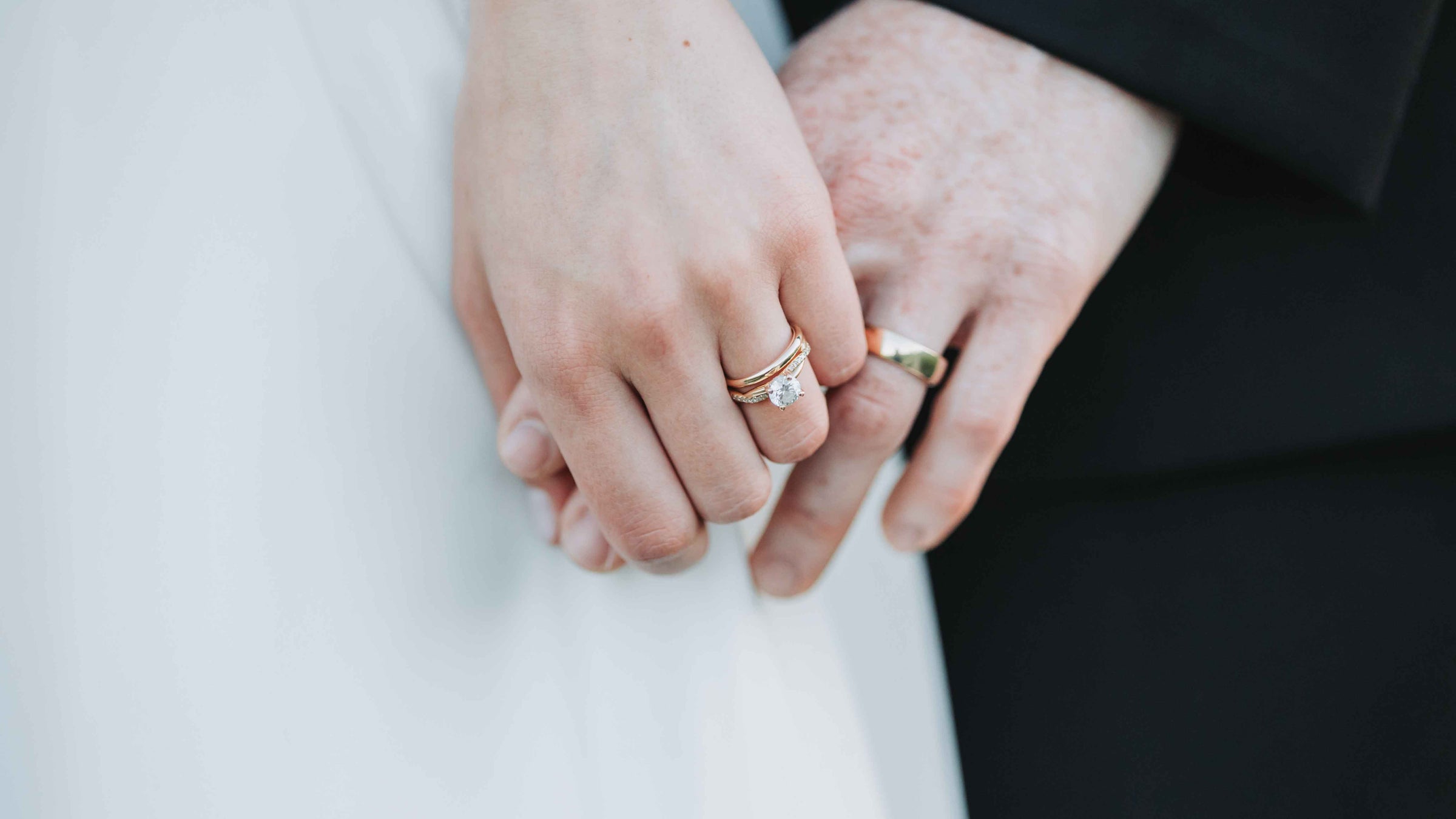
Wedding Rings
Wedding Rings
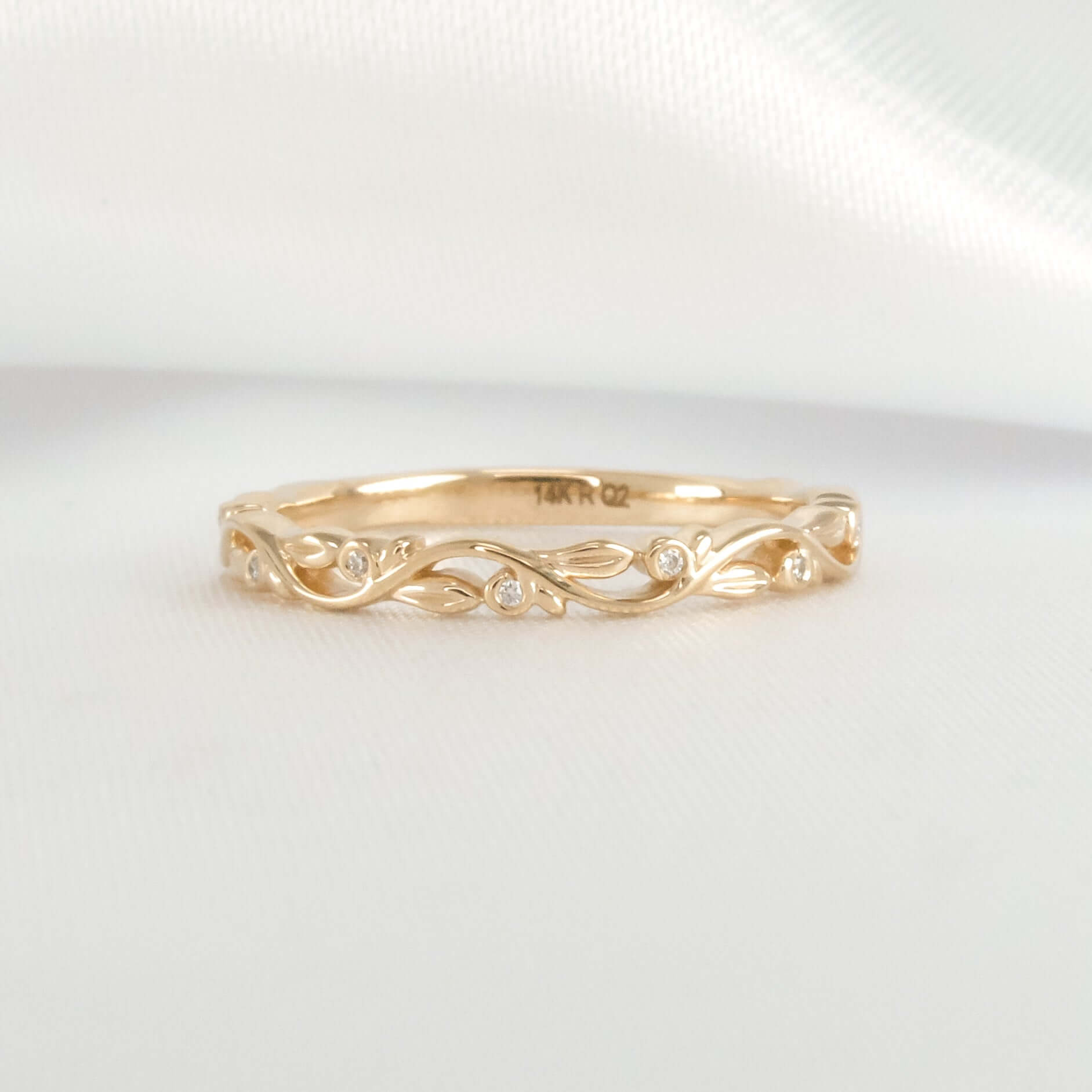

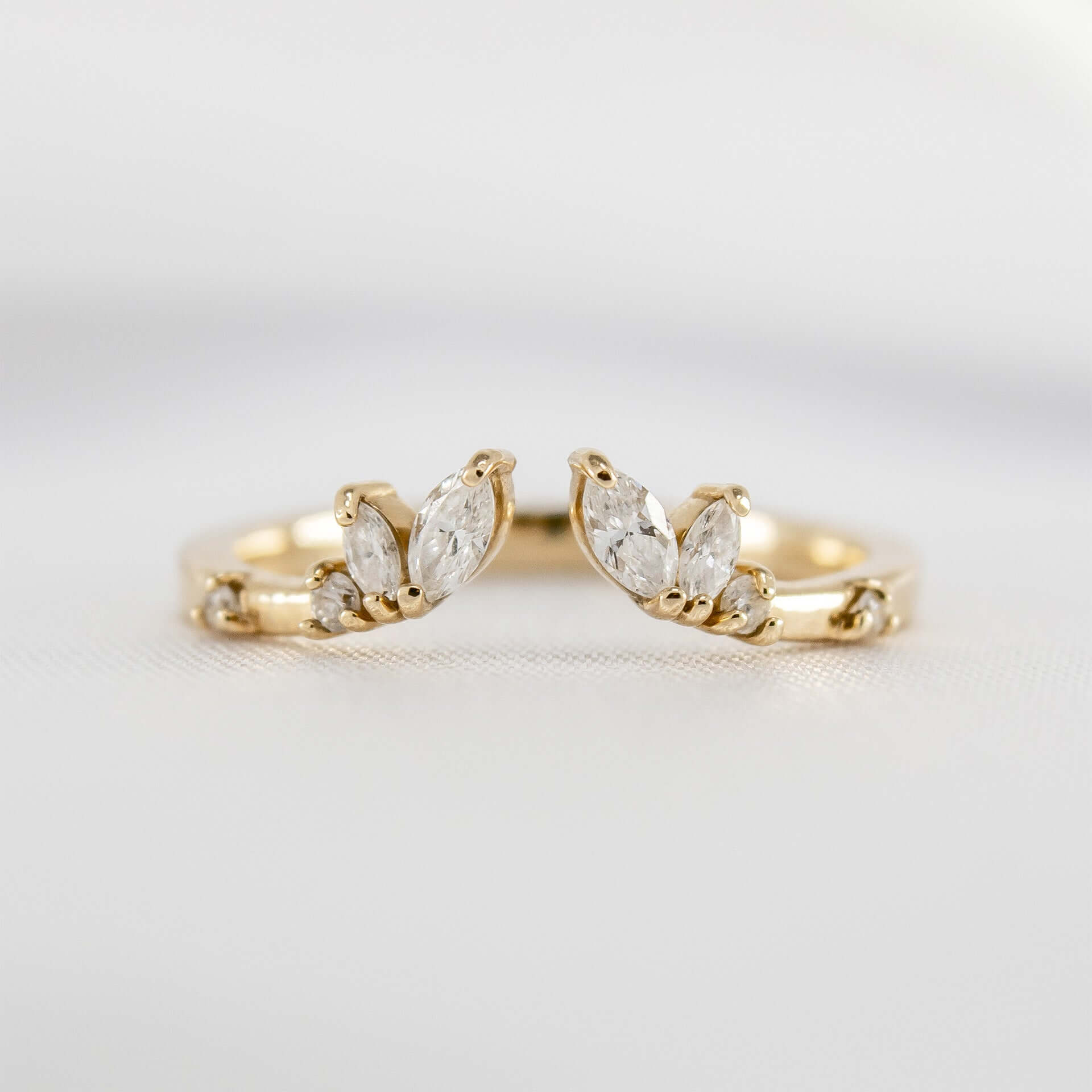

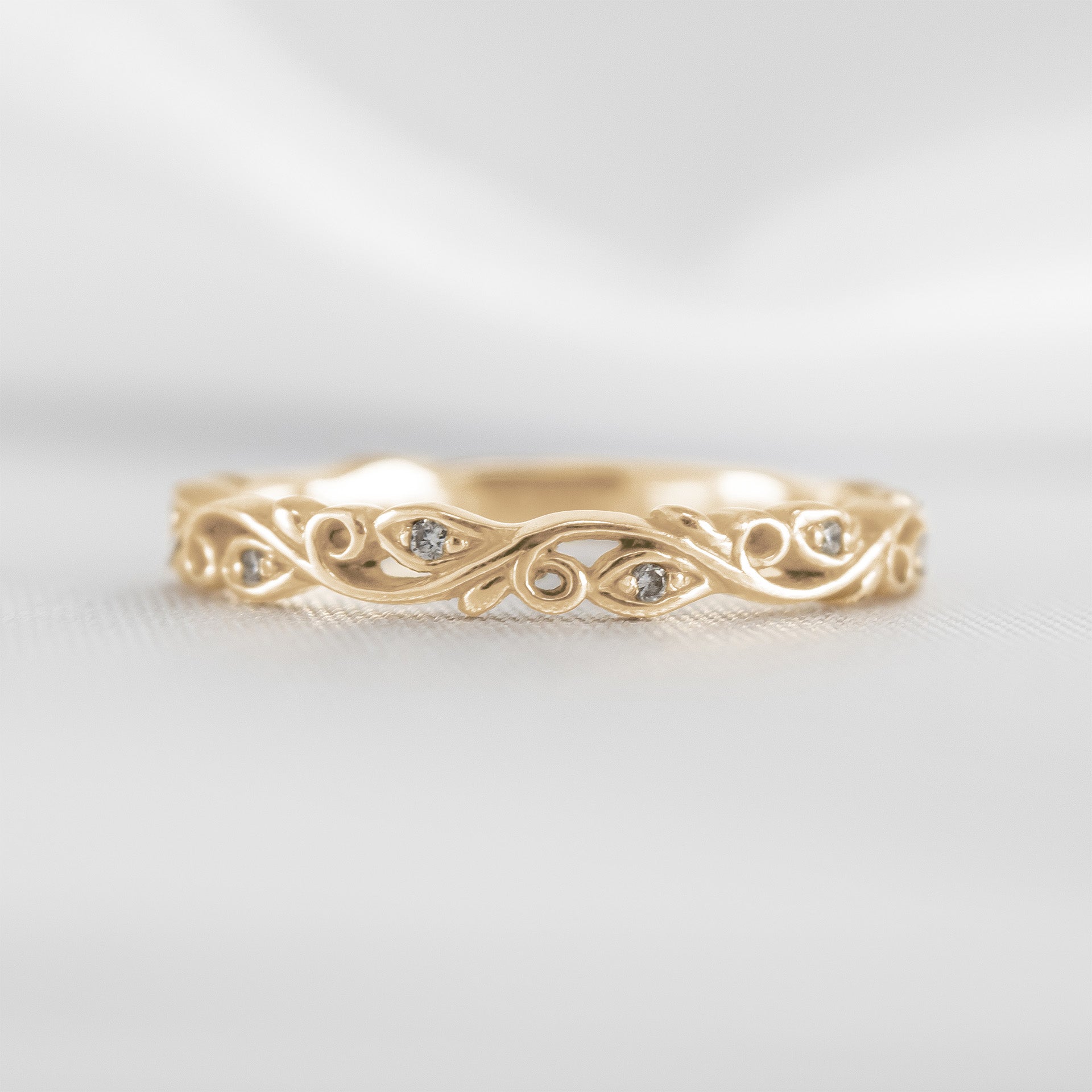

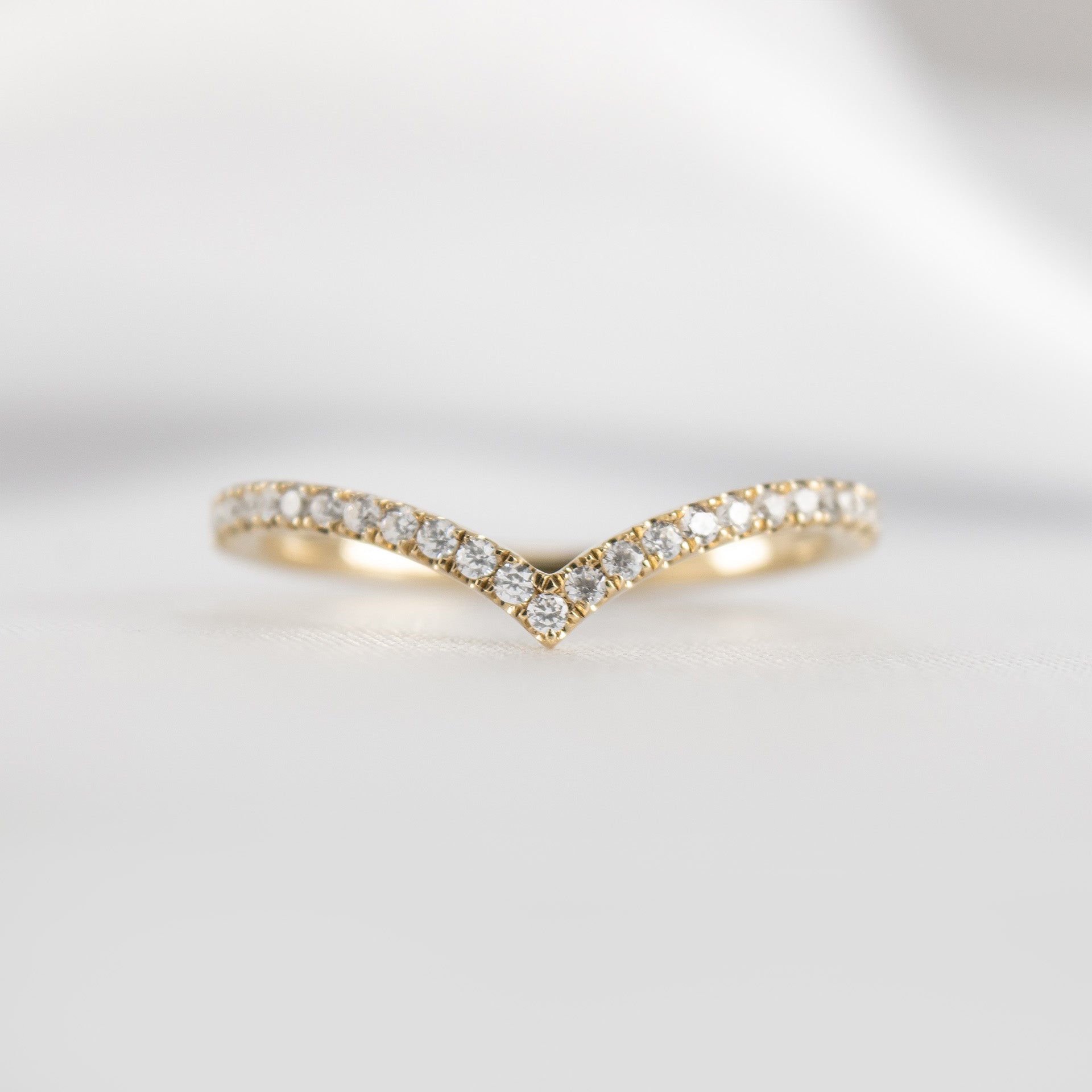






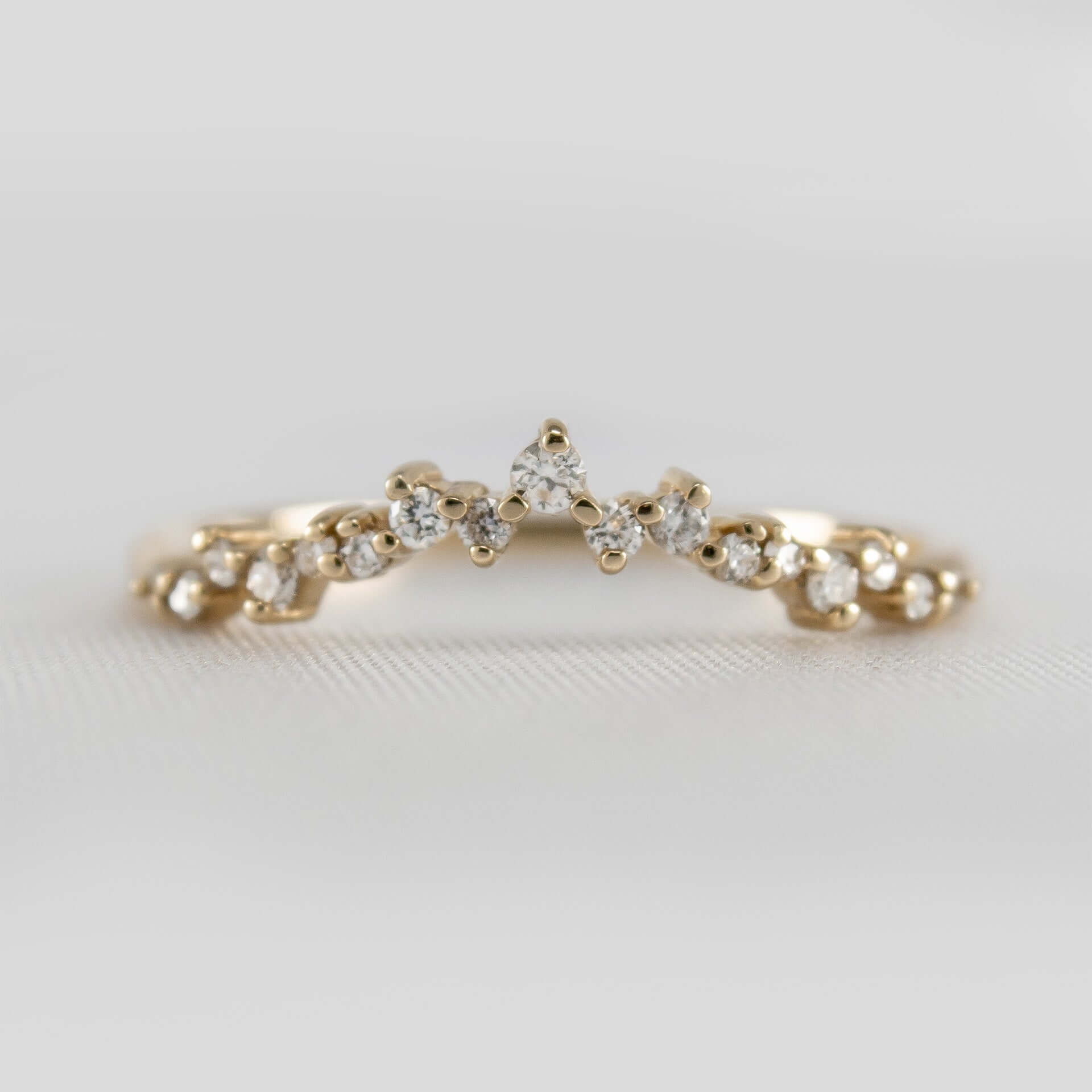

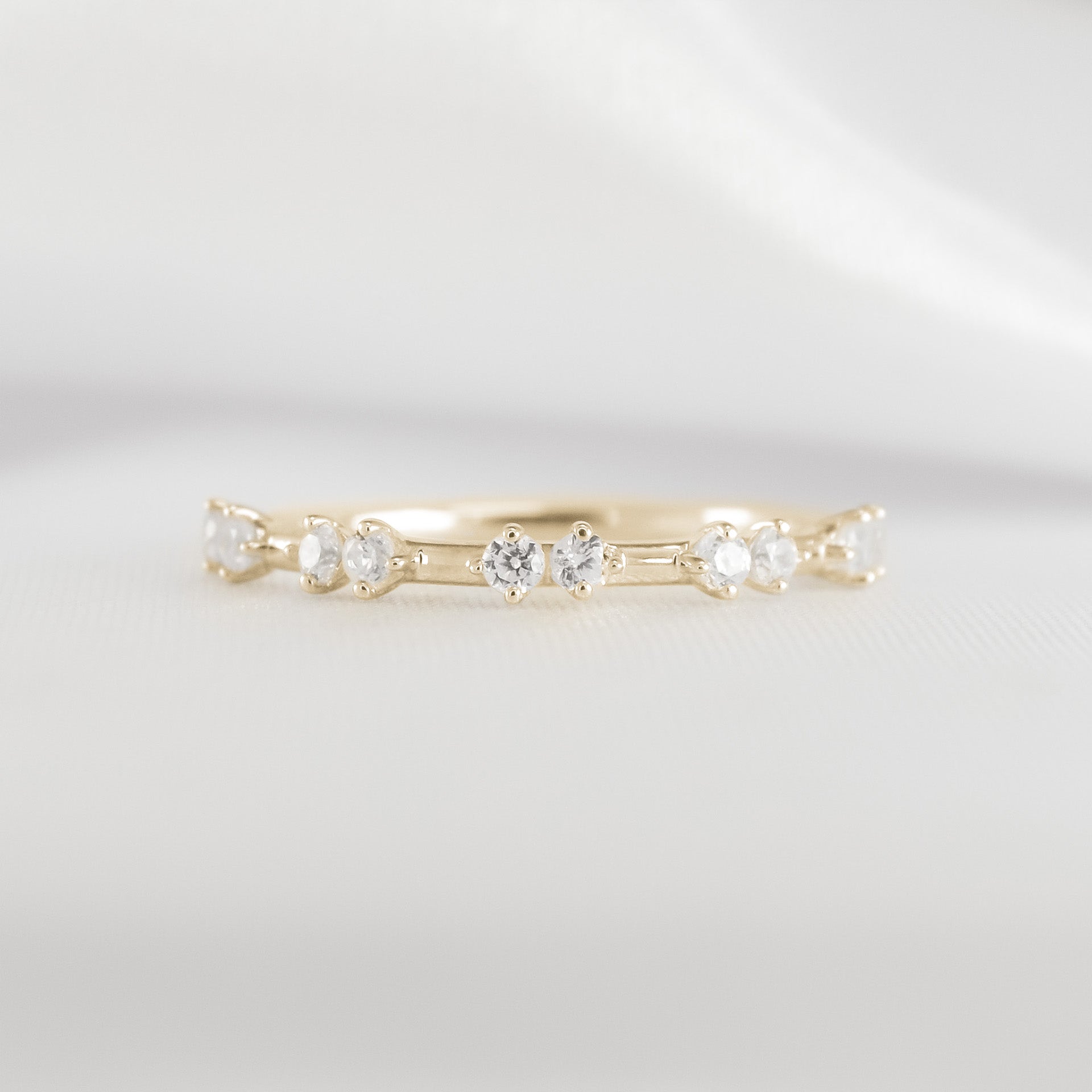
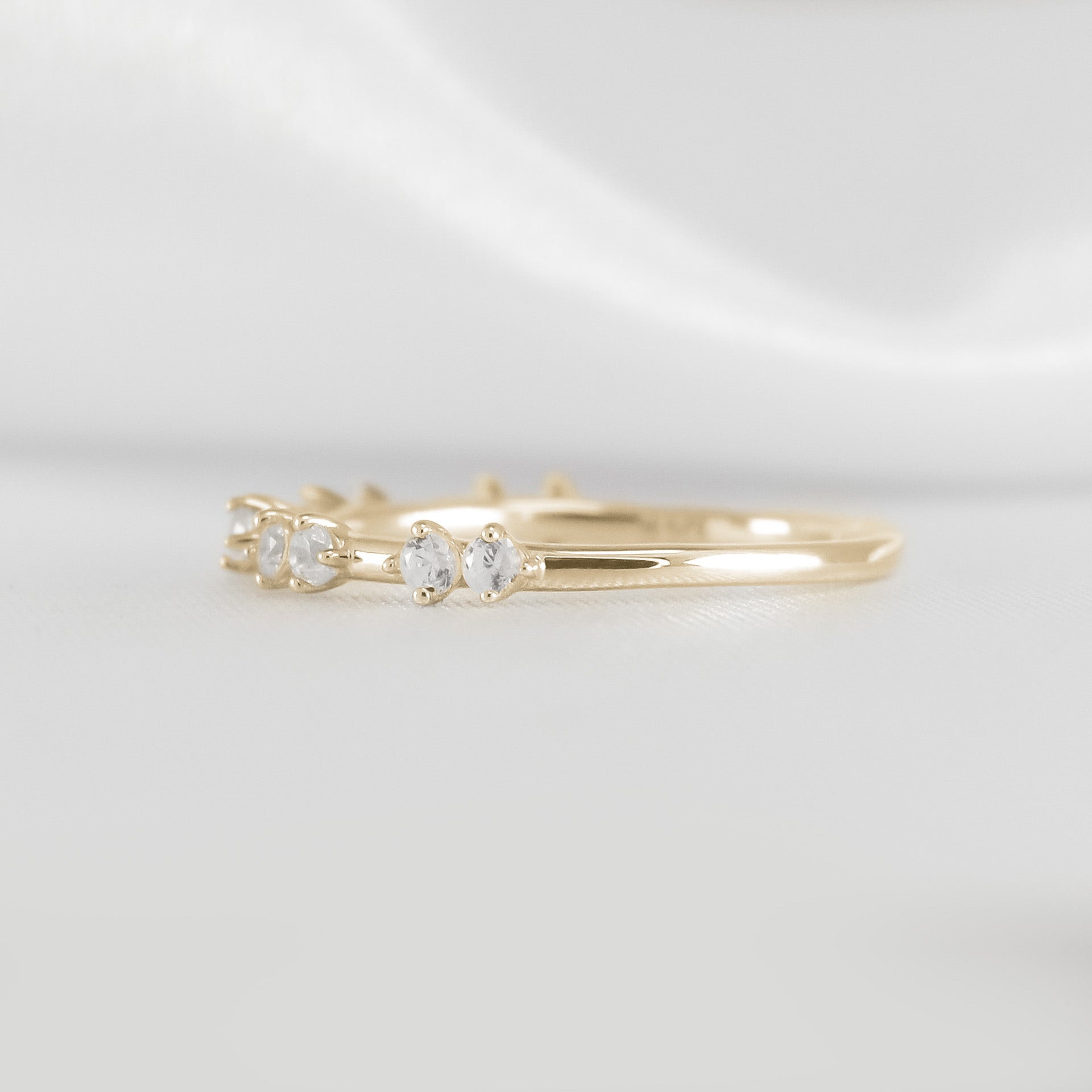


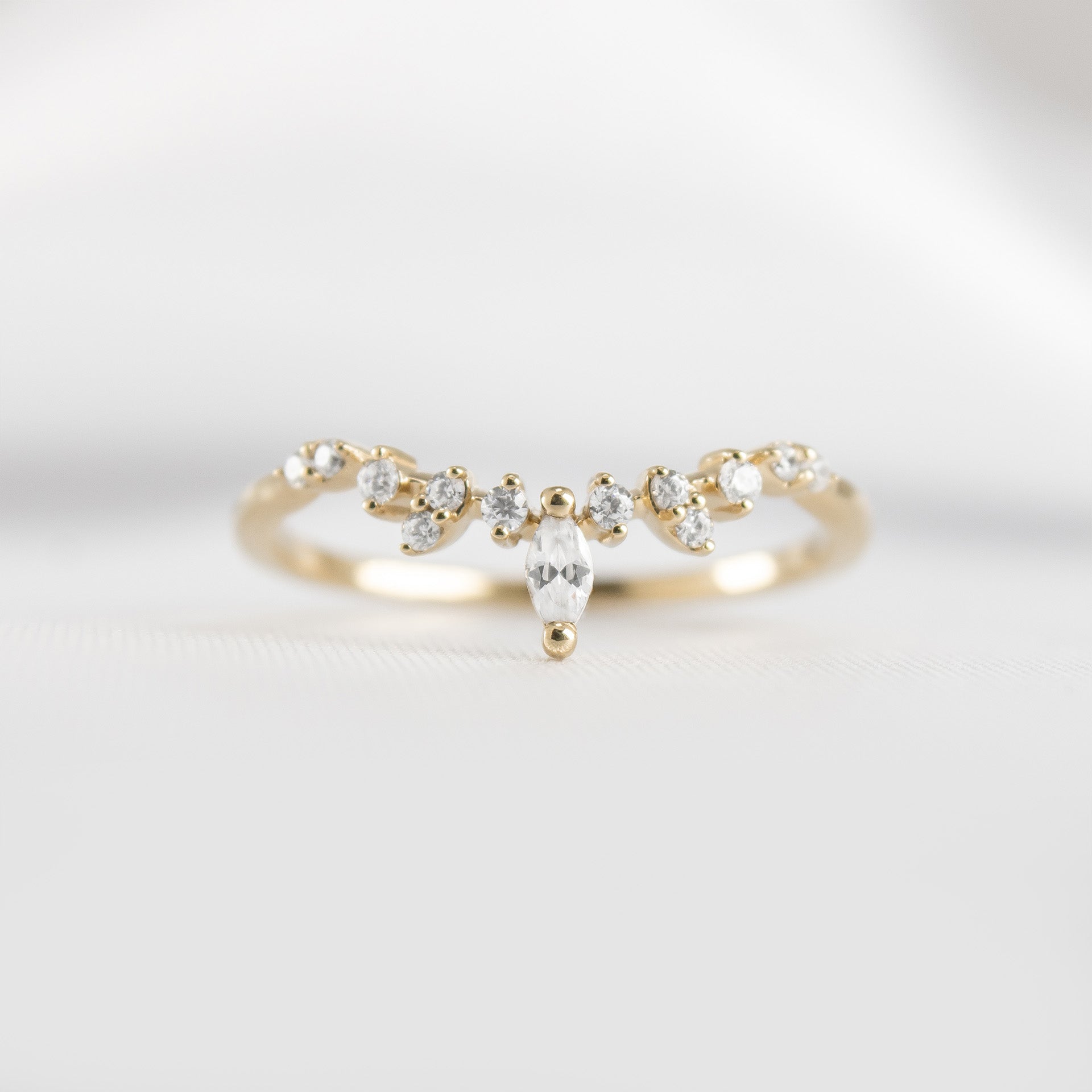

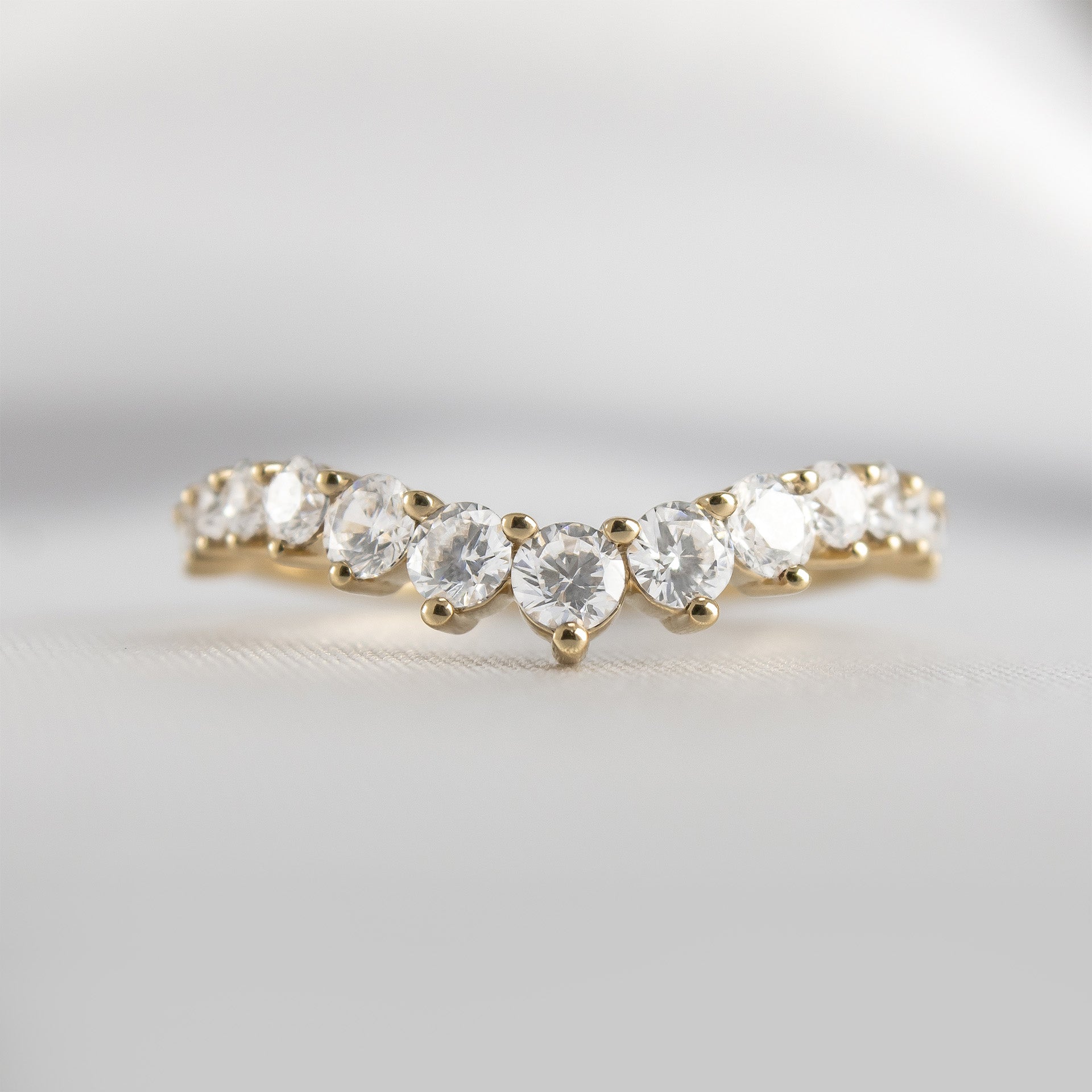

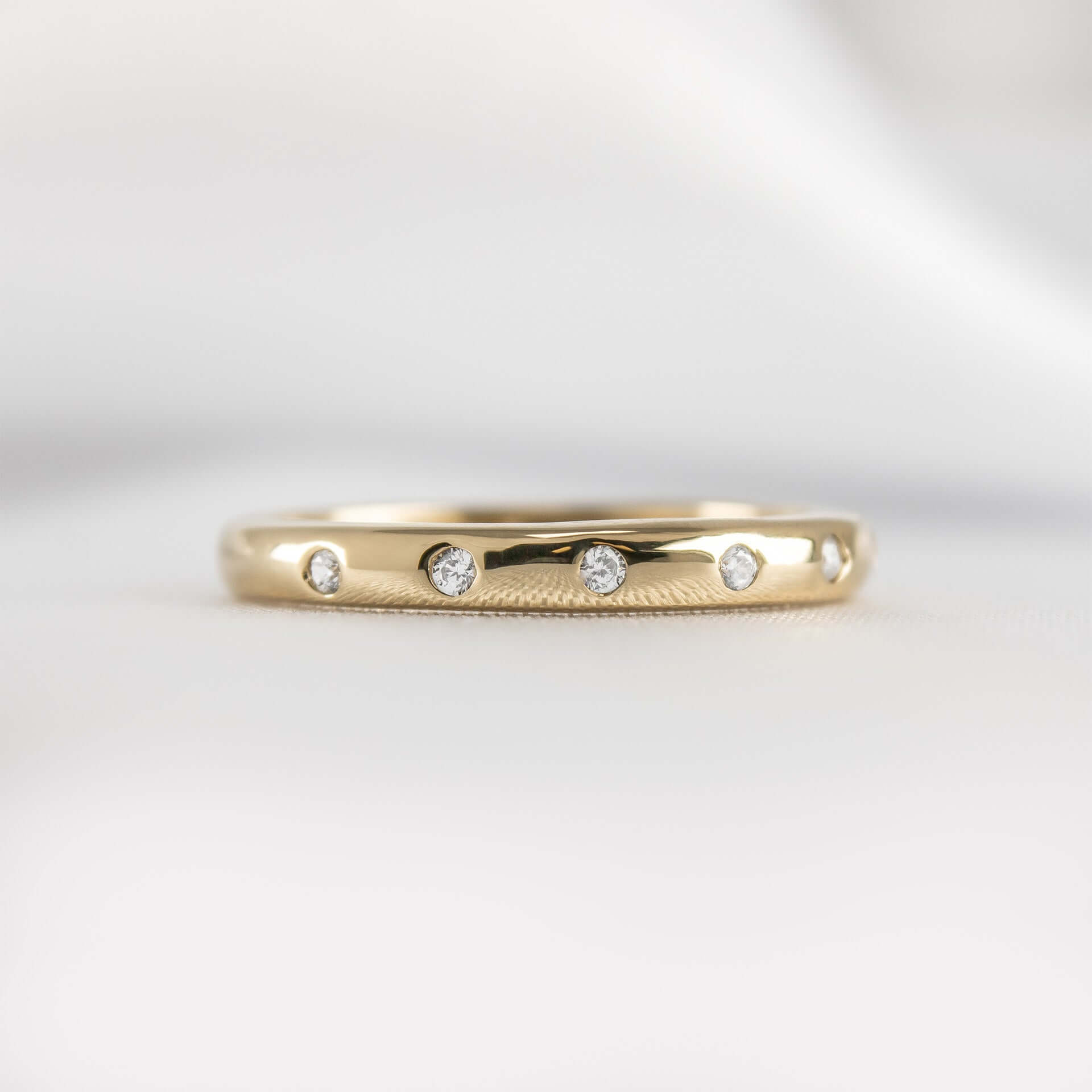

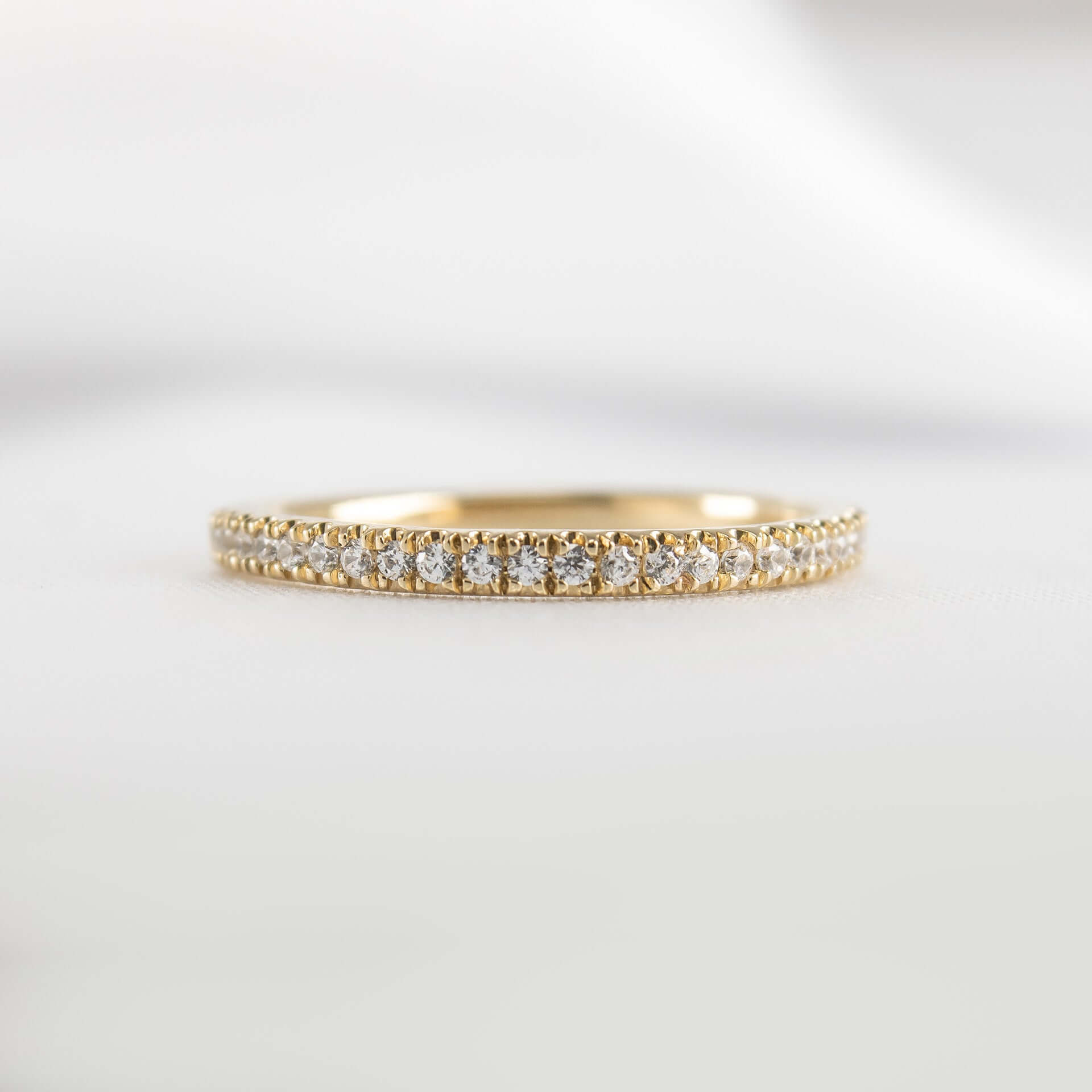

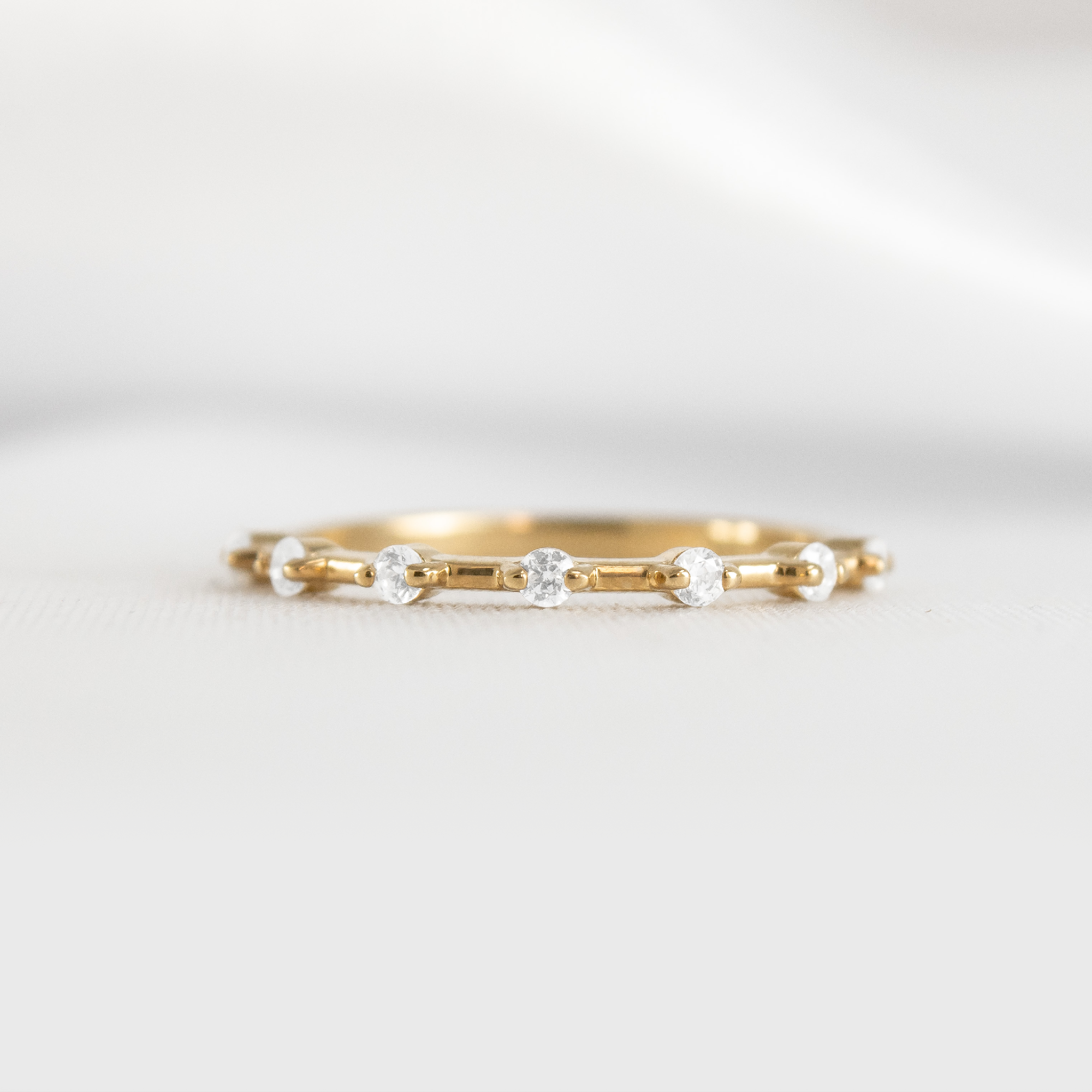





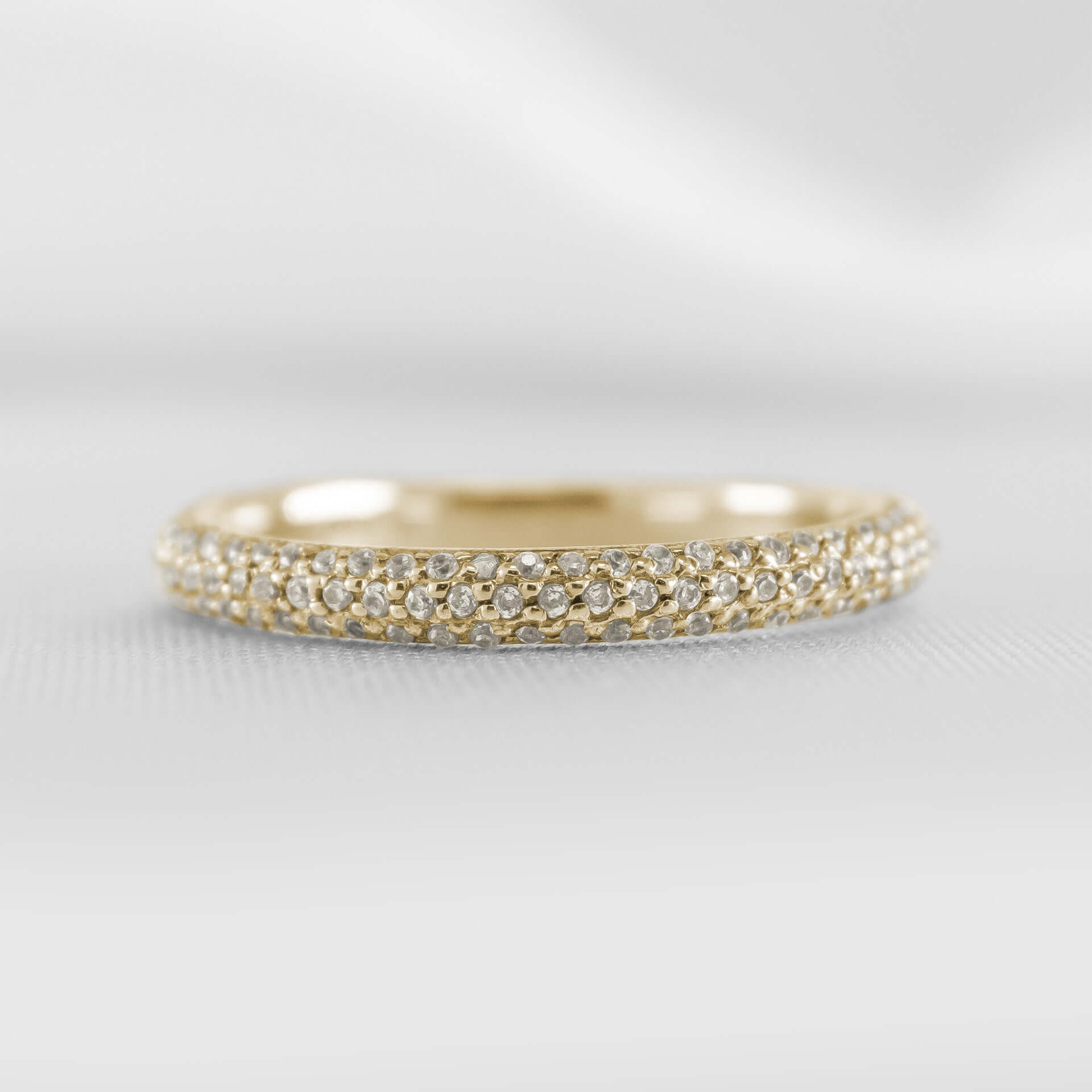

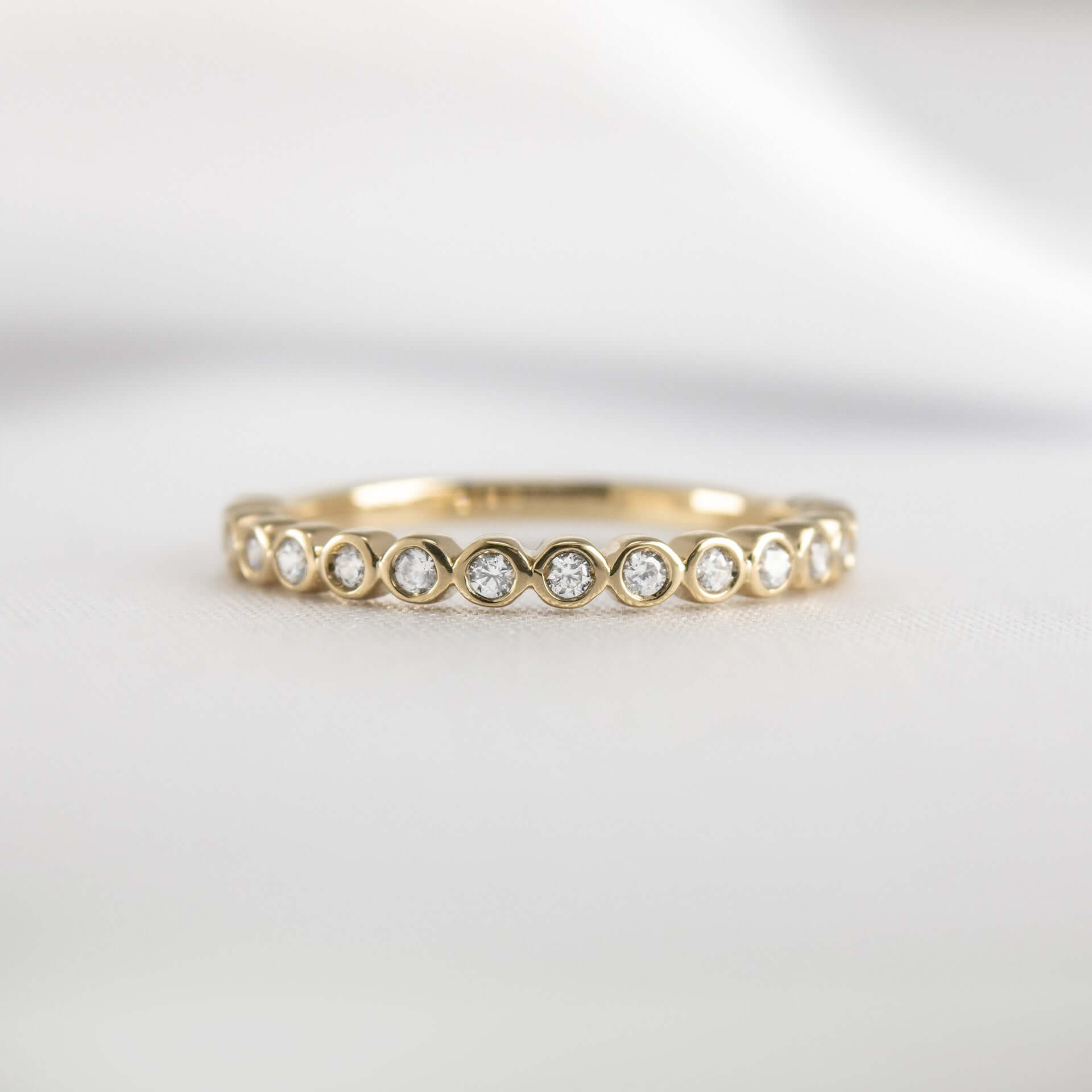

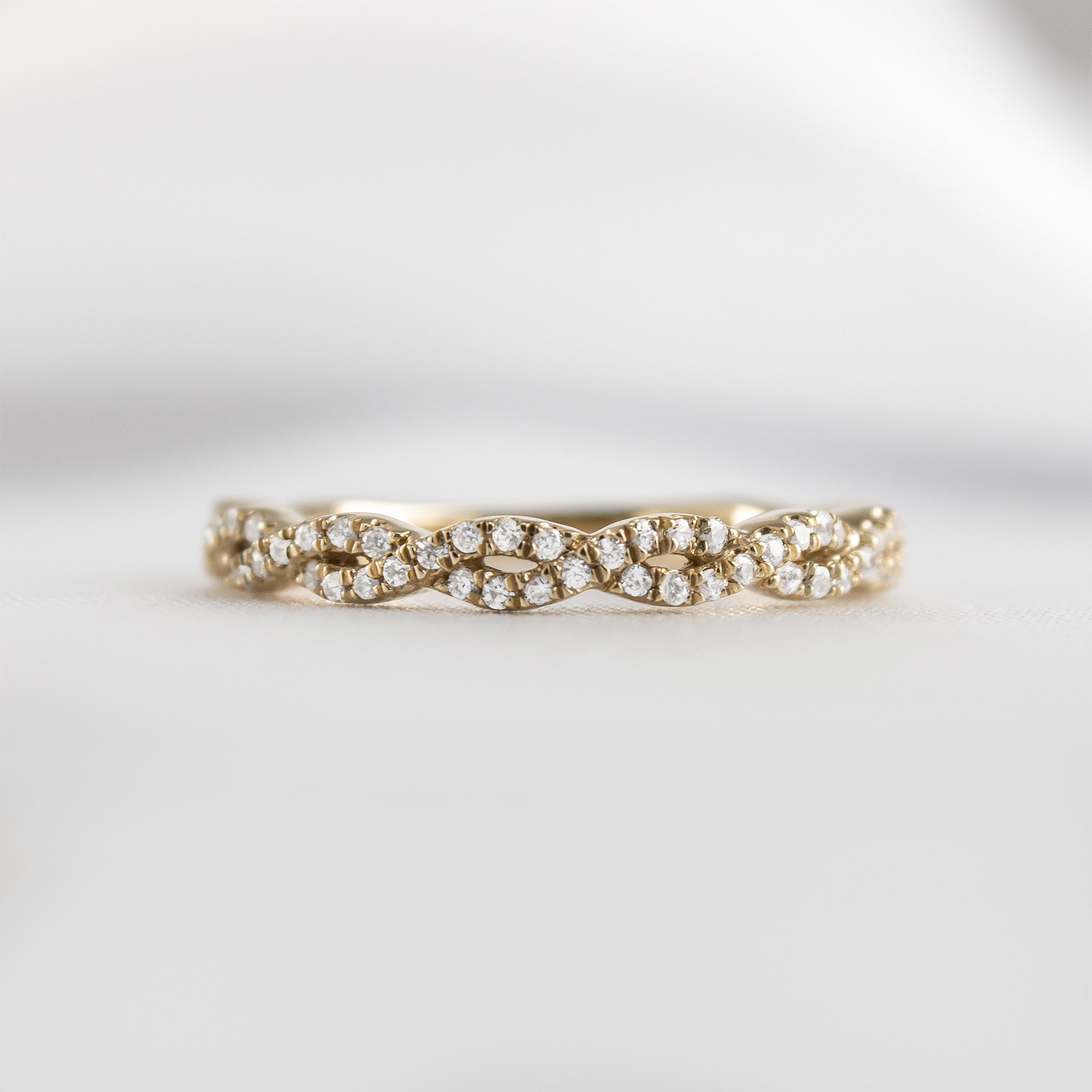







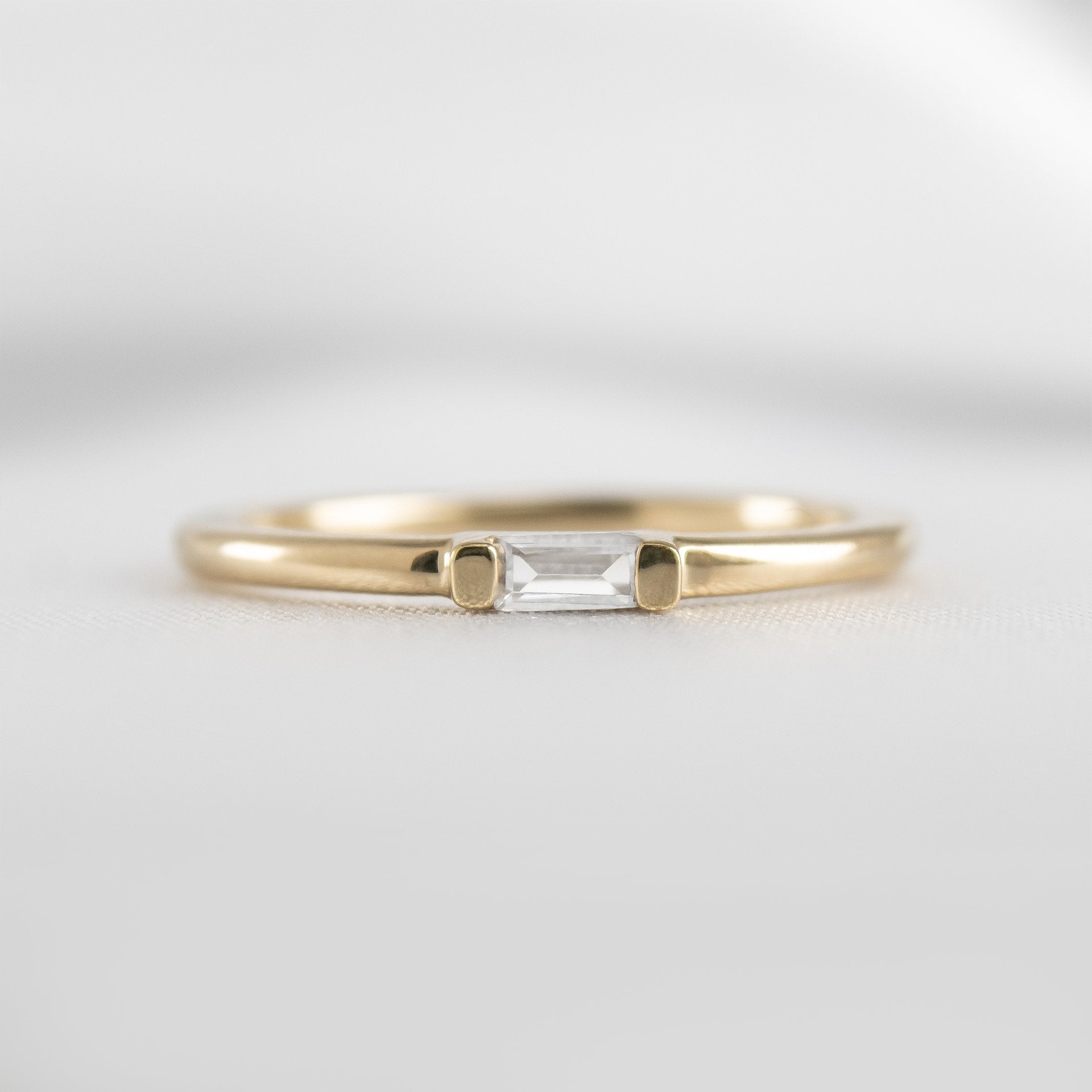
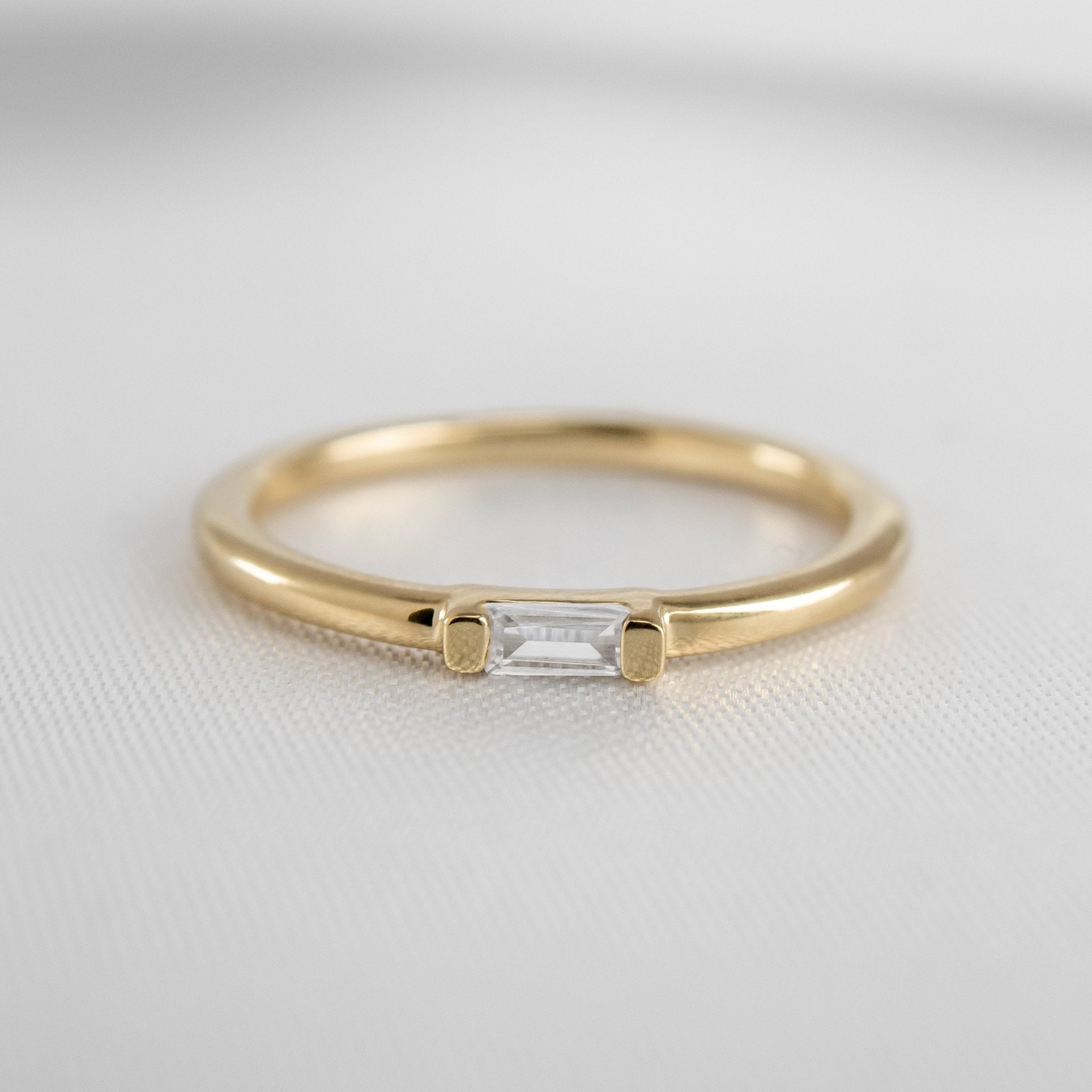
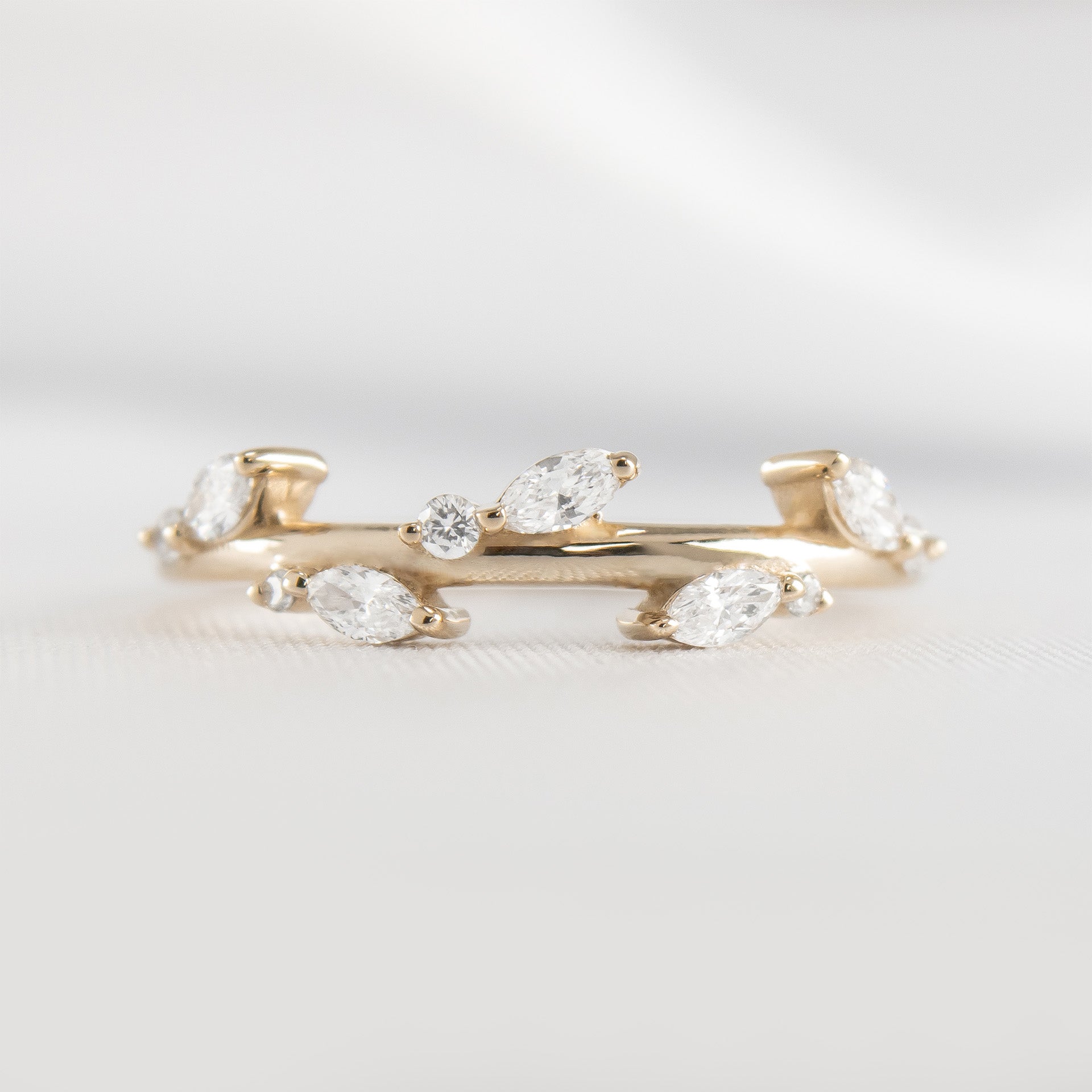

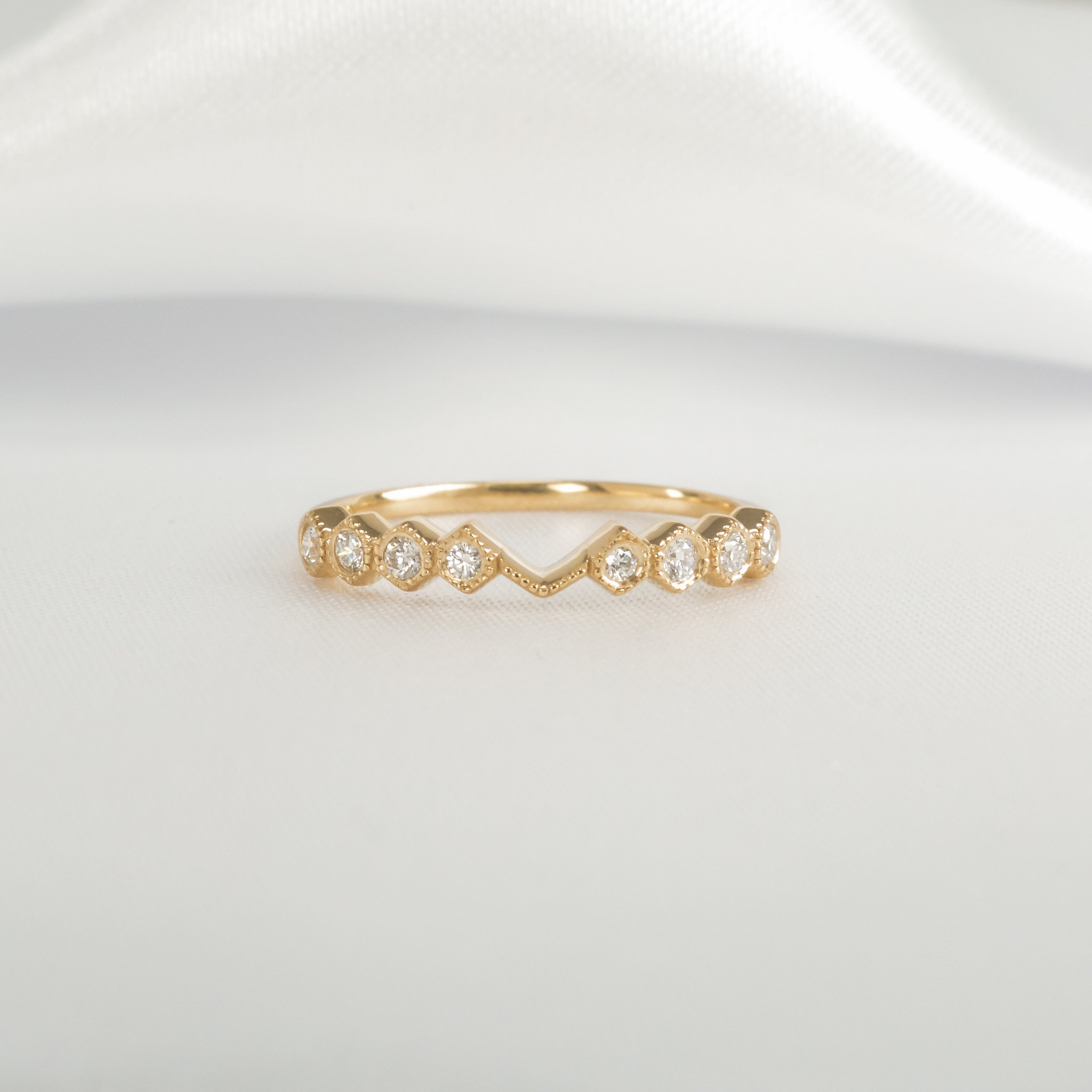

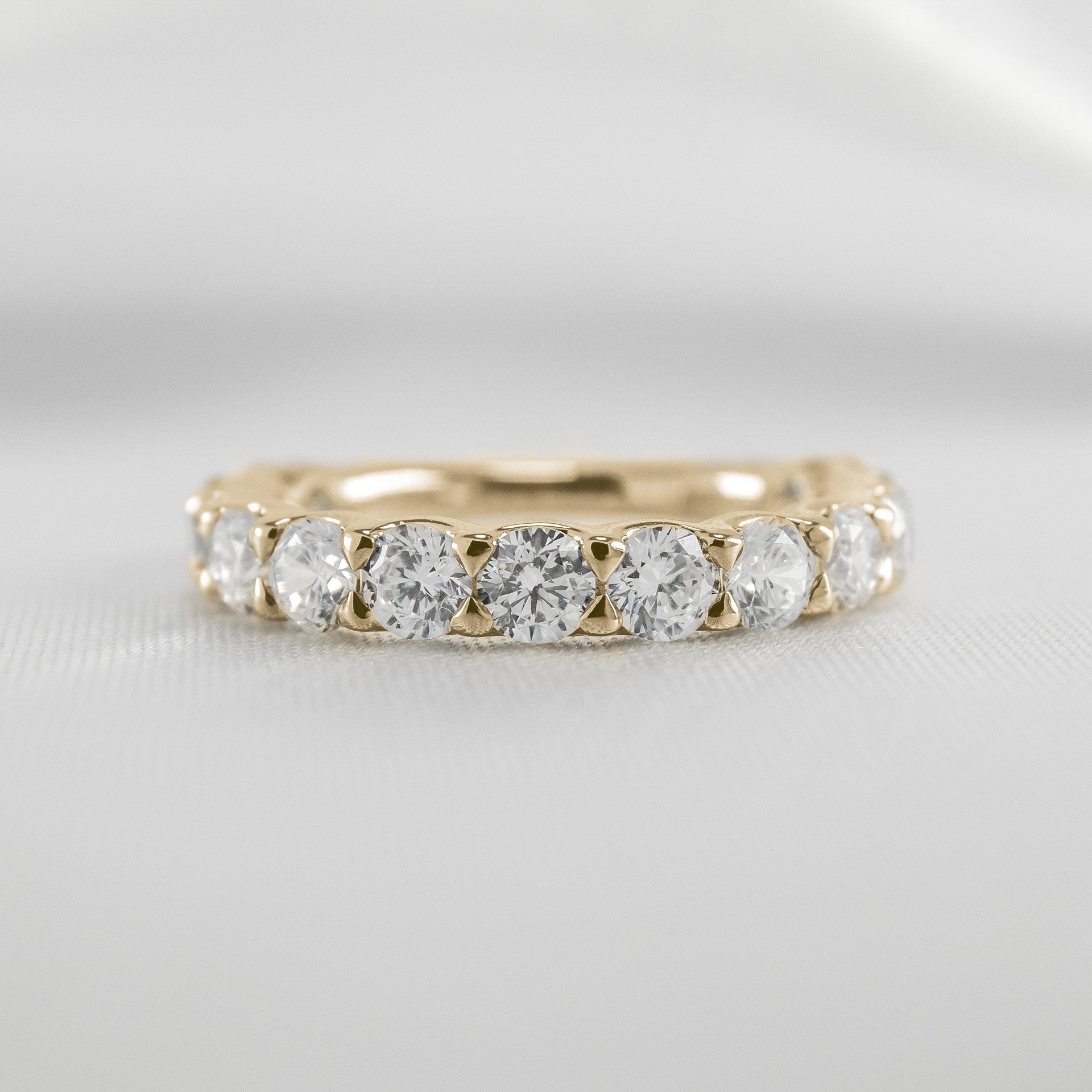

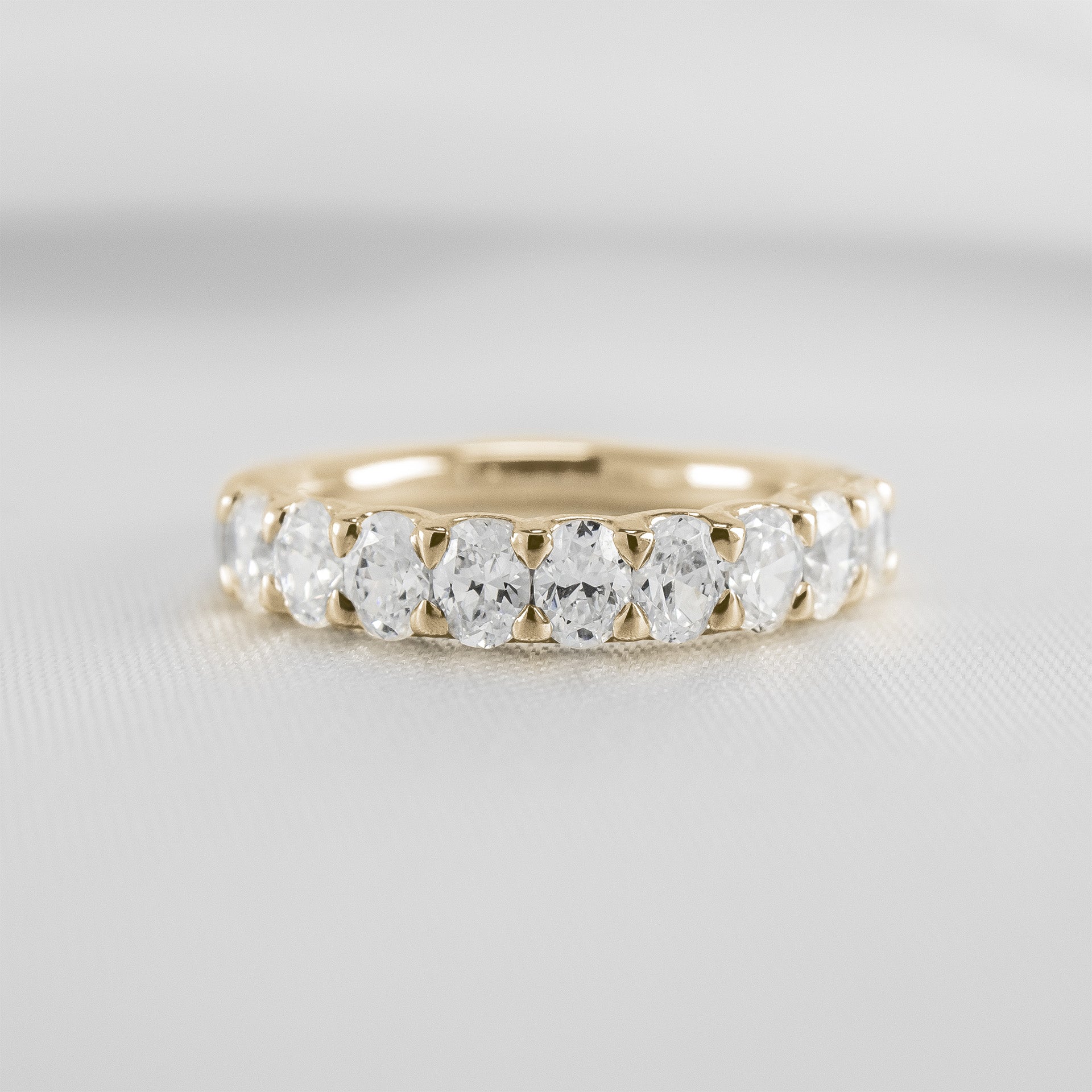

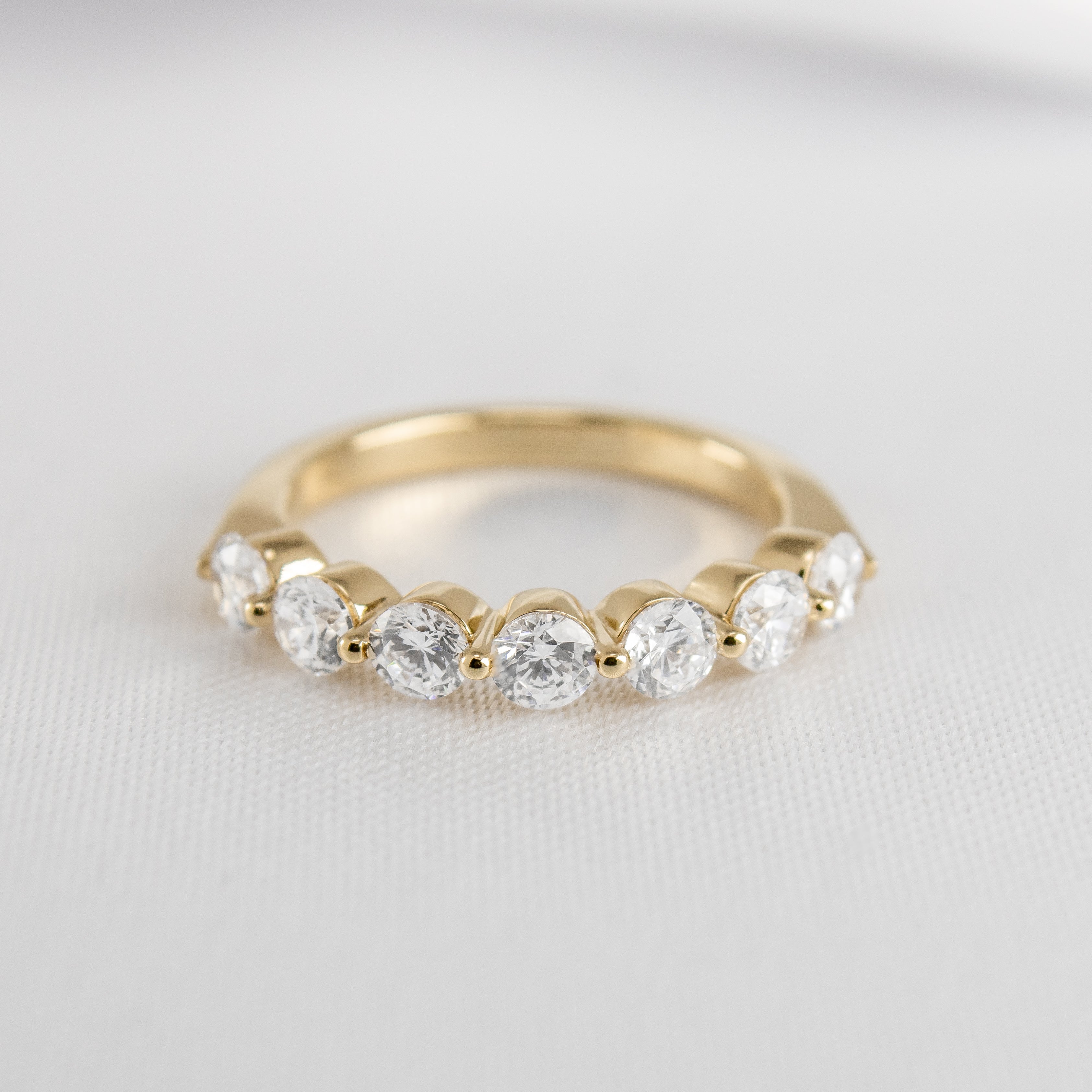
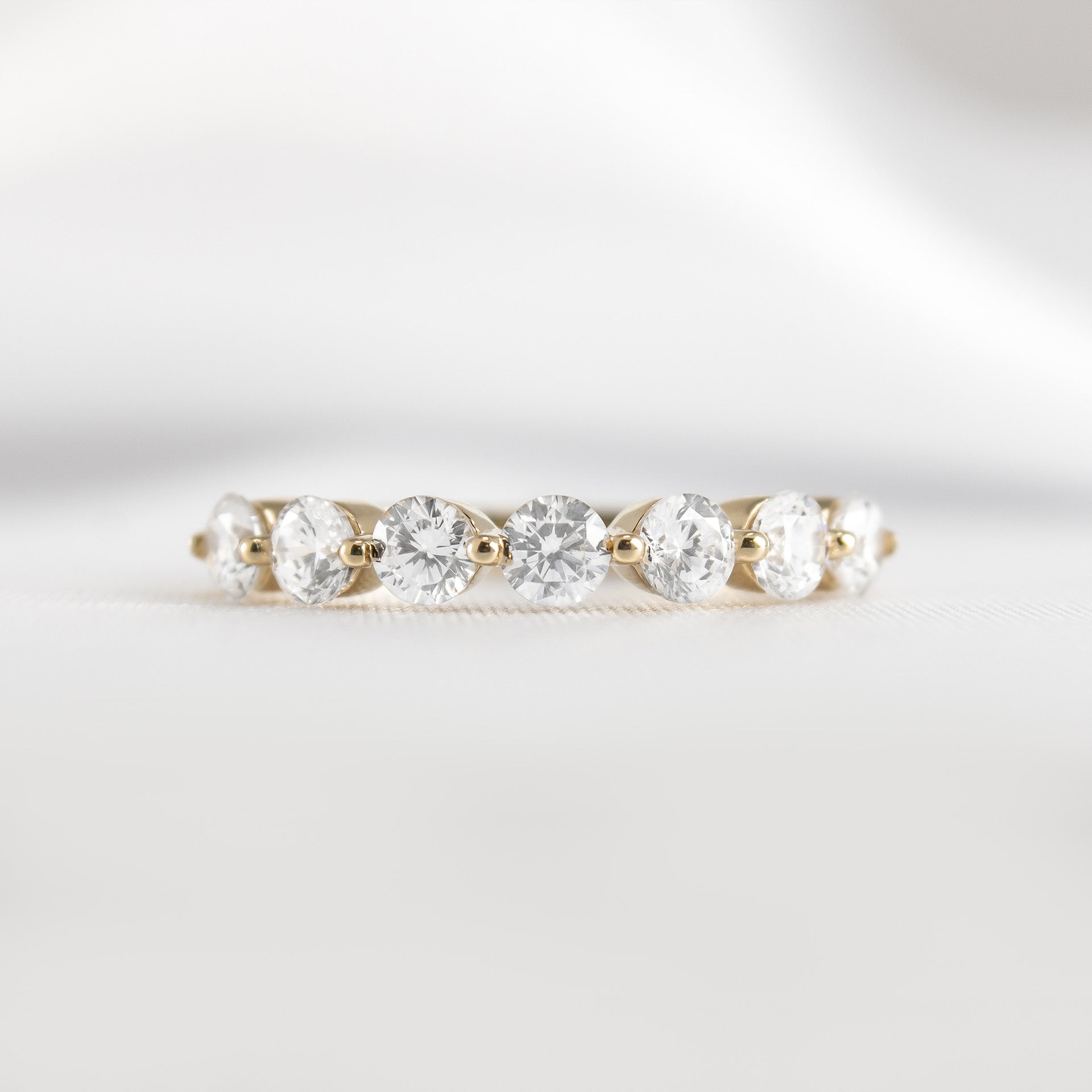
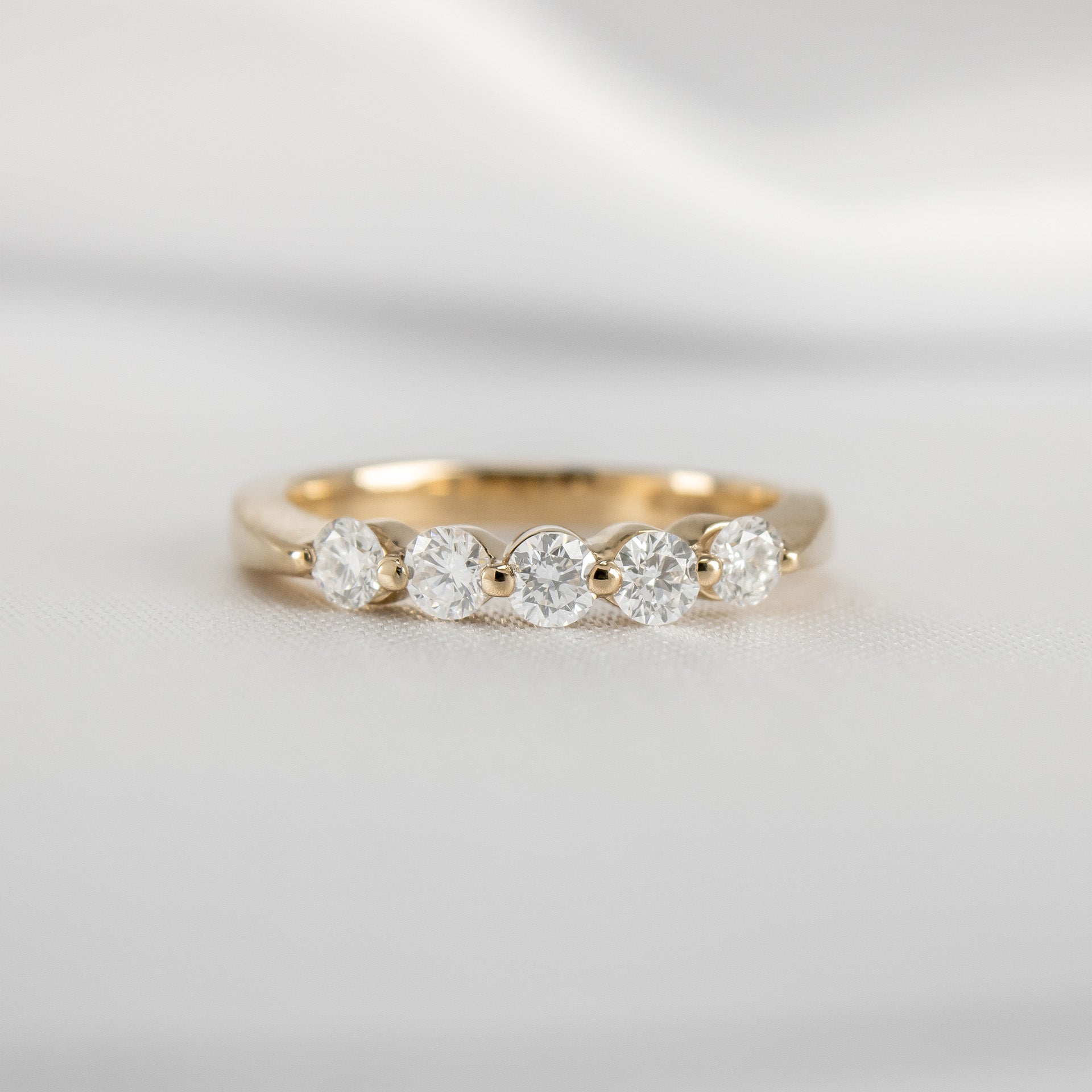
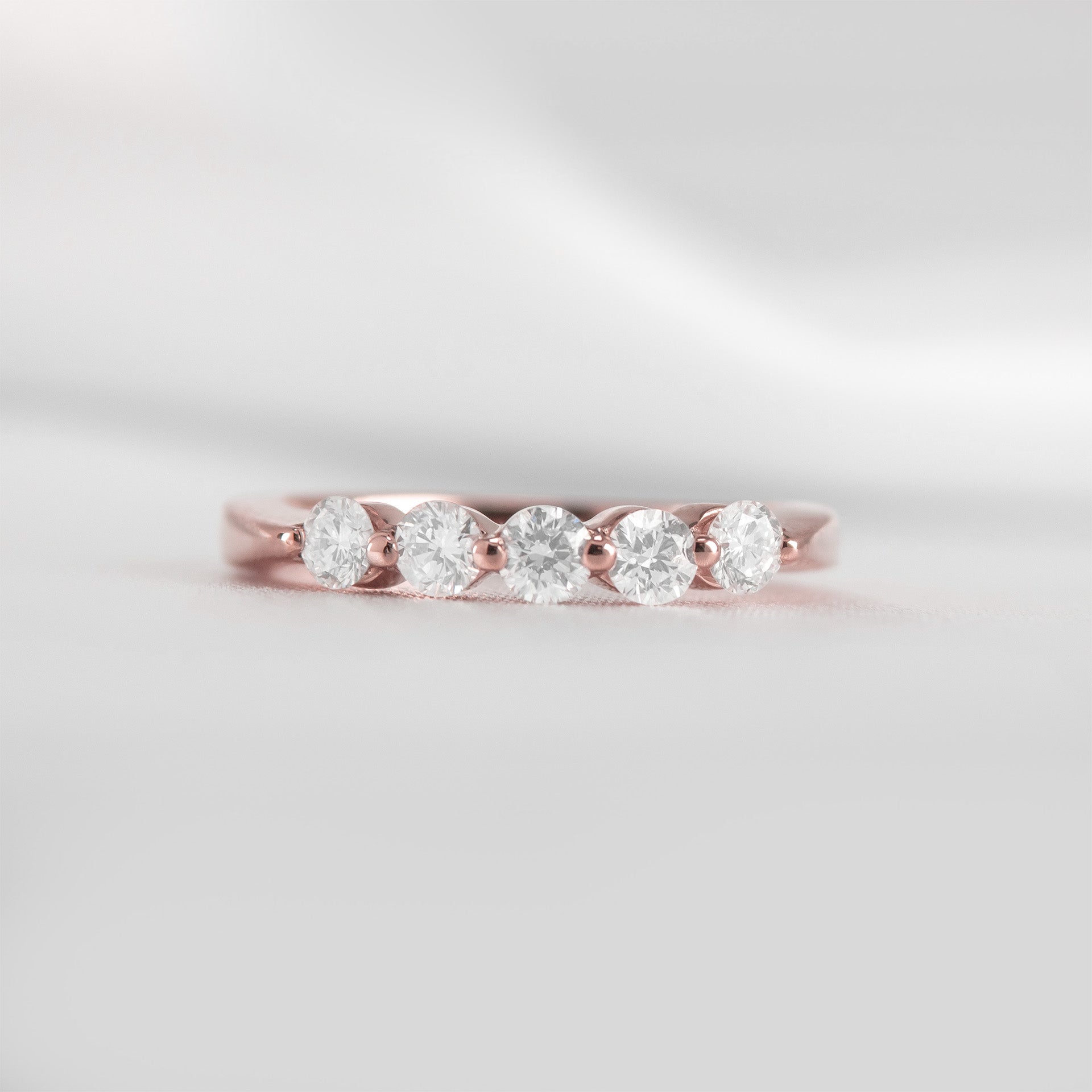
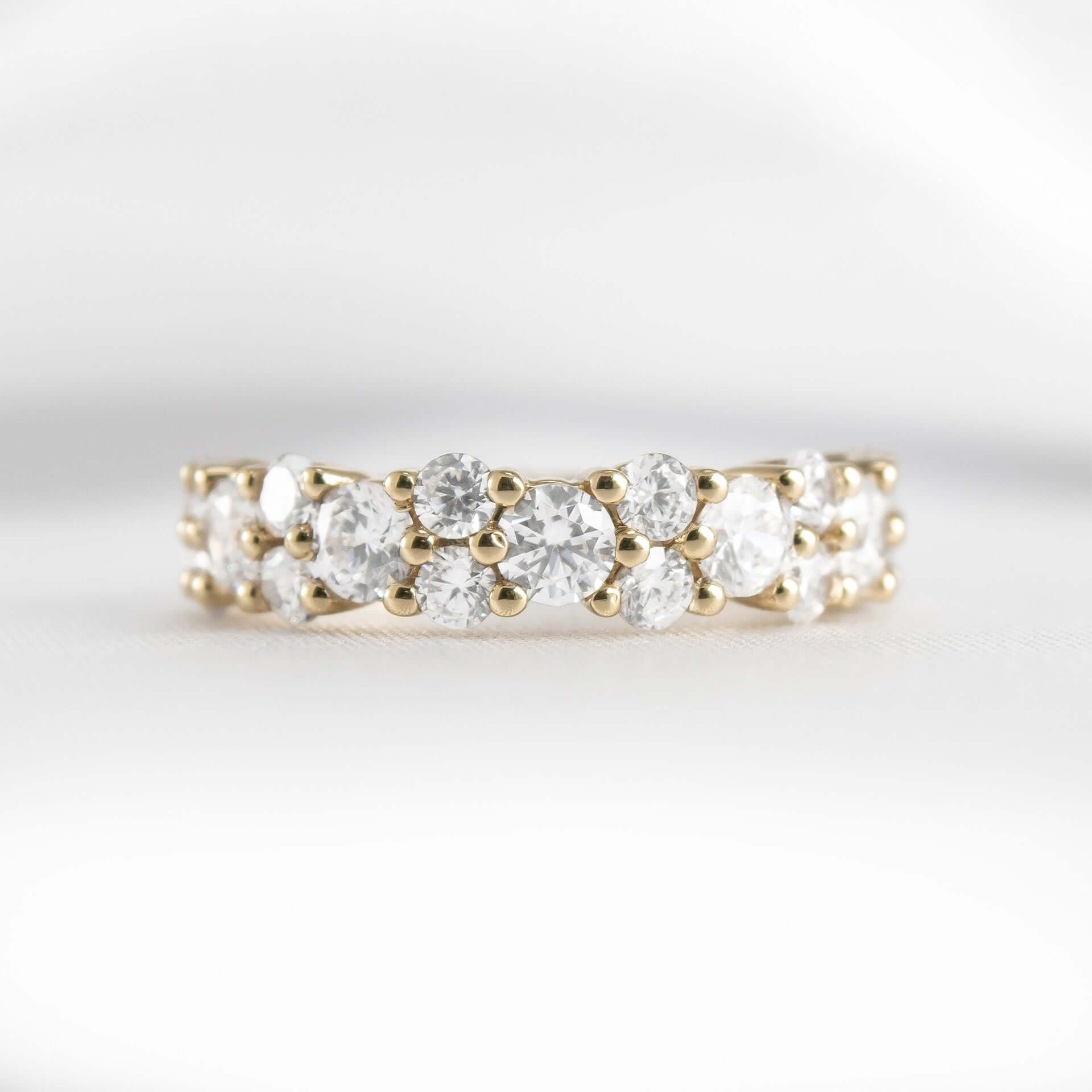
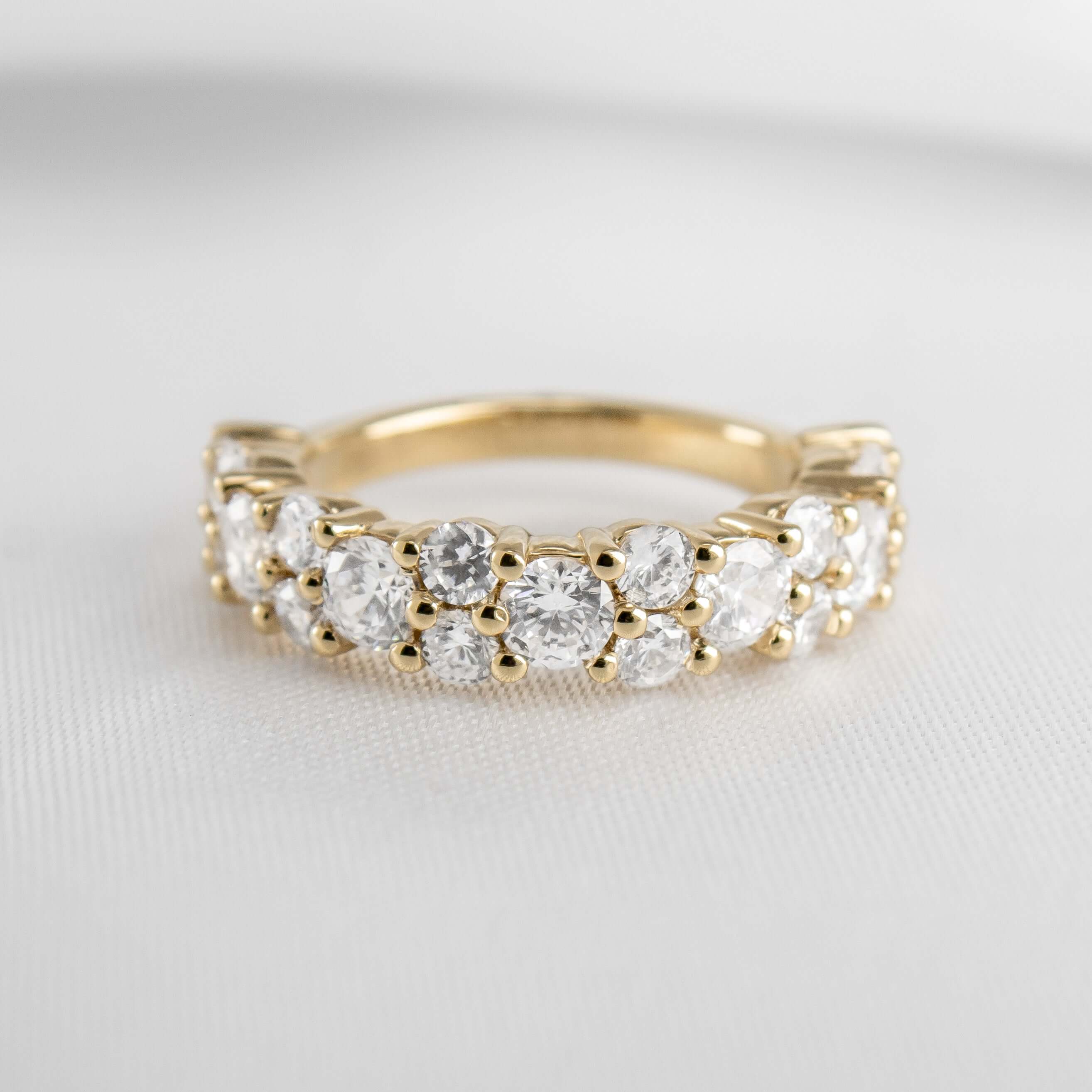




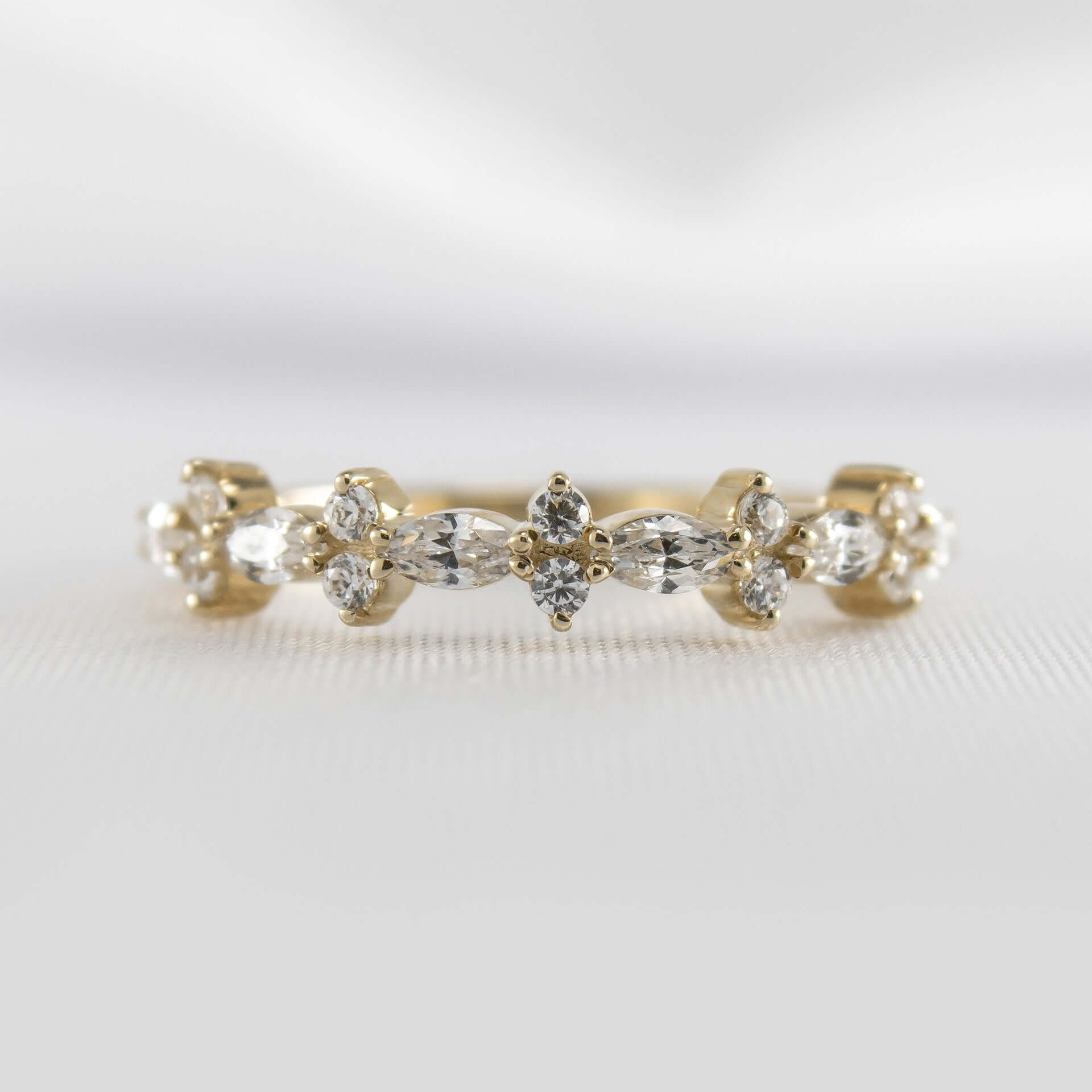

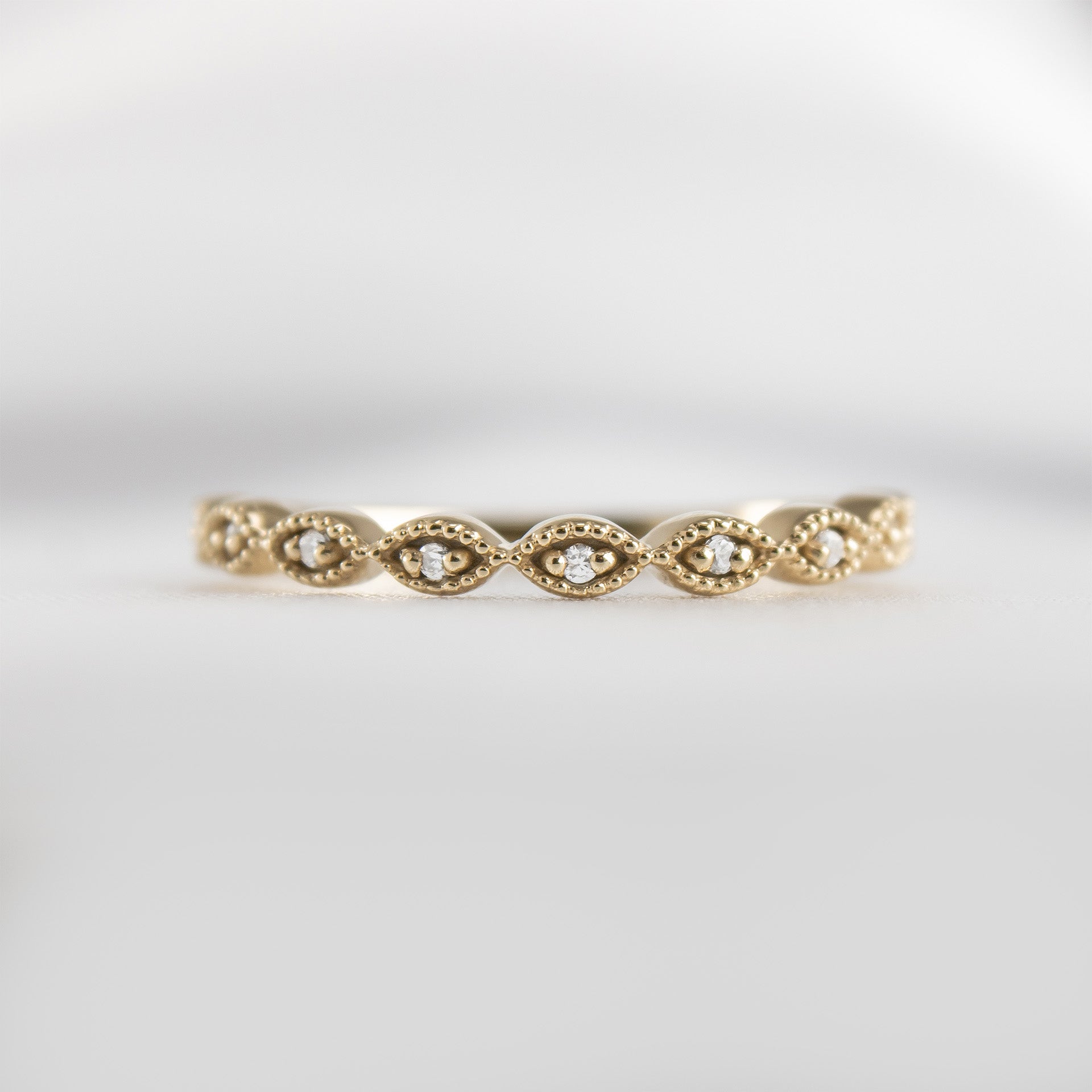

Diamond Wedding Bands and Eternity Rings
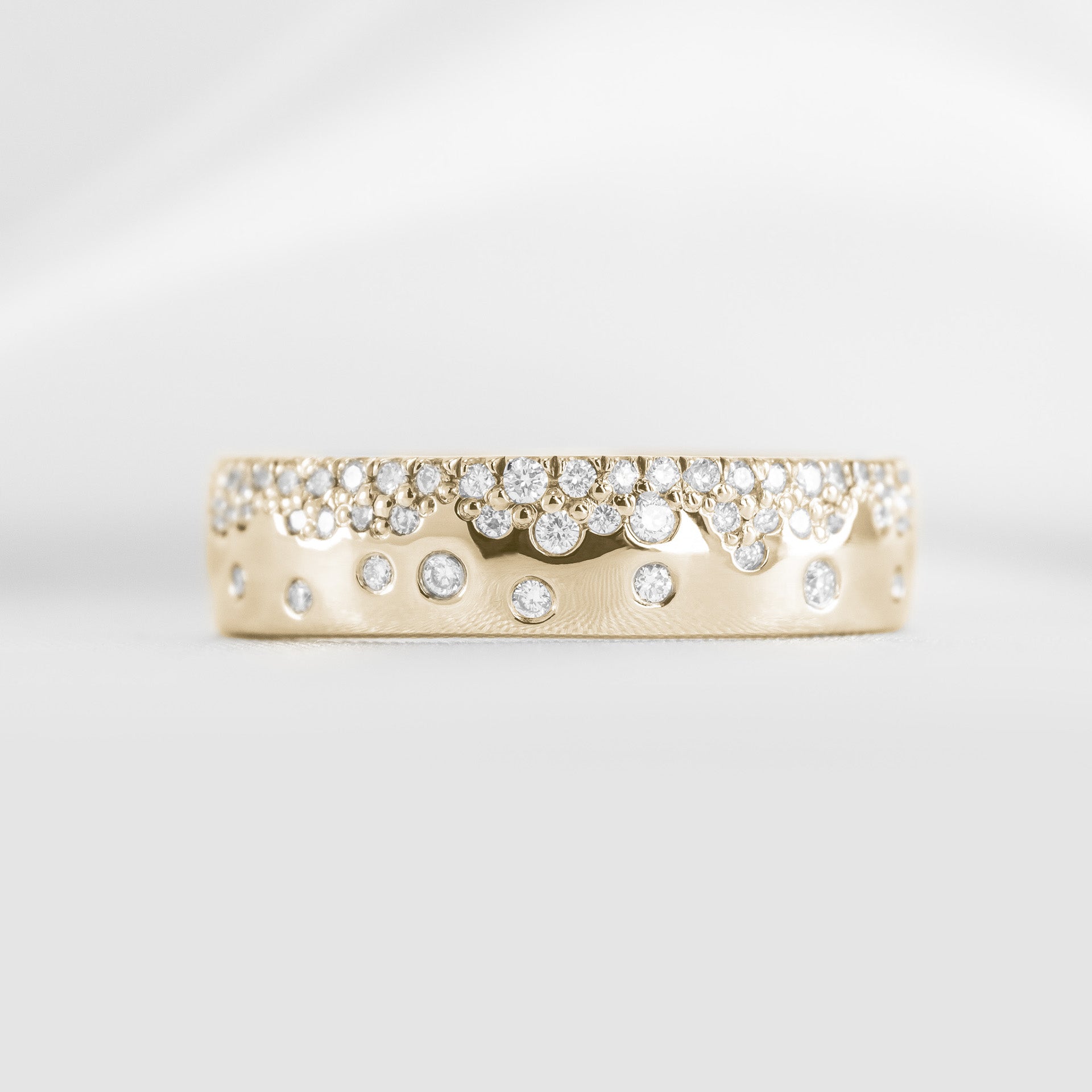
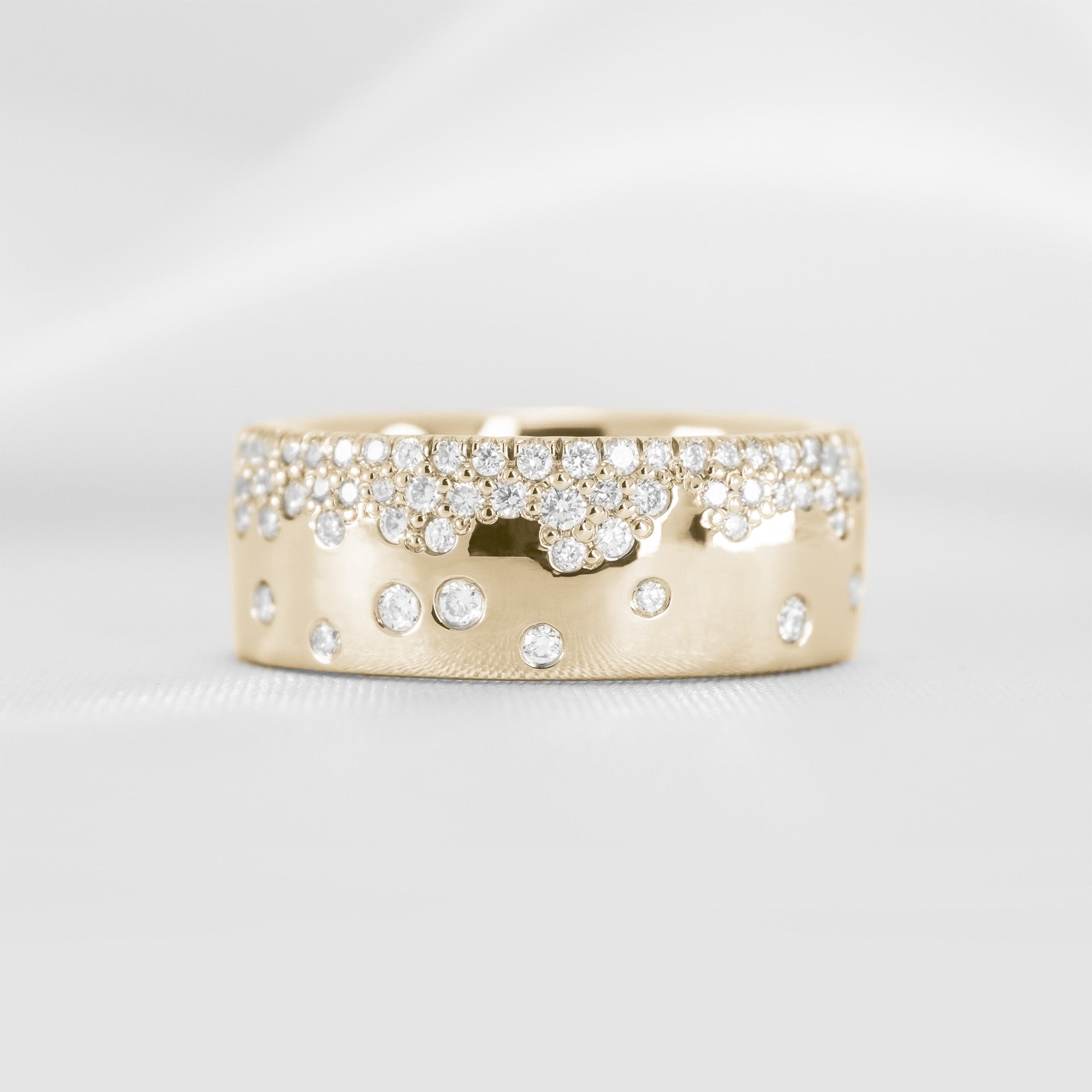
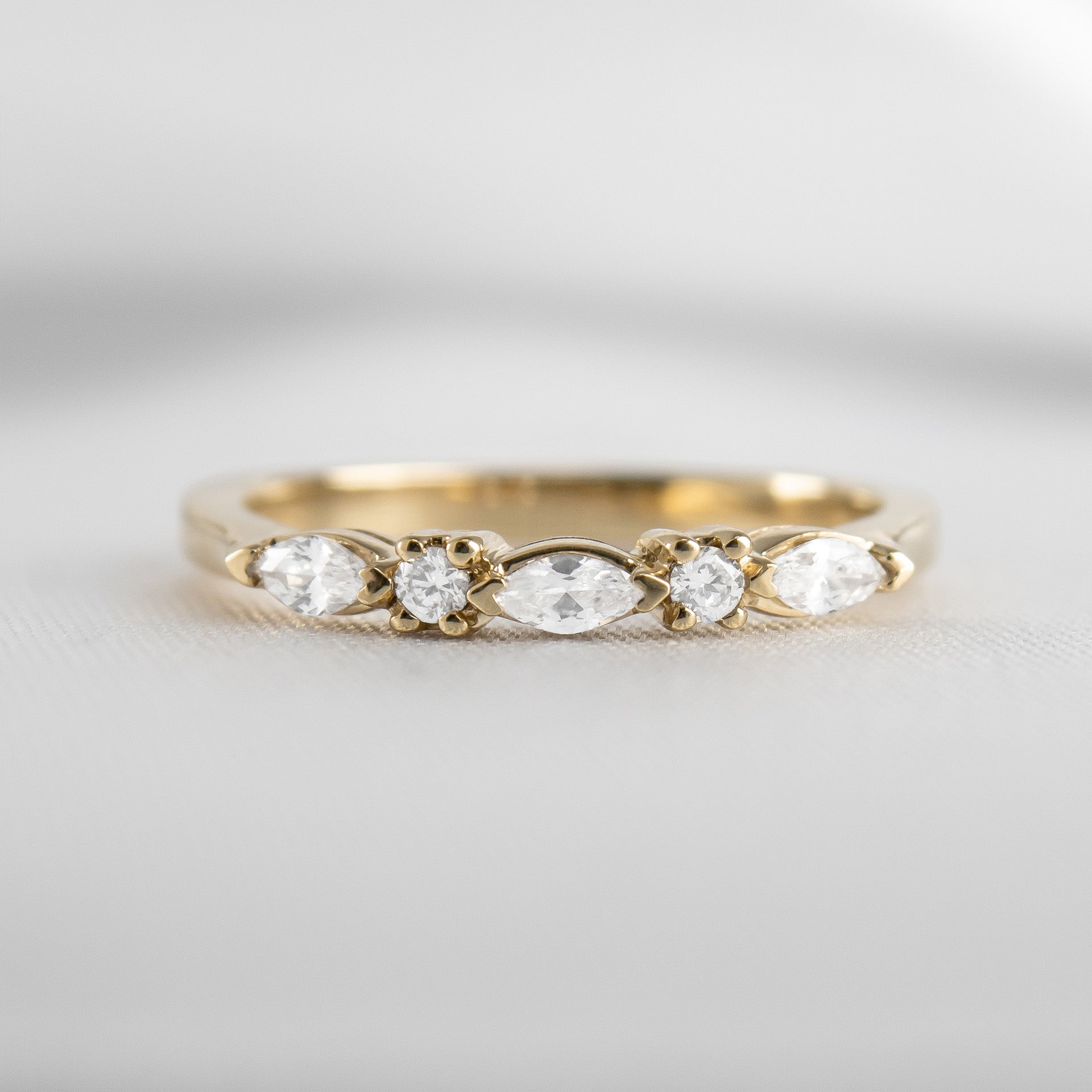
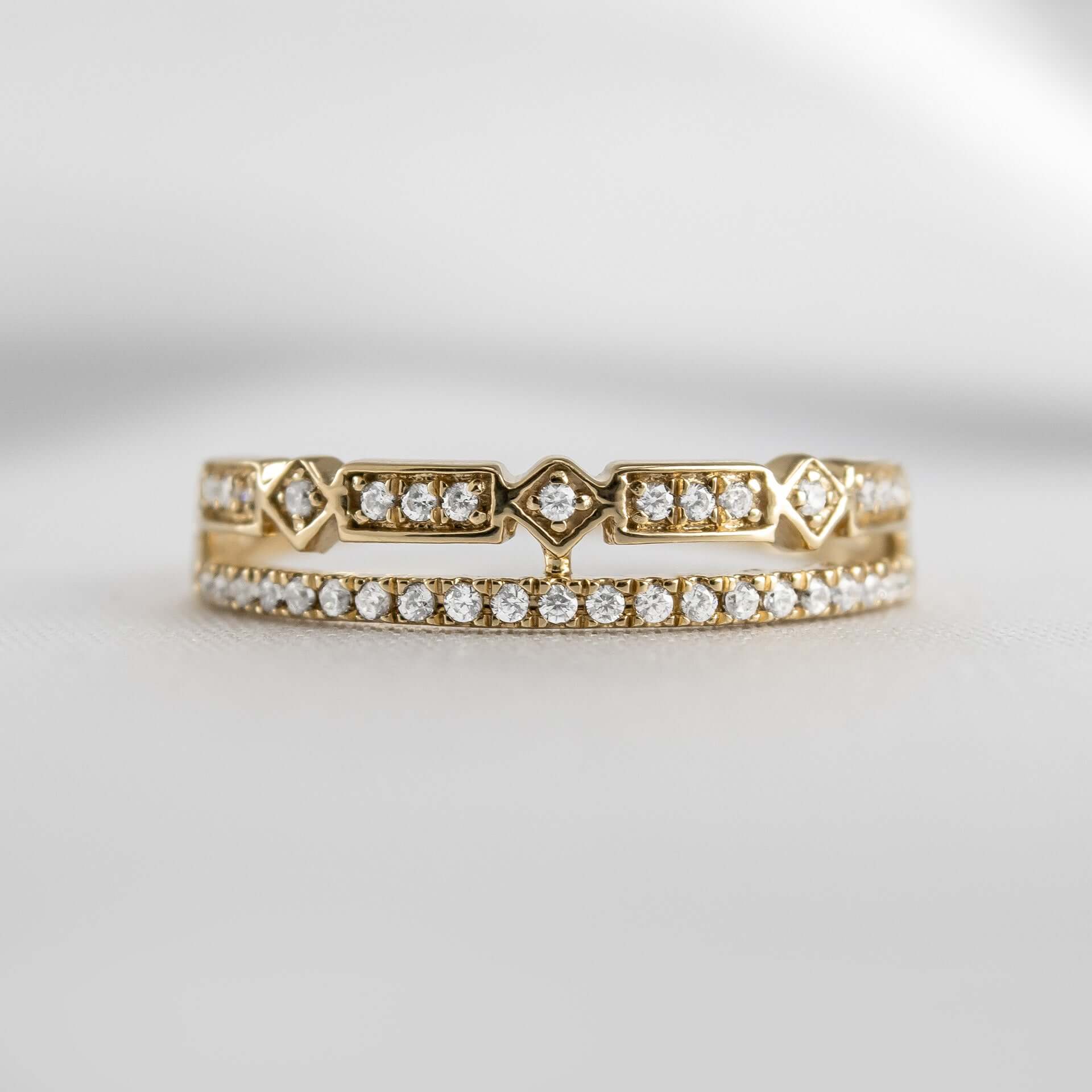
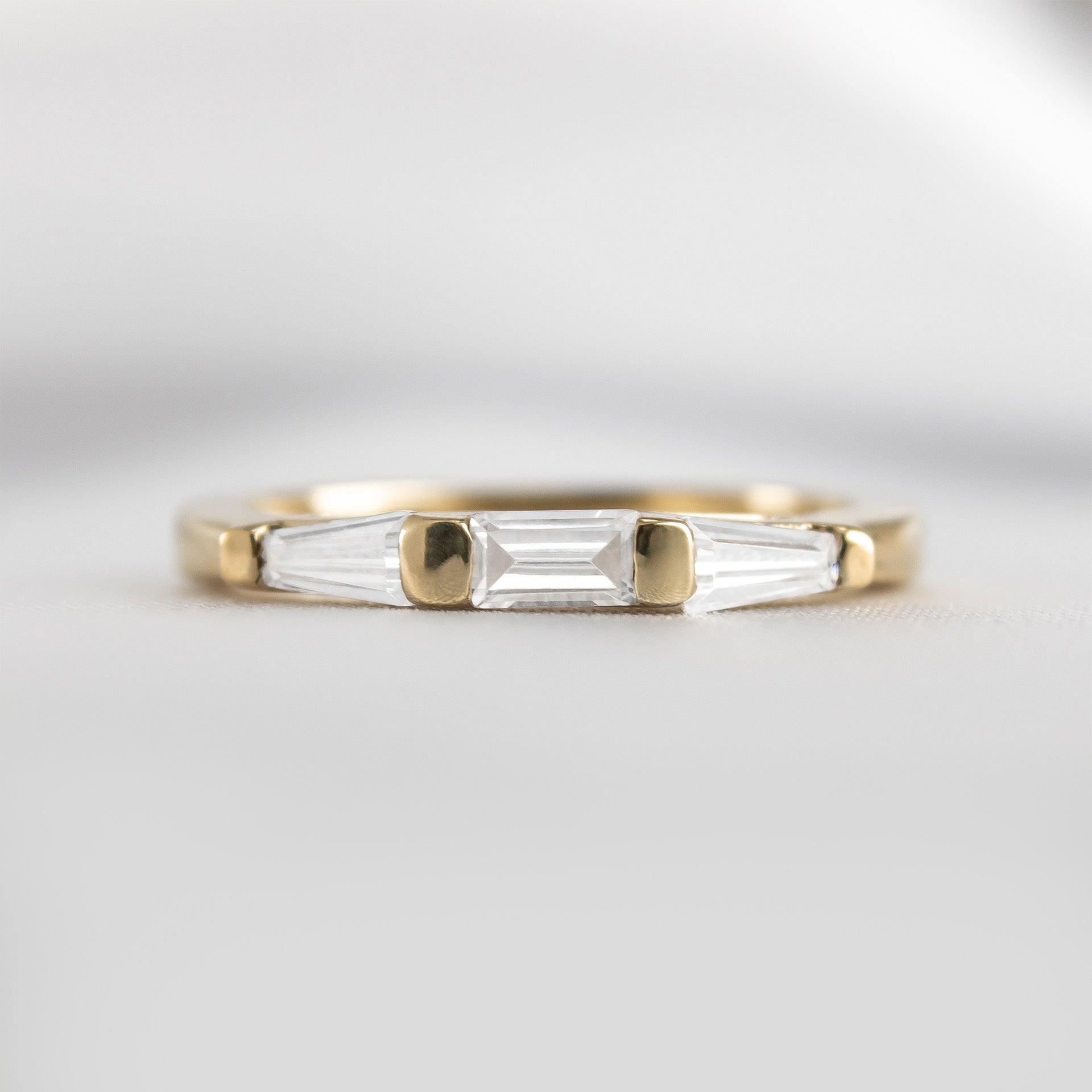
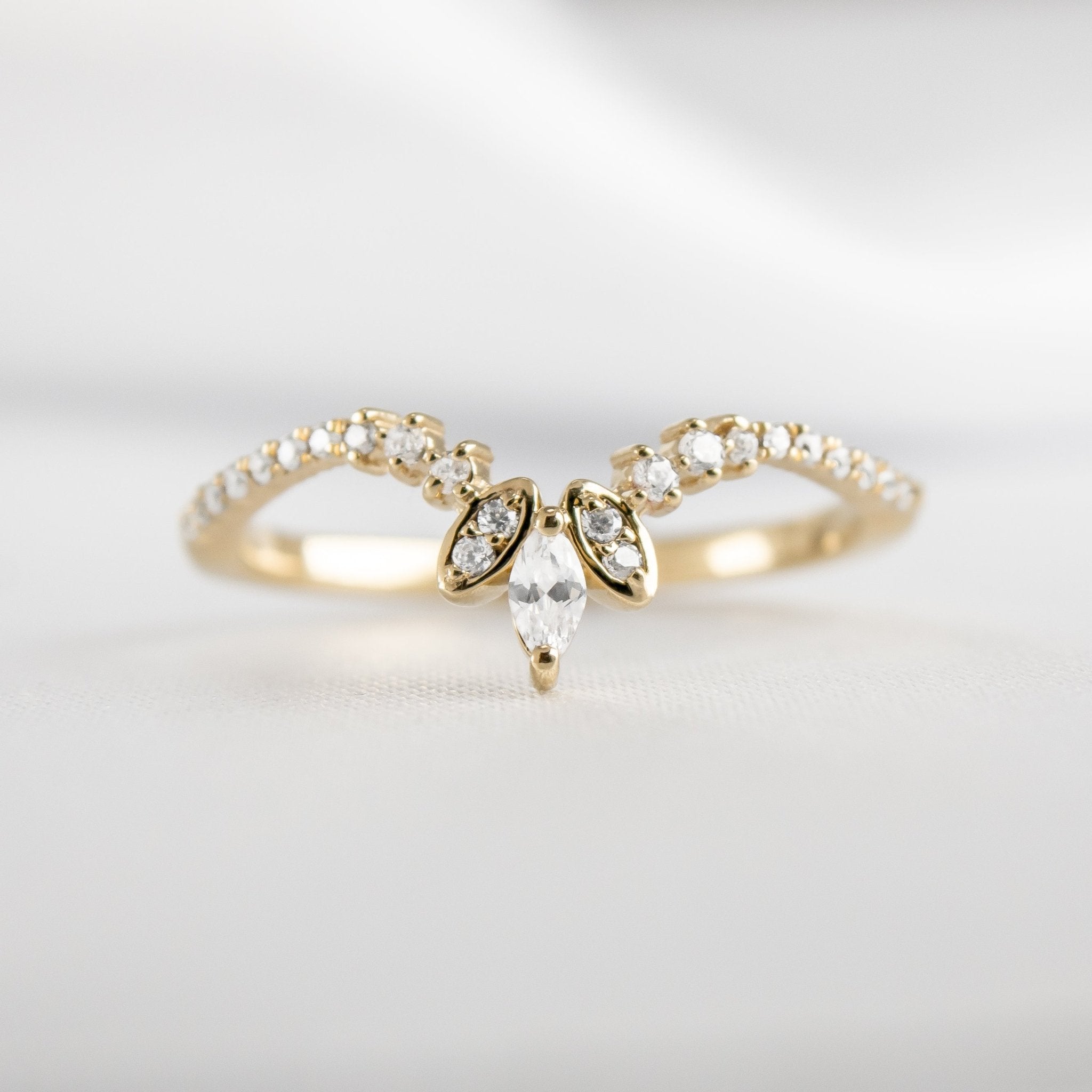
Diamond wedding rings range from narrow accent bands to substantial eternity rings carrying diamonds around the full circumference. The choice depends on how much diamond presence you want on your hand and how the wedding band will pair with your engagement ring.
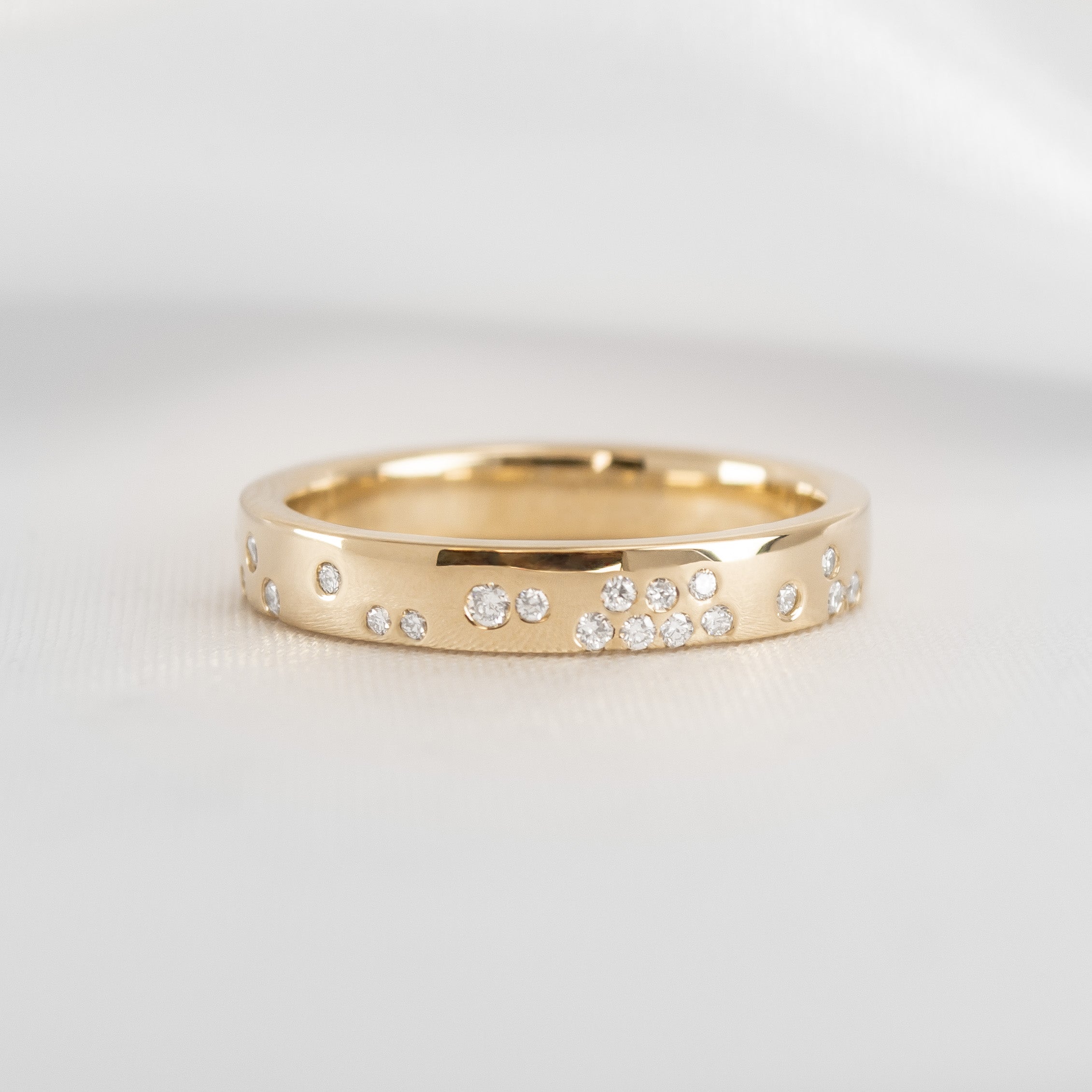
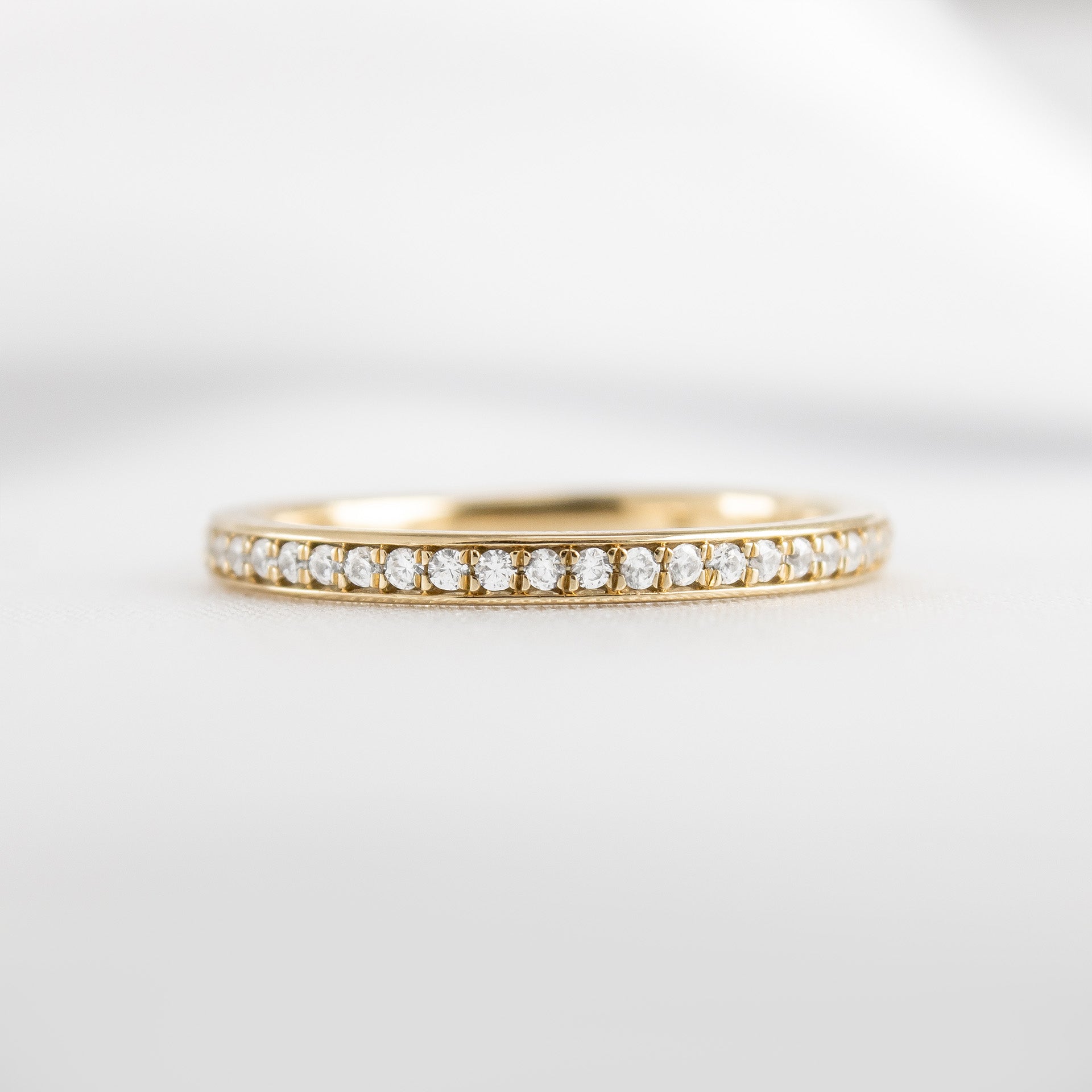
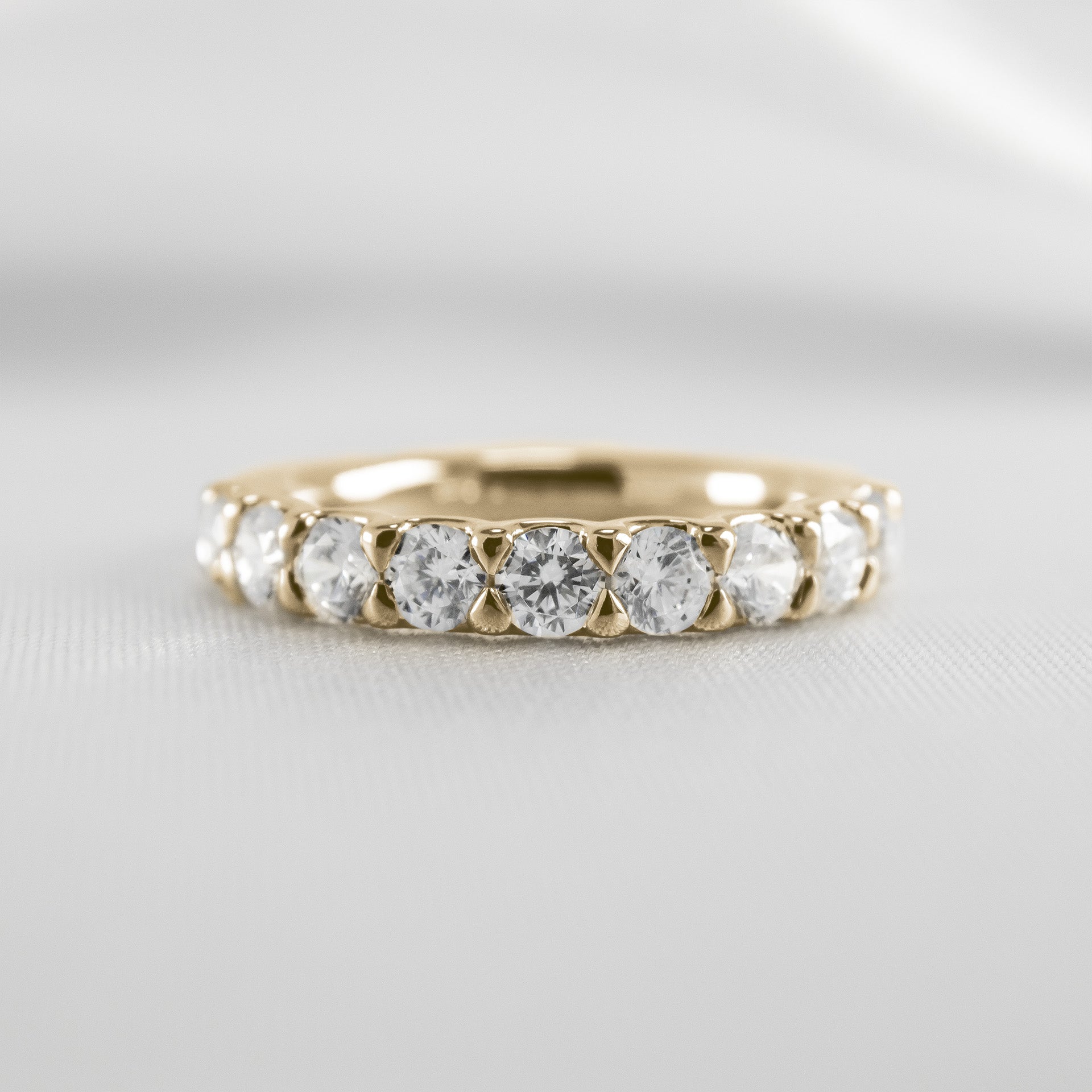
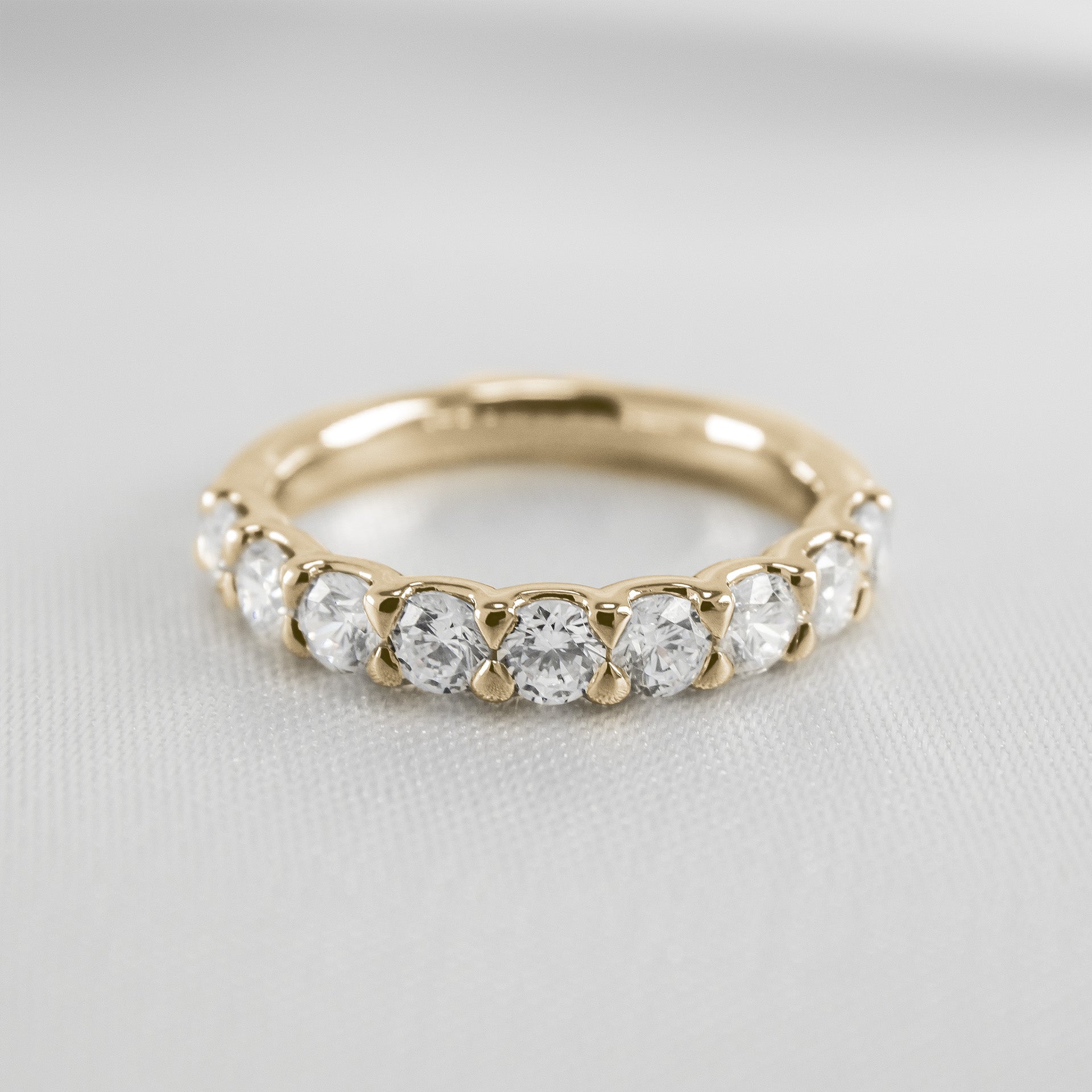
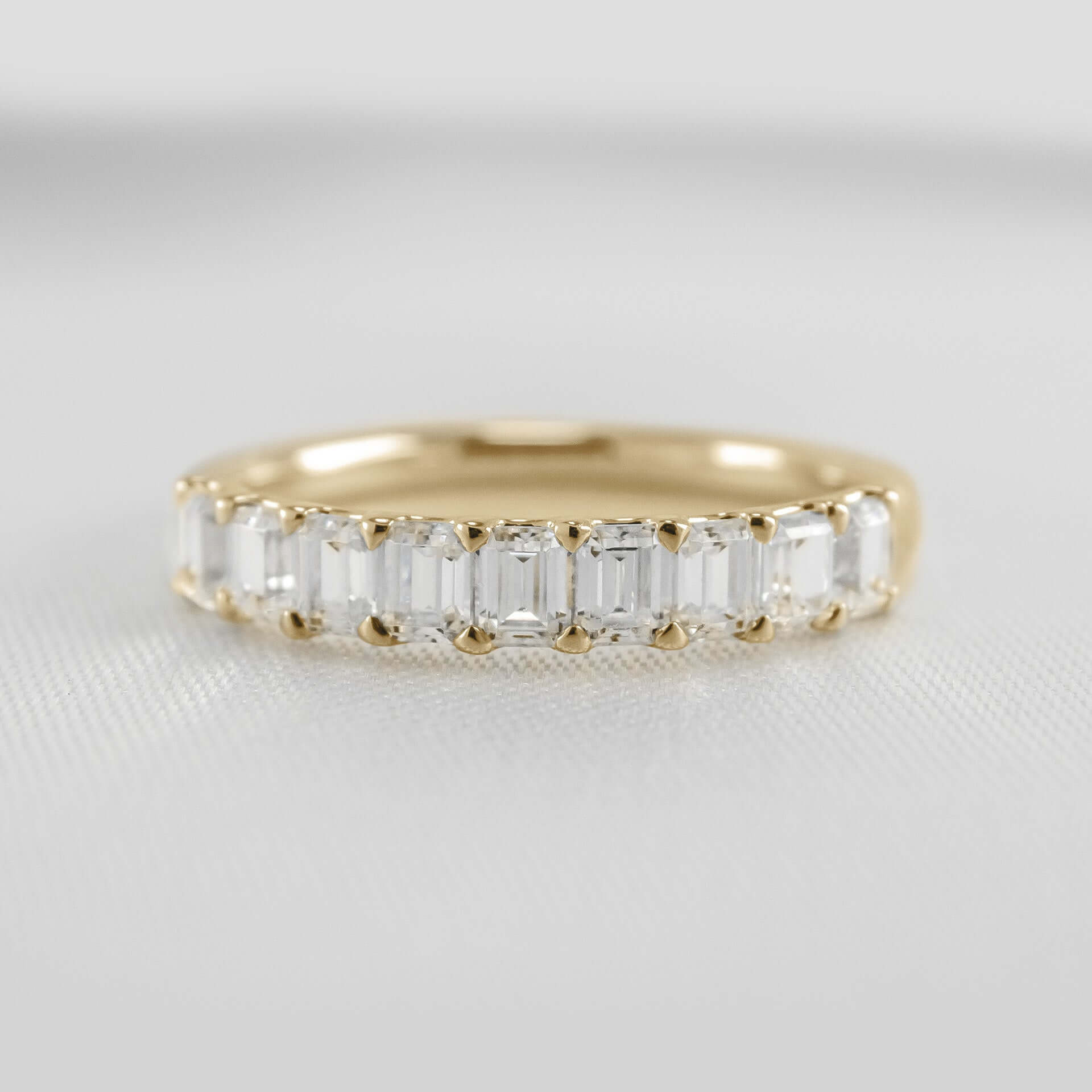
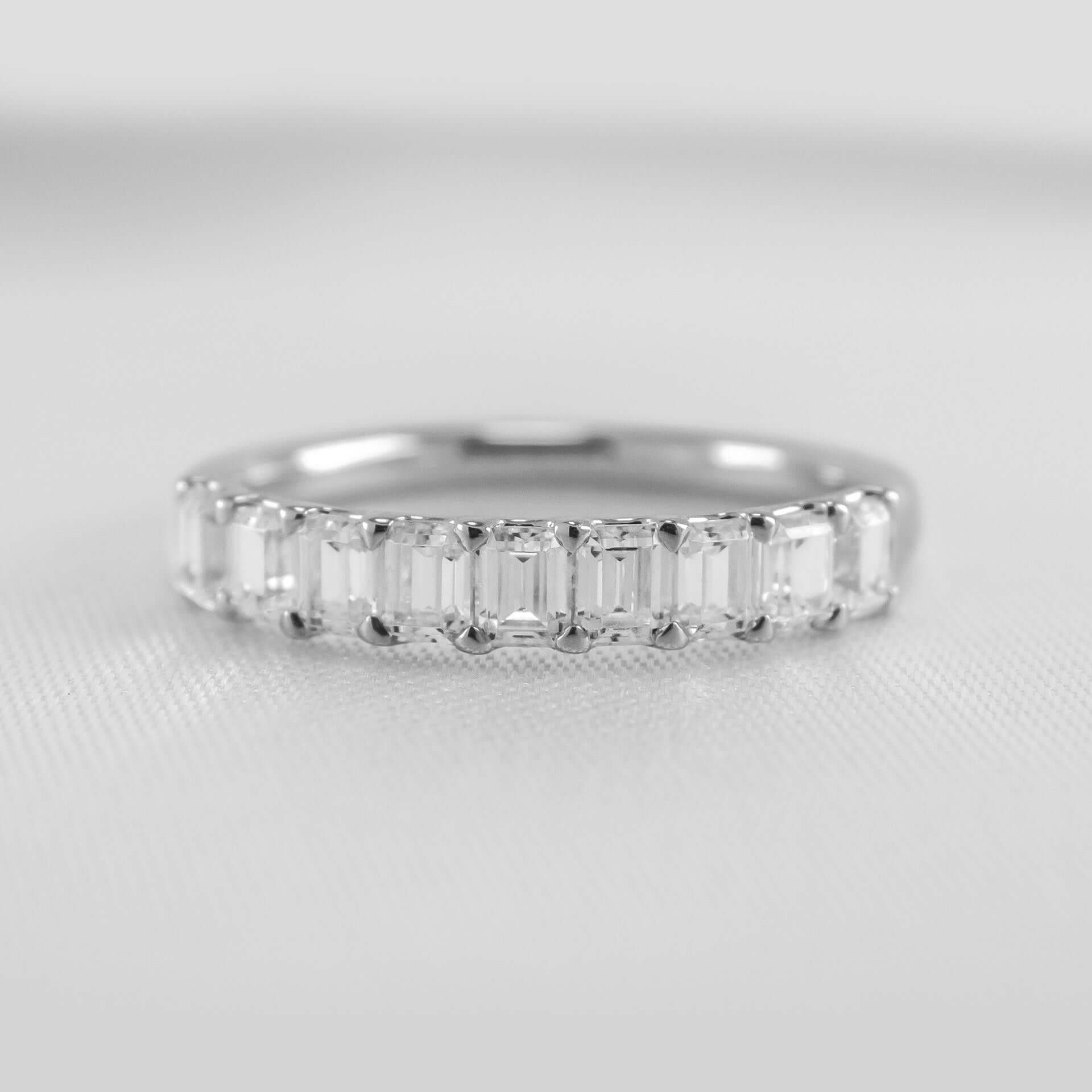
Half eternity diamond bands carry diamonds across the visible top portion of the band, leaving the underside in solid metal. The Drew, Mercer, and similar half-eternity designs read identical to full eternity bands from the wearing angle while remaining resizable in the future.
Diamond Wedding Bands and Eternity Rings
Diamond wedding rings range from narrow accent bands to substantial eternity rings carrying diamonds around the full circumference. The choice depends on how much diamond presence you want on your hand and how the wedding band will pair with your engagement ring.
Half eternity diamond bands carry diamonds across the visible top portion of the band, leaving the underside in solid metal. The Drew, Mercer, and similar half-eternity designs read identical to full eternity bands from the wearing angle while remaining resizable in the future.
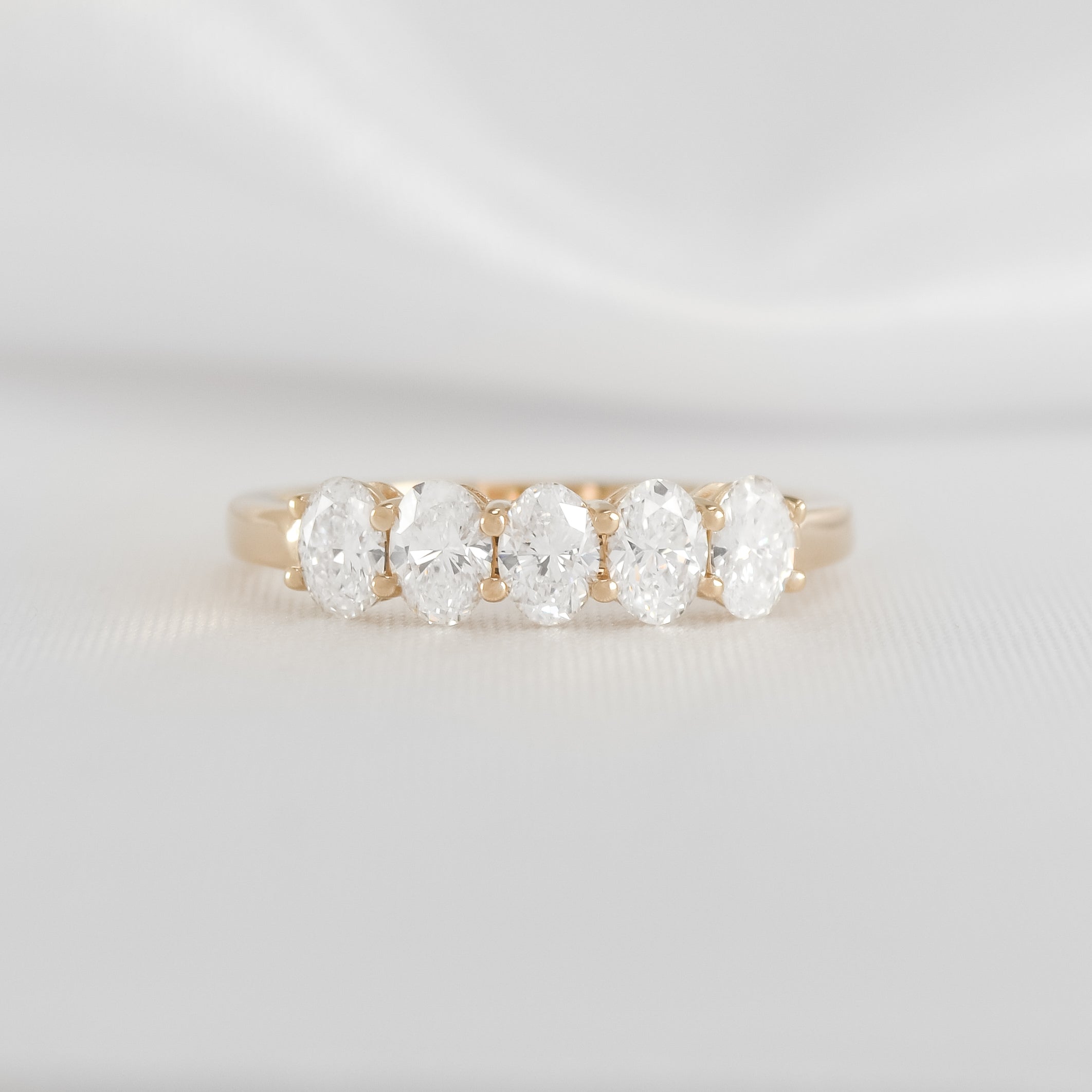
Full eternity bands carry diamonds around the entire circumference — bands like the Aniston (emerald cut), Lindon (princess cut), Mayumi (emerald cut bezel), Samara (half-bezel oval), Tristan (floating), Vashti (east-west marquise), and Blaine (baguette). Eternity bands cannot be resized after diamonds are set, so accurate sizing before crafting is critical.
Narrow diamond bands sit at the refined end of the scale — Macey at 1.5mm with channel-set pavé diamonds, Frances at 1.3mm with vintage prong setting, Naomi at 2.6mm with two parallel diamond rows. These bands read as refined accents alongside engagement rings or as delicate standalone wedding rings.
Diamond wedding rings work across most engagement ring styles — round brilliant solitaires, halo settings, three-stone designs, fancy-shape centers. The metal choice (yellow, white, rose gold, or platinum) is what coordinates the wedding band with the engagement ring it pairs with.
Curved, Chevron, and Contoured Wedding Bands
Standard wedding bands sit flat against an engagement ring. Curved, chevron, and contoured bands are shaped to fit against specific engagement ring geometries.
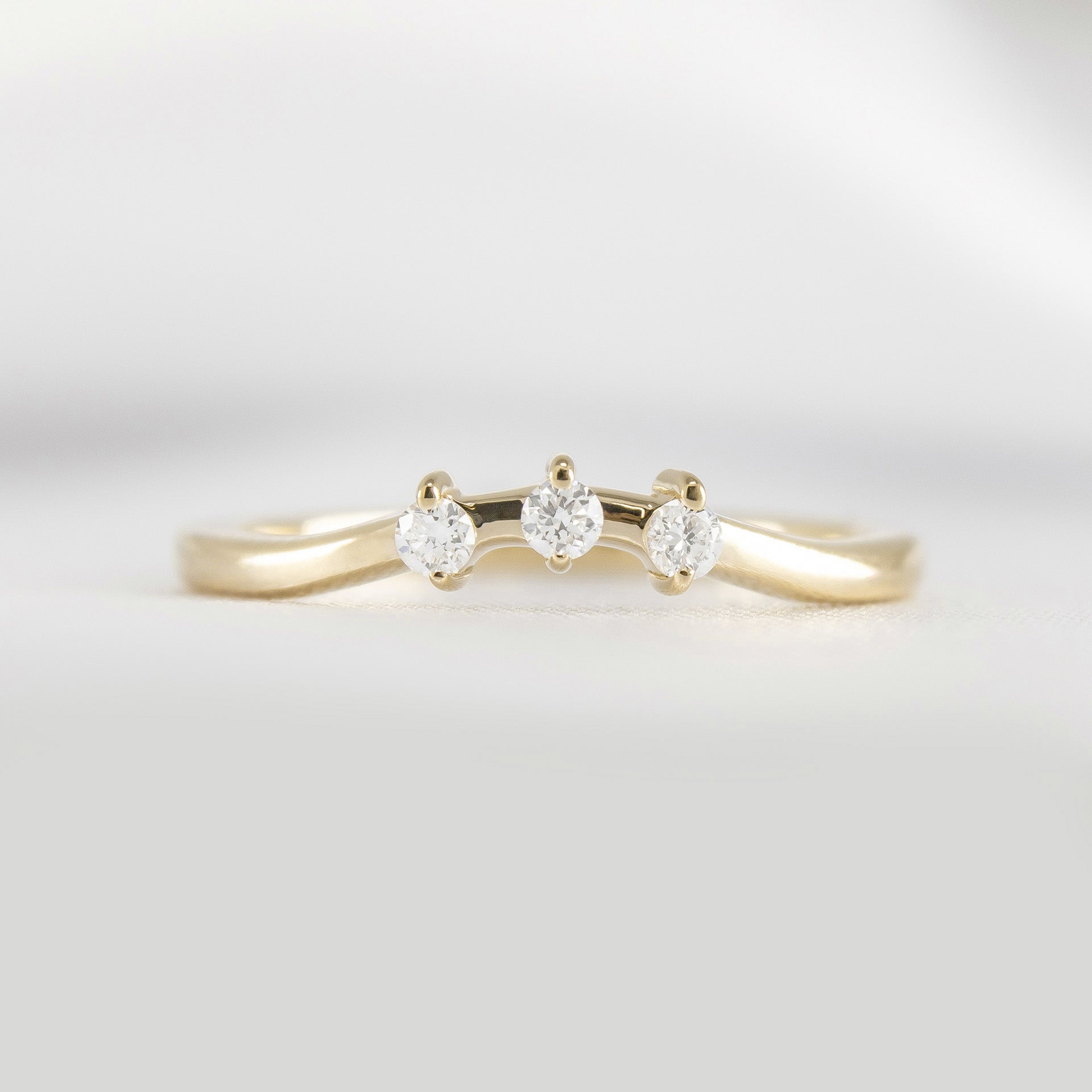
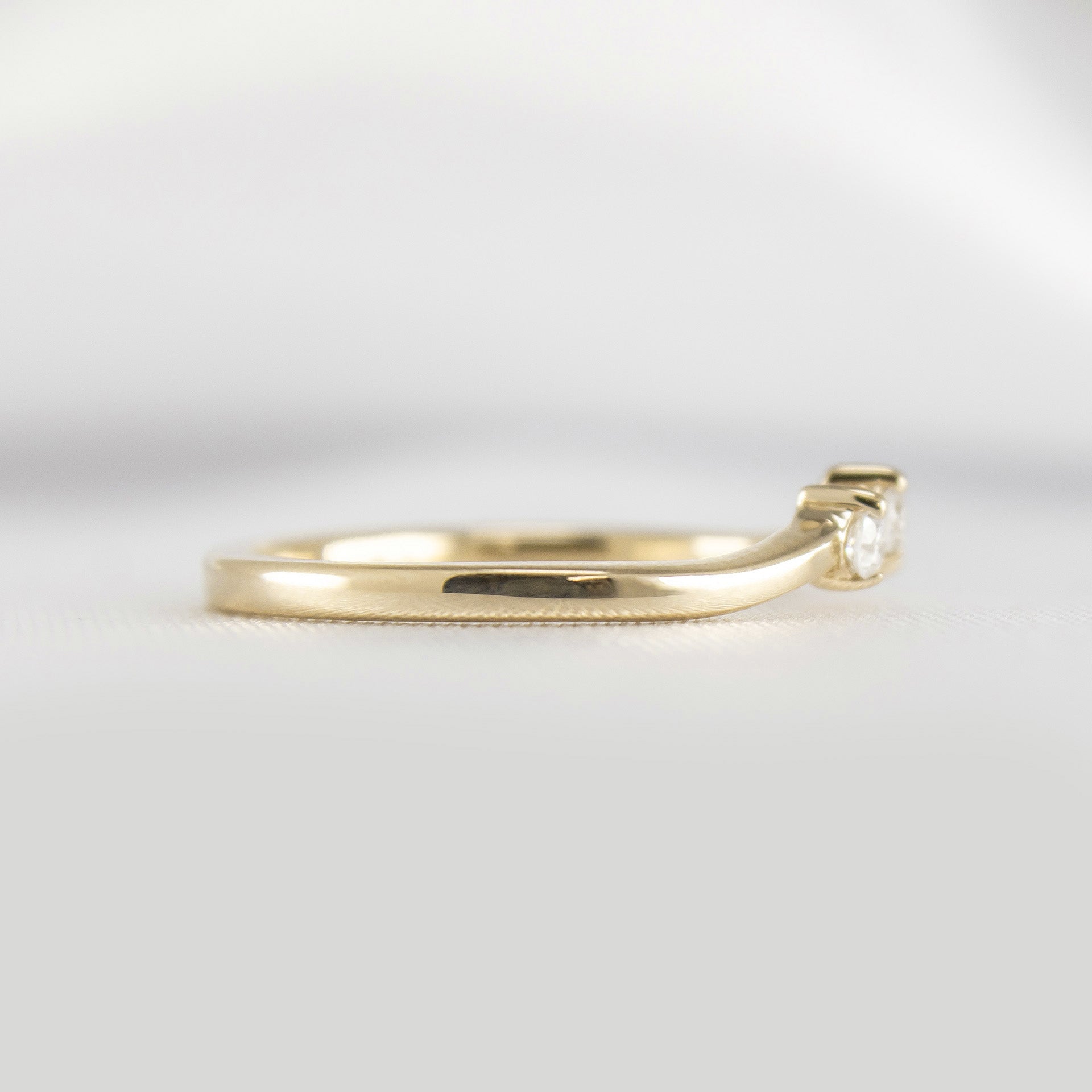
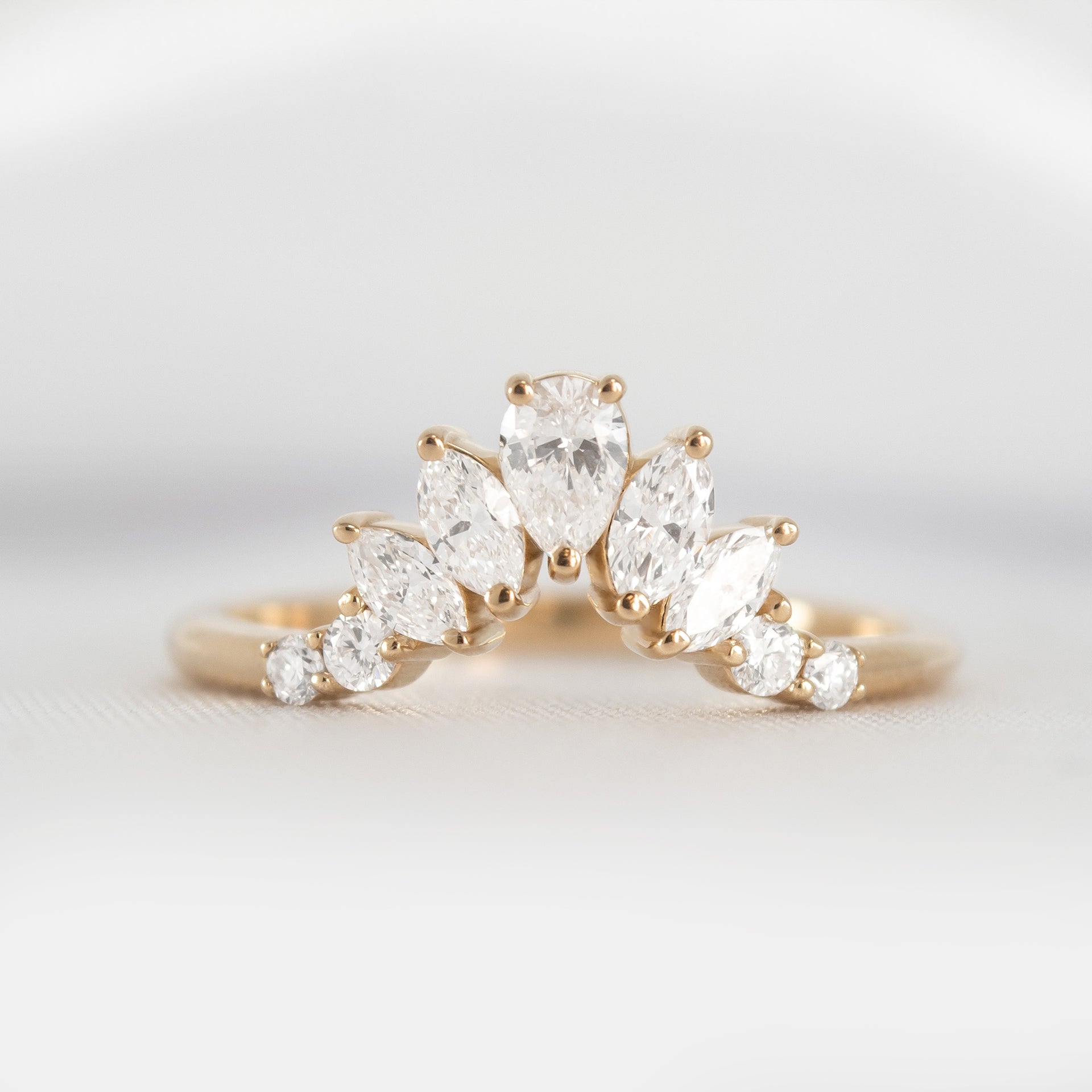
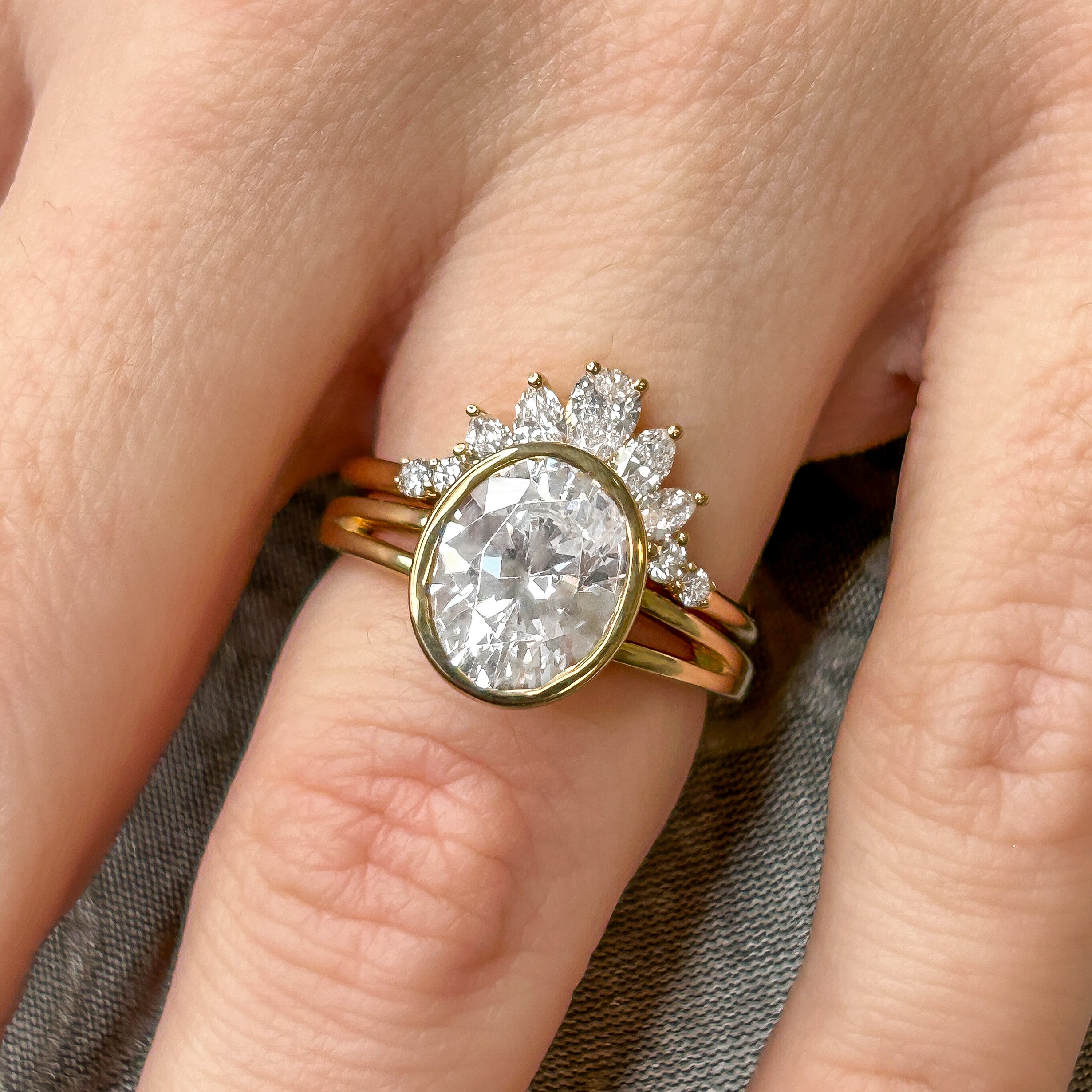
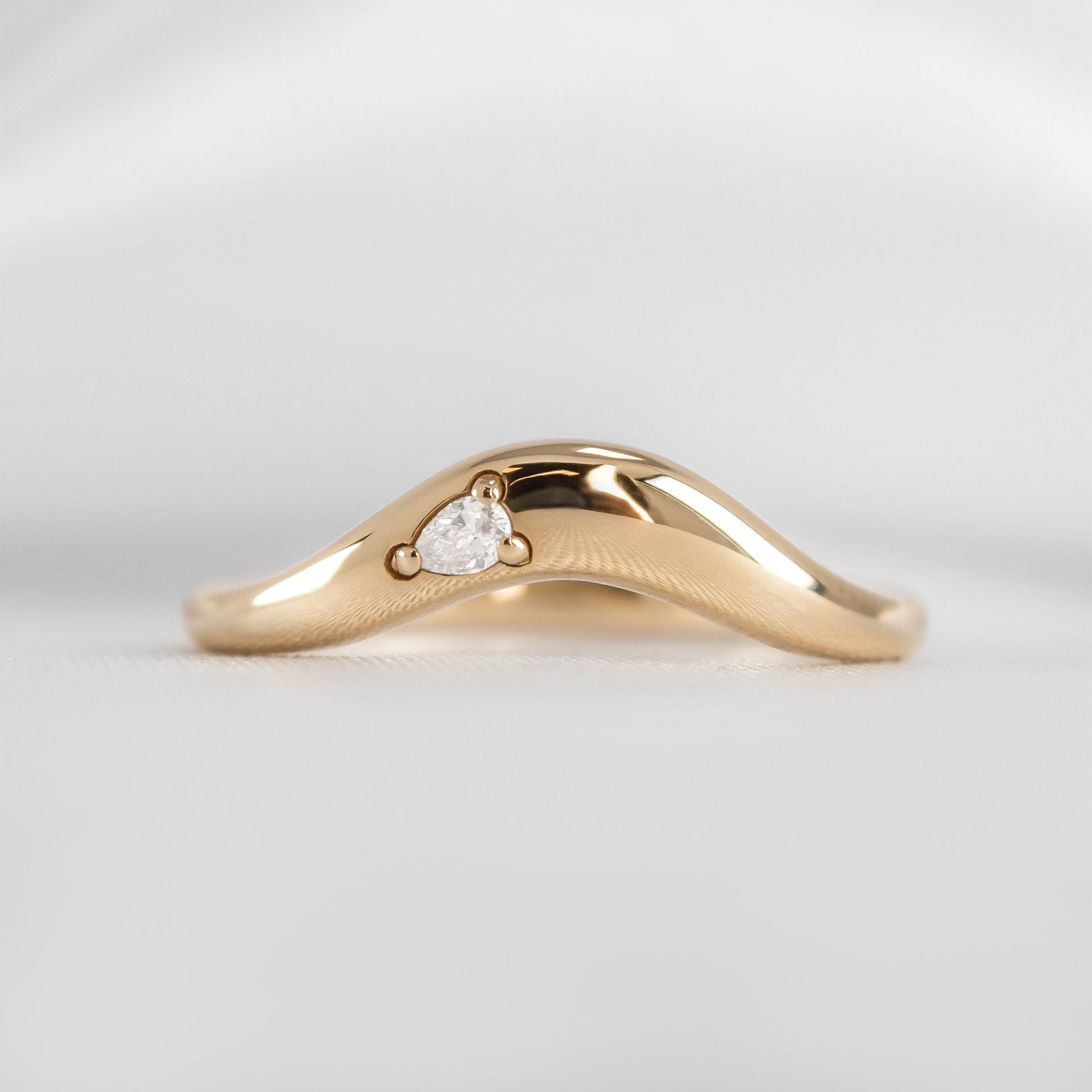
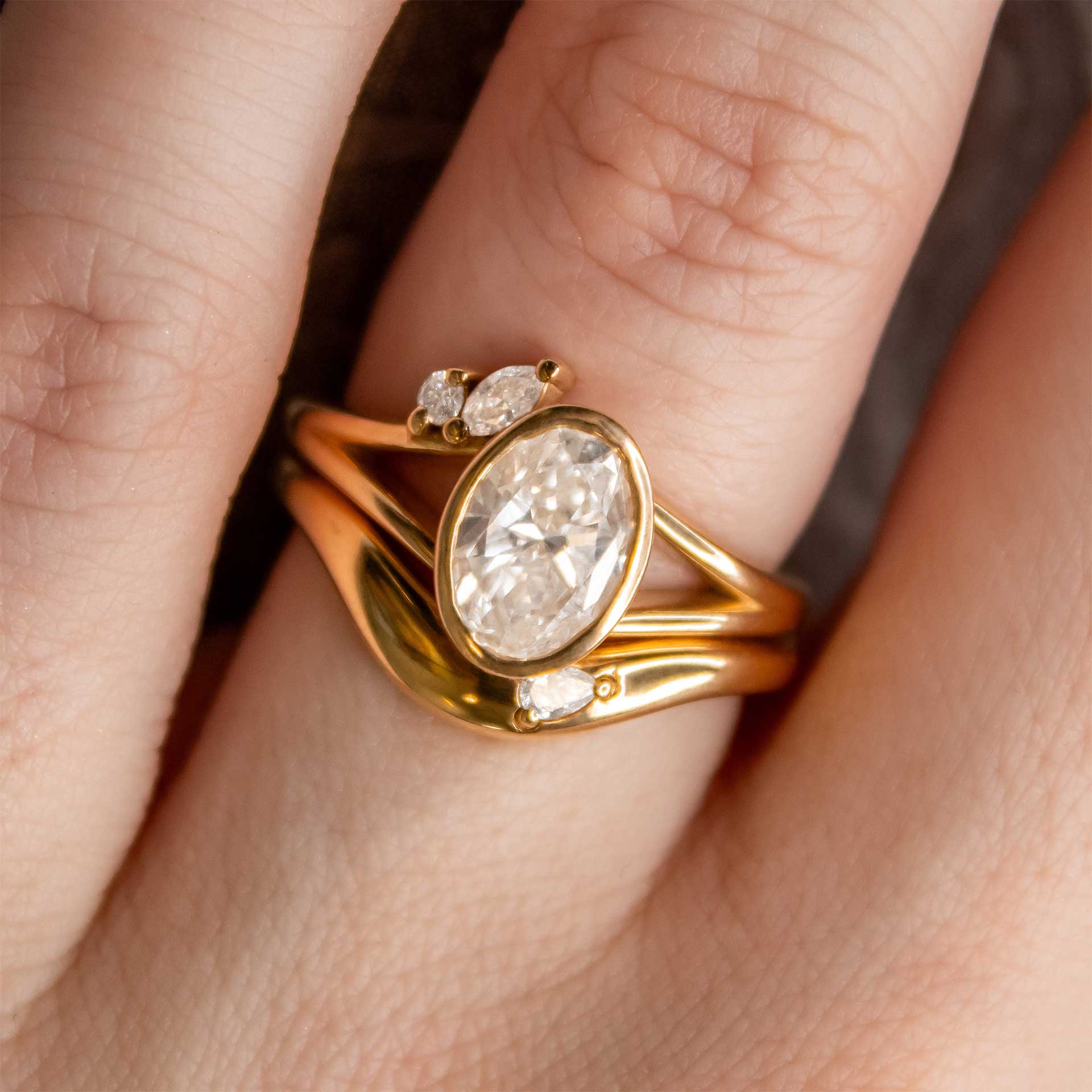
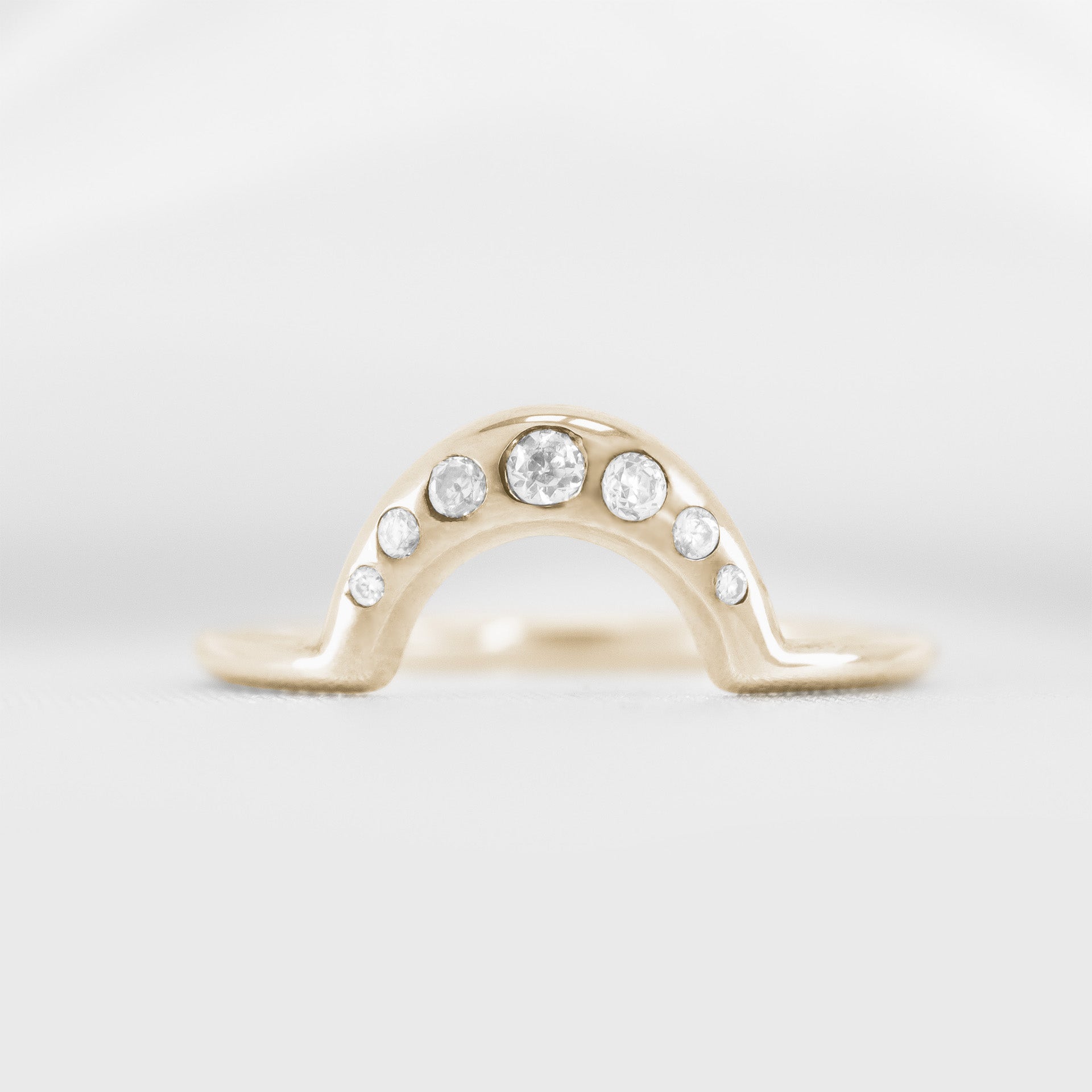
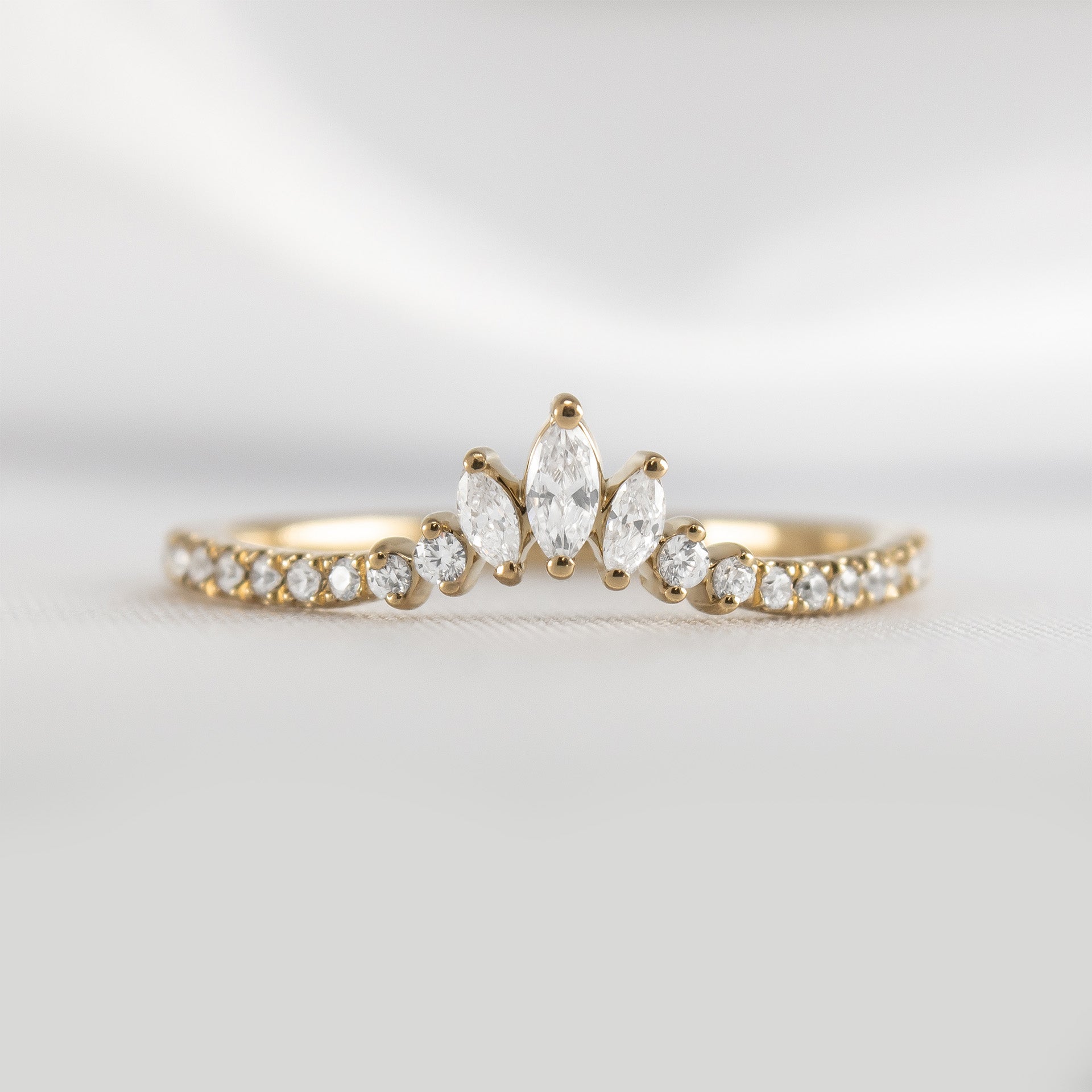
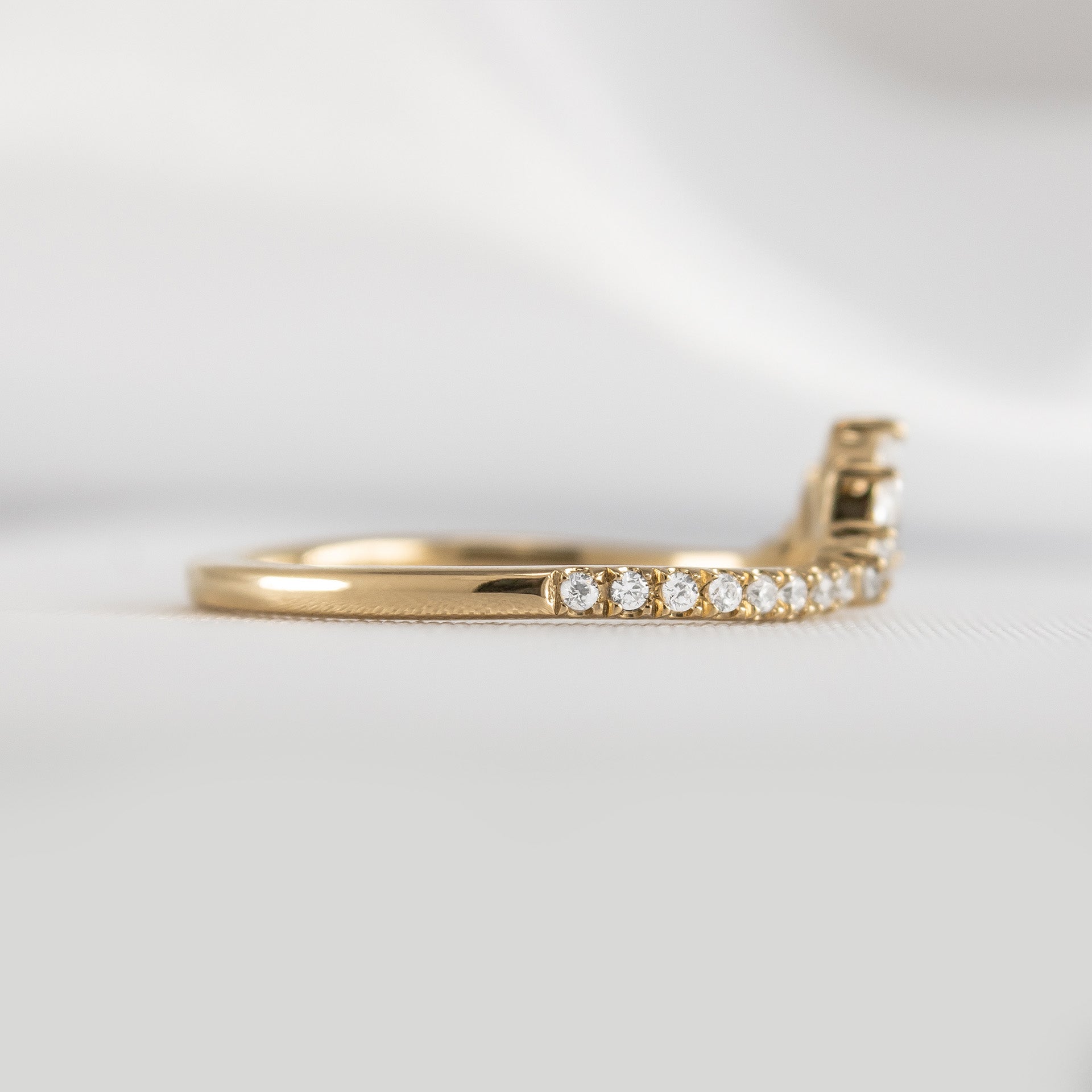
Curved wedding bands follow the inside arc of standard round and oval engagement ring shanks — the Talon (1.75mm narrow curve), Valentina (1.4mm flush pavé curve), Gabby (4.2mm tapering to 1.9mm with 0.90 carat diamonds). Curved bands nest against the engagement ring's shank, creating a flush contact along a shared arc rather than meeting at a single point.
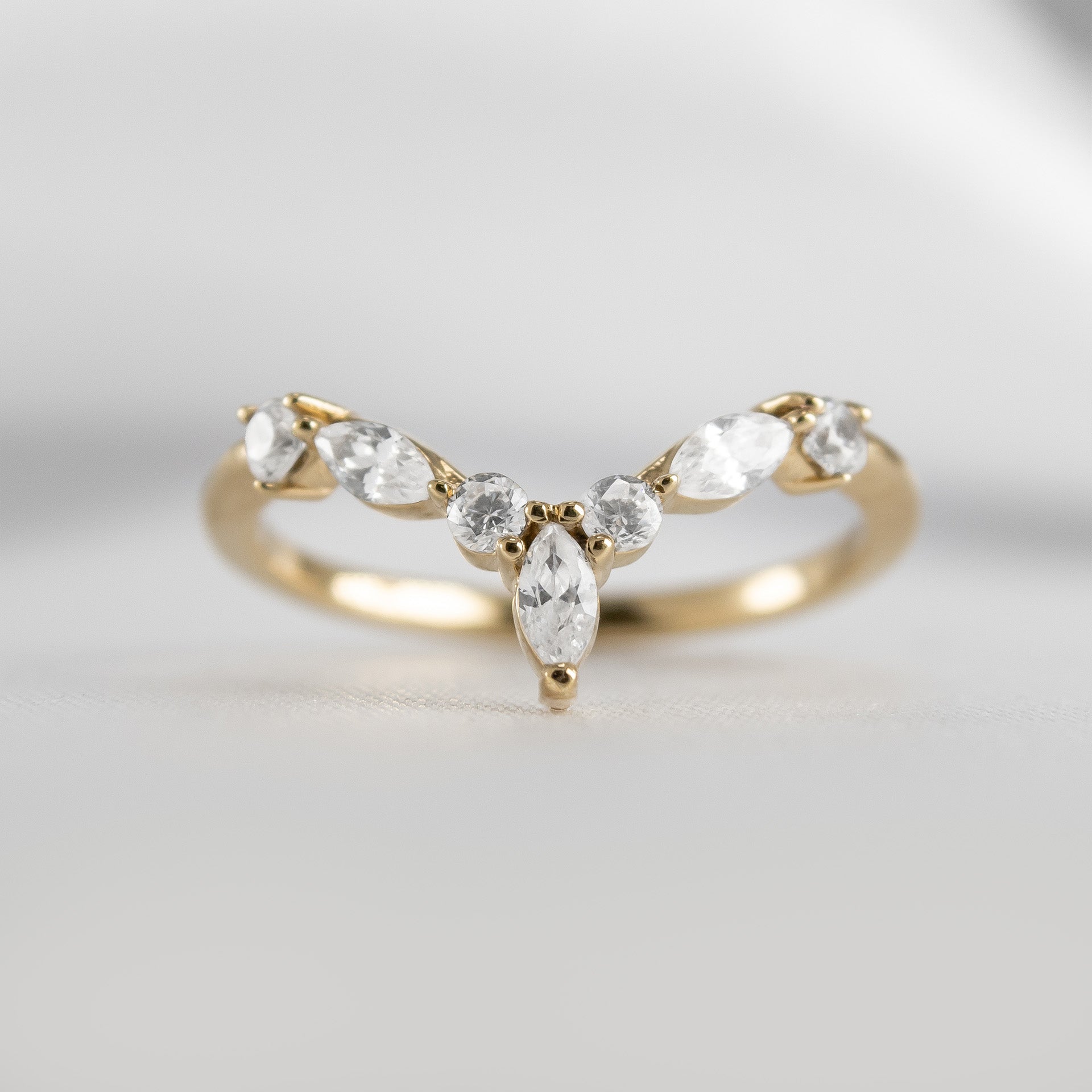
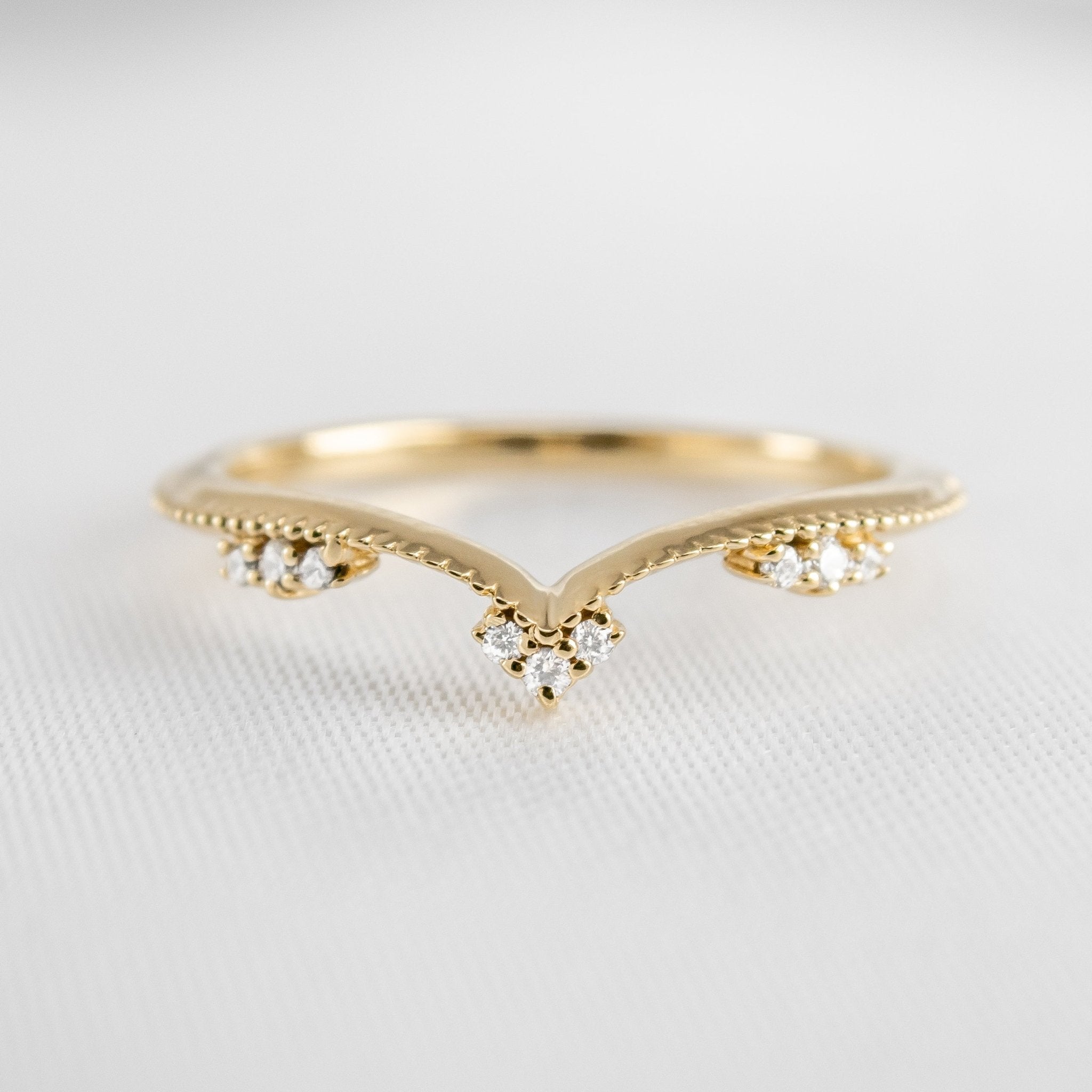
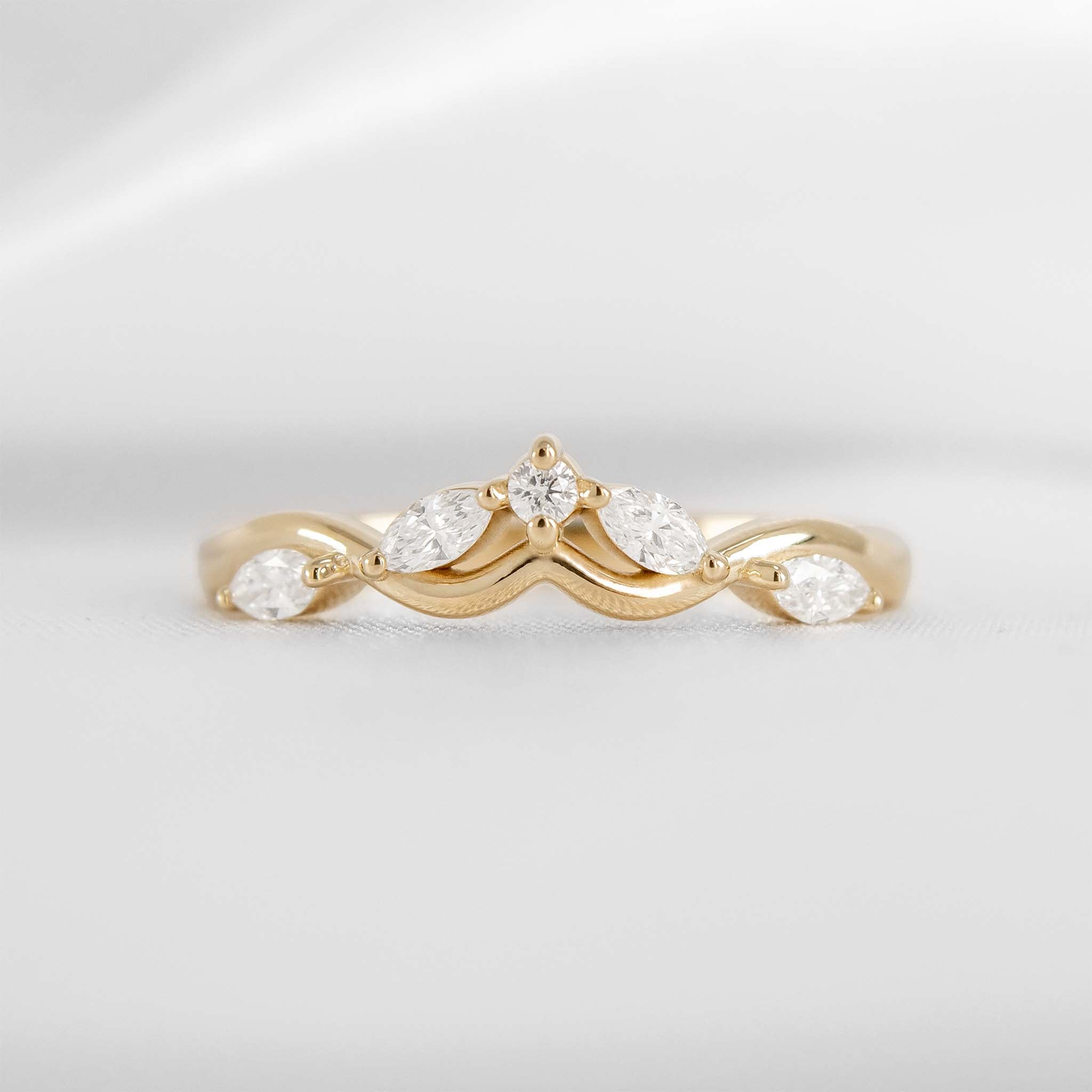
Chevron wedding bands shape into an inward V designed to fit against angular engagement rings — princess cut centers, stepped baguette settings, or art deco geometric configurations. The Halee (1.5mm prong-set chevron) and Marla (1.4mm pavé chevron) angle inward where a straight band would meet an angular engagement ring awkwardly.
Contoured wedding bands like the Zoey are shaped to the specific outline of a particular engagement ring — neither a standard curve nor a V, but a custom contour matched to one ring. Contoured bands are the most bespoke nesting wedding band format and require working with the engagement ring's exact specifications during design.
If your engagement ring has unusual geometry, a curved, chevron, or contoured band creates a more cohesive bridal set than a flat band would. We confirm fit during design to ensure the wedding band nests against your specific engagement ring correctly.
Plain Gold Wedding Bands and the Tanner Family
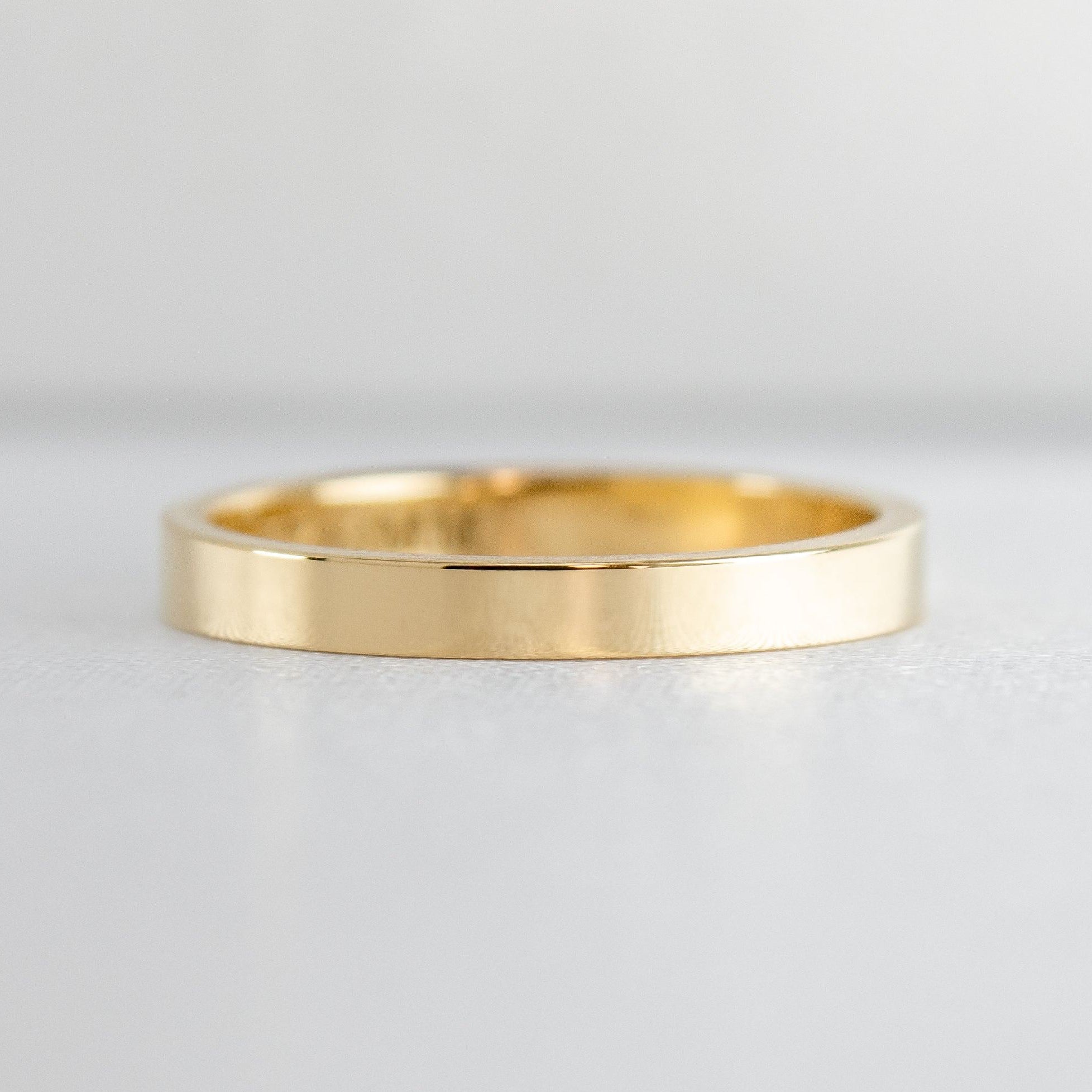
Plain gold wedding bands are the foundational wedding ring category — no diamond detail, no inlay, just gold or platinum at the wearer's chosen width. The metal and the proportion are the entire design.
The Tanner family is our plain gold wedding band collection, available in five widths from 2mm to 10mm. Every Tanner uses comfort fit construction (rounded interior for smooth daily wear) and a low domed exterior (softly rounded top surface). The widths scale across different proportions: 2mm reads as a refined thin band, 4mm is standard daily wedding ring width, 6mm reads substantial, 8mm matches traditional men's wedding band width, 10mm is statement width for wearers who want maximum metal presence.
All Tanner widths are available in 10K yellow, 10K white, 14K yellow, 14K white, 14K rose, 18K yellow, 18K white, 18K rose, or platinum. Couples often choose different widths for each partner from the same Tanner family — same design language, scaled differently to match each wearer's hand and preference. Couples also choose mixed metal pairs — yellow Tanner for one partner, white Tanner for the other — for personal preference rather than matched precious metal.
Plain gold wedding bands also include Tristan (2mm high-profile floating diamond eternity) and similar refined designs that bridge plain bands and diamond bands. For wearers who want the simplicity of a plain band with minimal diamond detail, these in-between options work well.
Vintage, Art Deco, and Twist Wedding Bands
Some wedding rings carry specific design vocabulary from earlier periods or distinctive structural choices.
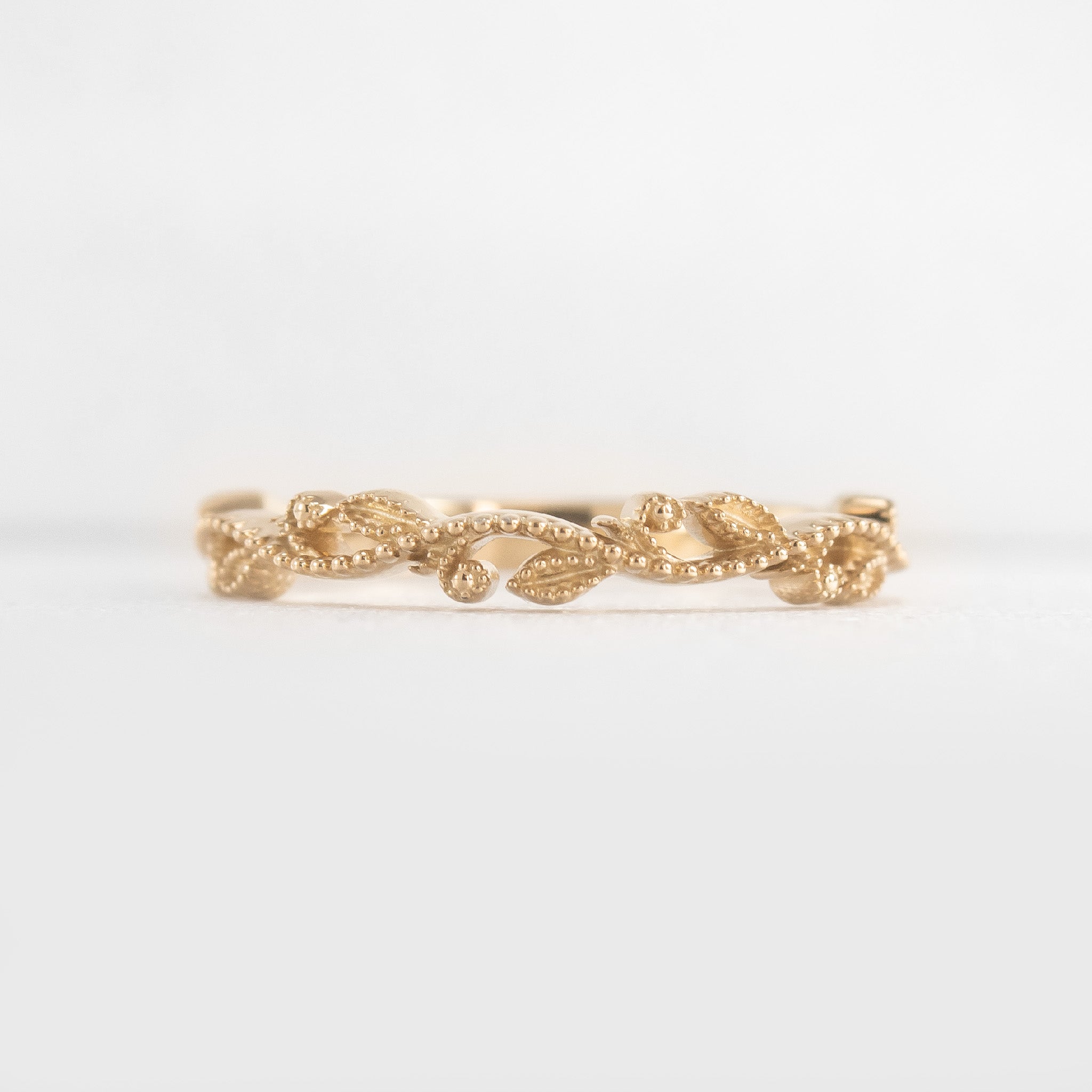
Vintage wedding bands draw on Victorian, Edwardian, and Art Nouveau jewelry traditions — milgrain edge detail, delicate proportions, prong-set small diamonds, refined narrow widths. The Frances, Matilda, and Maeve carry vintage character at varying scales. Vintage wedding bands pair naturally with engagement rings sharing antique design language — milgrain solitaires, filigree settings, rose-cut centers.
Art deco wedding bands use the geometric design vocabulary of 1920s and 1930s jewelry: flat band profiles, baguette diamonds, step-cut stones, architectural symmetry, geometric clusters. The Rene (pavé art deco), Blaine (baguette eternity), Dillon (tapered baguette with bar setting), Dominic (small-scale baguette), Bellamy and Brooklyn (art deco wedding sets) all carry art deco language. Pair best with engagement rings in matching geometric vocabularies.
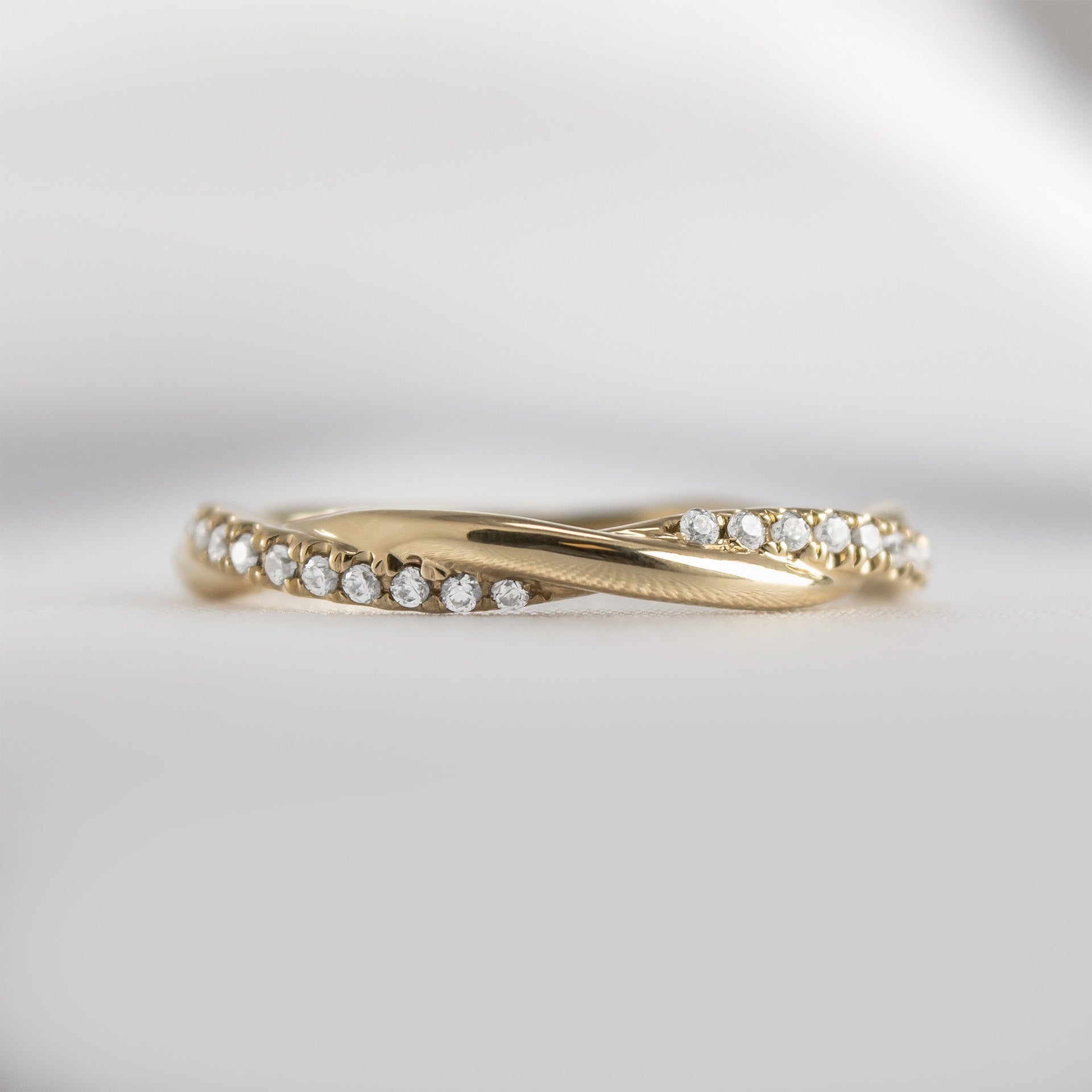
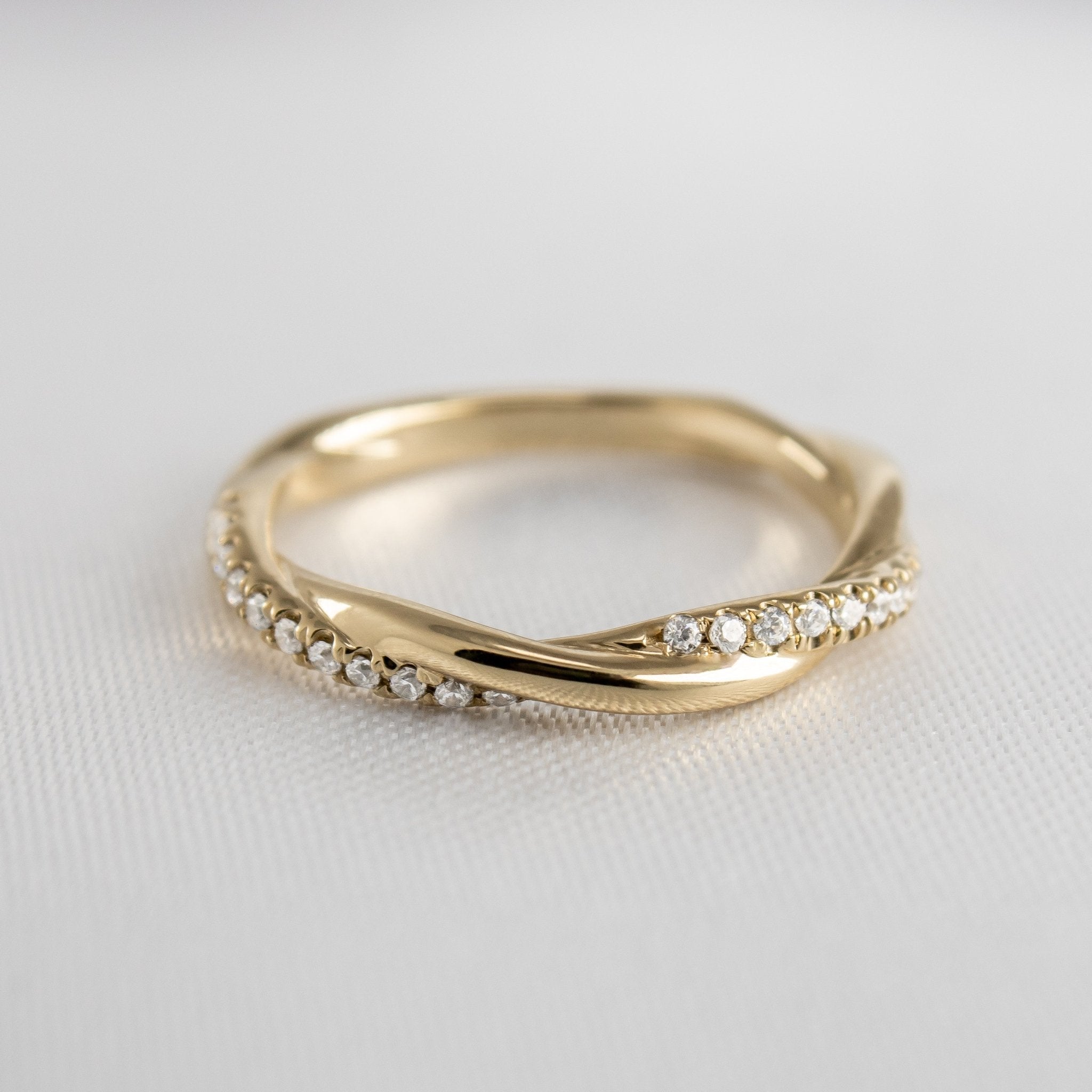
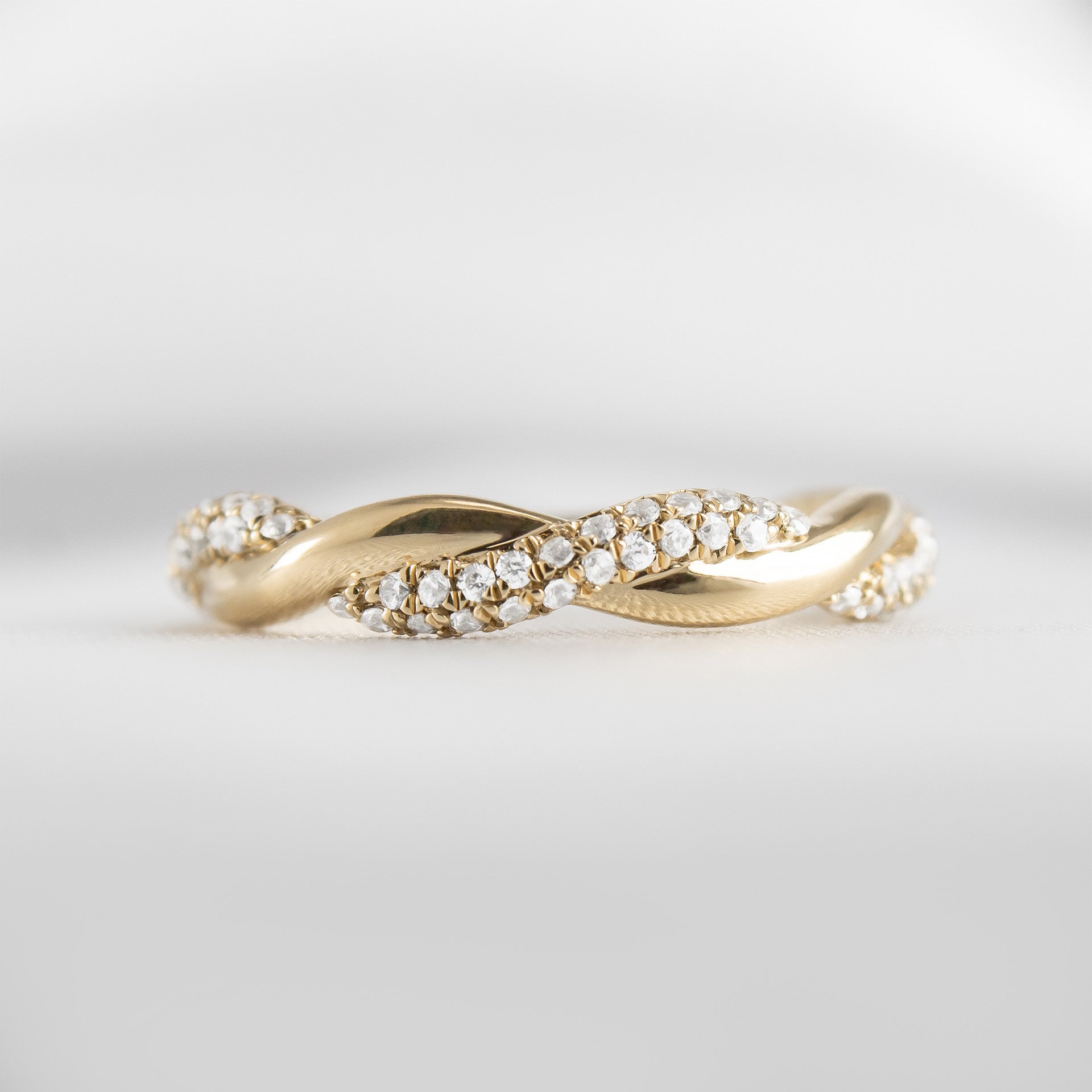
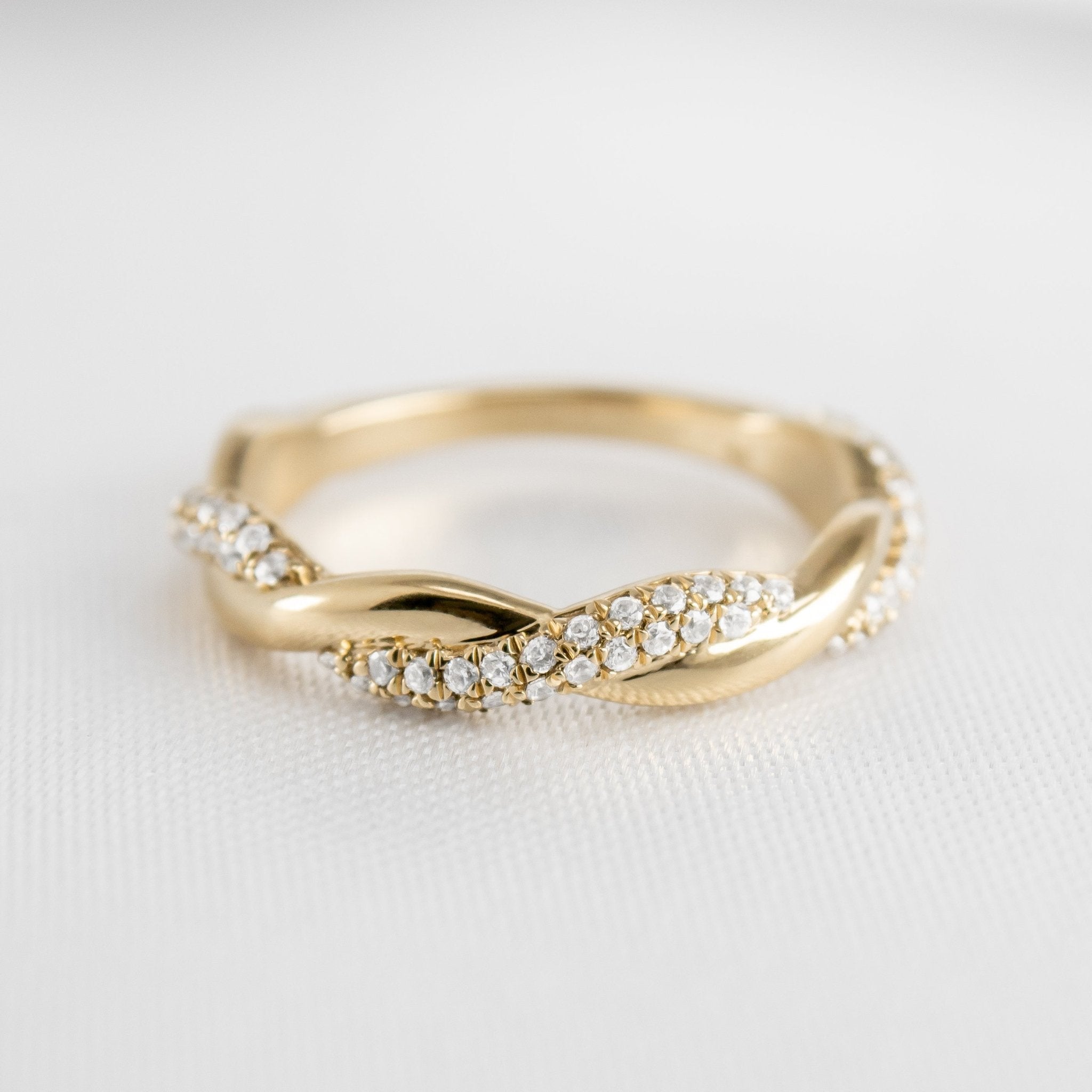
Twist wedding bands use two strands of metal turning around each other in a continuous helix — dimensional structure rather than flat band profile. The Evara (3mm prong-set diamond twist) and Milan (2.5mm pavé twist) bring twist construction into wedding ring format. Twist bands give the ring three-dimensional character that flat or domed bands can't replicate.
These design vocabularies aren't required for wedding bands — many couples choose minimal modern bands instead. But for couples drawn to specific design periods or structural character, these categories offer wedding rings that read with their own distinctive voice.
Choosing Width, Profile, and Setting Height
Three dimensions matter for how a wedding band fits and reads on your hand: width, profile, and setting height.
Width: The metal measurement across the band face, from one edge to the other. Common wedding ring widths range from 1.3mm (very narrow, refined accent scale) through 4mm (standard daily wedding band) up to 10mm (statement width for men's traditional bands). Width affects visual presence on the hand and comfort: narrower bands feel less present, wider bands feel more substantial. Couples often choose different widths for each partner.
Profile: The shape of the band's top surface. Flat profiles read geometric and architectural. Low dome profiles round the top slightly for a softer visual line and more comfort. High dome profiles raise the band's top further from the finger. Curved or chevron profiles shape the band for engagement ring fit. Most daily-wear wedding bands use low dome or flat profiles; chevron and curved profiles are specific to nesting designs.
Setting Height: For diamond wedding bands, how high the diamonds sit above the band surface. Low setting height keeps diamonds flush with the band face — smoother for daily wear, less visible from the side. Medium and high settings raise the diamonds for more visible brilliance from multiple angles but can catch on fabric or sit more prominently on the finger.
These dimensions interact — a high-profile band with high-set diamonds reads very prominent; a low-profile band with low-set diamonds reads refined. Most couples settle on a combination during the design conversation based on how the ring should feel and read.
Pairing With Your Engagement Ring
Wedding bands are typically chosen to coordinate with the engagement ring they'll be worn alongside. The pairing decisions involve metal, width, and design vocabulary.
Metal match: Most couples choose a wedding band in the same metal as the engagement ring — yellow gold engagement ring with yellow gold wedding band, white gold with white gold, platinum with platinum. Mixing metals (a white gold engagement ring with a yellow gold wedding band, for example) is increasingly common and can be a deliberate design choice rather than a coordination problem.
Width proportion: The wedding band's width should typically be narrower than or equal to the engagement ring's shank width. A 2mm engagement ring shank with a 4mm wedding band creates a visual imbalance where the wedding band overpowers the engagement ring. Narrower wedding bands (1.5-2.5mm) work well alongside delicate engagement rings; wider wedding bands (3-4mm) need engagement rings with substantial shanks.
Design vocabulary: Vintage engagement rings pair best with vintage wedding bands; art deco with art deco; modern minimal with modern minimal. Mixing vocabularies — a vintage milgrain engagement ring with a chevron art deco band, for example — can be a deliberate choice but works best when both rings carry their own clear identity that doesn't read as a coordination accident.
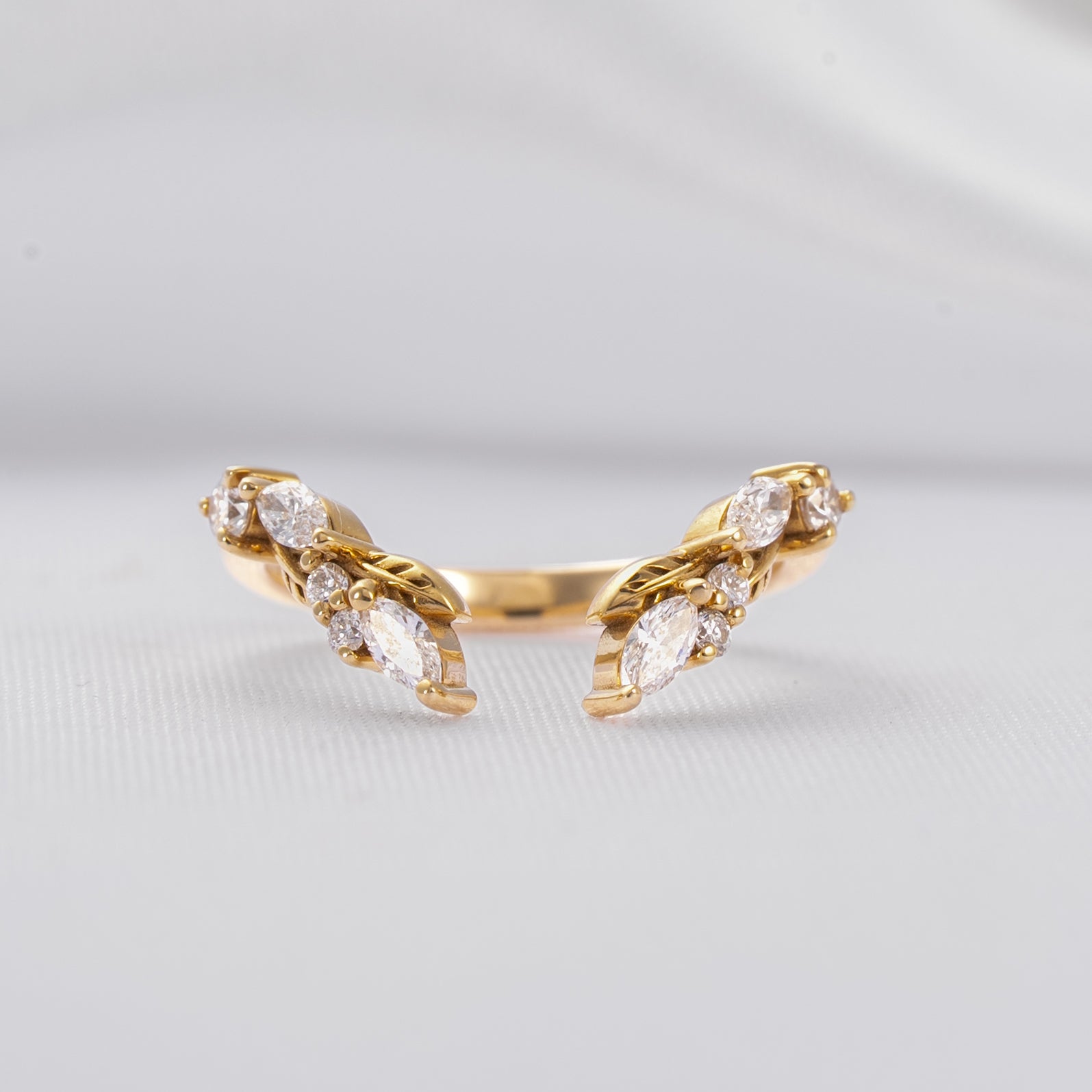
Nesting fit: For engagement rings where the center stone projects significantly below the shank, a curved or chevron wedding band creates a flush fit where a flat band would either gap or overlap. The Marlowe leaf curved open band is designed for engagement rings with substantial center stones; the Halee chevron is designed for angular engagement rings.
Quality, Care, and Lifetime Service
Wedding rings are made for lifetime daily wear. The construction quality determines how the ring holds up to that wear, and the service we provide determines what happens when the ring needs attention.
Every wedding ring in this collection is crafted to fine jewelry standards — diamonds set with secure prong, bezel, channel, or pavé construction; gold or platinum alloyed to the correct specification for jewelry; finishes (brushed, polished, milgrain) applied with appropriate technique. Gold and platinum wedding bands are made-to-order in our New York workshop; alternative metal bands are sourced through a specialized supplier.
For care across daily wear: remove rings before heavy manual work, gym workouts with weights, gardening, or activities involving harsh chemicals or solvents. Clean with warm soapy water and a soft cloth as needed; have rings professionally cleaned annually. Diamond bands benefit from annual prong inspection to catch any loosening before a diamond is lost — this is a free service we provide for any ring we've crafted.
For long-term service: gold and platinum wedding rings can be resized as finger size changes over decades. Diamond wedding rings can be re-tipped (replacing worn prongs) or have settings replaced. Alternative metal rings cannot be resized but carry a lifetime sizing exchange warranty. Engraving can be added later if not chosen at the original purchase. Contact us for any service needs — we maintain records of every ring we craft and can support repair, resize, or refurbishment work indefinitely.
Wedding Rings — Frequently Asked Questions
Do you ship wedding rings nationally and internationally?
