




Gold Wedding Rings
Gold Wedding Bands
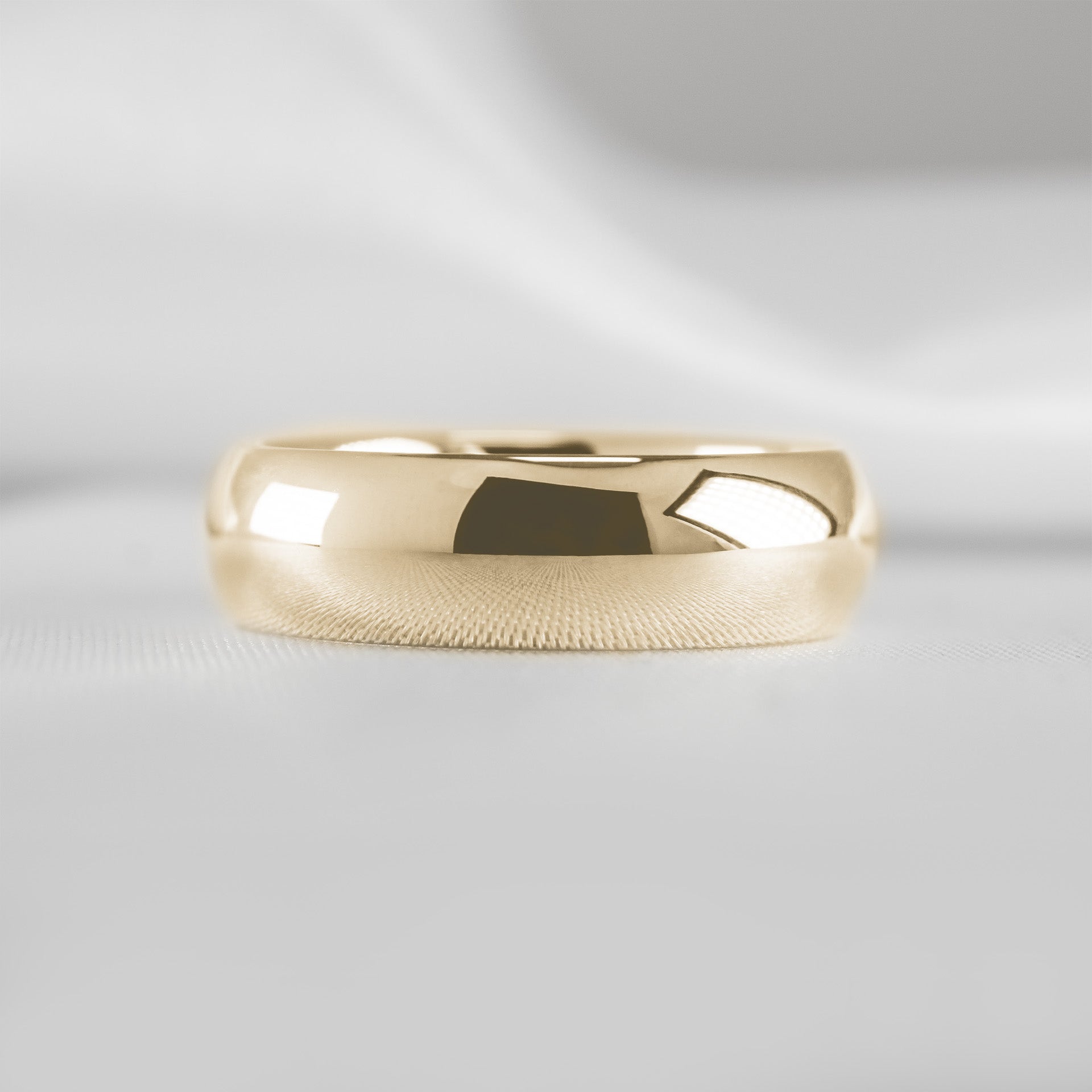
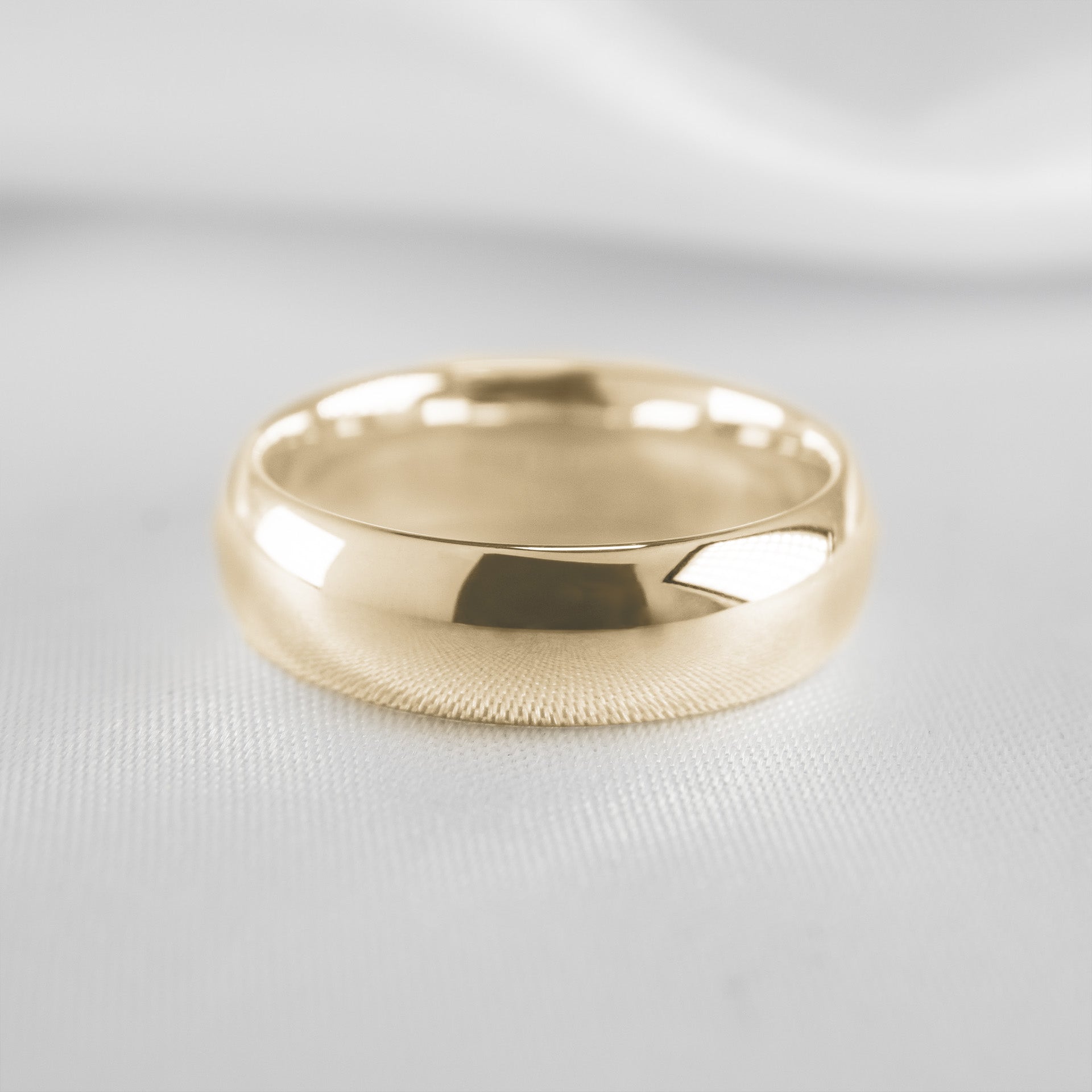
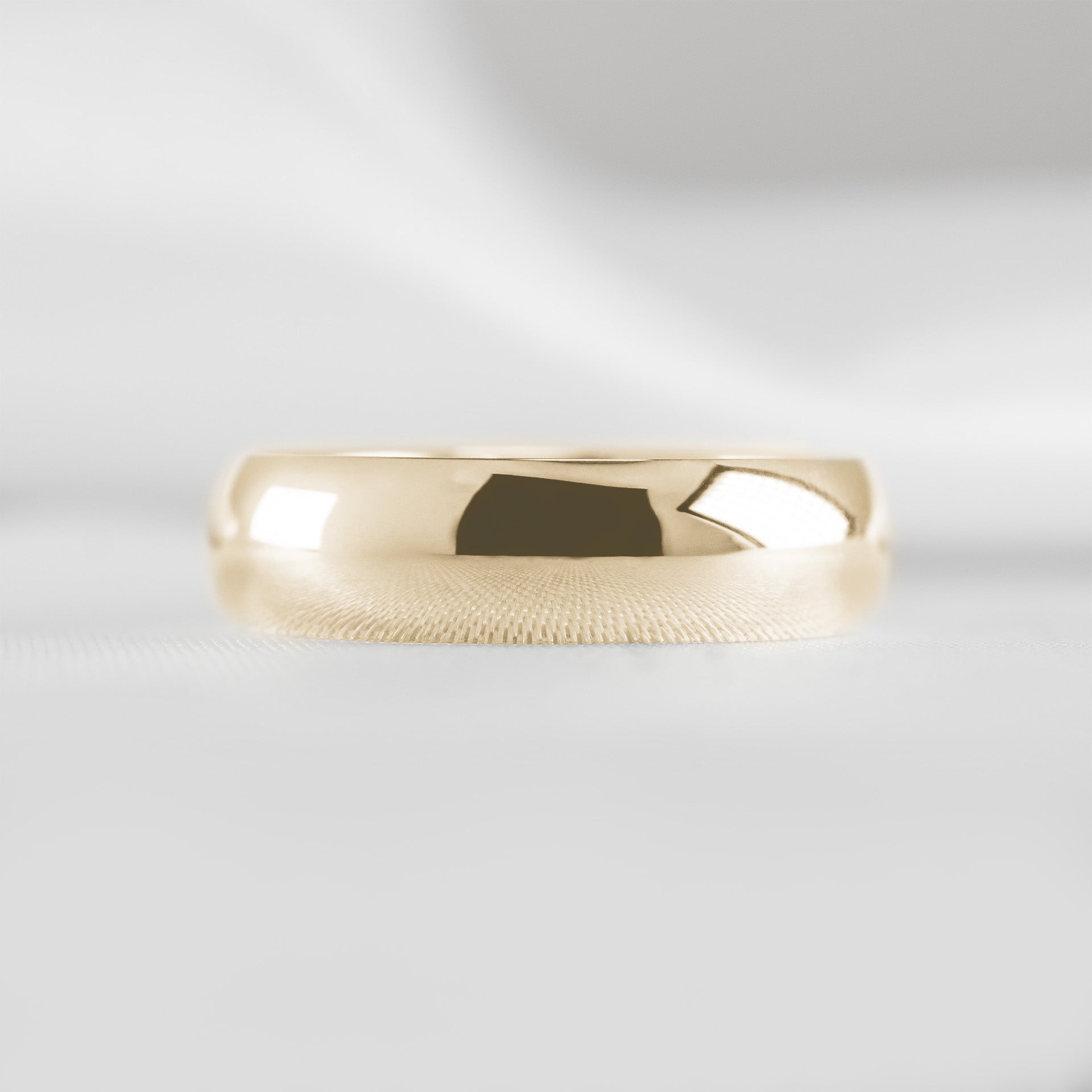
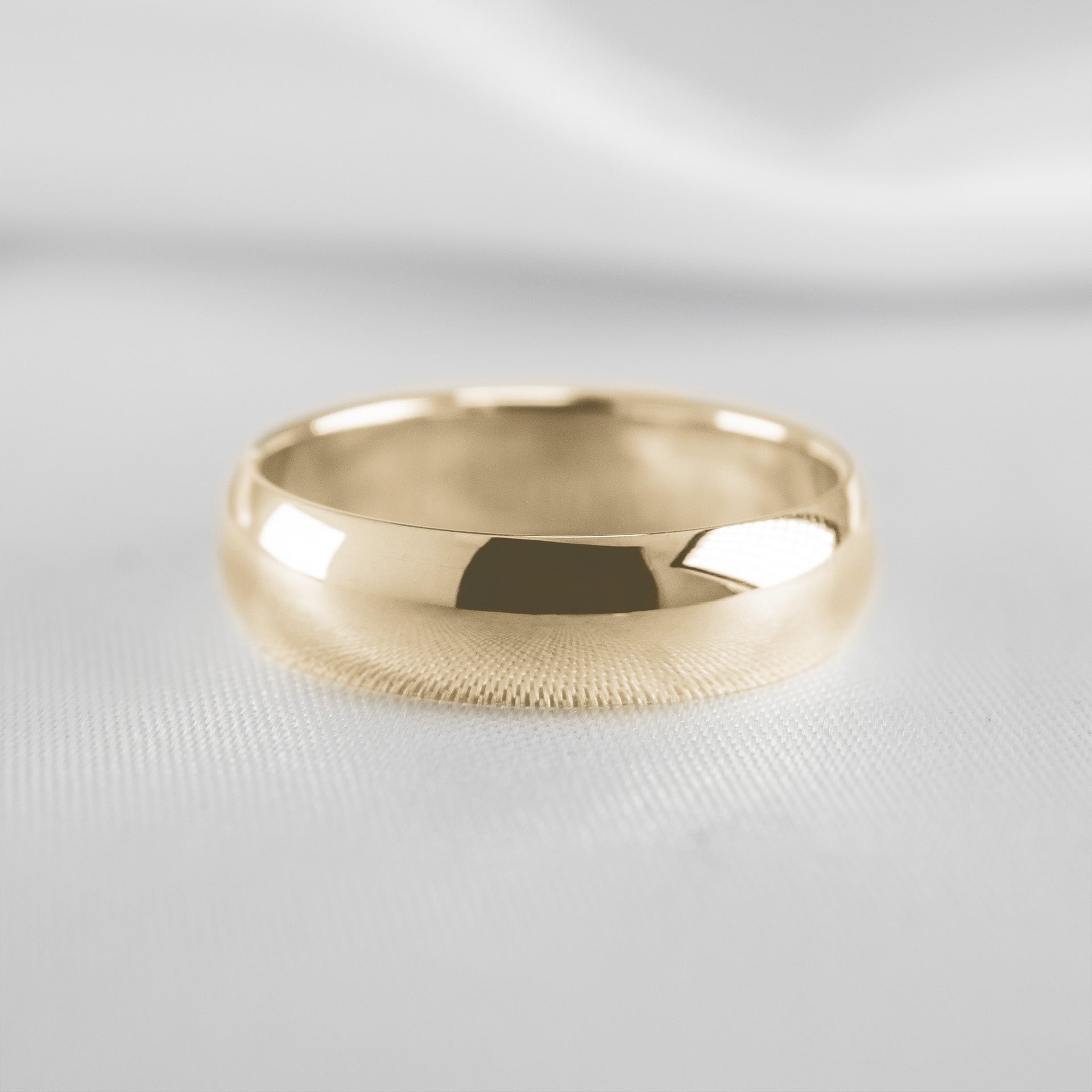
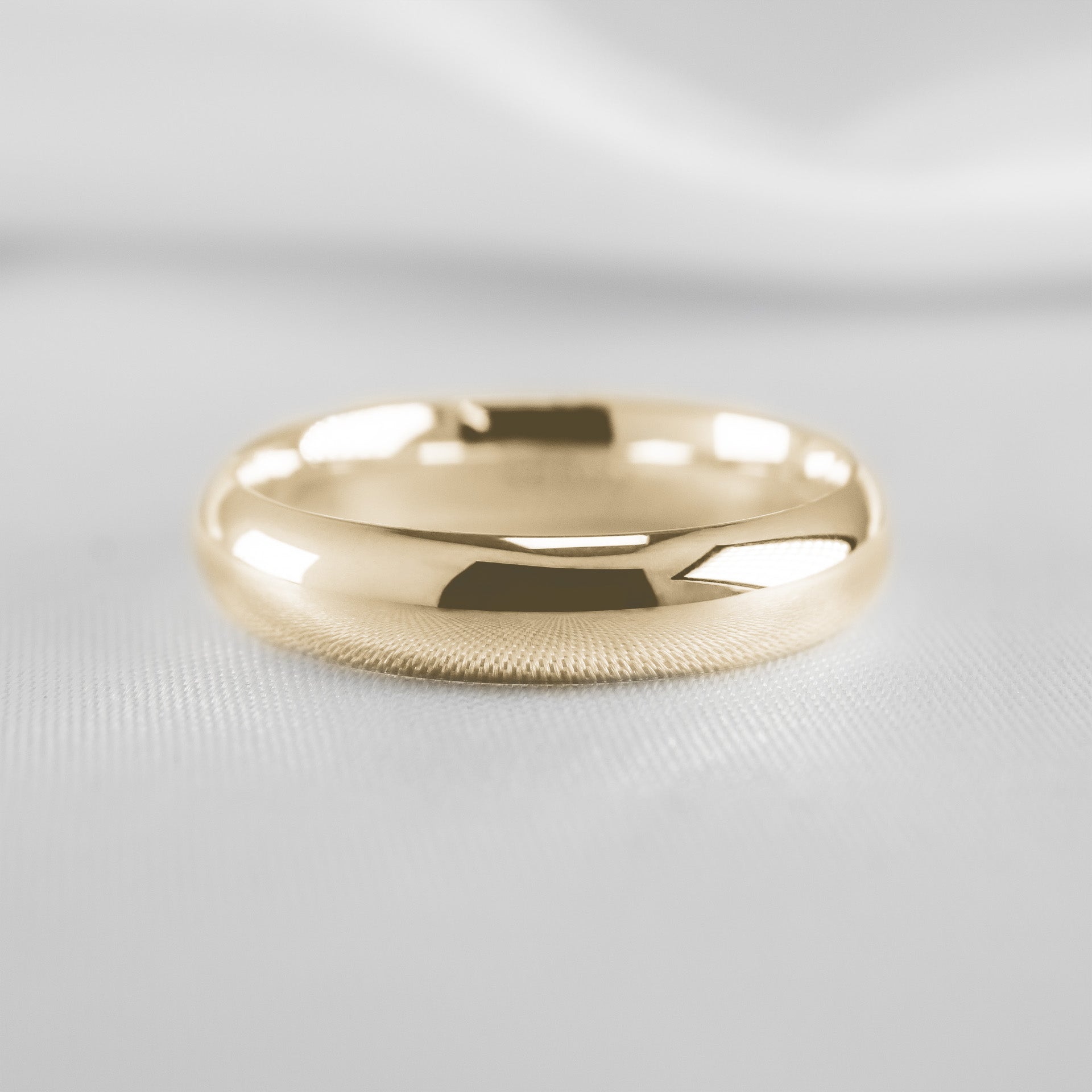
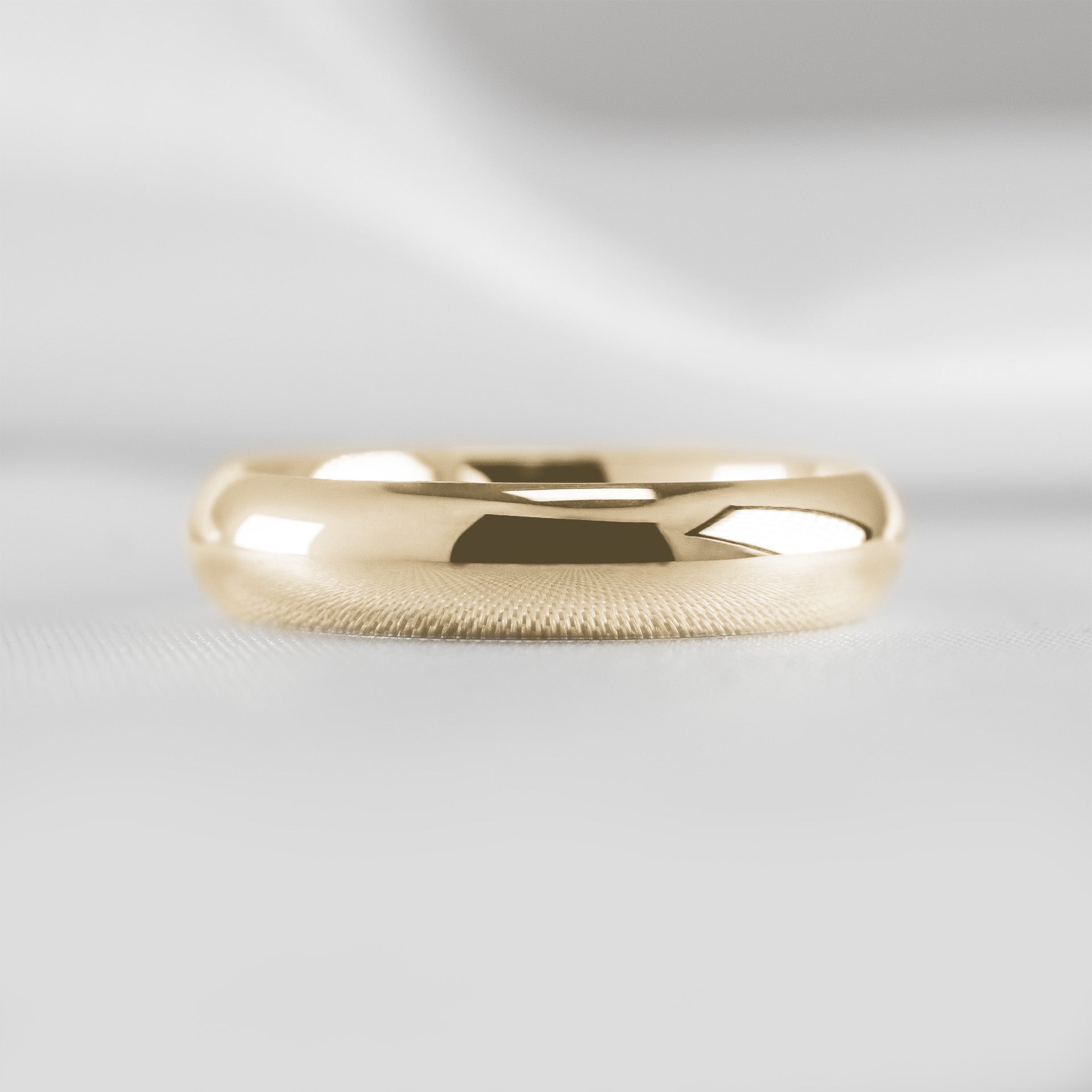


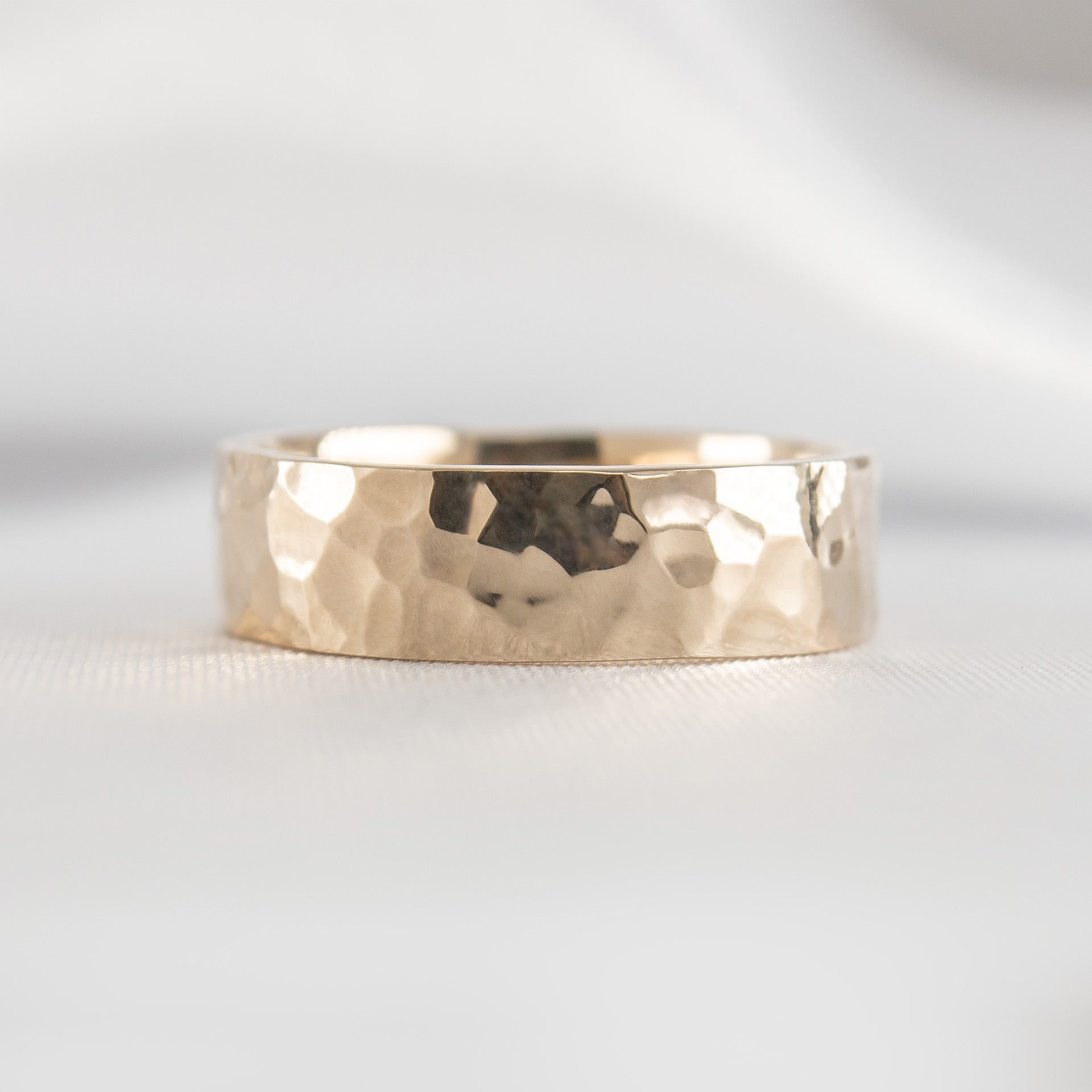

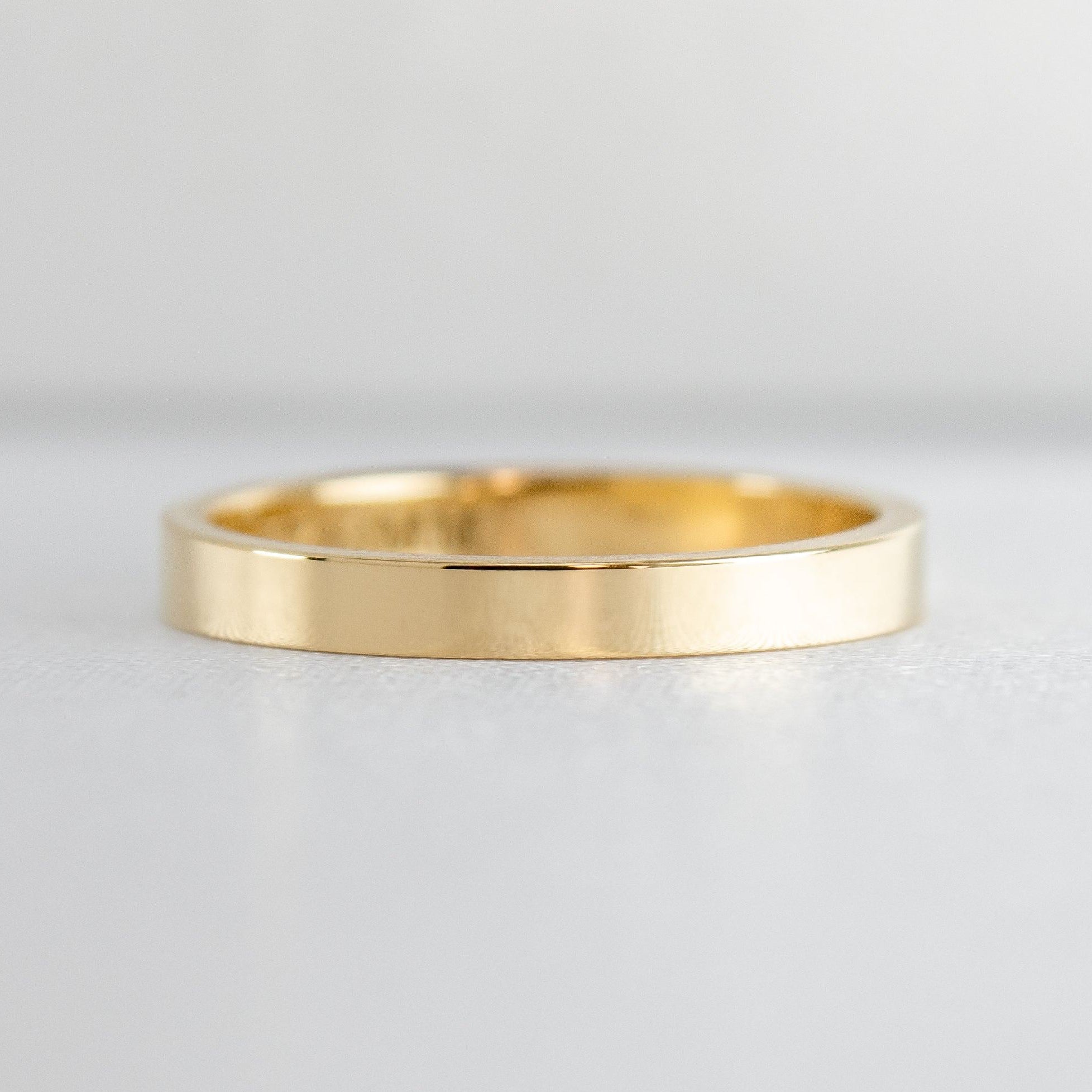


Featured Gold Wedding Rings
The 10 gold wedding rings in this collection span plain Tanner bands to designed gold rings with shape and texture variation.
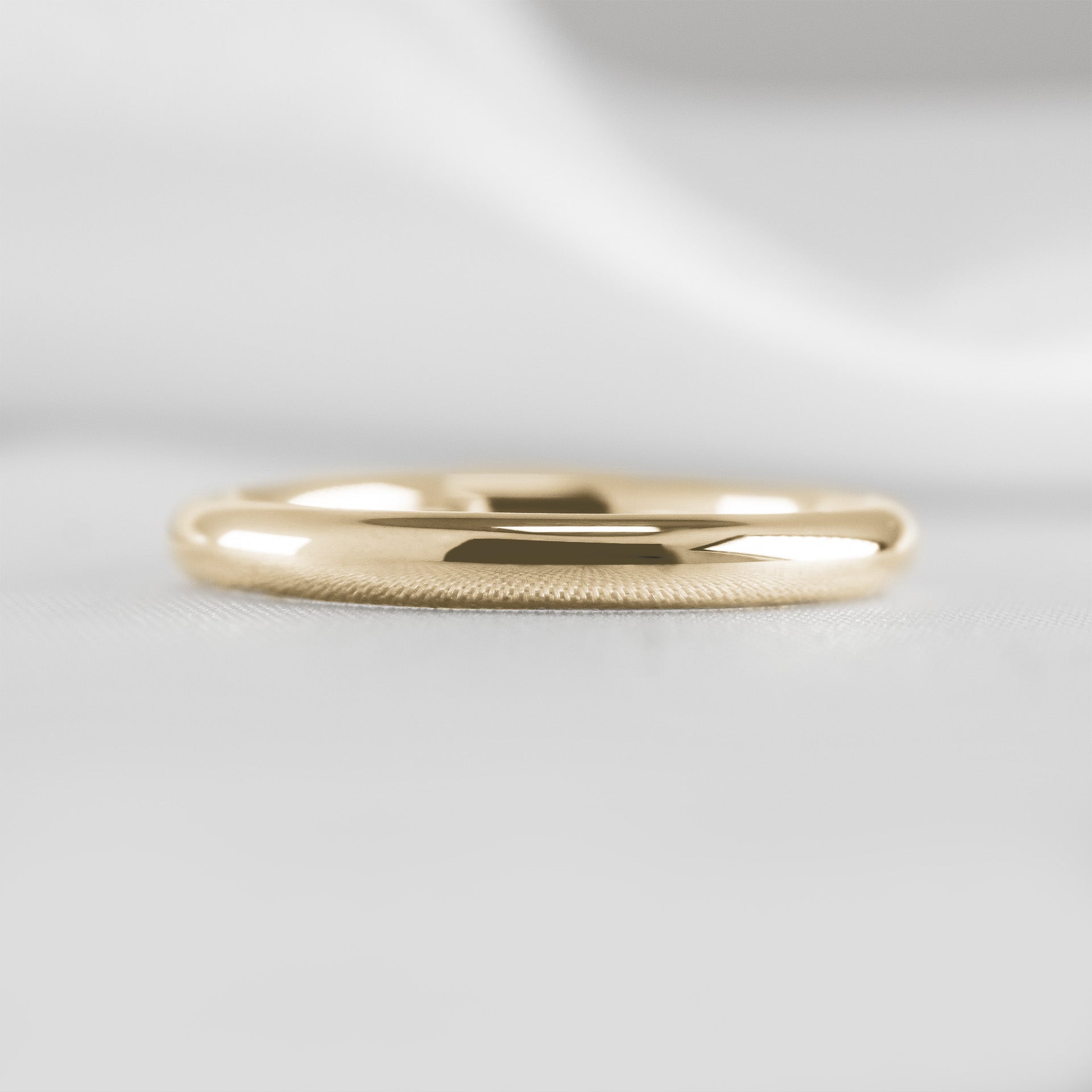
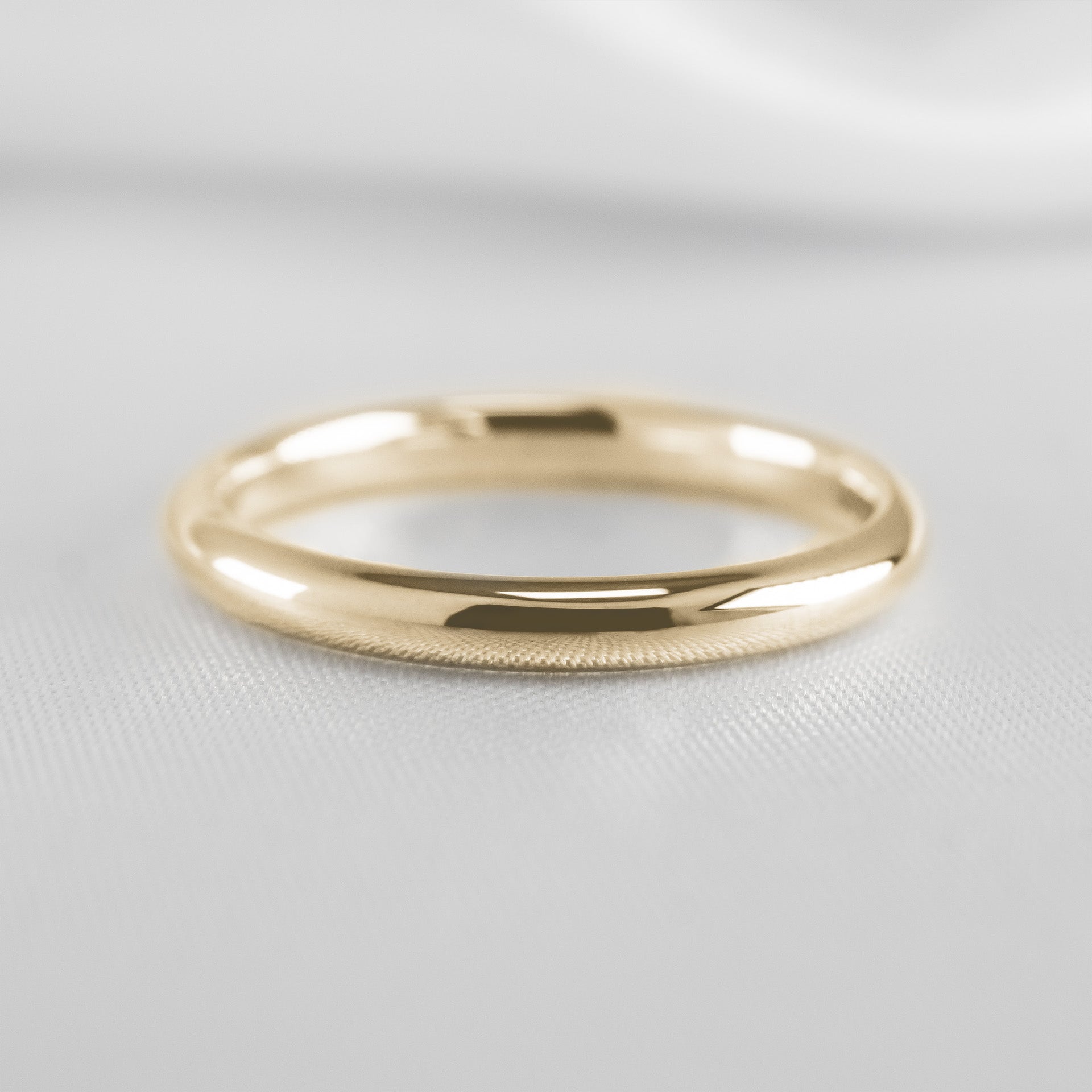
The Tanner family (plain gold wedding bands in 5 widths):
Featured Gold Wedding Rings
The 10 gold wedding rings in this collection span plain Tanner bands to designed gold rings with shape and texture variation.
The Tanner family (plain gold wedding bands in 5 widths):
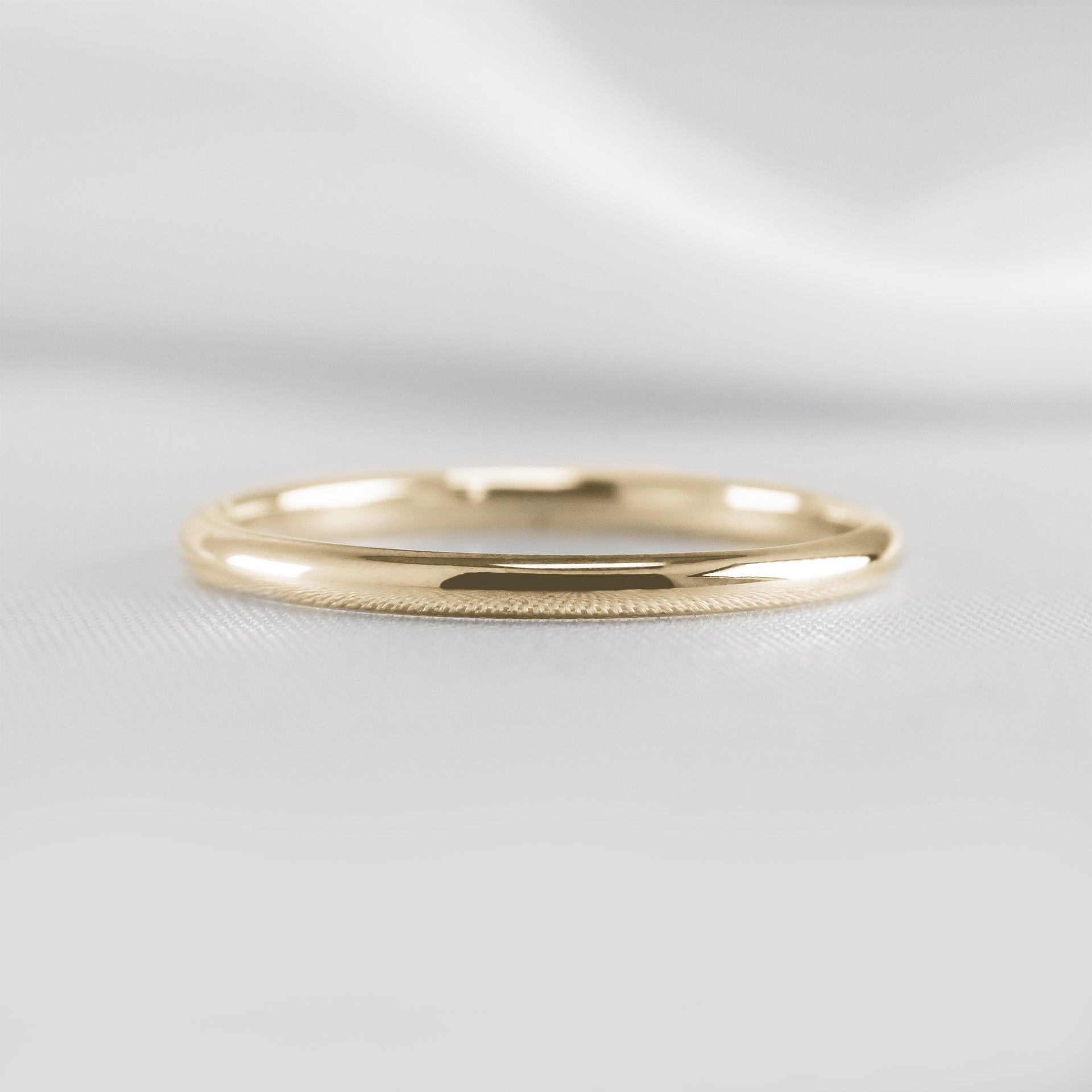
— Tanner 2mm (refined thin band, lightweight scale)
— Tanner 4mm (standard daily wedding band width)
— Tanner 6mm (substantial width)
Designed gold wedding rings:
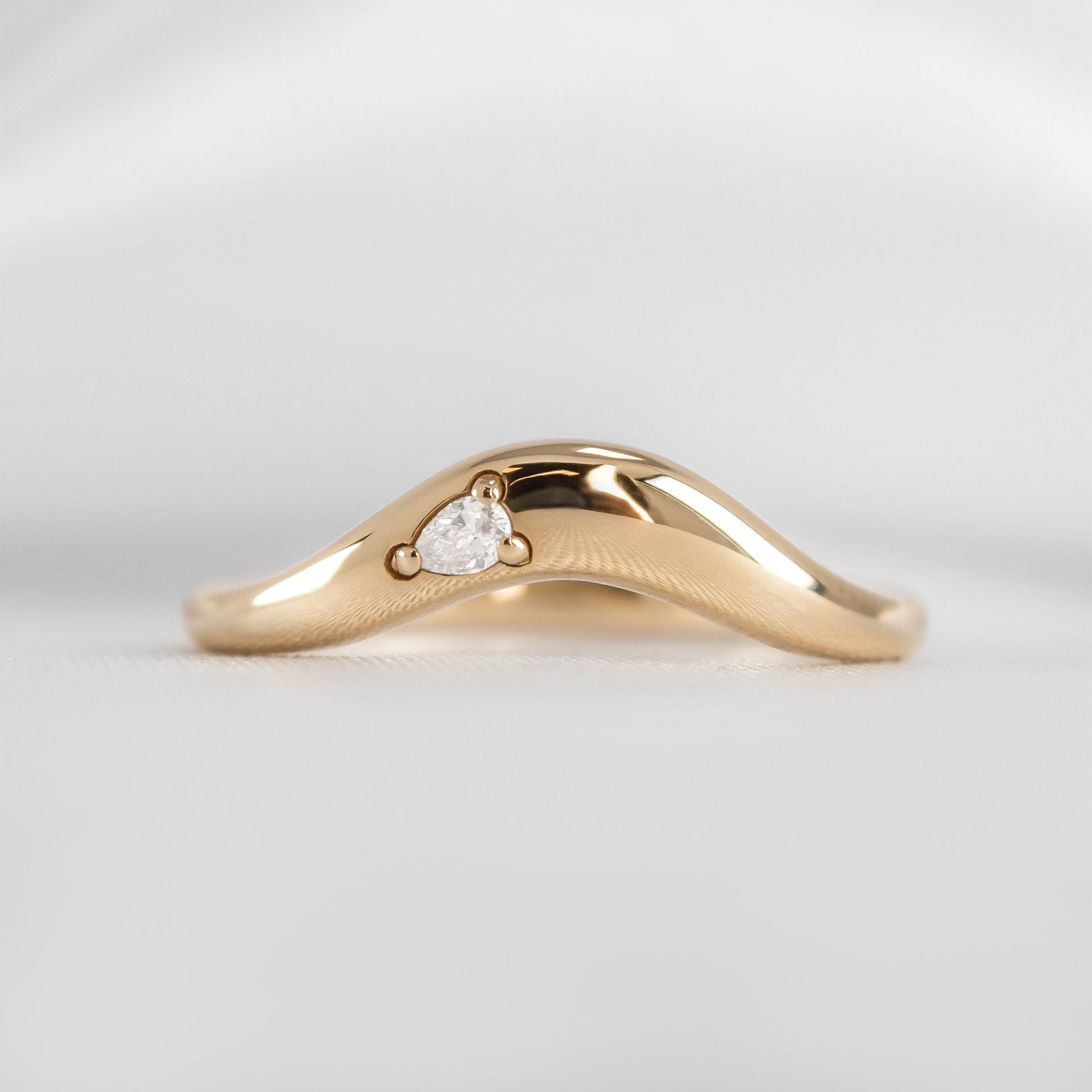
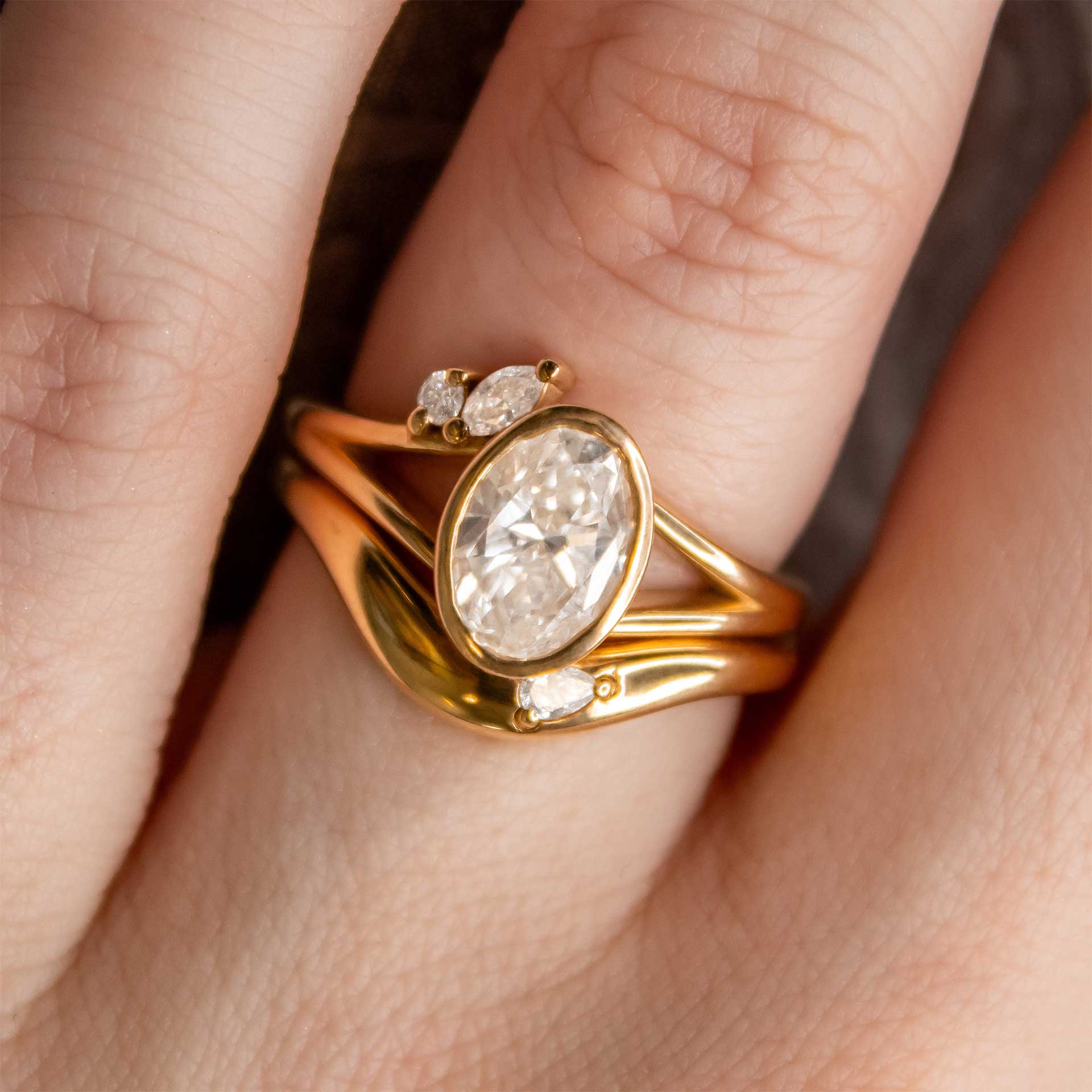
— Kiran (bold curved gold wedding ring)
— Jamie (gold dome wedding ring)
— Leland (plain gold twist construction)
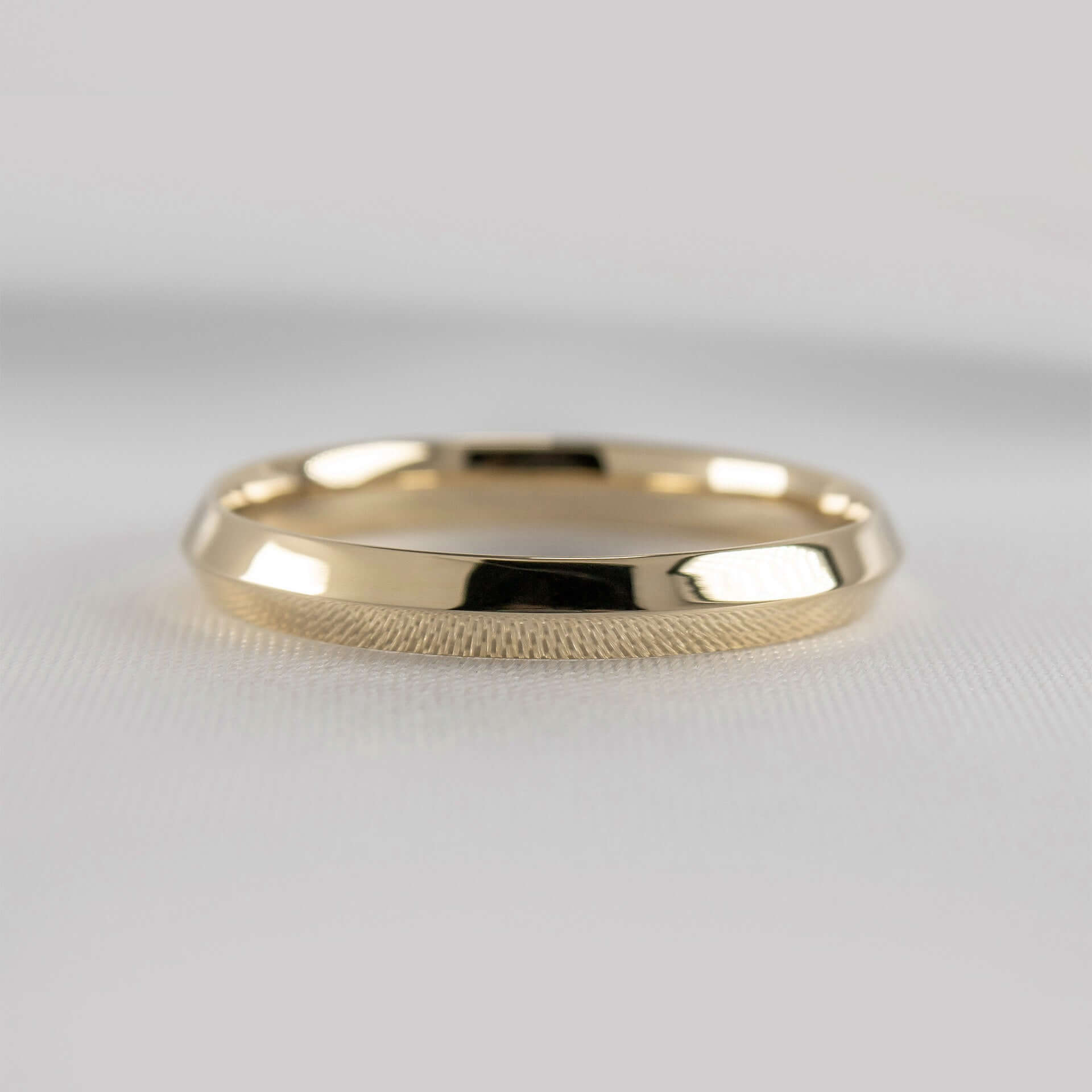
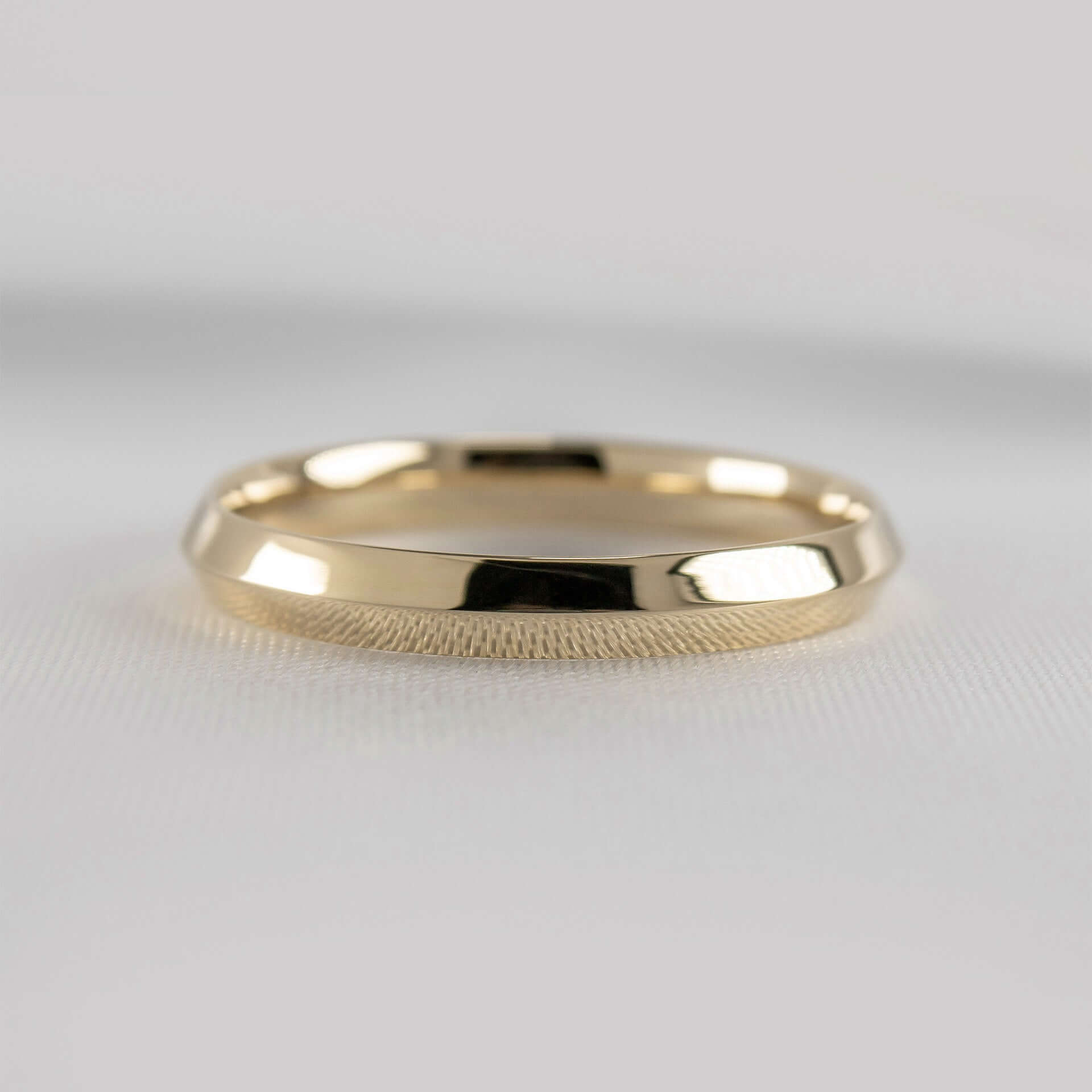
— Flynn (knife edge profile gold wedding ring)
— Townes (hammered finish gold wedding ring)
The Tanner Family in Five Widths
The Tanner family is our plain gold wedding band collection — same design language across five widths from 2mm to 10mm.
Every Tanner uses comfort fit interior (rounded inside surface for smooth daily wear against the finger) and a low domed exterior (softly rounded top surface that catches light without being highly reflective). The five widths scale the same design across different proportions, allowing couples to choose the width that matches their hand size, design preference, and pairing with their engagement ring.
2mm Tanner: Refined thin band, lightweight feel. Works for smaller hands, refined design preferences, or alongside delicate engagement rings.
4mm Tanner: Standard daily wedding band width. Most chosen across hand sizes. Pairs comfortably with most engagement ring shank widths.
6mm Tanner: Substantial width. Reads more present on the hand. Works for medium-to-larger hands or for couples wanting more metal presence.
8mm Tanner: Traditional men's wedding band width. Most common width for men's plain gold wedding rings. Also chosen by some women wanting bold scale.
10mm Tanner: Statement width. Maximum metal presence for couples wanting the wedding ring to read substantial. Most often chosen for men's wedding bands or for couples whose wedding ring is the primary jewelry piece they wear.
Couples often choose different widths for each partner from the same Tanner family — same design language, scaled differently to match each wearer's preference.
10K, 14K, and 18K Gold Options
Gold wedding rings are available in 10K, 14K, or 18K gold — the karat number indicates the percentage of pure gold in the alloy. Each karat level has different properties.
10K gold (41.7% pure gold): The hardest of the three gold karats due to its lower gold content (gold is a soft metal; alloyed metals like copper, silver, and zinc are harder). 10K gold is the most scratch-resistant and durable for heavy daily wear. The gold color reads slightly less rich than 14K or 18K because of the lower gold content. 10K is a practical choice for wearers in trades, manual labor, or active lifestyles.
14K gold (58.3% pure gold): The standard for fine jewelry in the United States. 14K balances gold color richness with practical durability — harder than 18K, less rich in color, generally suitable for daily wear across most lifestyles. 14K is the most chosen karat for wedding bands.
18K gold (75% pure gold): Richer gold color, more luxurious feel, softer alloy. 18K can pick up minor surface scratches more easily than 14K or 10K, but the visual character is the richest of the three. Chosen by couples prioritizing the deepest gold color, particularly in yellow or rose gold where the color saturation is most visible.
For wedding rings that will see heavy daily wear (manual work, frequent contact, etc.), 14K is the practical choice. For couples prioritizing maximum gold color richness, 18K. For maximum durability in working hands, 10K.
Yellow, White, and Rose Gold
Gold wedding rings are available in three color tones — yellow, white, and rose. The color is determined by the metals alloyed with pure gold.
Yellow gold: The natural color of pure gold, deepened or lightened slightly by the karat alloy. Yellow gold reads warm and traditional. It pairs naturally with yellow gold engagement rings and reads particularly distinctive on warmer skin tones. Yellow gold doesn't require any special maintenance — the color is permanent through the metal.
White gold: Gold alloyed with white metals (palladium, nickel, or silver) to produce a white-toned alloy. Most white gold is also plated with rhodium for a brighter white finish. The rhodium plating wears over time and requires periodic replating (typically every 2-3 years) to maintain the bright white color. Without rhodium, white gold reads slightly warmer and more cream-toned. White gold pairs with white gold and platinum engagement rings.
Rose gold: Gold alloyed with copper to produce a warm pink-toned color. Rose gold has become increasingly popular for modern wedding rings — it reads warm, romantic, and slightly less traditional than yellow gold. Rose gold pairs with rose gold engagement rings or works as a deliberate color choice against white gold or platinum engagement rings. Like yellow gold, rose gold doesn't require maintenance — the color is permanent.
Plain Gold or Designed Gold Wedding Rings
This collection includes both plain gold wedding rings (Tanner family, where the metal and width are the entire design) and designed gold wedding rings (Kiran, Jamie, Leland, Flynn, Townes — where shape, profile, or texture adds character beyond plain construction).
Plain gold wedding rings (Tanner family): No diamonds, no inlay, no texture. The metal and the band's proportion are the design. Plain gold wedding rings are the most timeless choice — they don't reference a particular design period or trend, they don't compete visually with anything else worn, and they hold their visual character across decades.
Designed gold wedding rings: The Kiran adds bold curved shape, the Jamie adds dome profile, the Leland adds twist construction, the Flynn adds knife edge profile, the Townes adds hammered texture. Each design uses the metal differently than plain Tanner construction — shape, profile, or surface texture creating visual character without diamonds.
The choice between plain and designed gold wedding rings depends on personal preference. Couples drawn to minimal, timeless design choose Tanner. Couples wanting some structural or textural character beyond plain construction choose the designed gold rings.
Customizing Your Gold Wedding Ring
Gold wedding rings in this collection are made-to-order with customization at multiple levels.
Karat choice: 10K, 14K, or 18K gold based on durability and color richness preferences (see the 10K/14K/18K section above).
Color choice: Yellow, white, or rose gold. The color choice typically coordinates with the engagement ring the wedding band will pair with, though mixed-metal pairings are increasingly common as deliberate design choices.
Width selection: For Tanner, five widths from 2mm to 10mm. For other designed gold wedding rings, the width is typically fixed or adjustable within a smaller range — we discuss available width options during the order conversation.
Engraving: Interior engraving is available at no additional charge. Exterior engraving (decorative scrollwork, your initials, or a phrase) is available on most gold wedding bands; we discuss options during the design conversation. Engraving adds approximately 1 week to the crafting timeline.
Custom gold designs: For couples wanting a gold wedding ring outside this collection — different width, profile, texture, or designed elements — Lisa designs custom gold wedding bands during a private design appointment. Custom designs are crafted in 3-4 weeks after design approval.
Care and Service for Gold Wedding Rings
Gold wedding rings made in 10K, 14K, or 18K hold up to lifetime daily wear with appropriate care. The metal alloy determines how the ring shows wear over decades — softer 18K picks up more surface marks; harder 10K and 14K resist marking better.
For routine care: remove the ring before heavy manual work, gym workouts with weights, gardening, contact sports, and activities involving harsh chemicals or solvents. Clean weekly with warm soapy water and a soft cloth — gold doesn't require special cleaners. Annual professional cleaning maintains the metal's brightness.
White gold requires periodic rhodium replating (typically every 2-3 years) to maintain the bright white finish. The replating is a separate service and minor cost — we offer this for any ring we've crafted. Without replating, white gold develops a slightly warmer, cream-toned finish that some wearers prefer as a "natural" white gold appearance.
Gold wedding rings can typically be resized within a wide range (4-5 sizes up or down). The resize involves cutting through the band, adjusting the diameter, and rejoining. Plain Tanner bands resize most easily; designed gold rings with specific profiles or textures require slightly more careful resize work to preserve the original character. We handle all resizing through our New York workshop.
Gold Wedding Bands — Frequently Asked Questions
How long does it take to make a gold wedding ring?
