



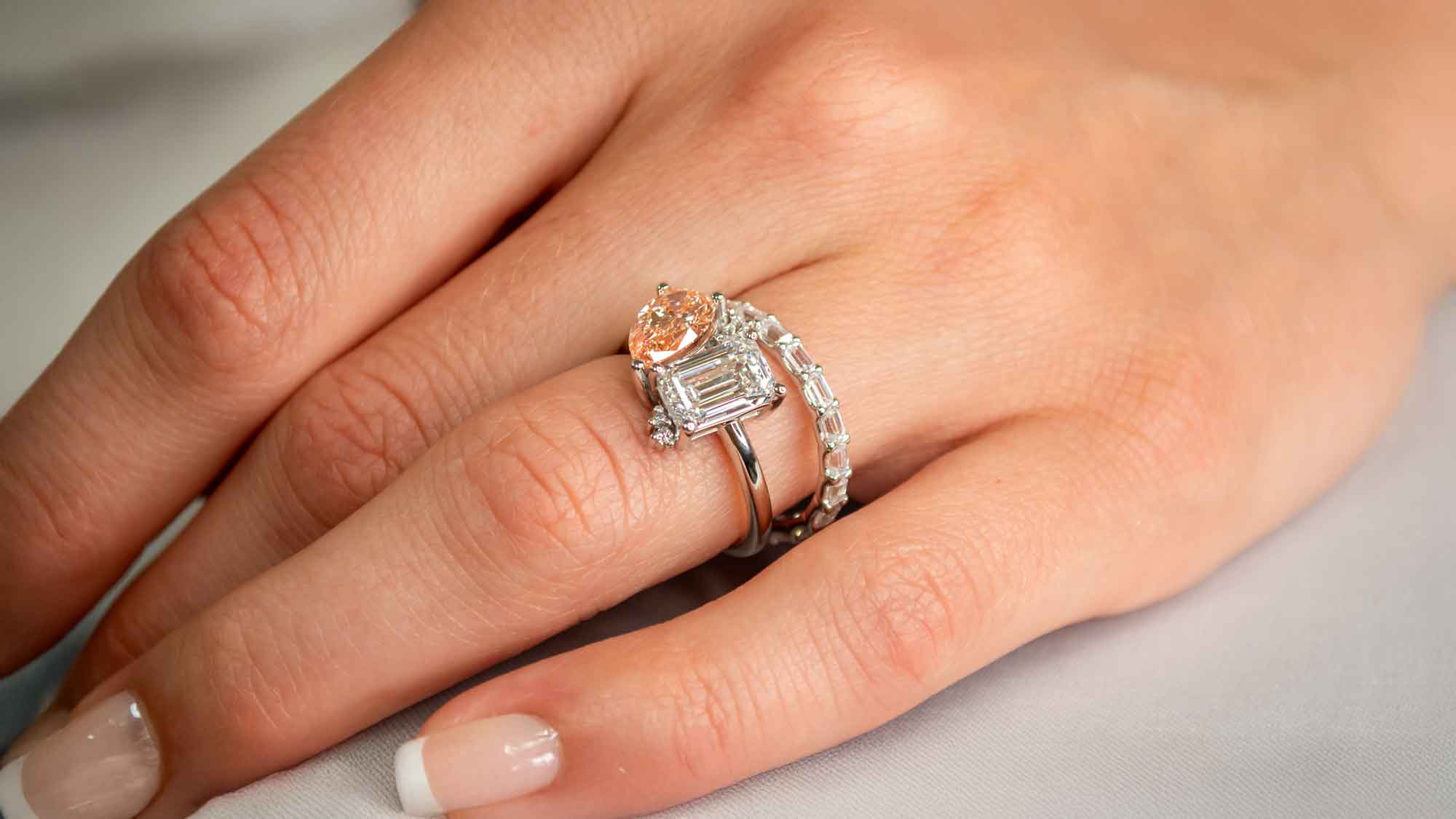
Diamond Wedding Rings
Diamond Wedding Rings
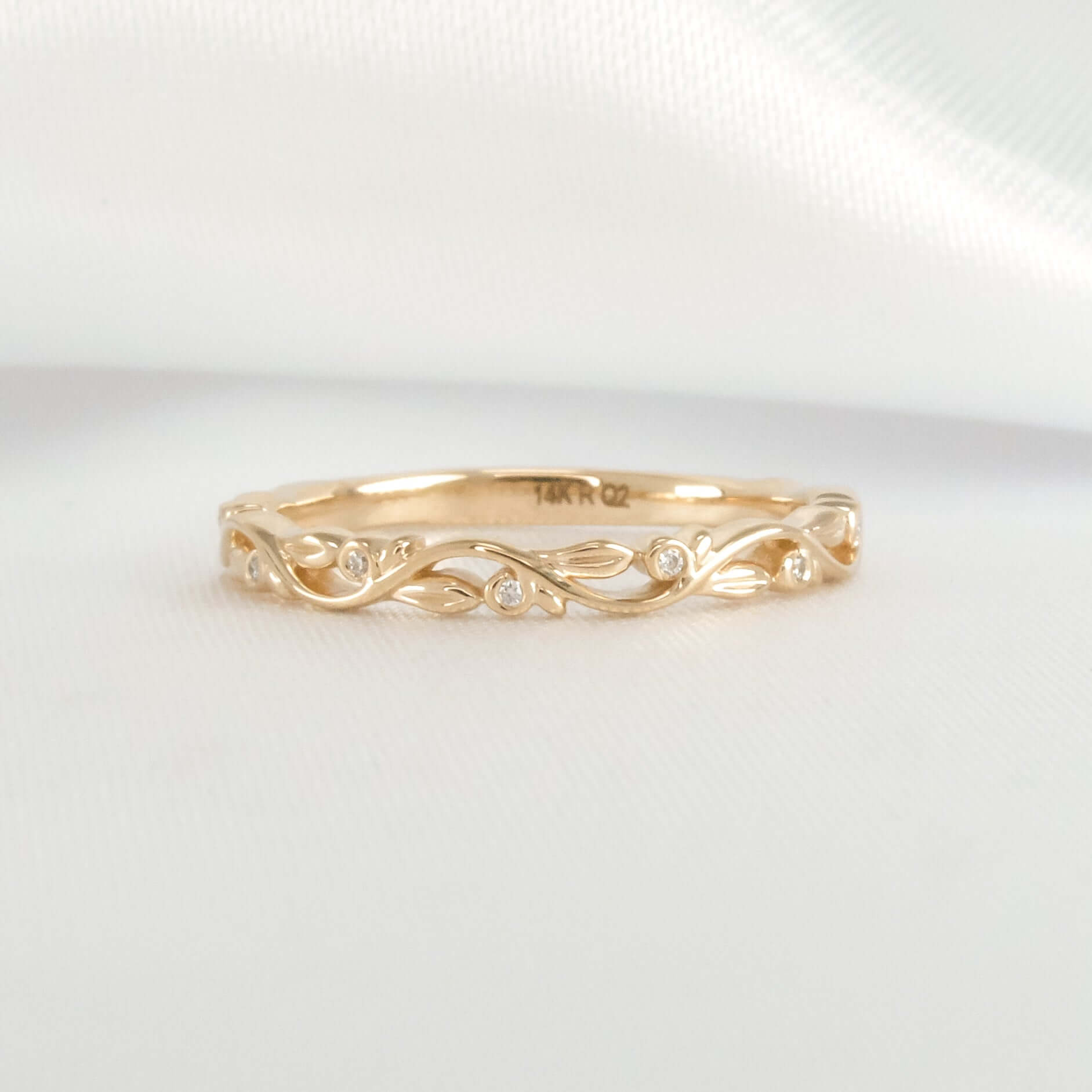

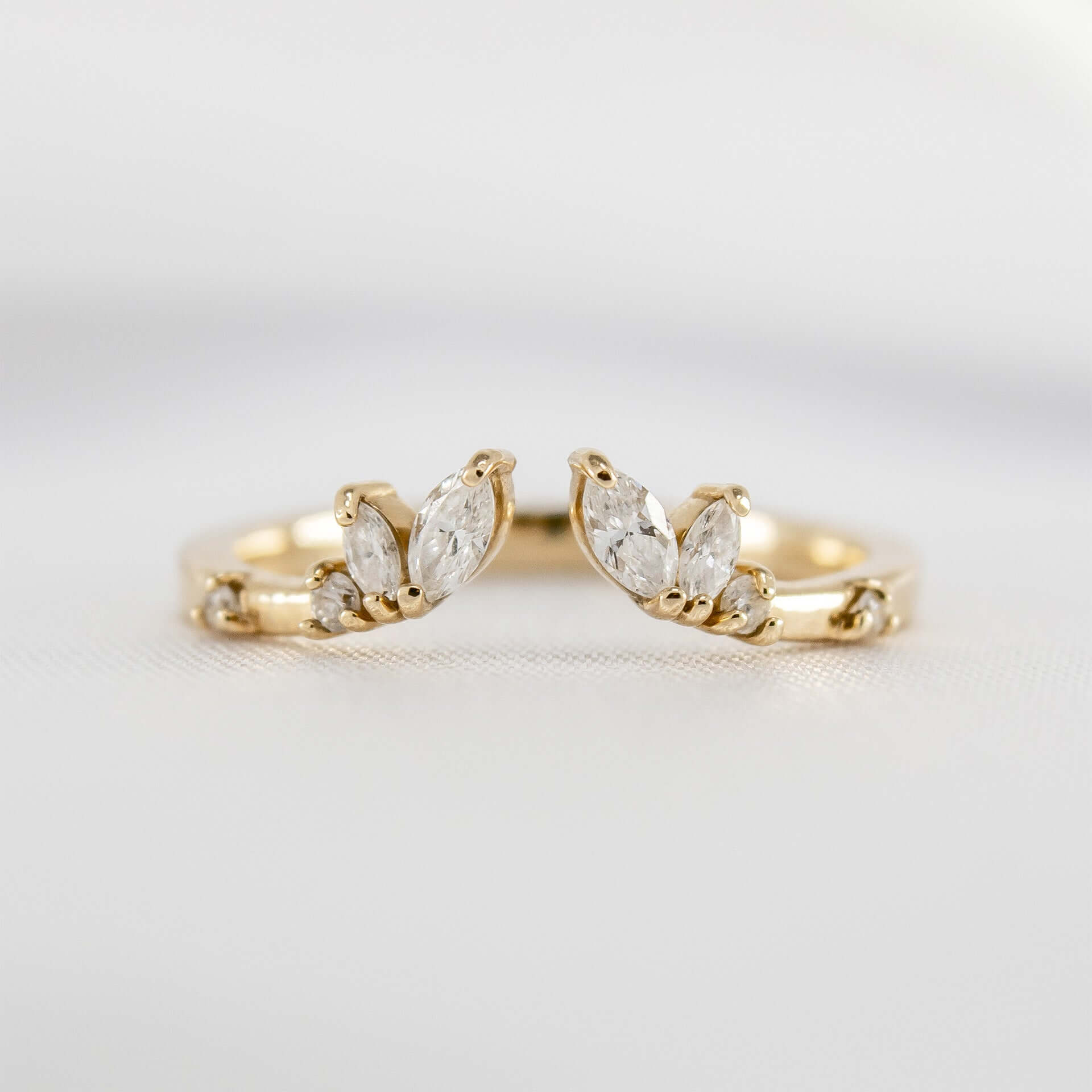

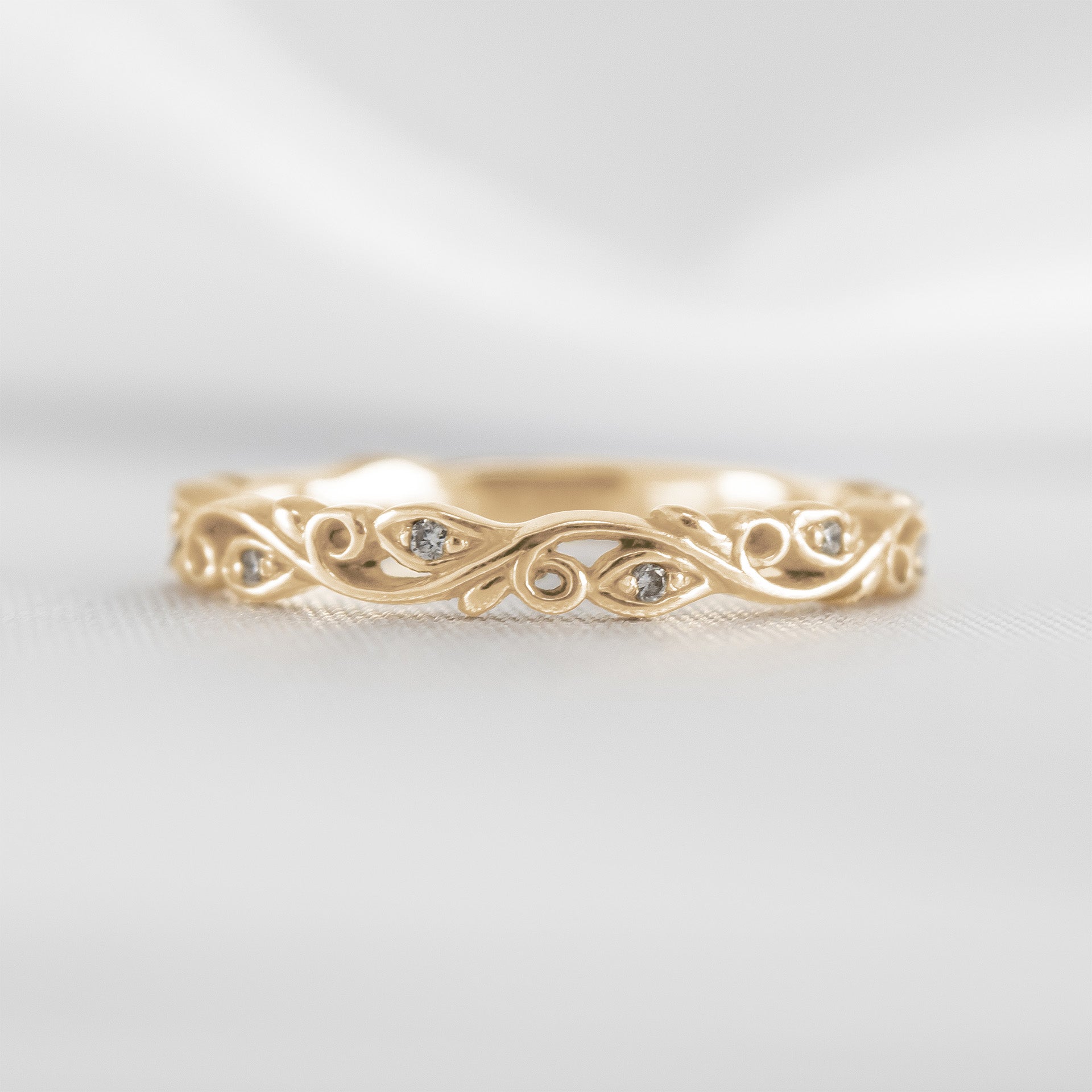












































Diamond Wedding Ring Categories
The 54 diamond wedding rings in this collection fall into several distinct categories.
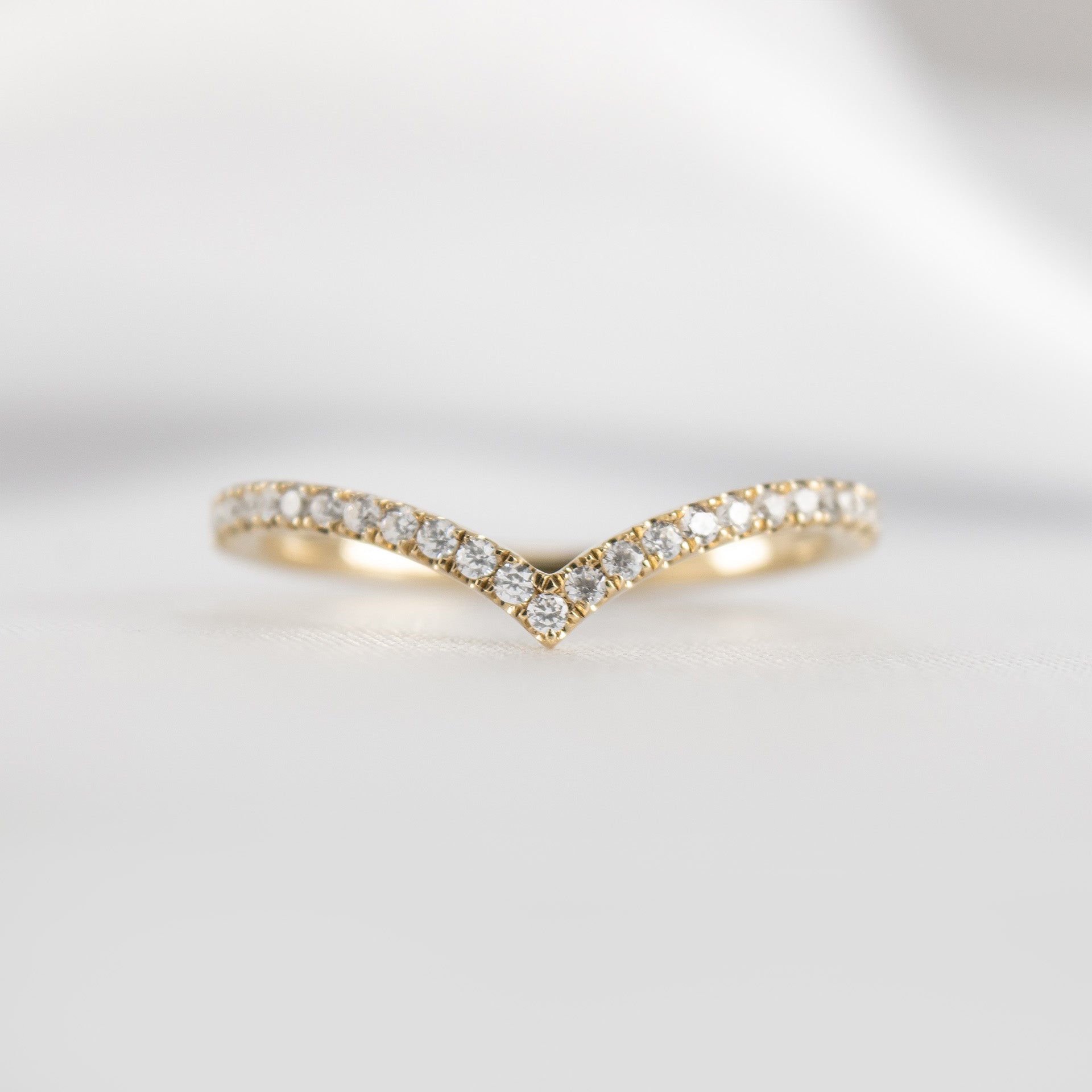
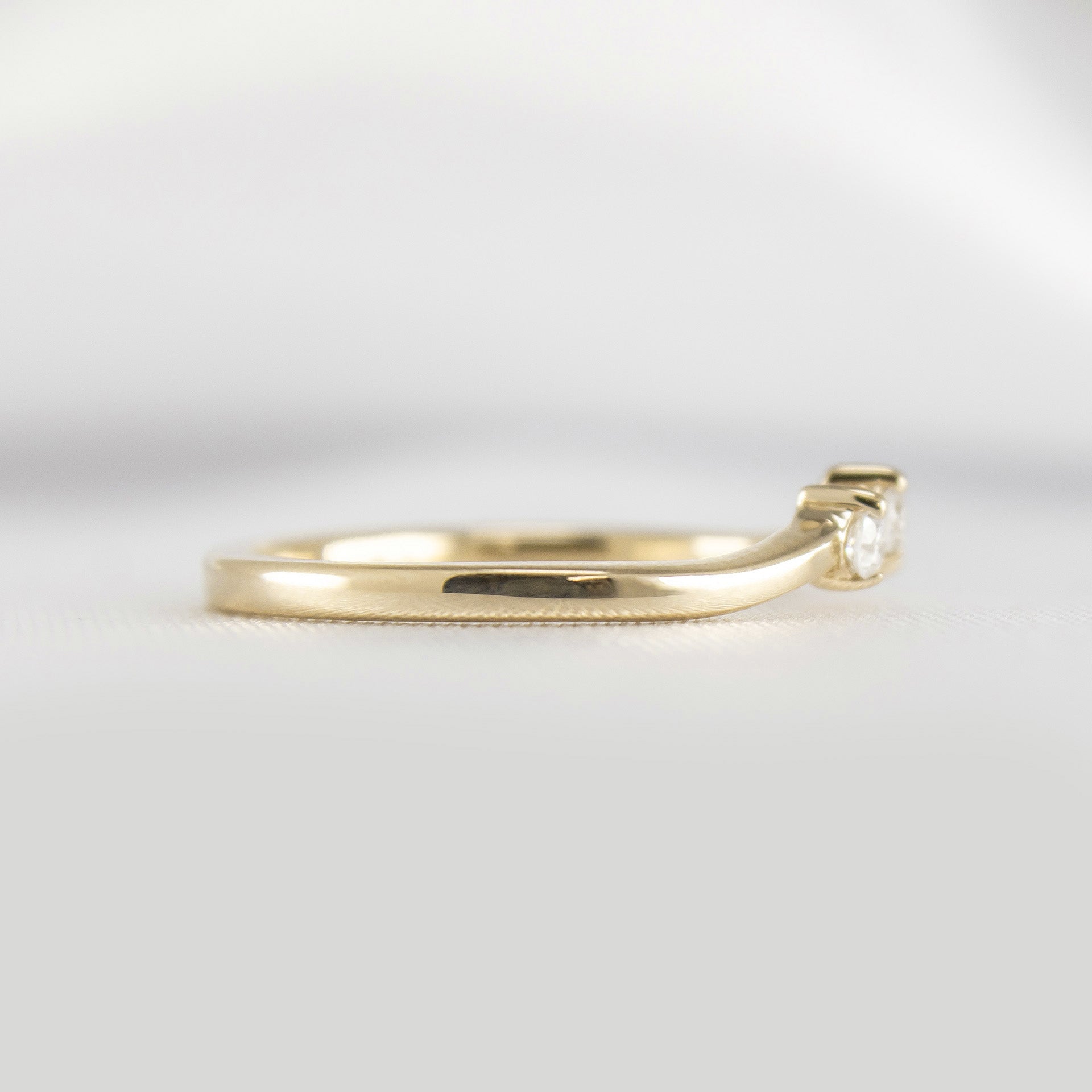
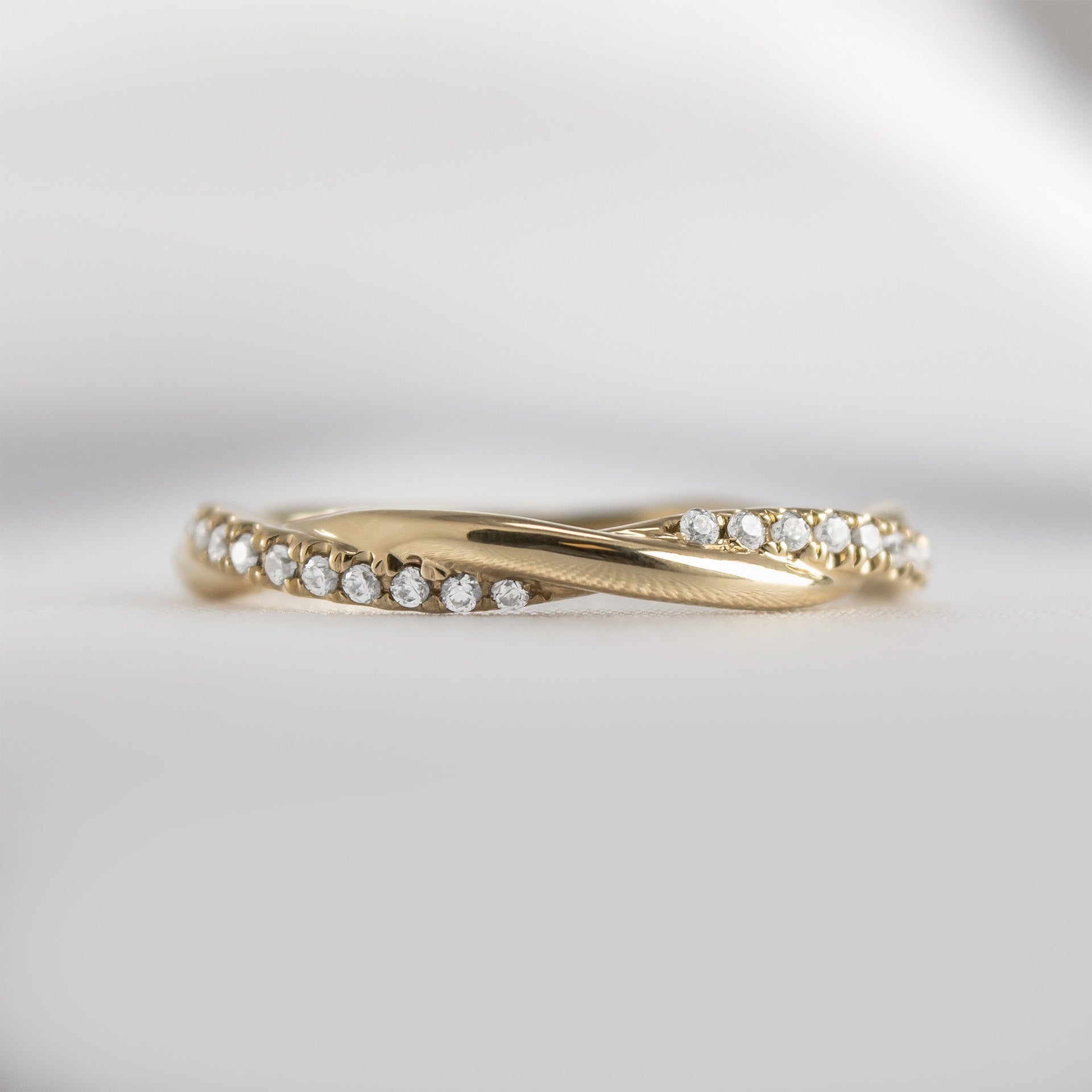
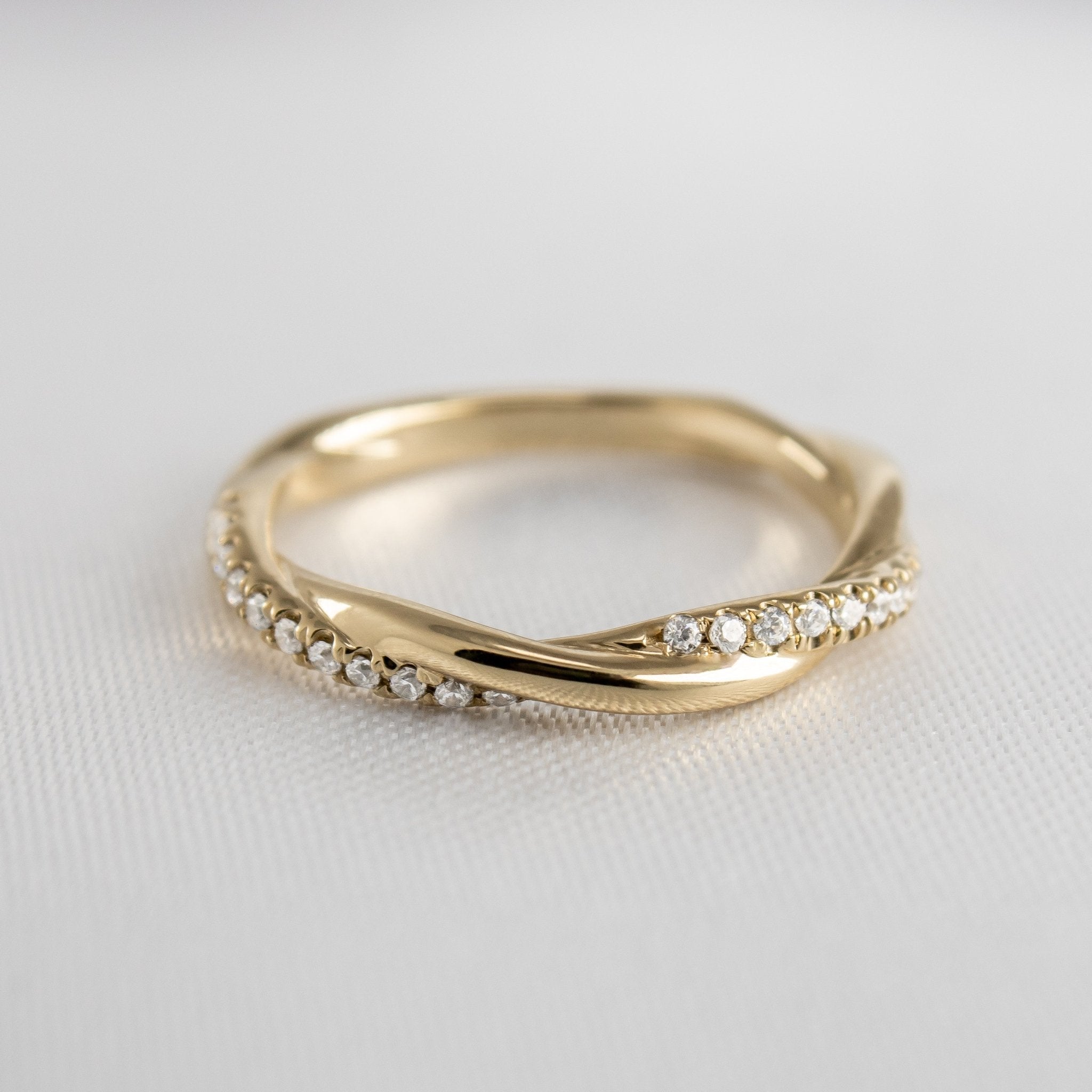
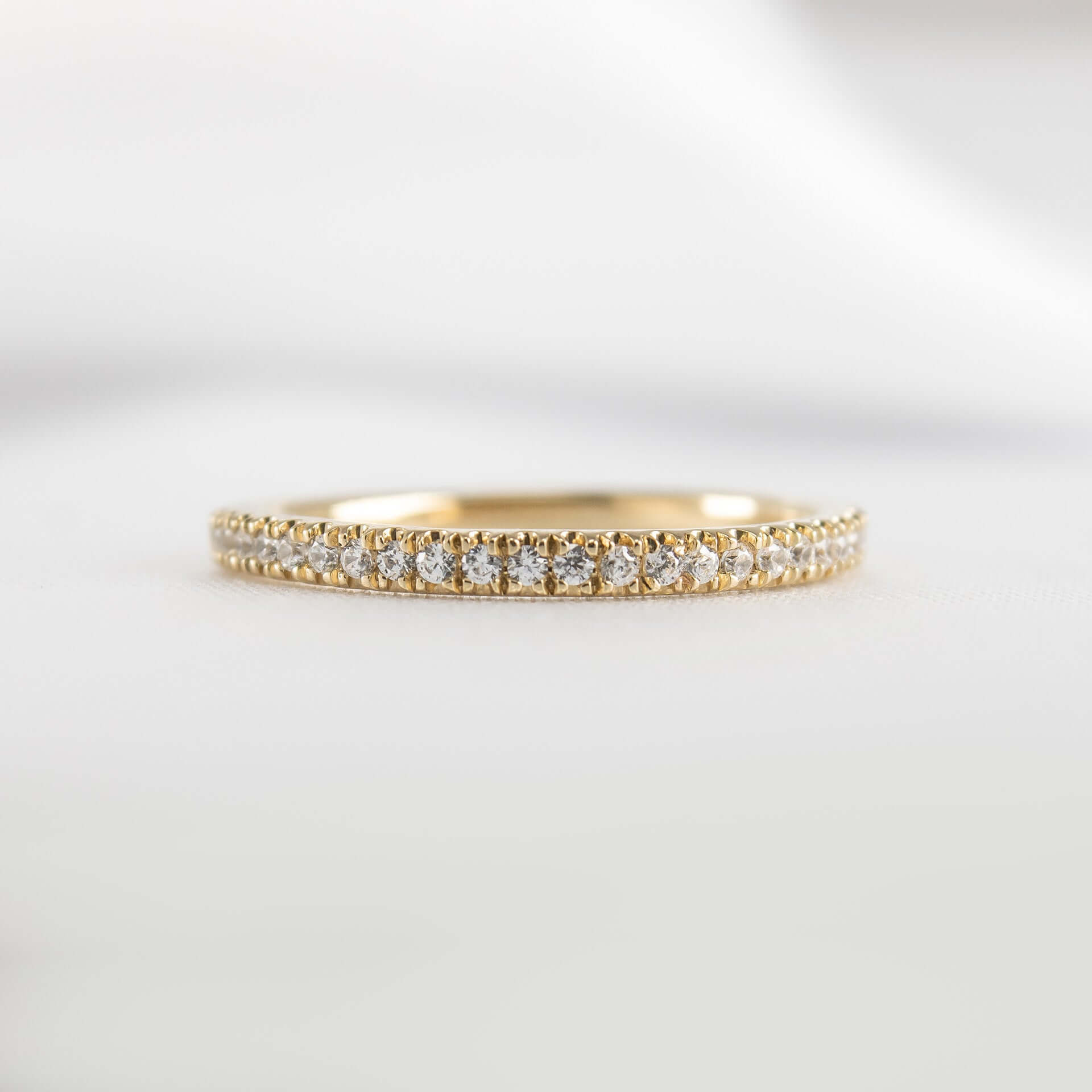
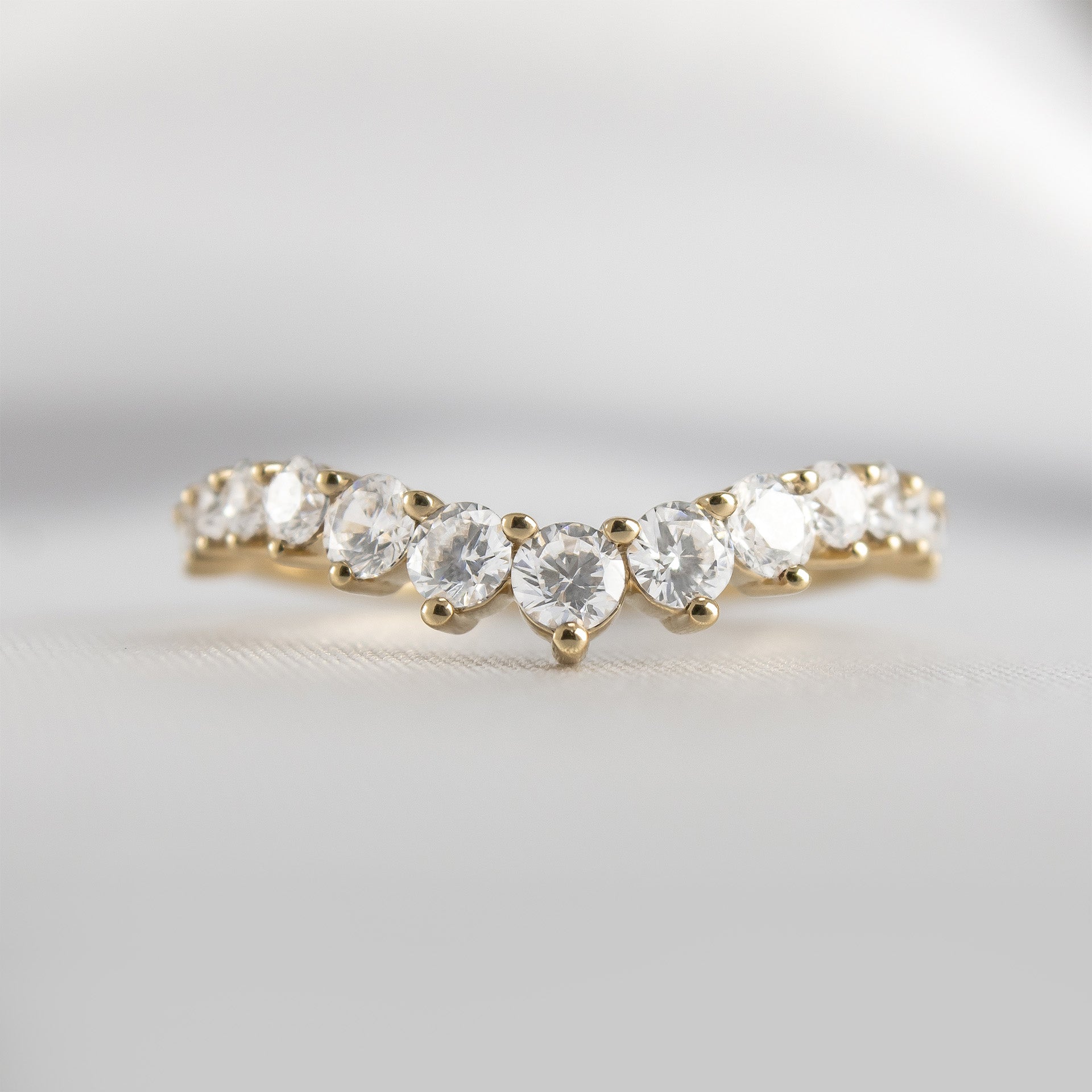
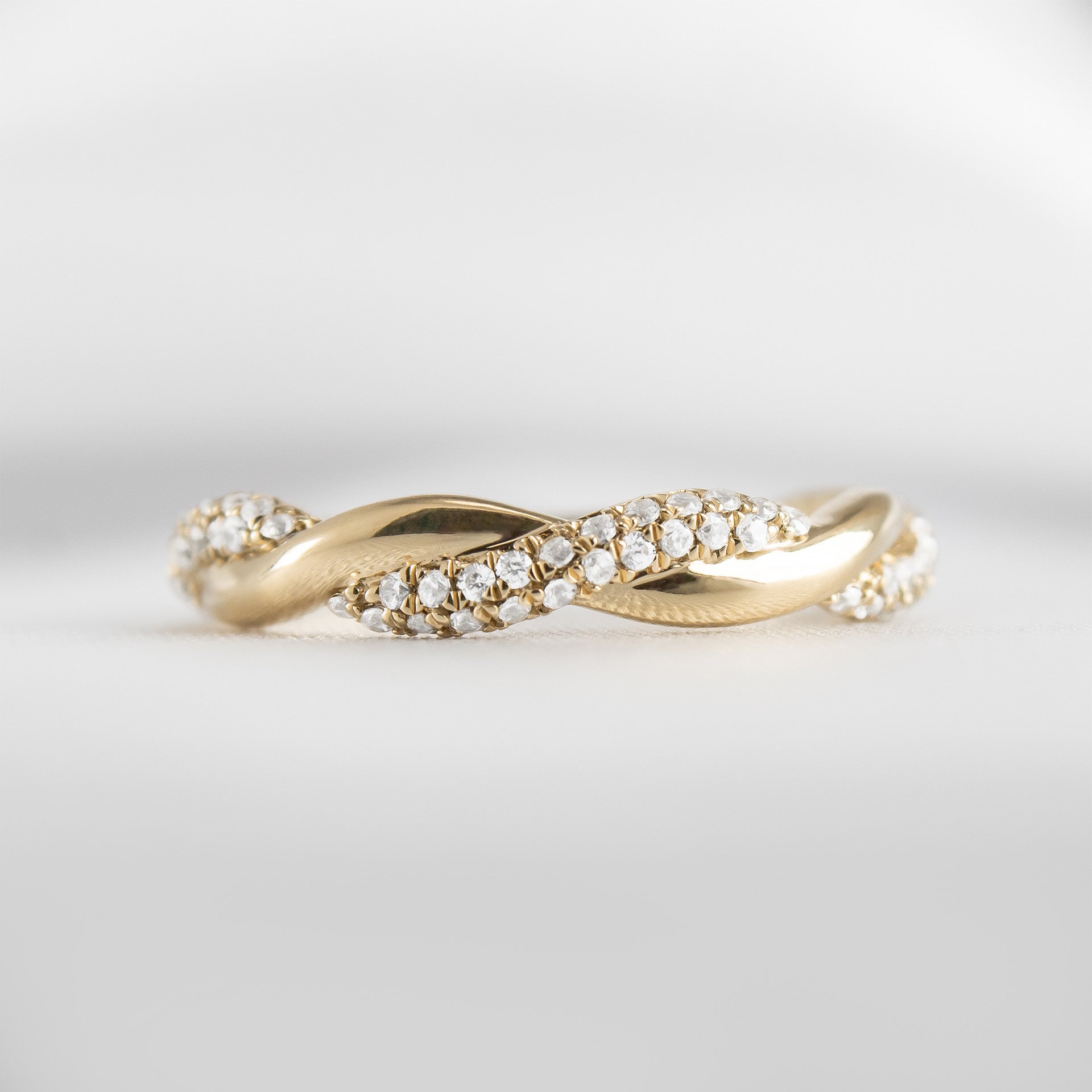
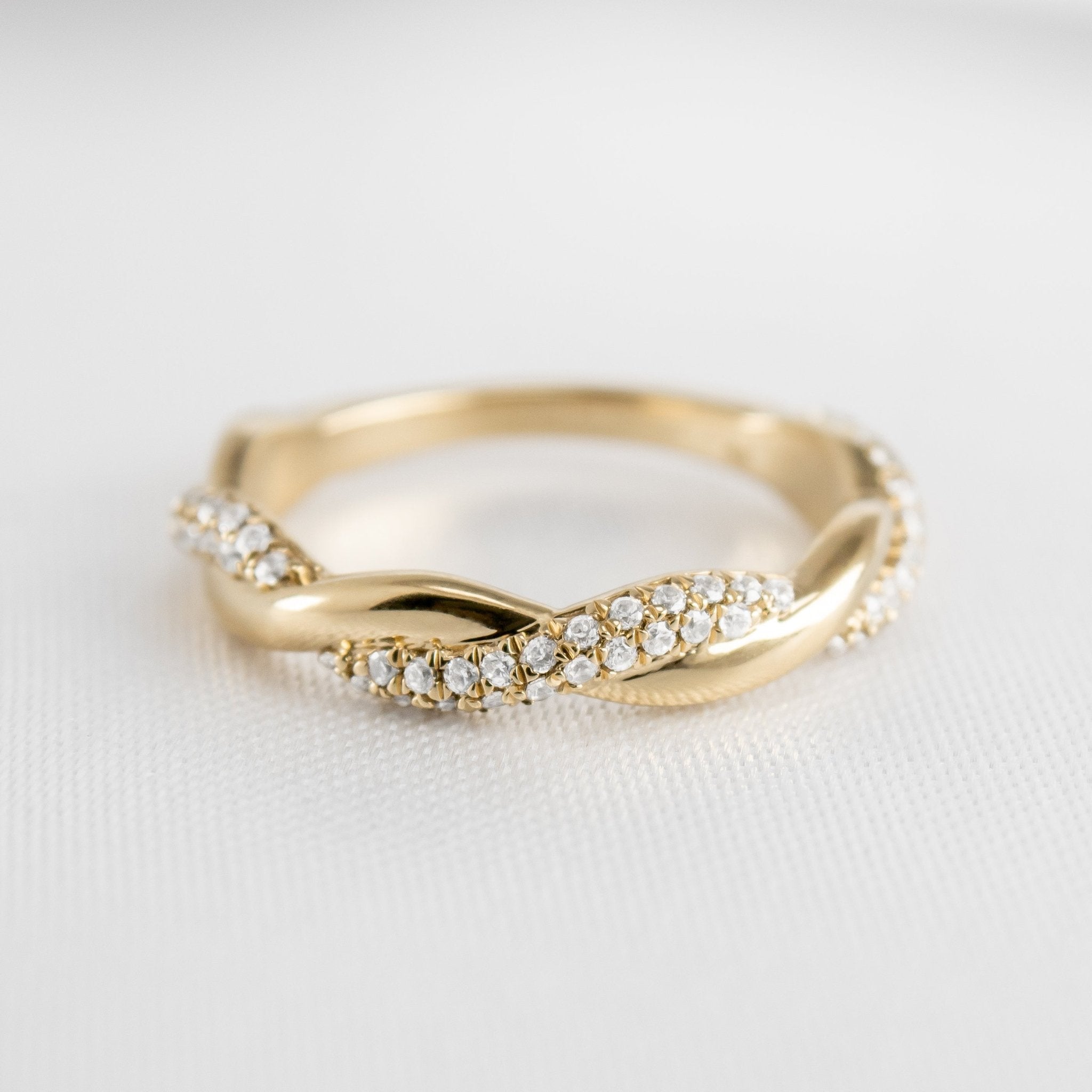
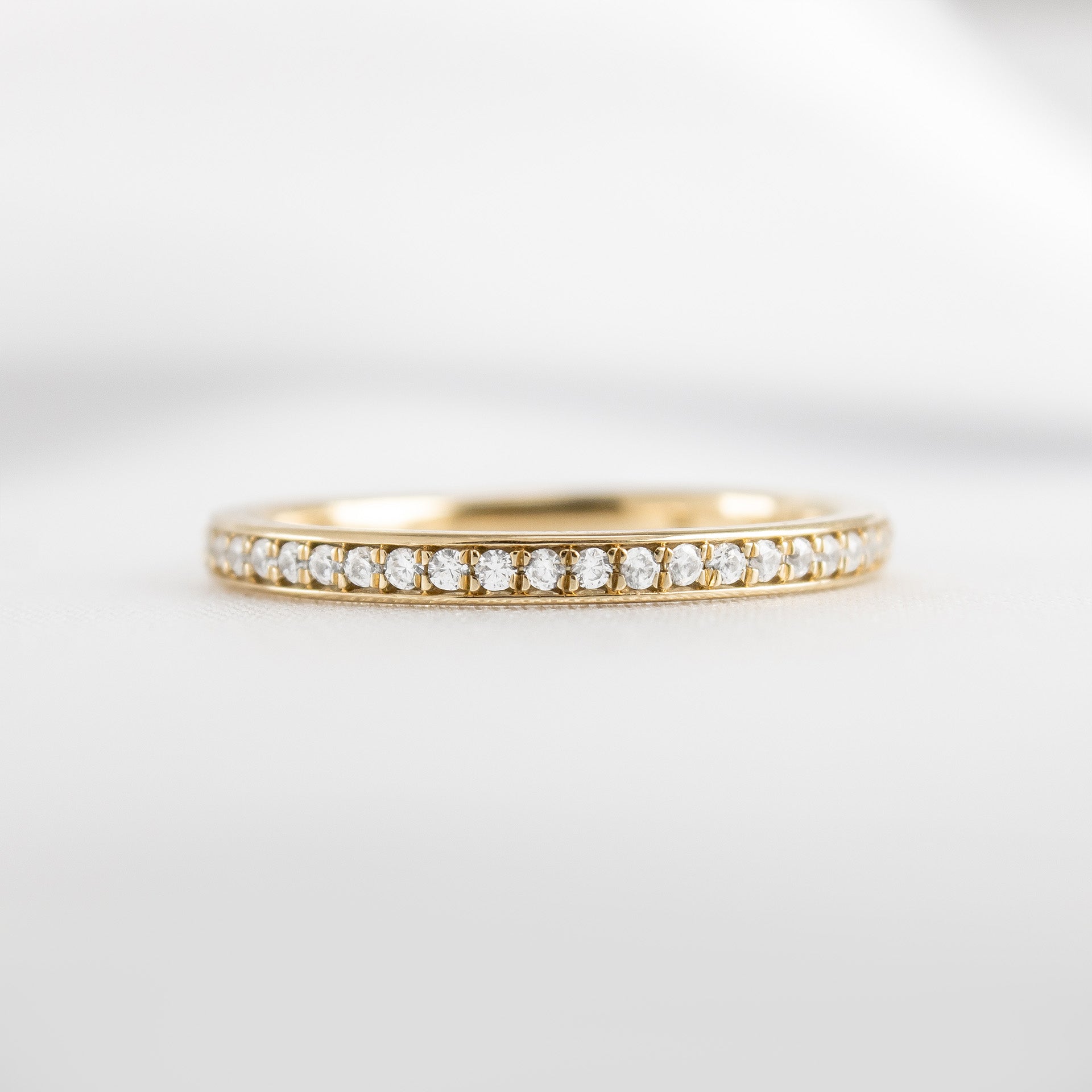
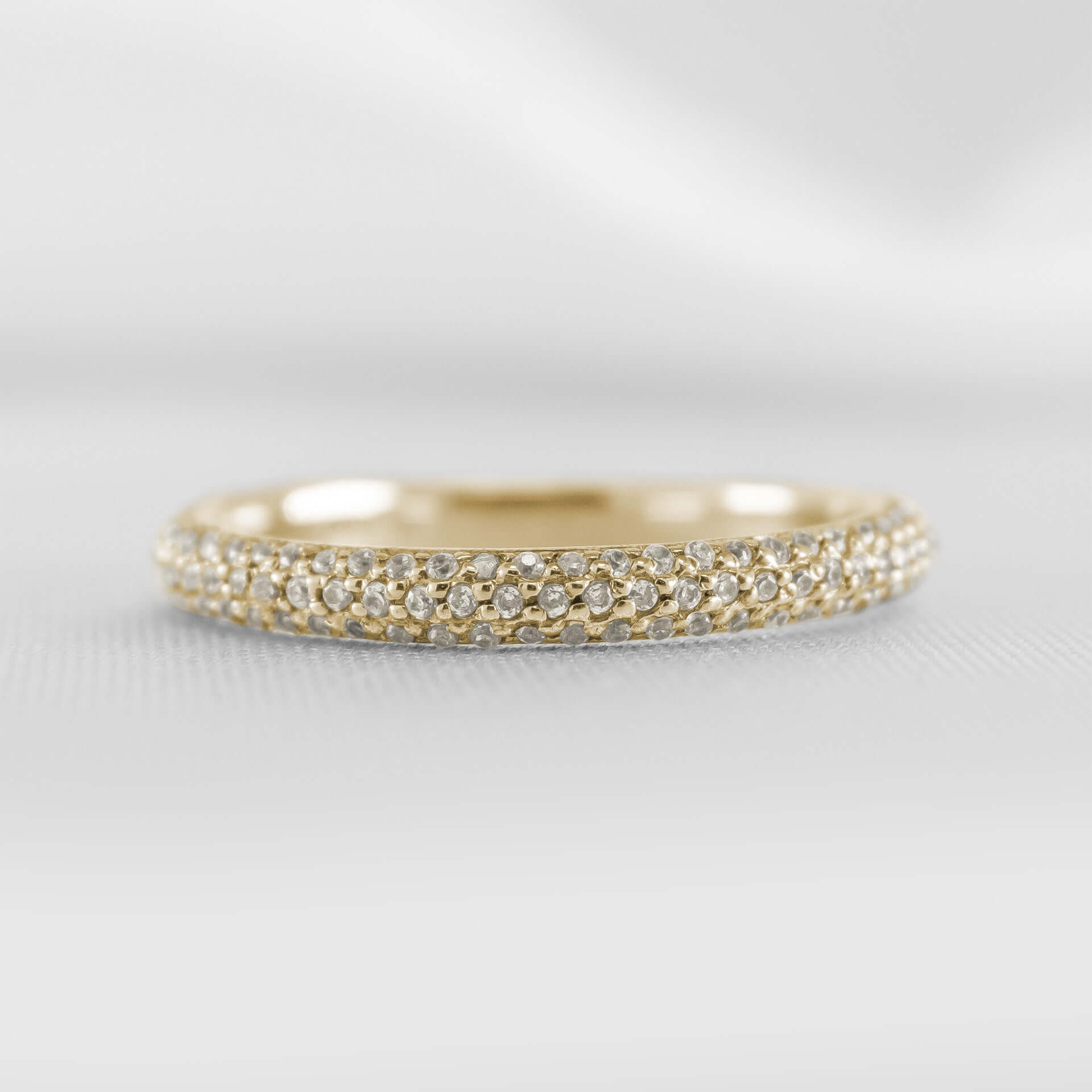
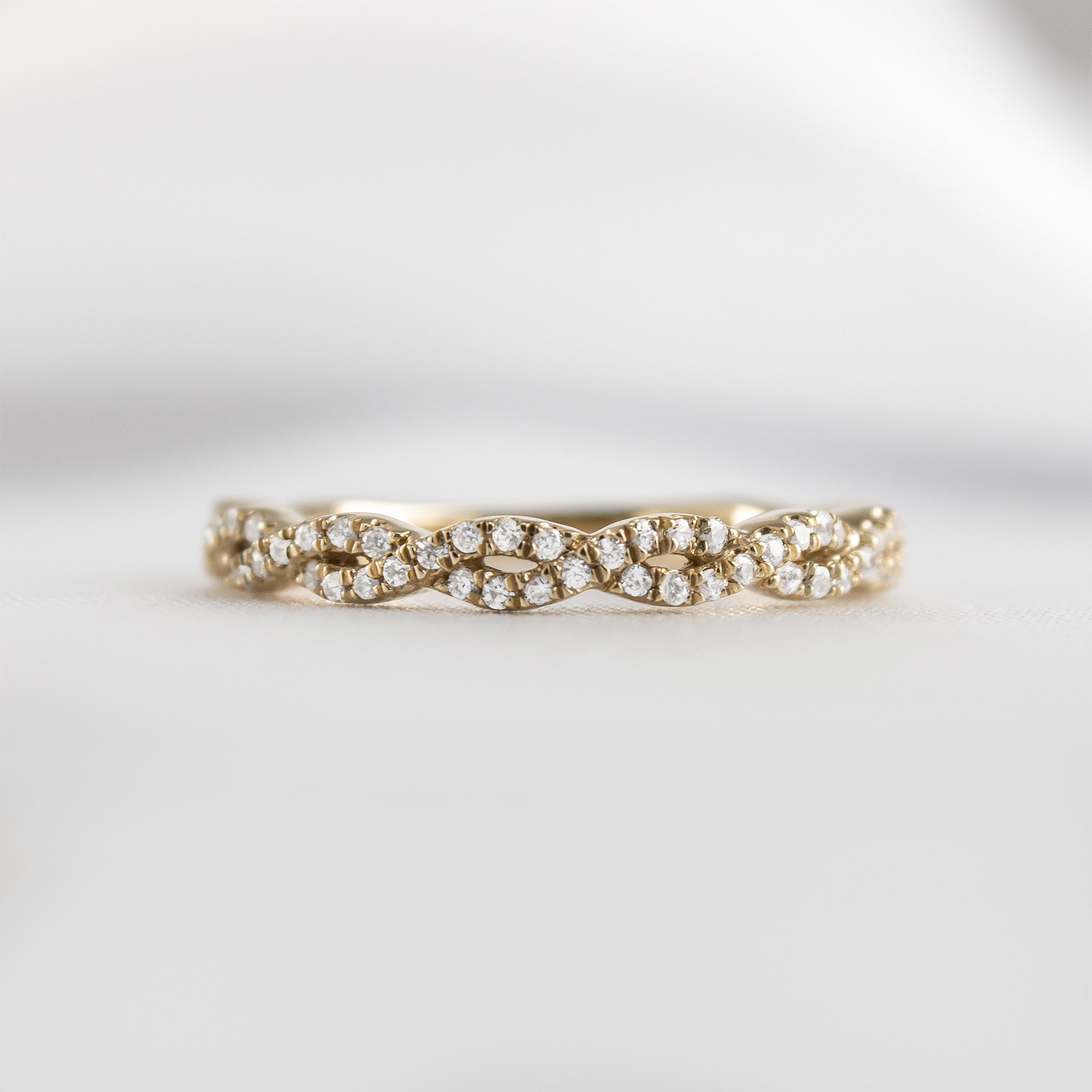
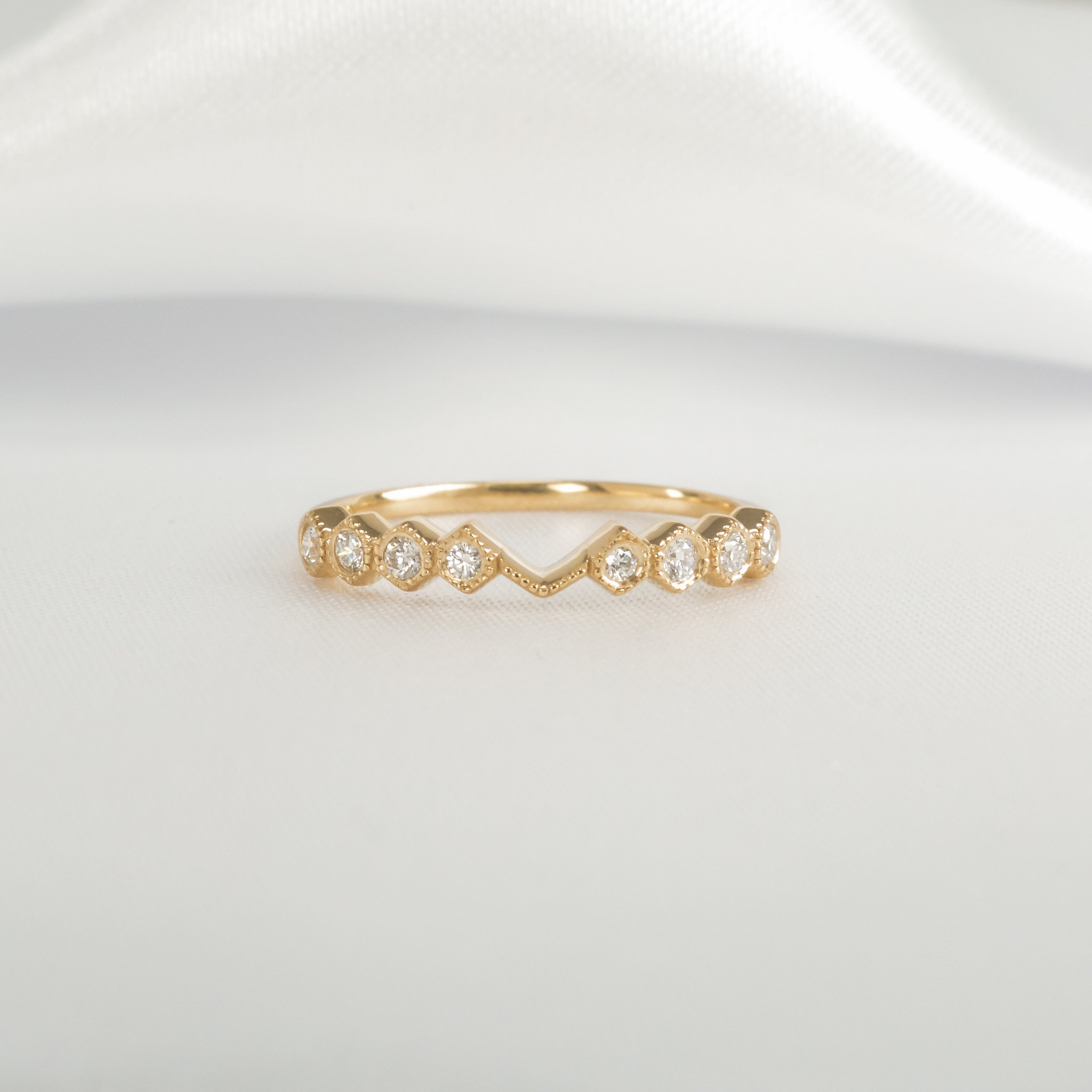
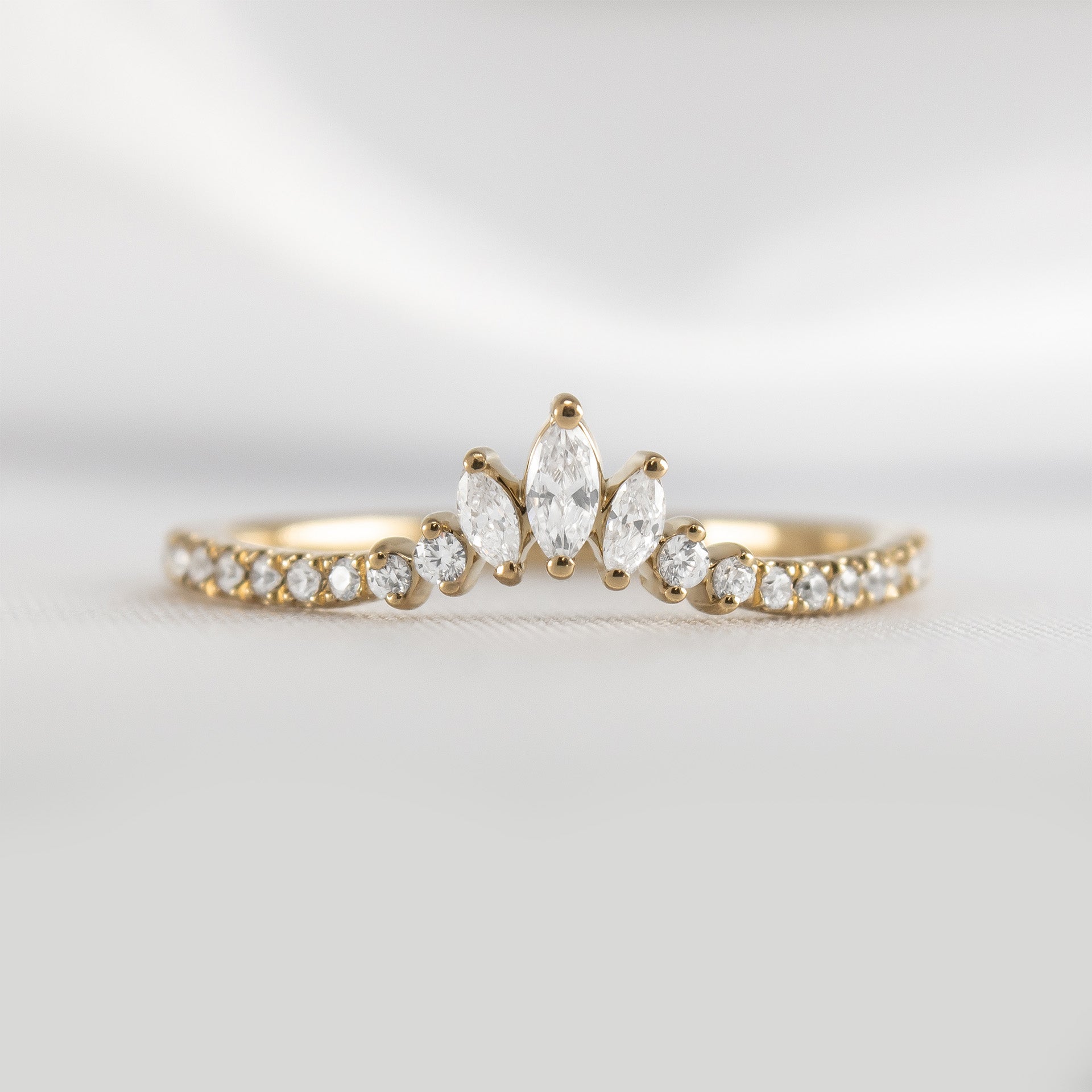
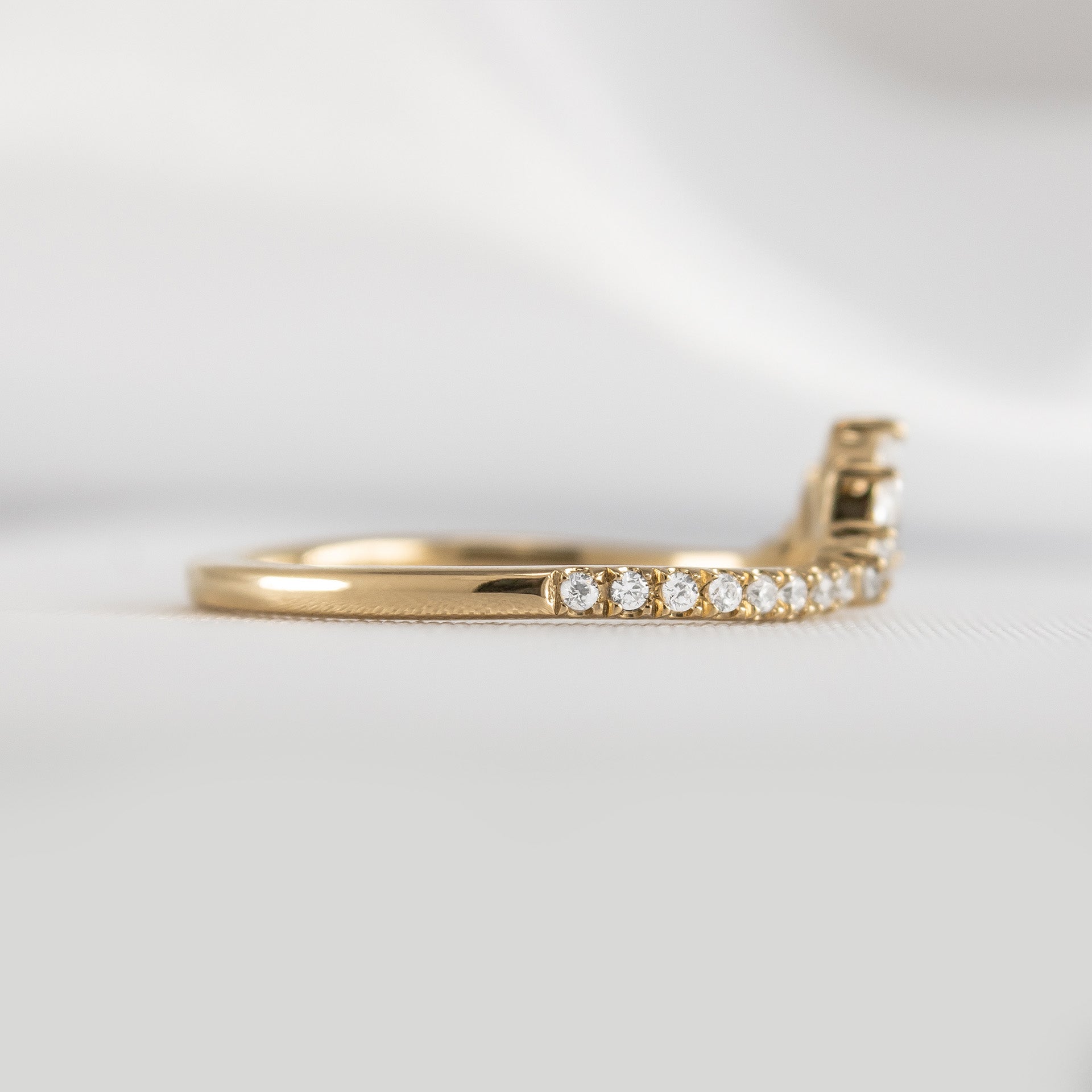
Pavé diamond bands: Small diamonds set close together across the band's top surface. Macey (1.5mm channel-set pavé), Valentina (1.4mm curved pavé), Marla (1.4mm pavé chevron).
Diamond Wedding Ring Categories
The 54 diamond wedding rings in this collection fall into several distinct categories.
Pavé diamond bands: Small diamonds set close together across the band's top surface. Macey (1.5mm channel-set pavé), Valentina (1.4mm curved pavé), Marla (1.4mm pavé chevron).
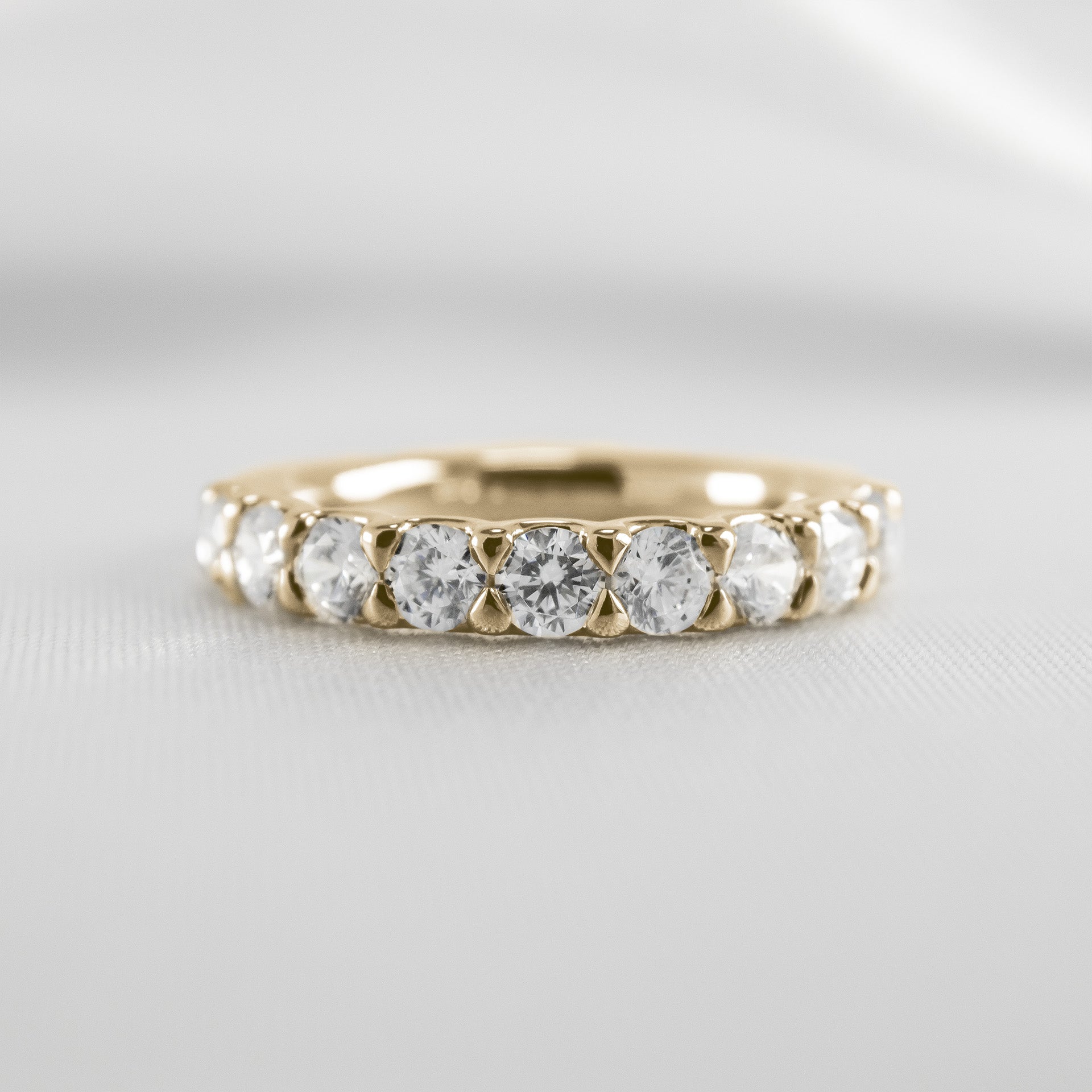
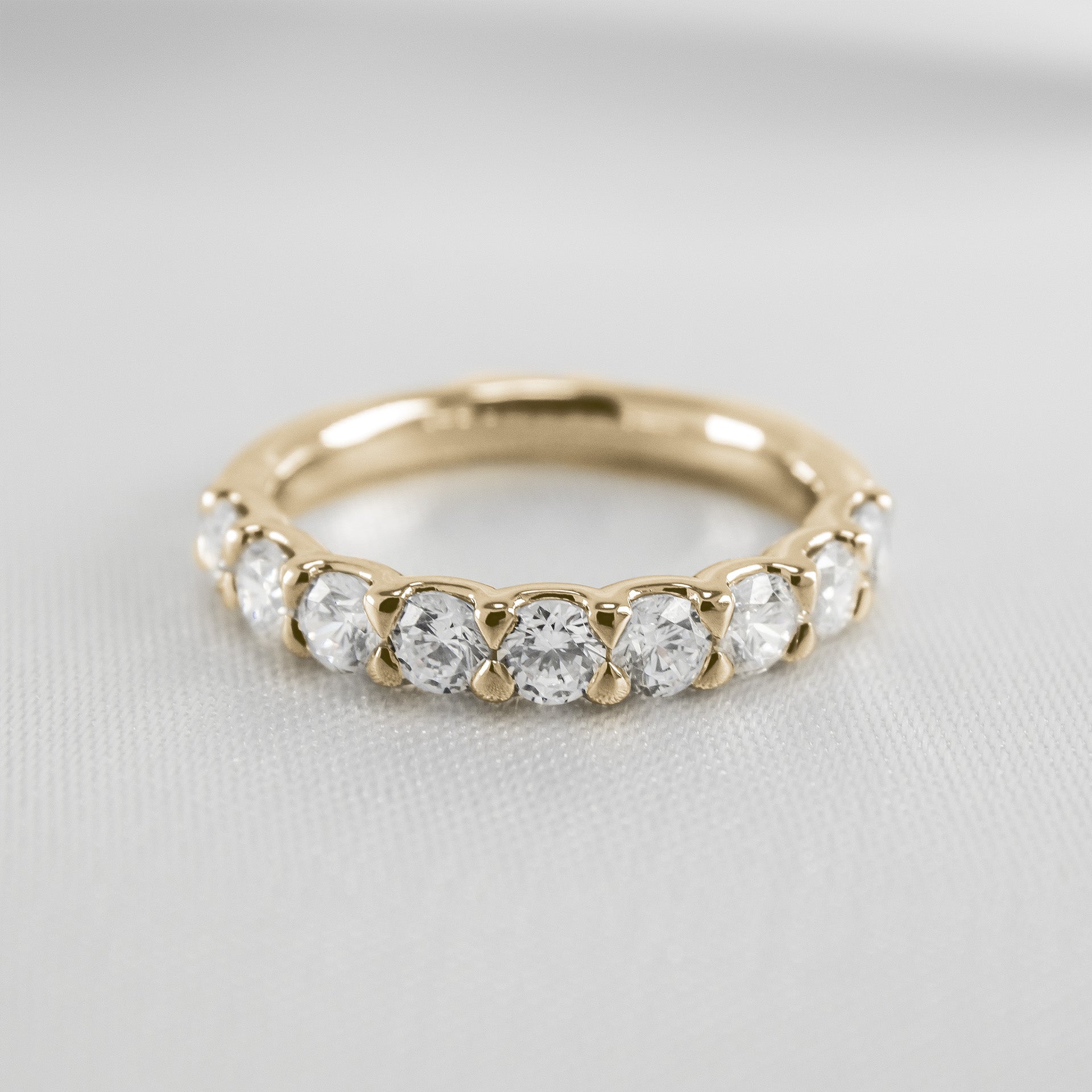
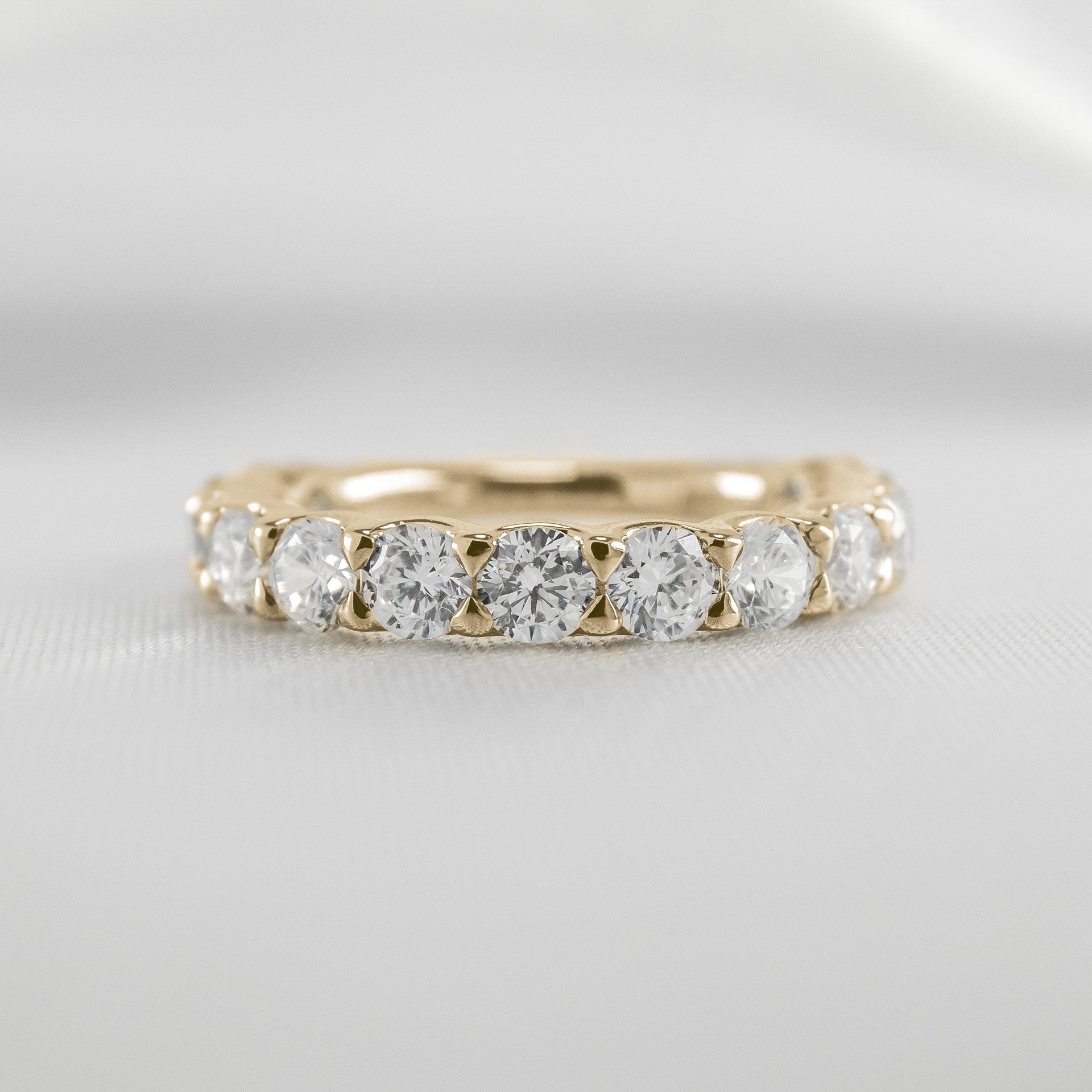
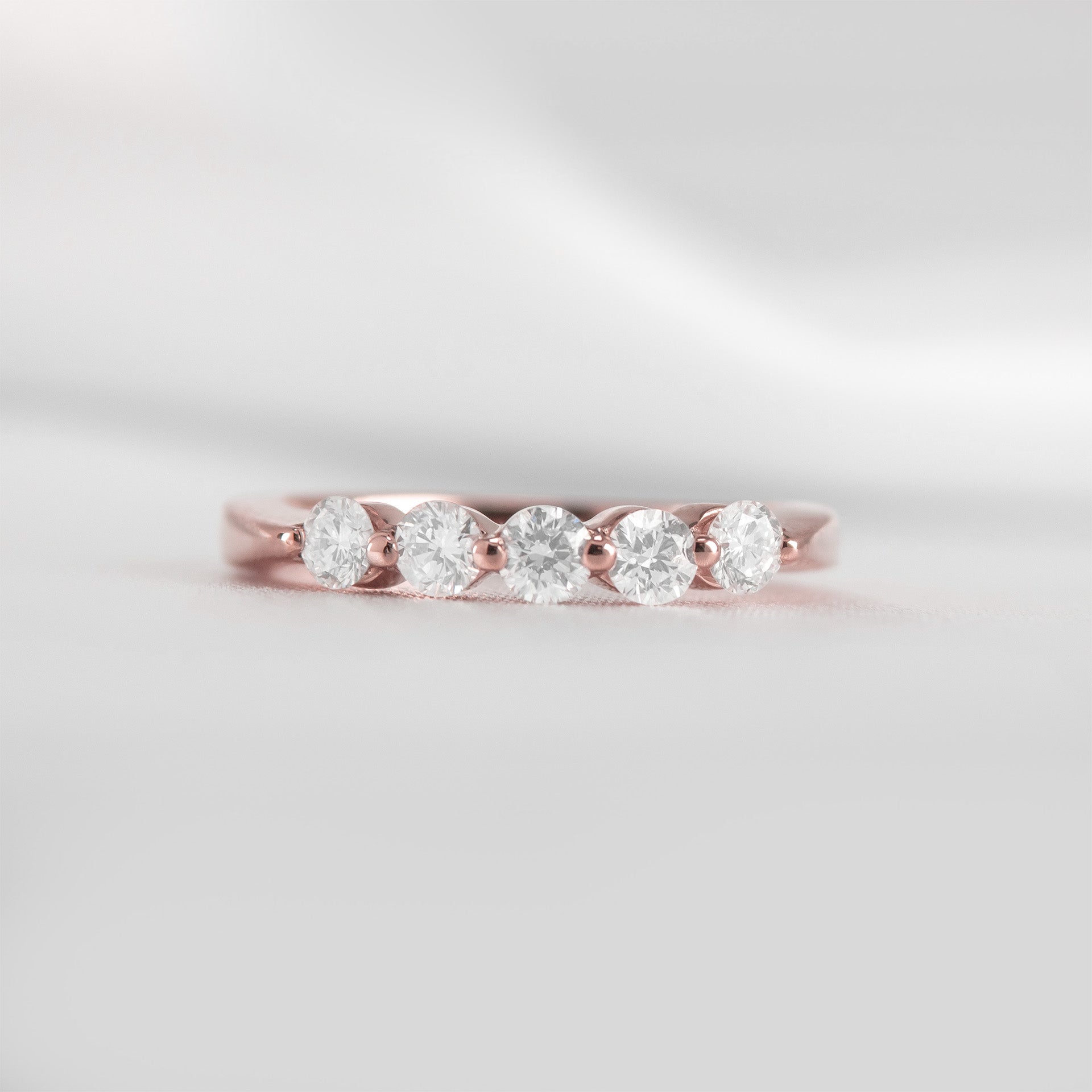
Half eternity diamond bands: Diamonds across the visible top portion of the band, leaving the underside in solid metal. Drew, Mercer (emerald cut half eternity).
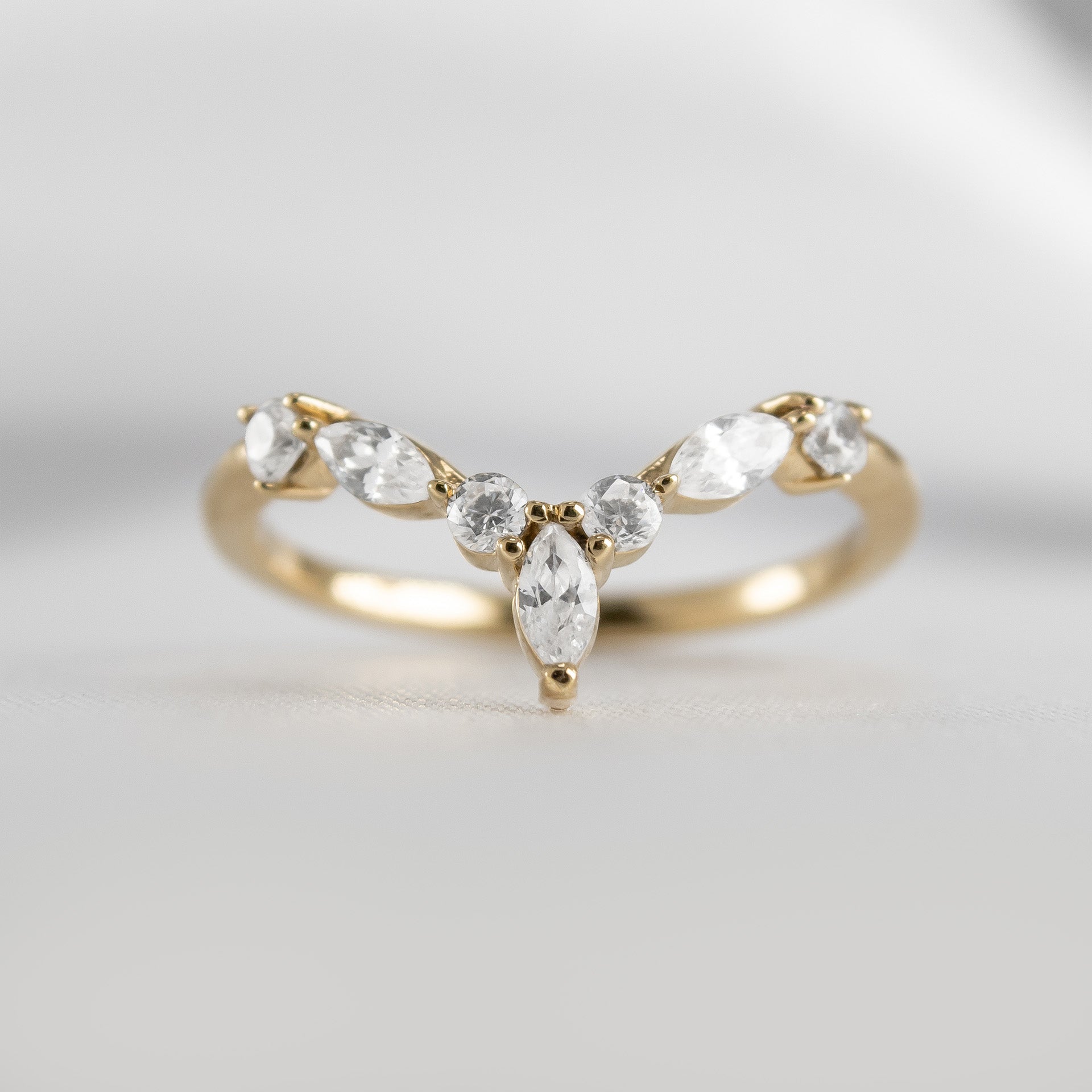
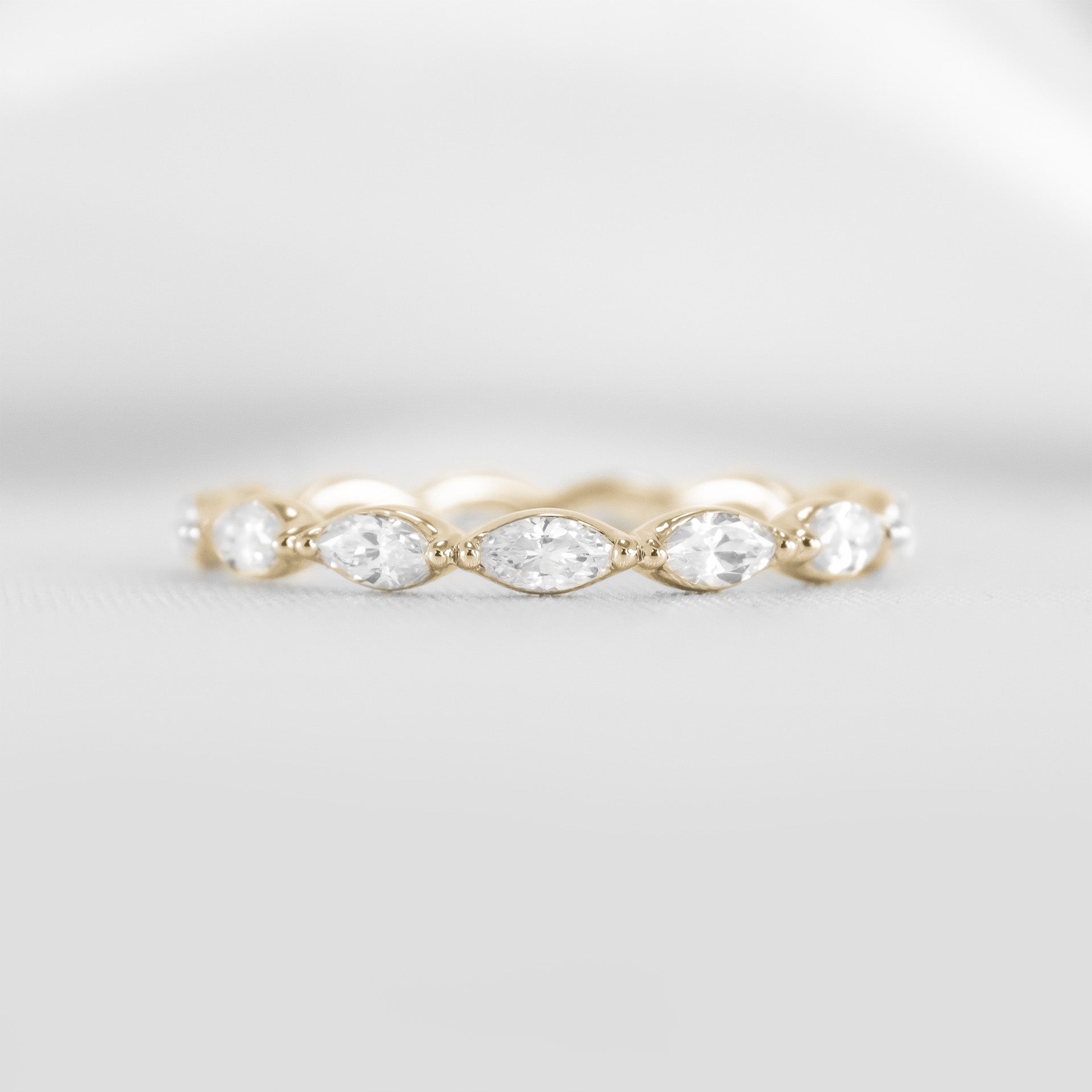
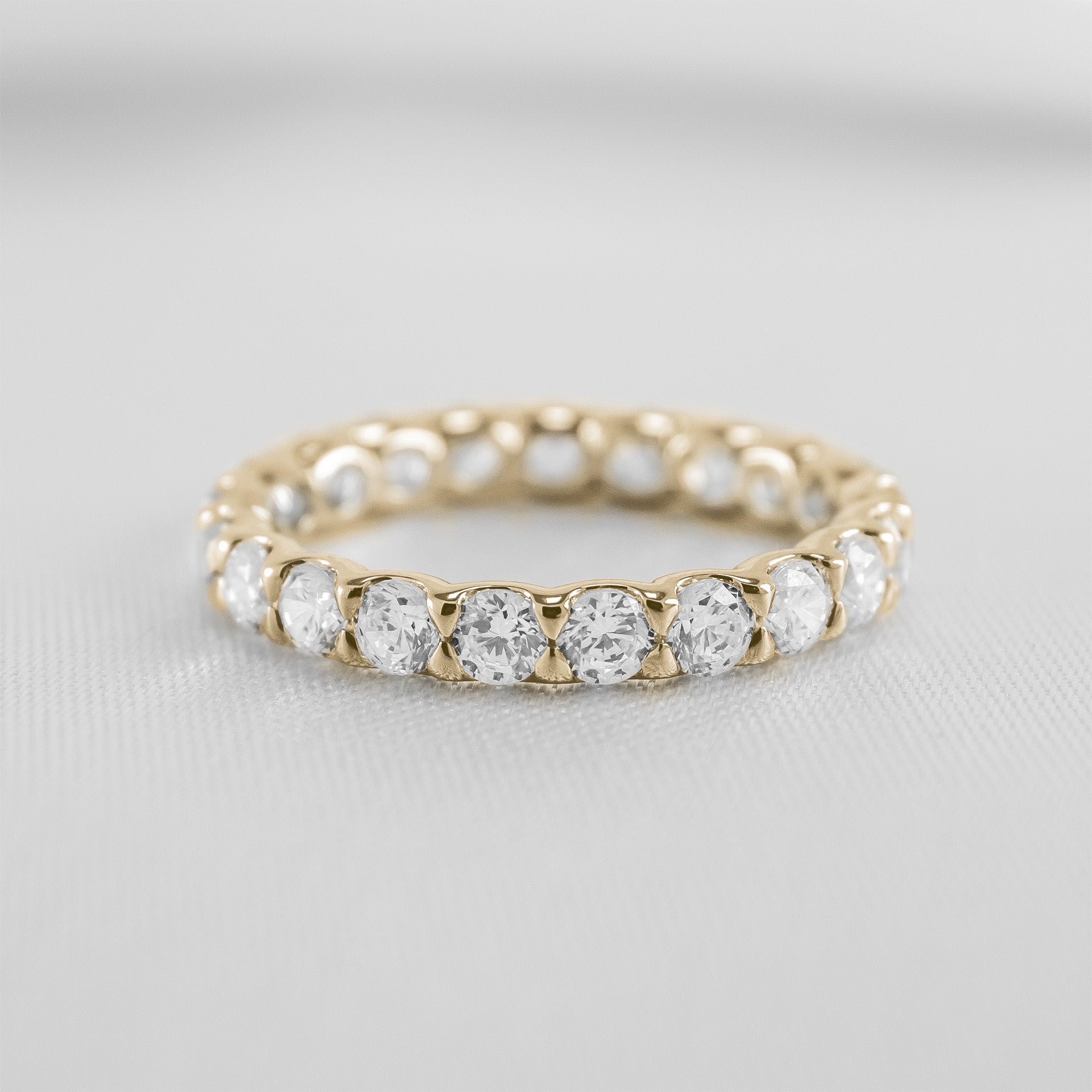
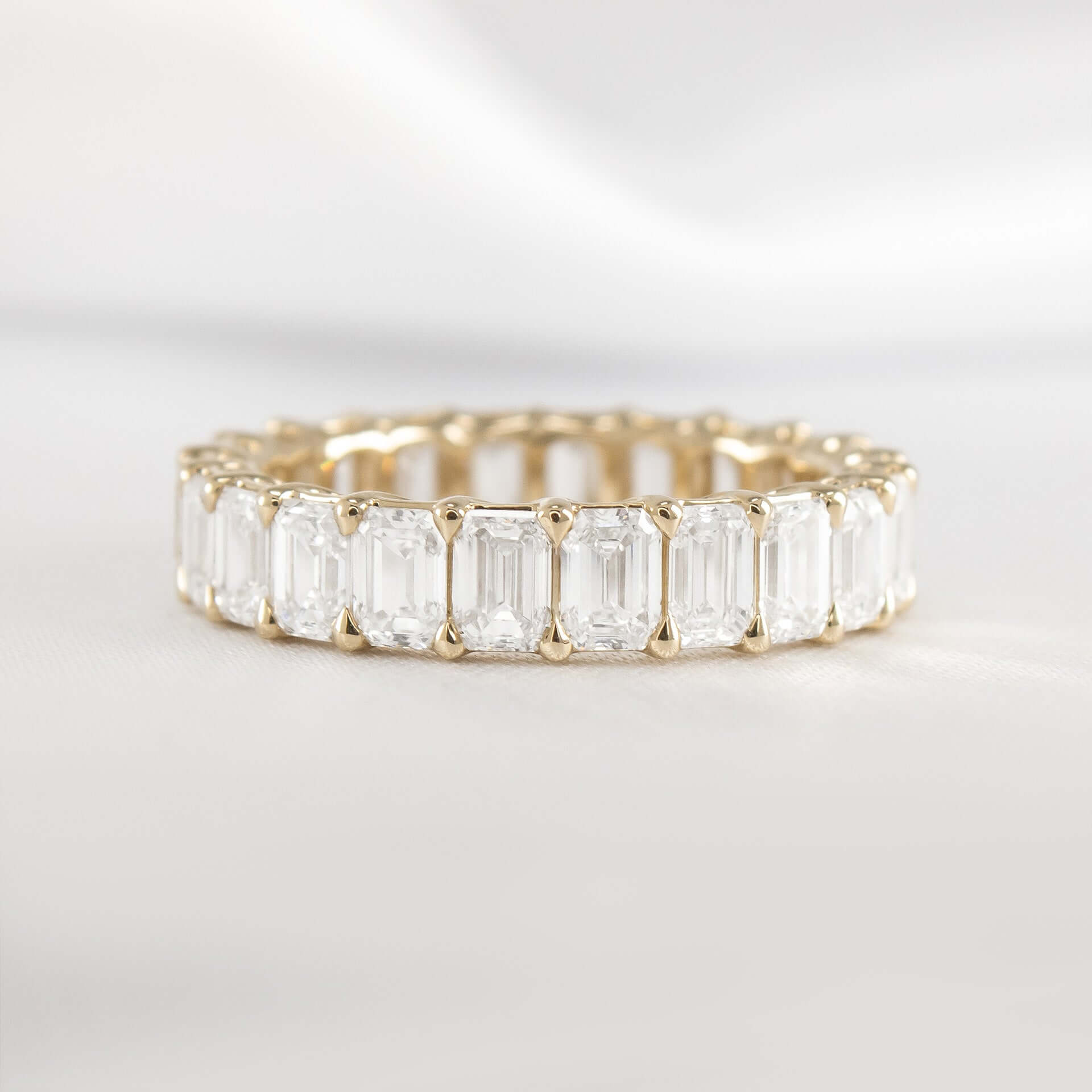
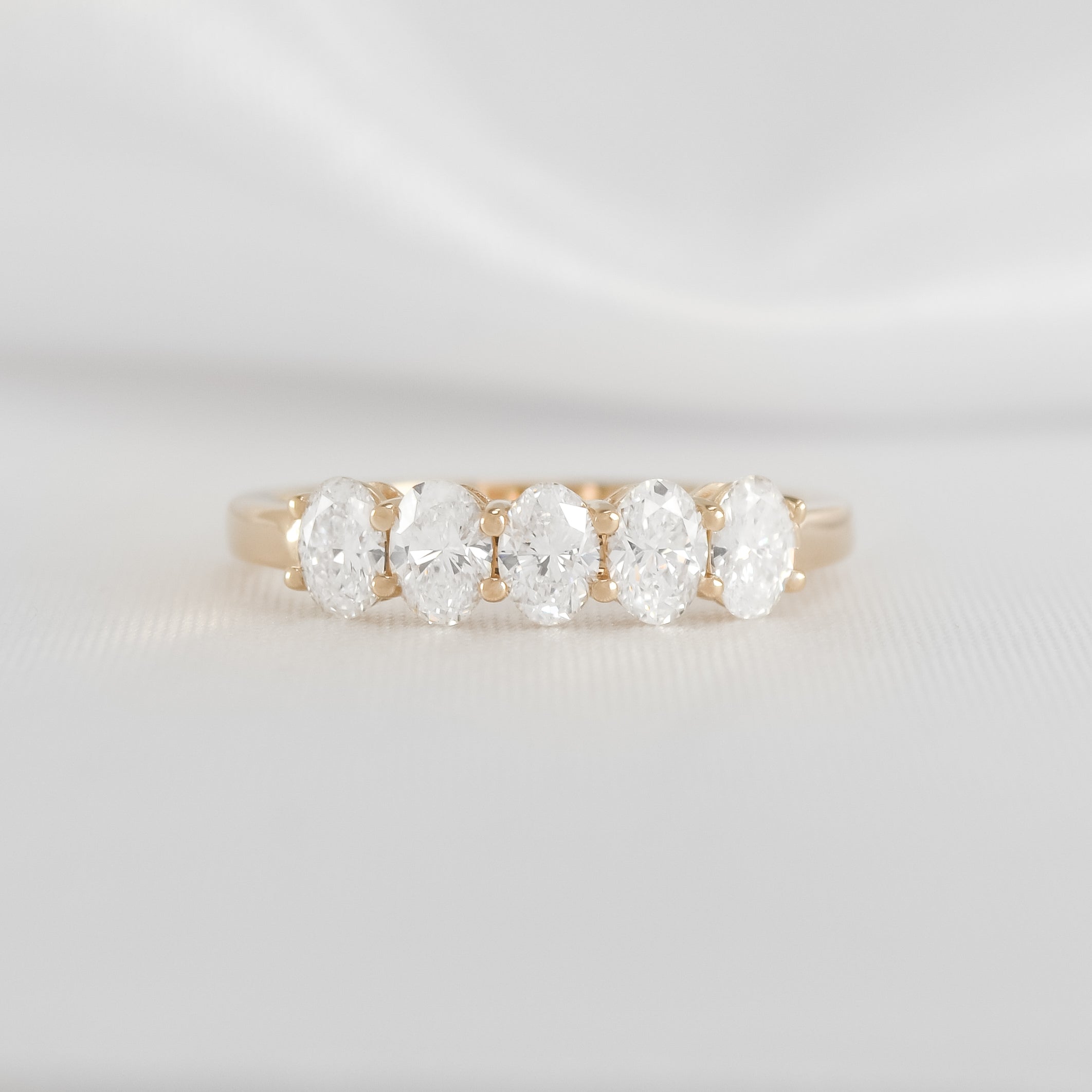
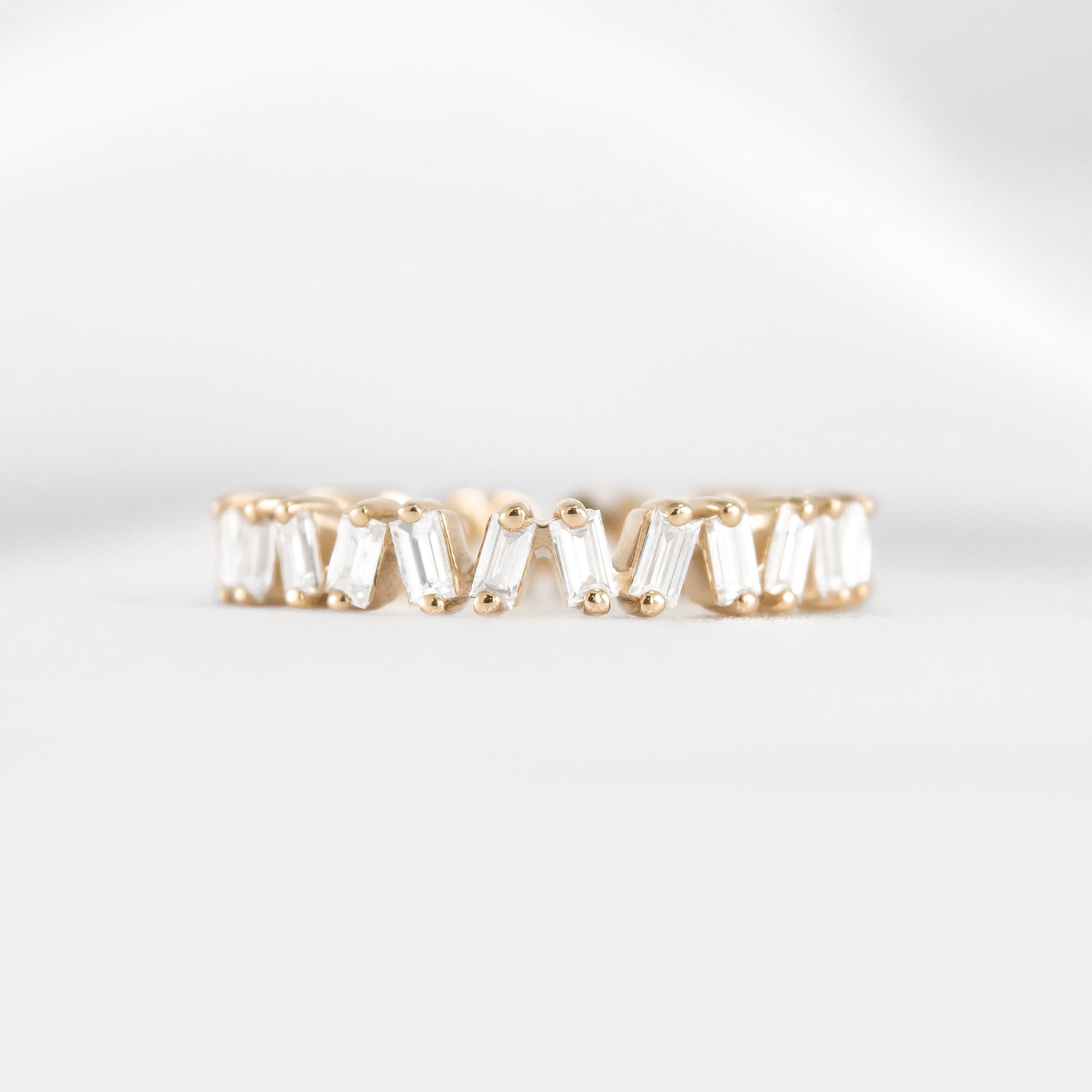
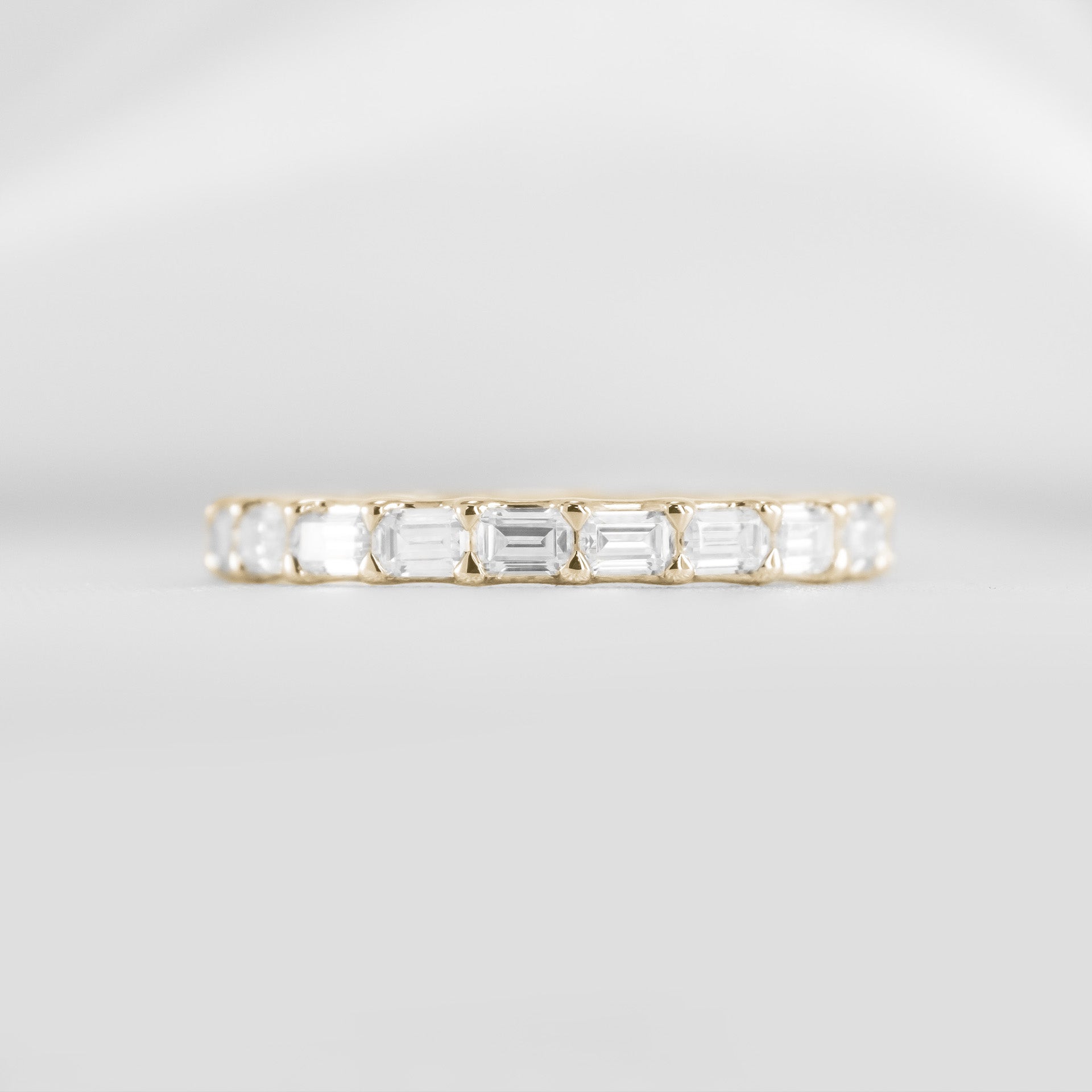
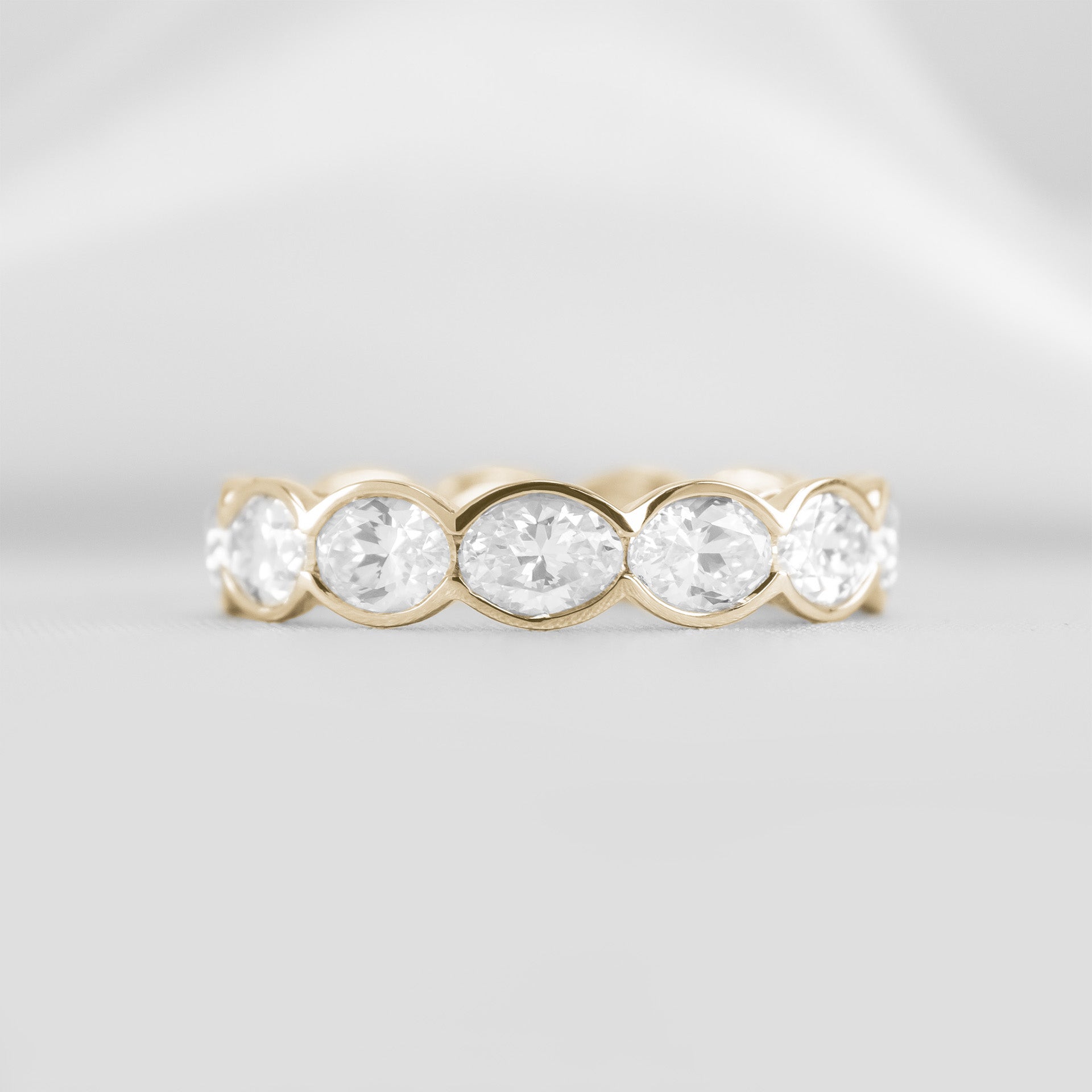
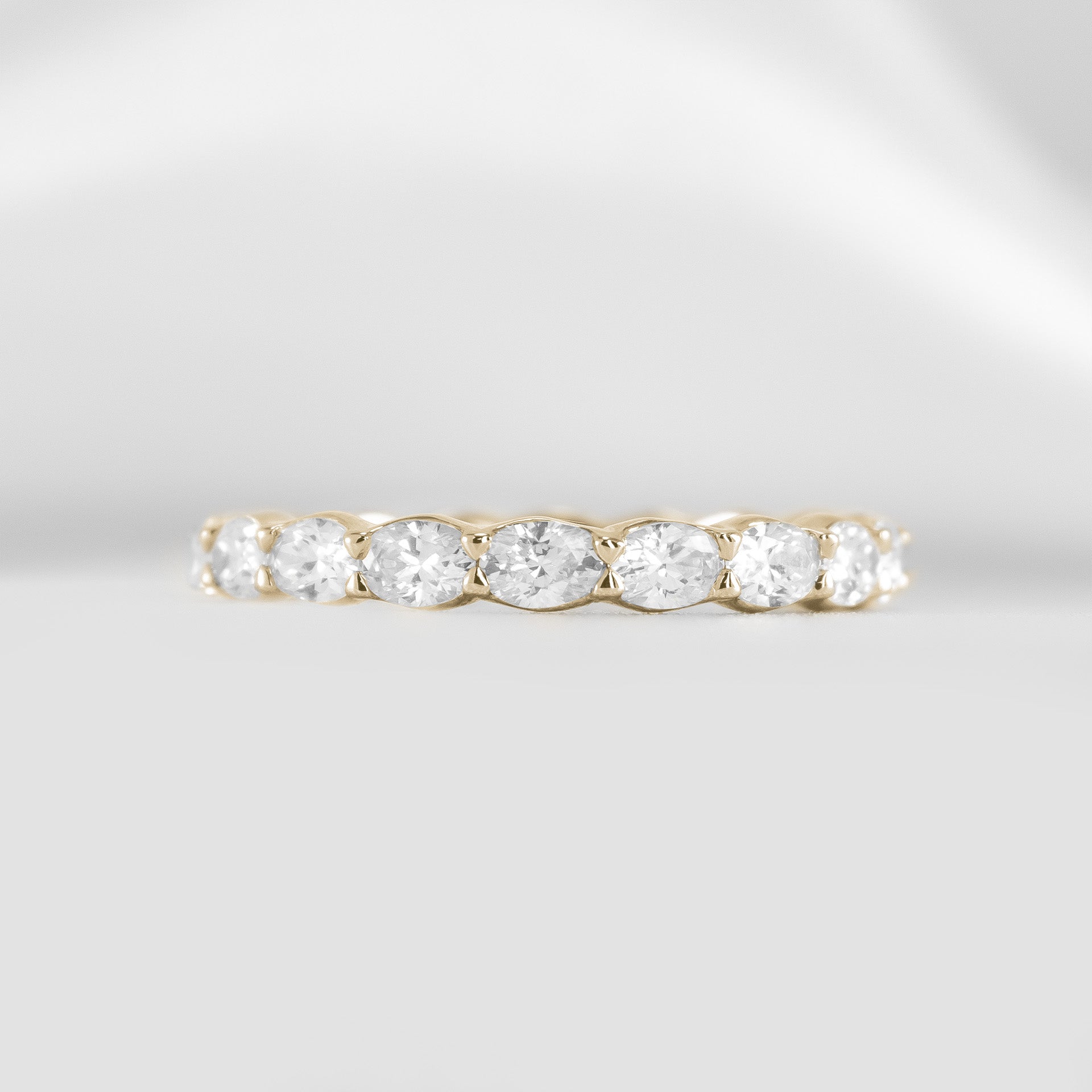
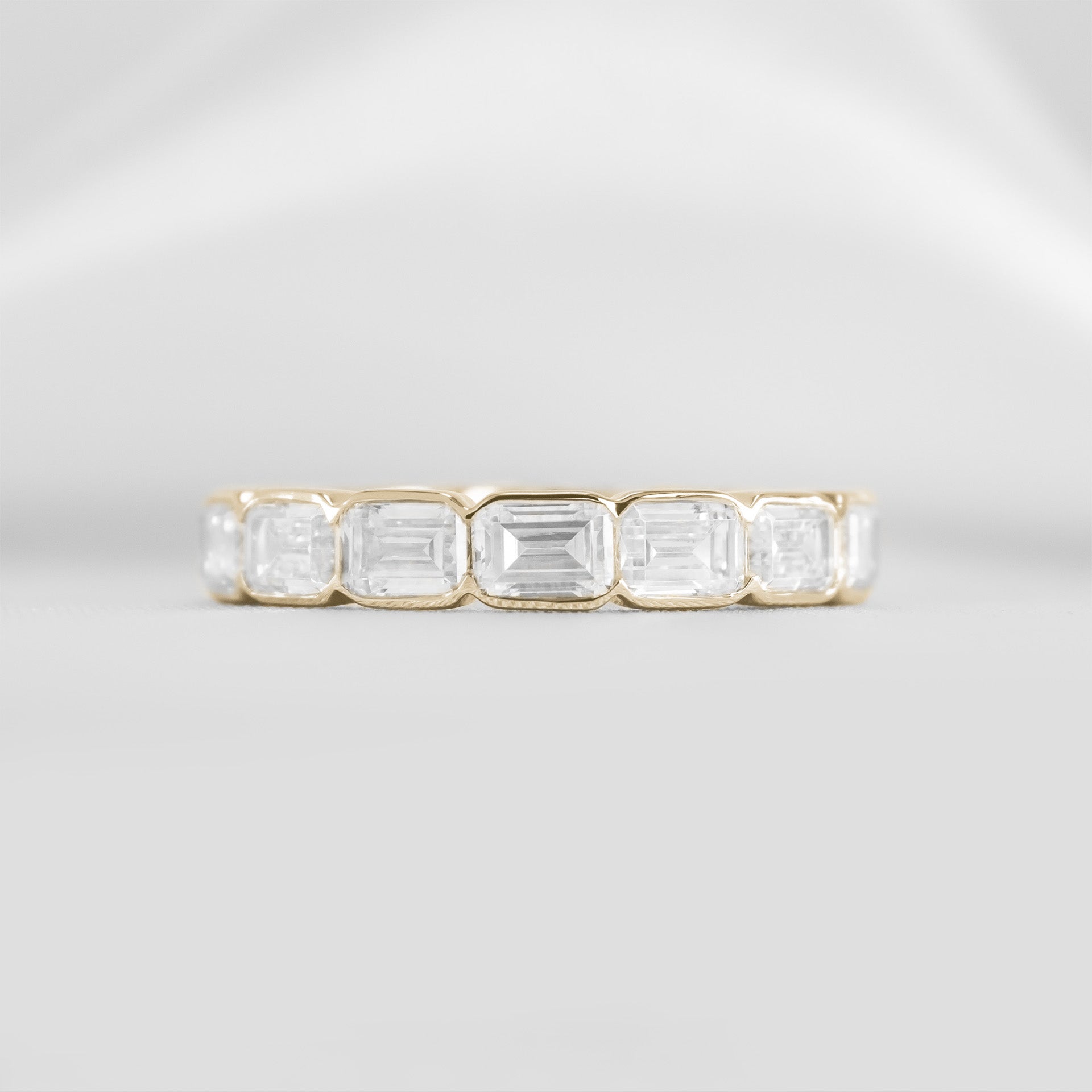
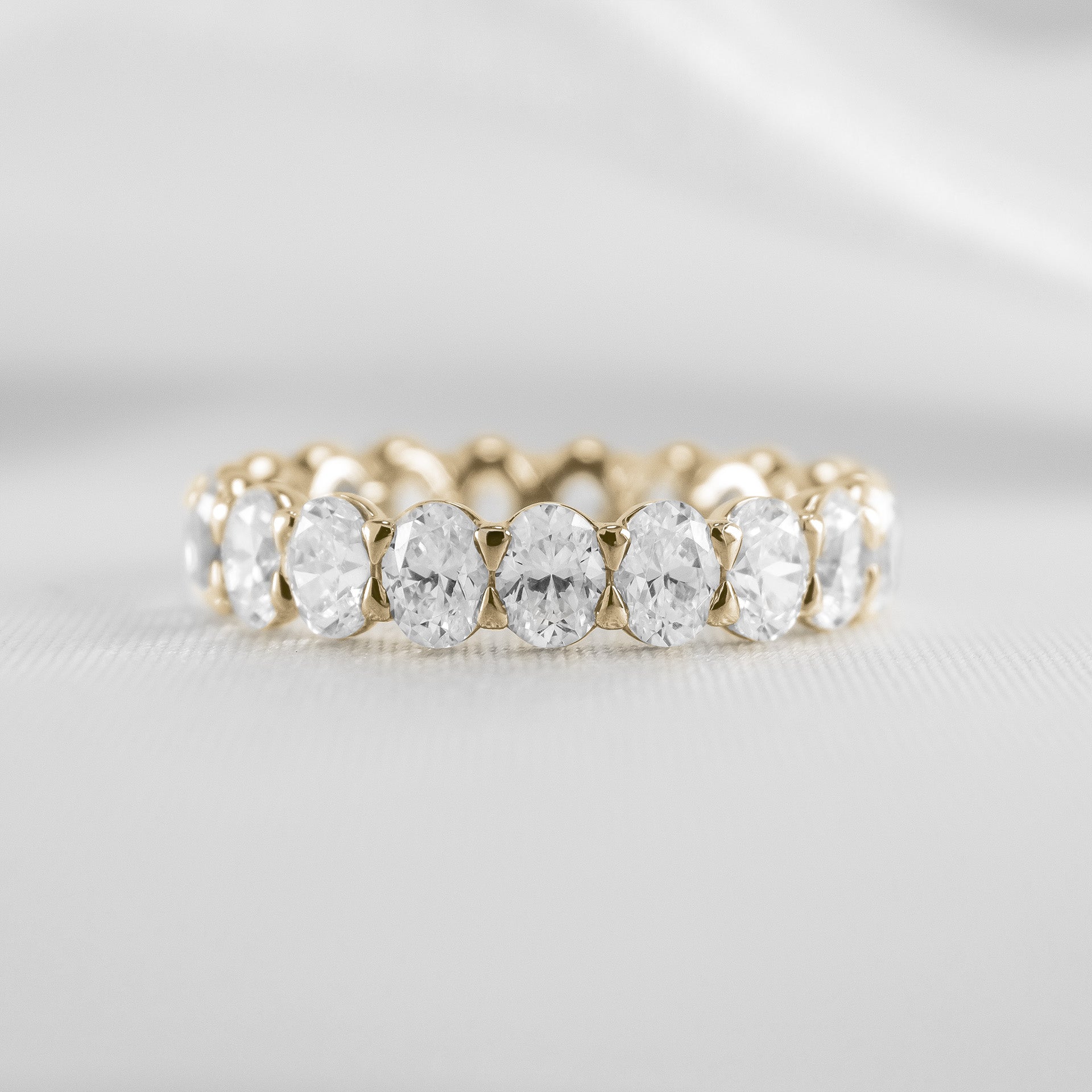
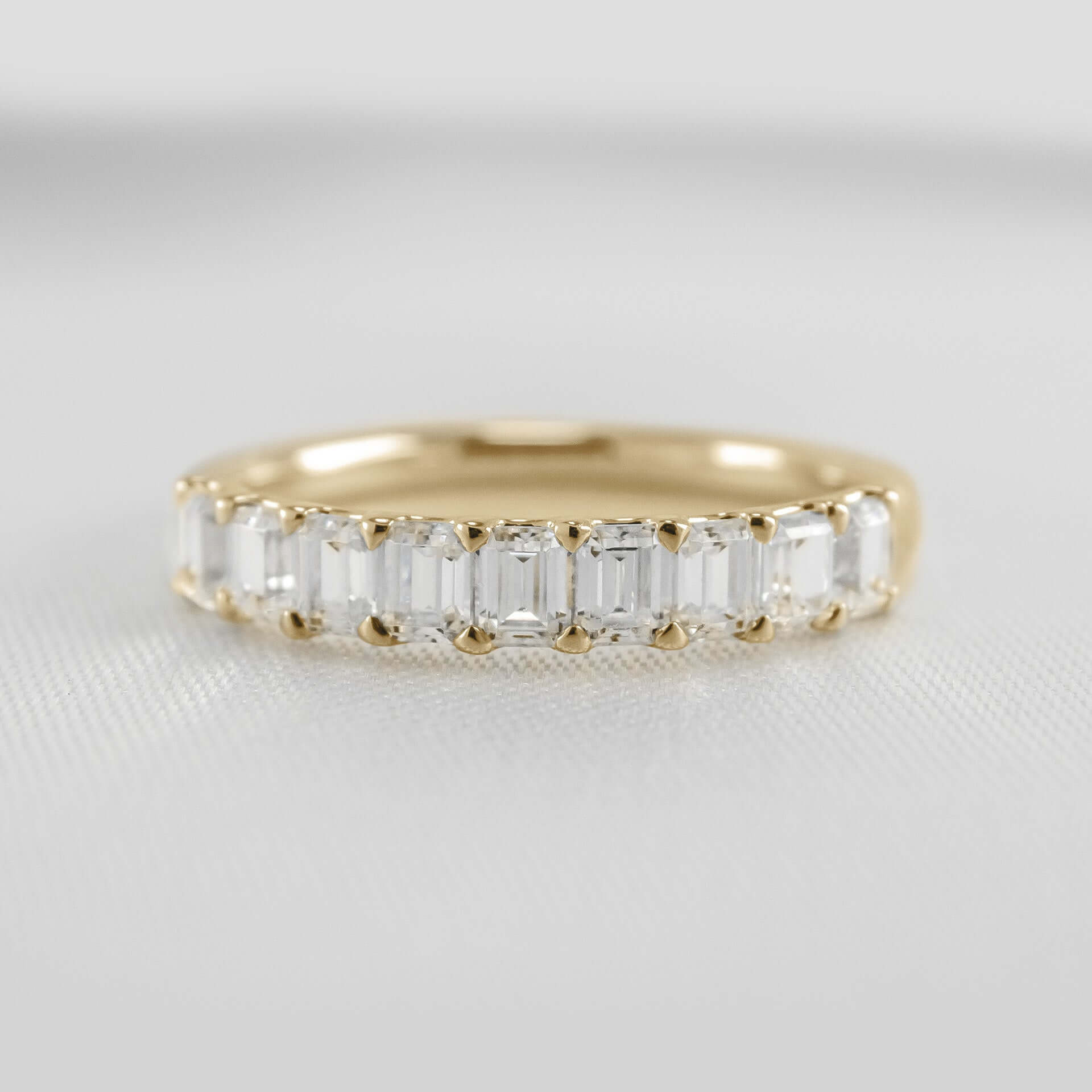
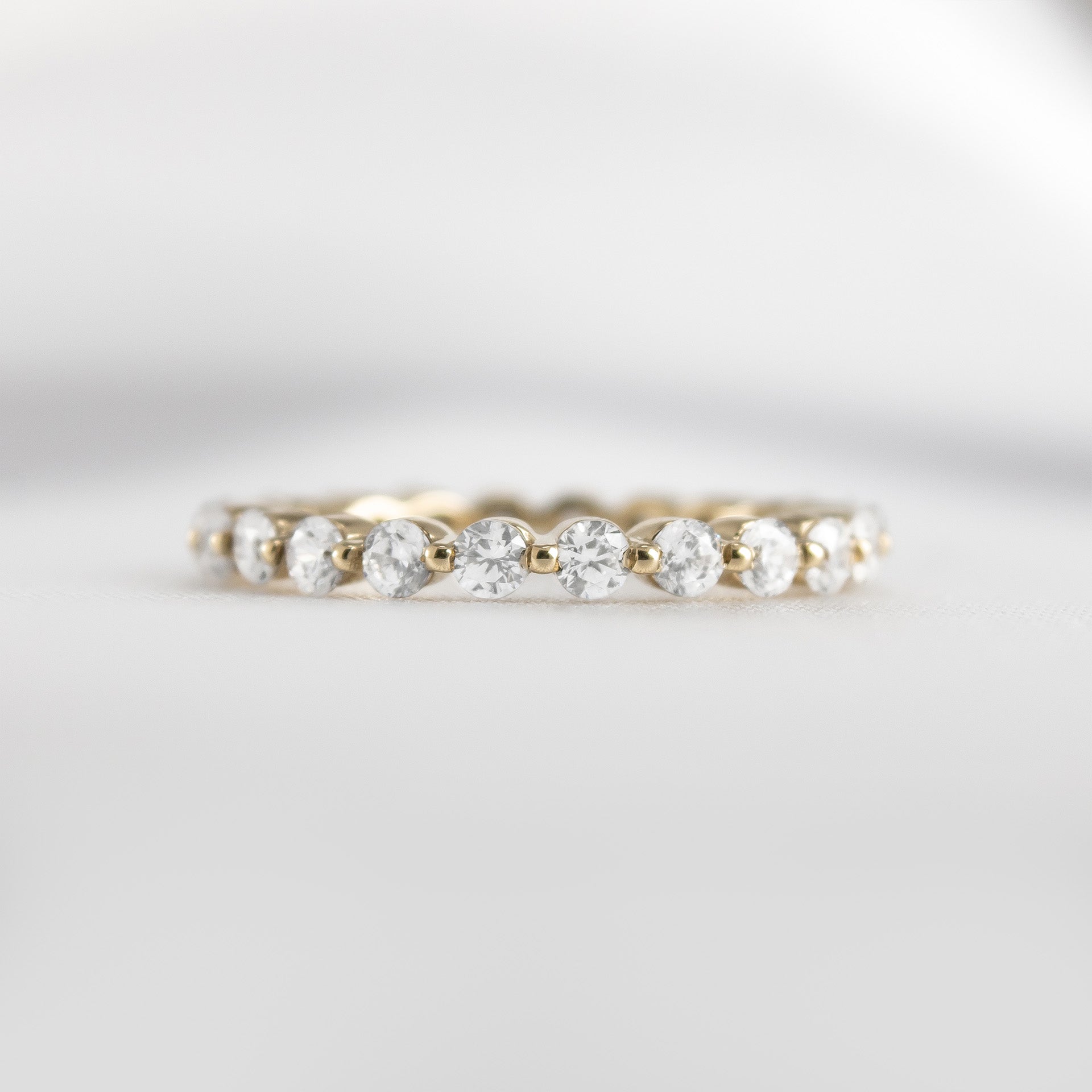
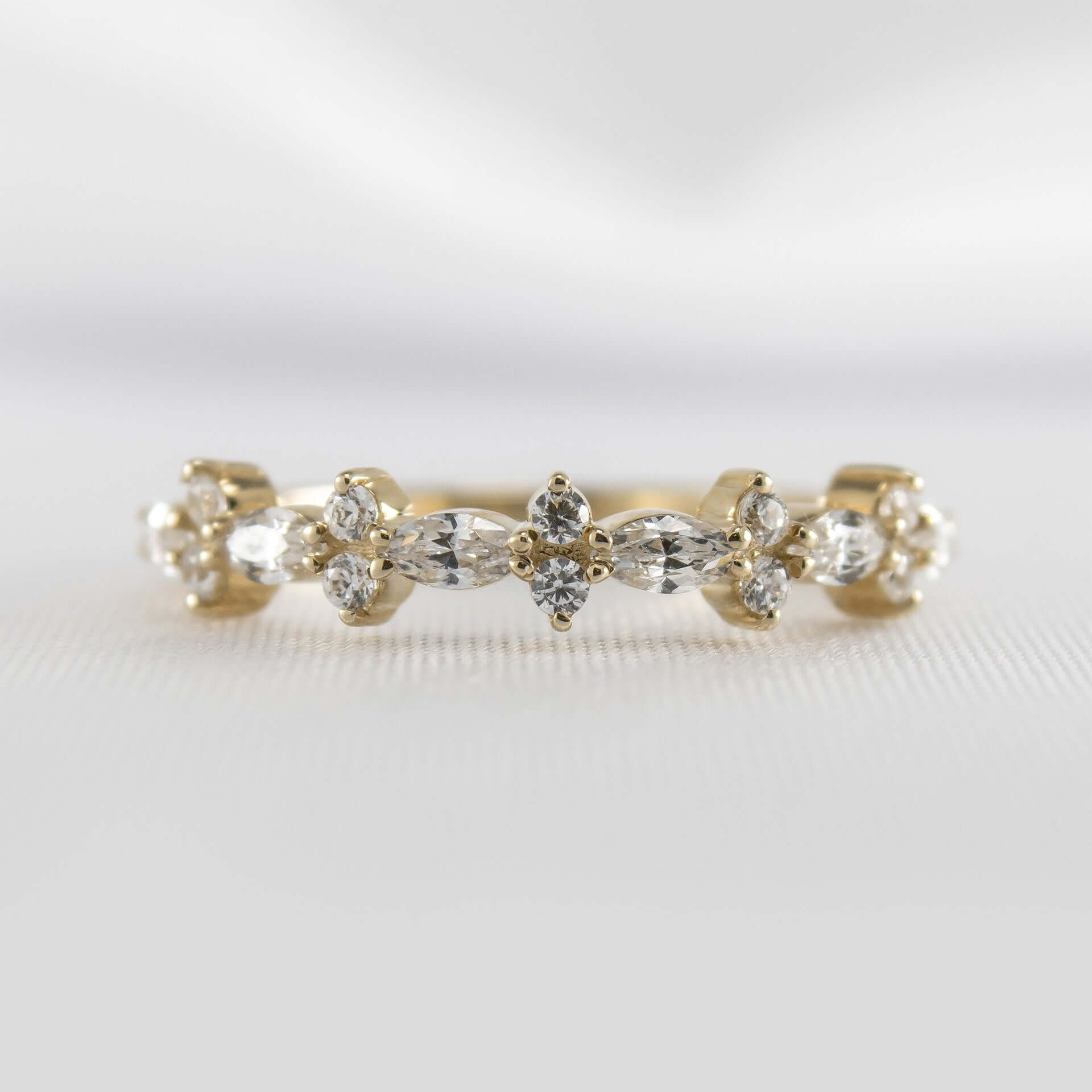
Full eternity bands: Diamonds around the entire circumference. Aniston (emerald cut), Lindon (princess cut), Mayumi (emerald cut bezel), Samara (half-bezel oval), Sutton (oval), Tristan (floating), Vashti (east-west marquise), Blaine (baguette), Avery (east-west emerald cut).
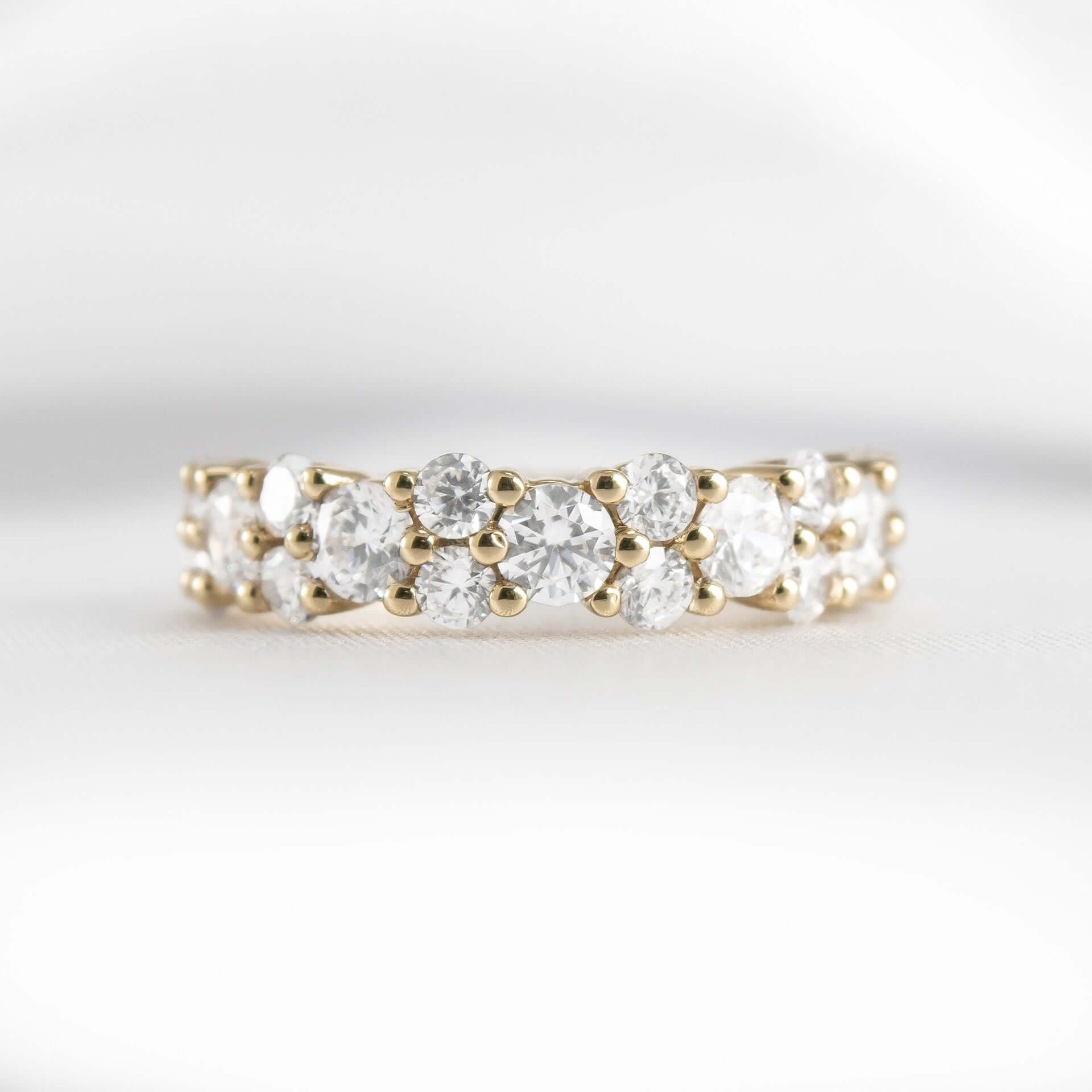
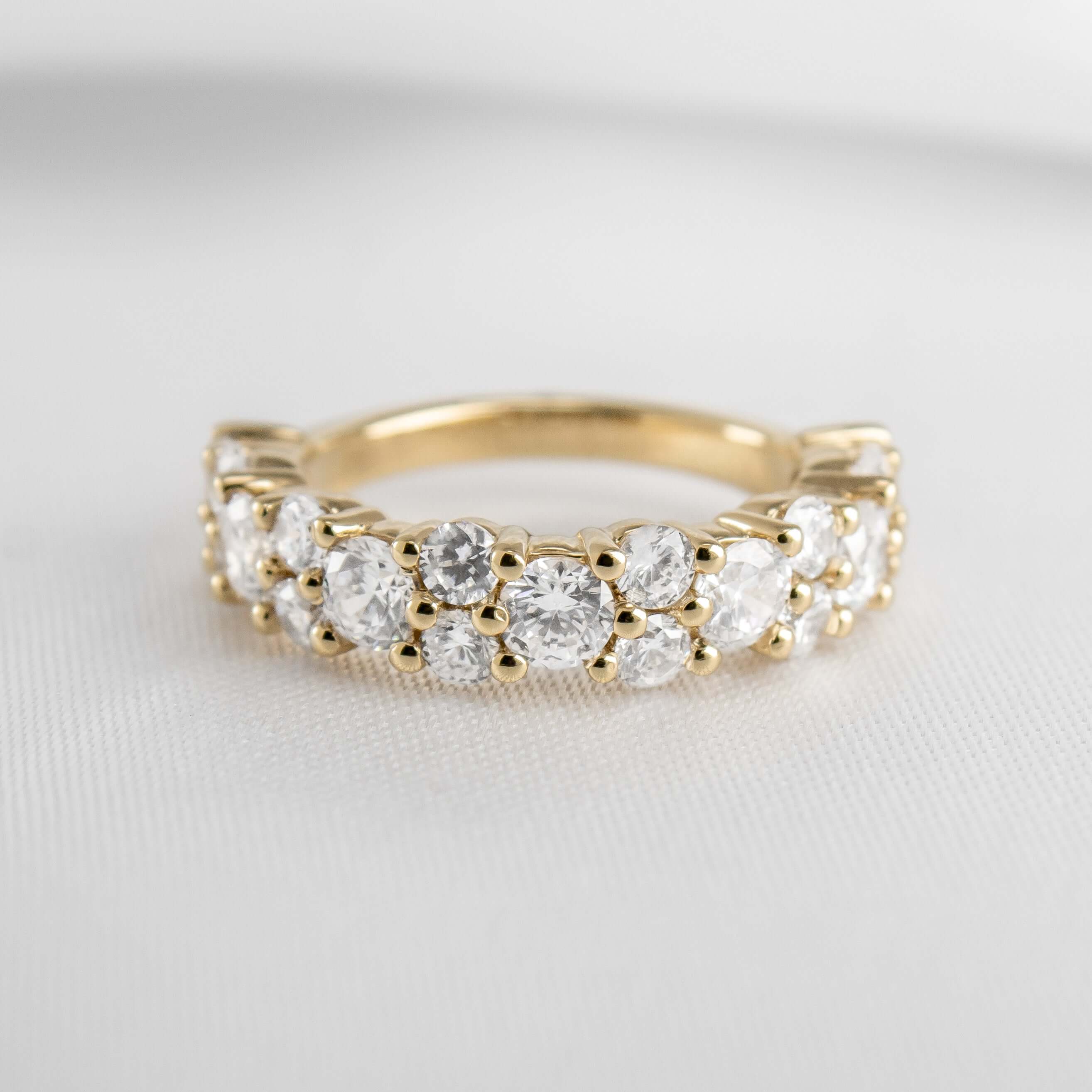
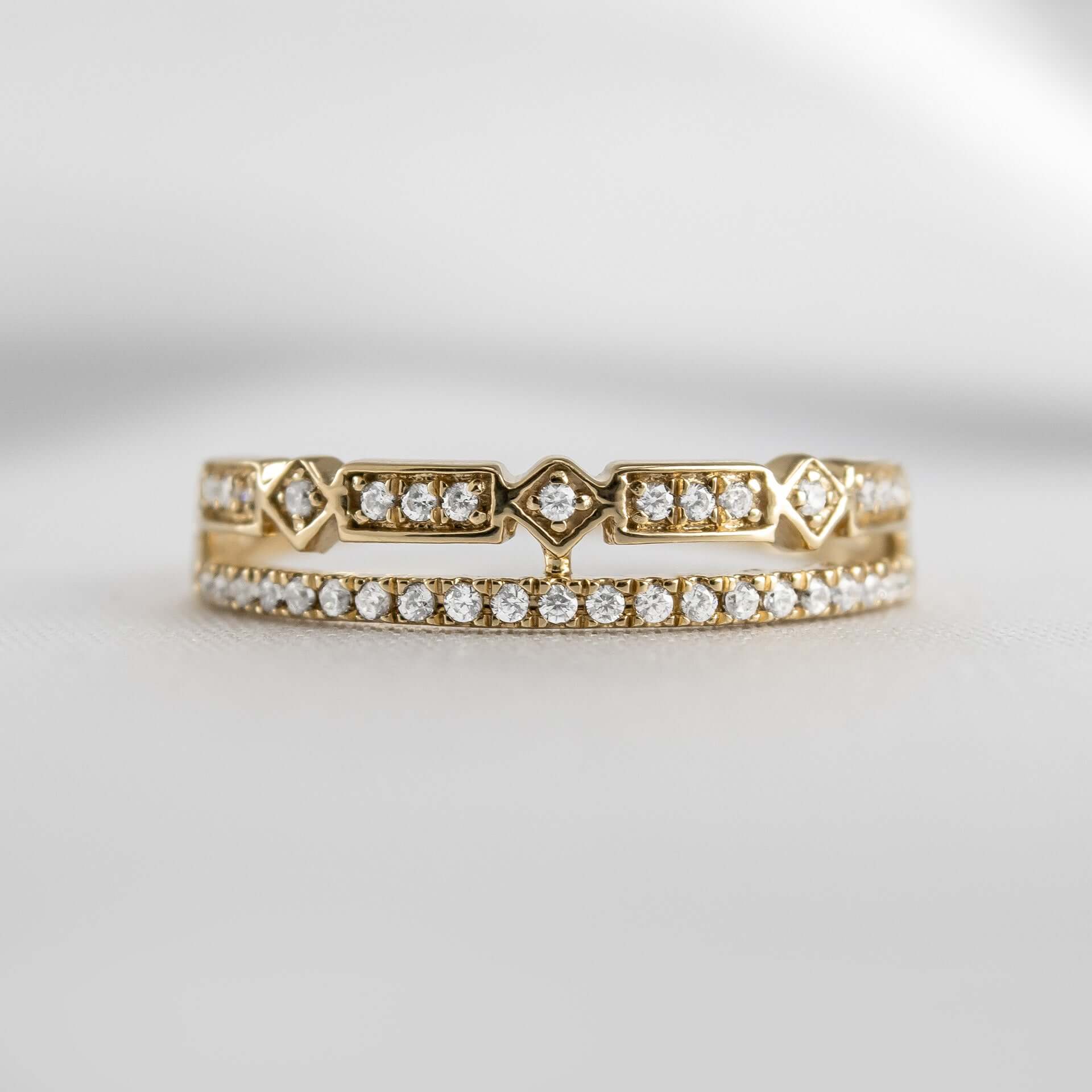
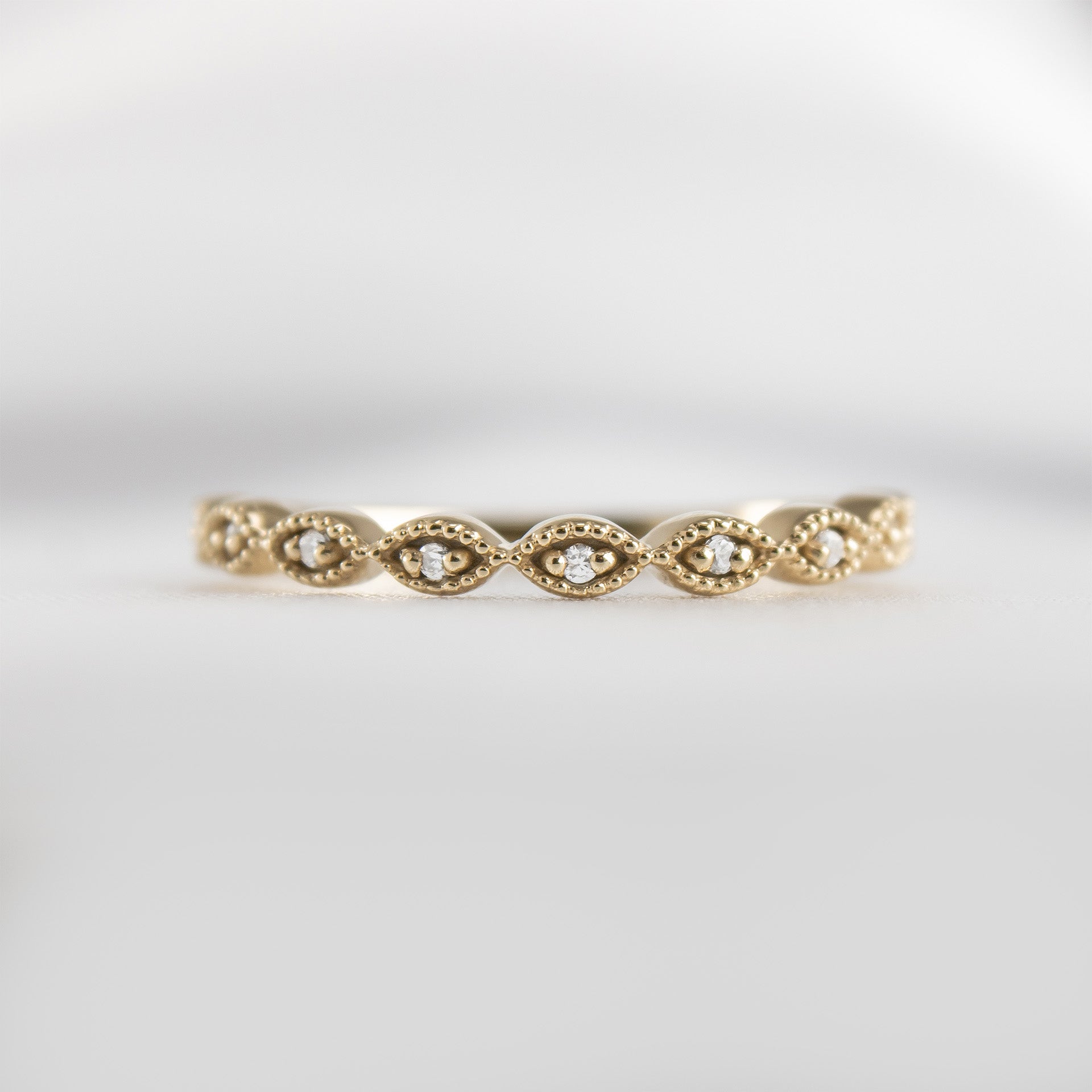
Narrow accent diamond bands: Refined narrow widths with delicate diamond detail. Frances (1.3mm vintage), Naomi (2.6mm with two parallel diamond rows).
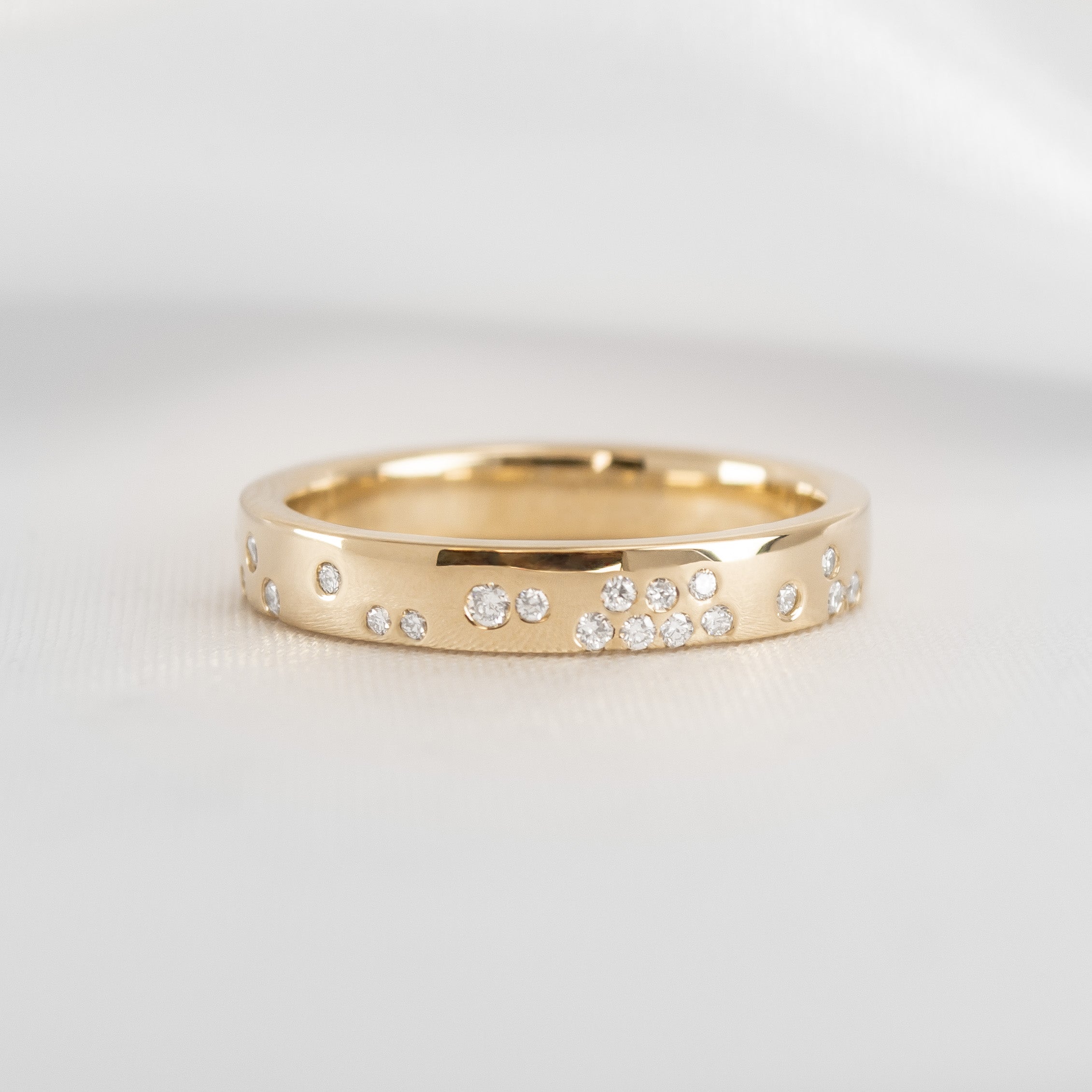
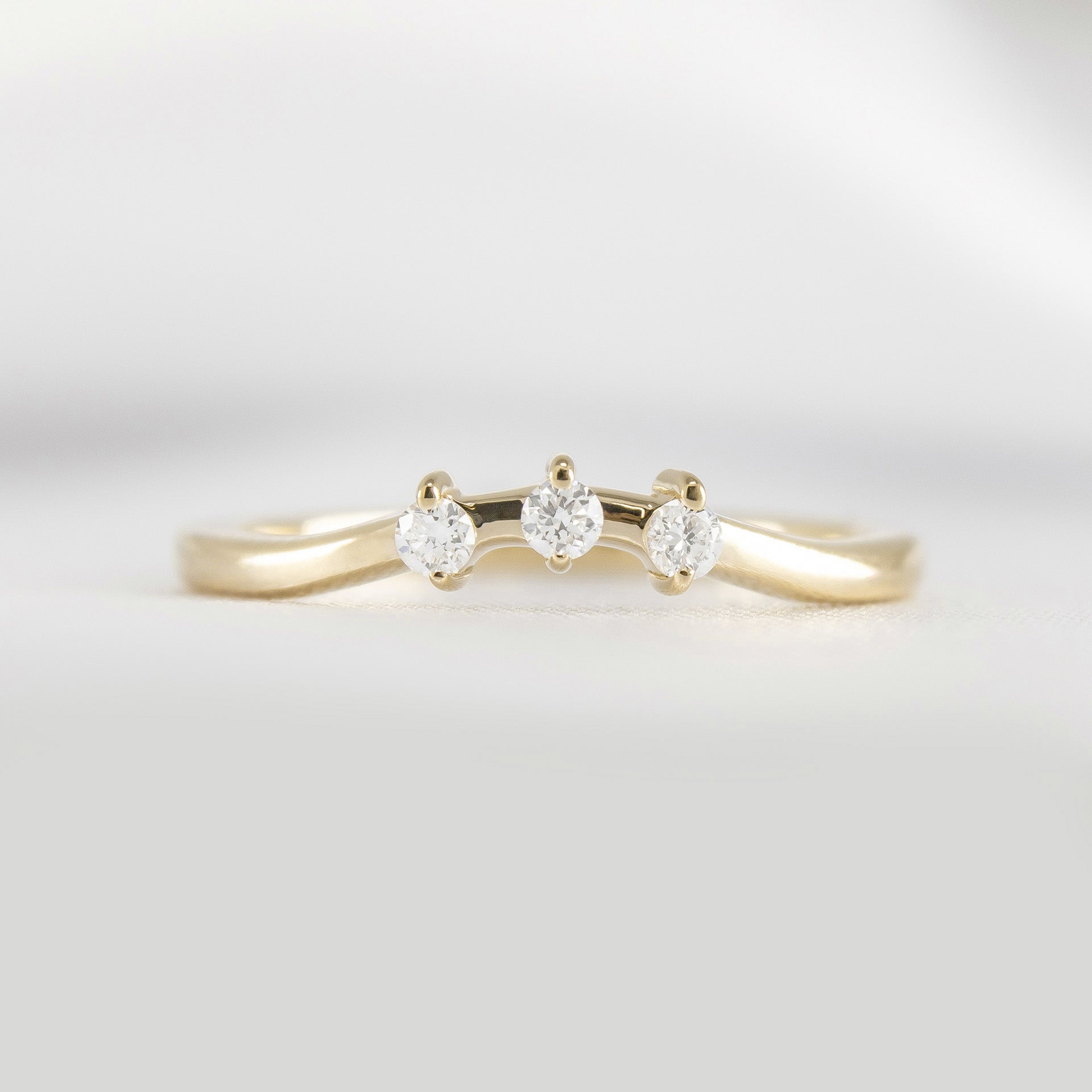
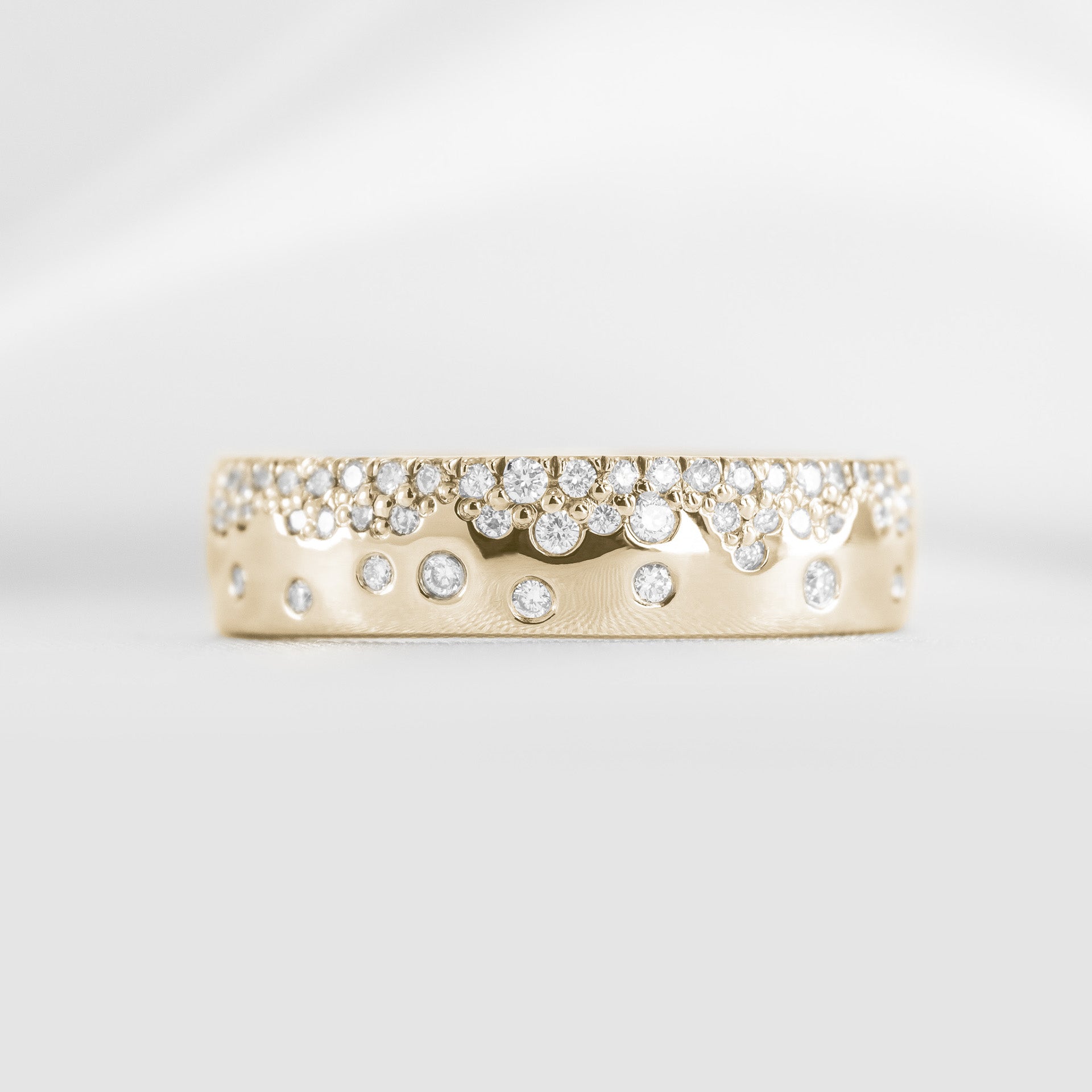
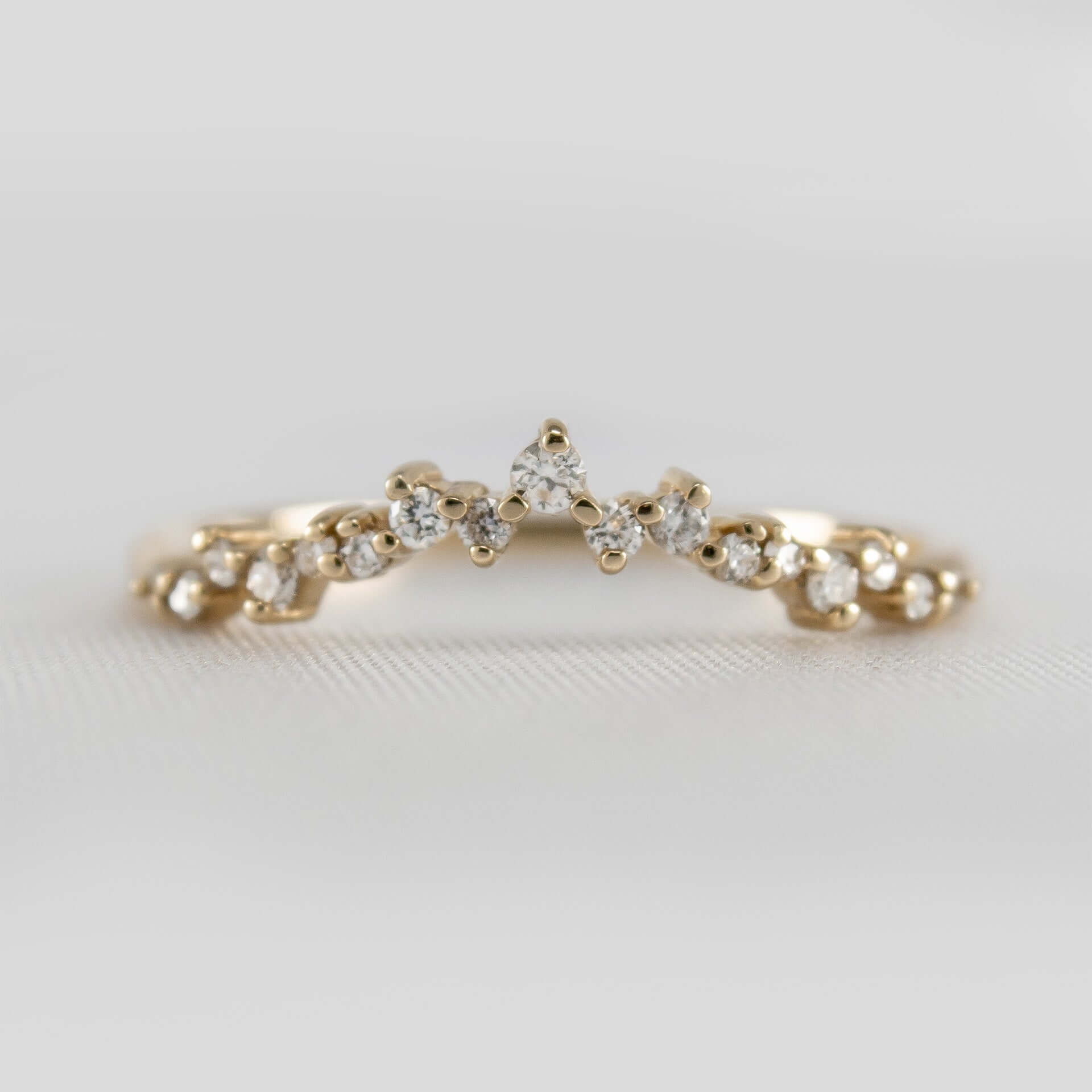
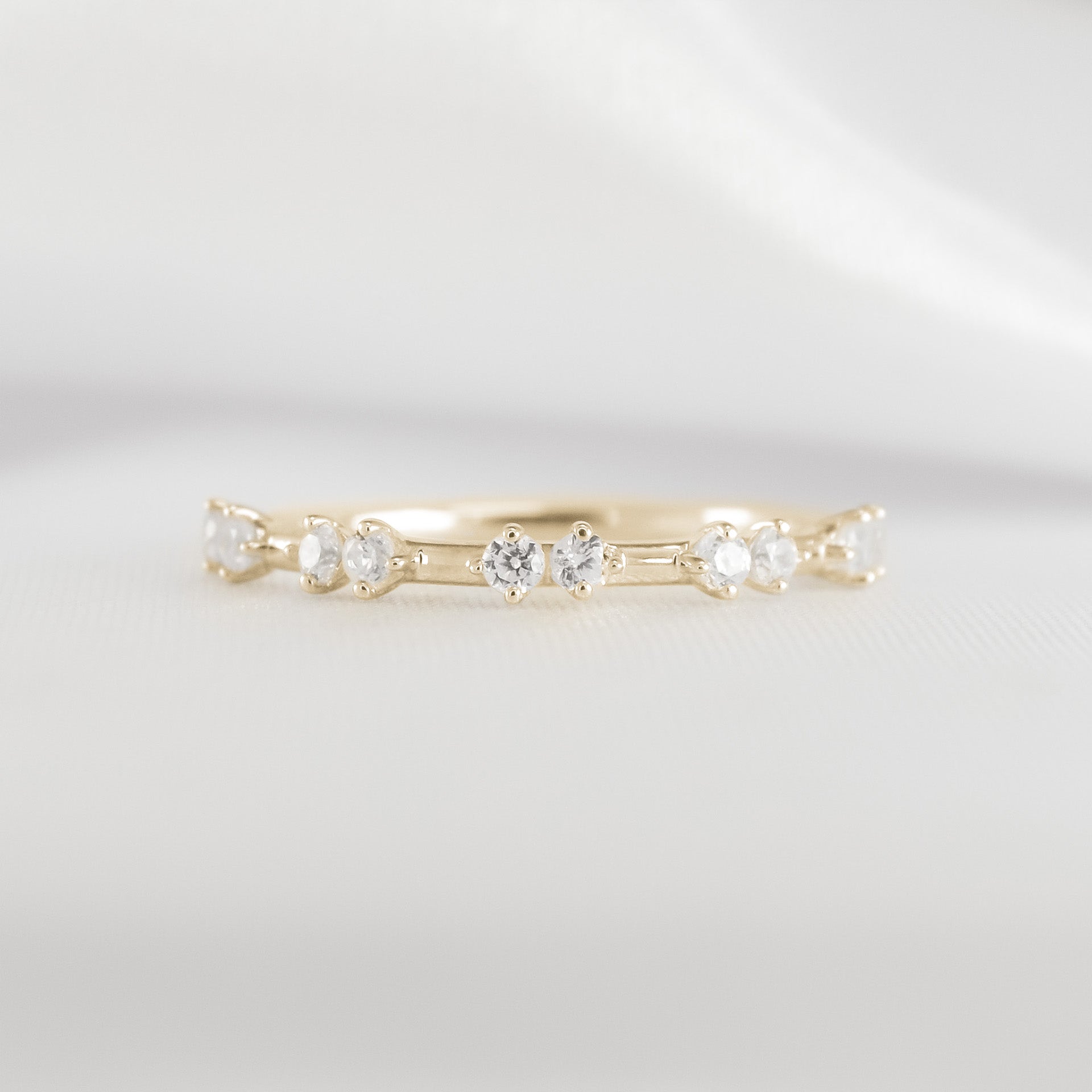
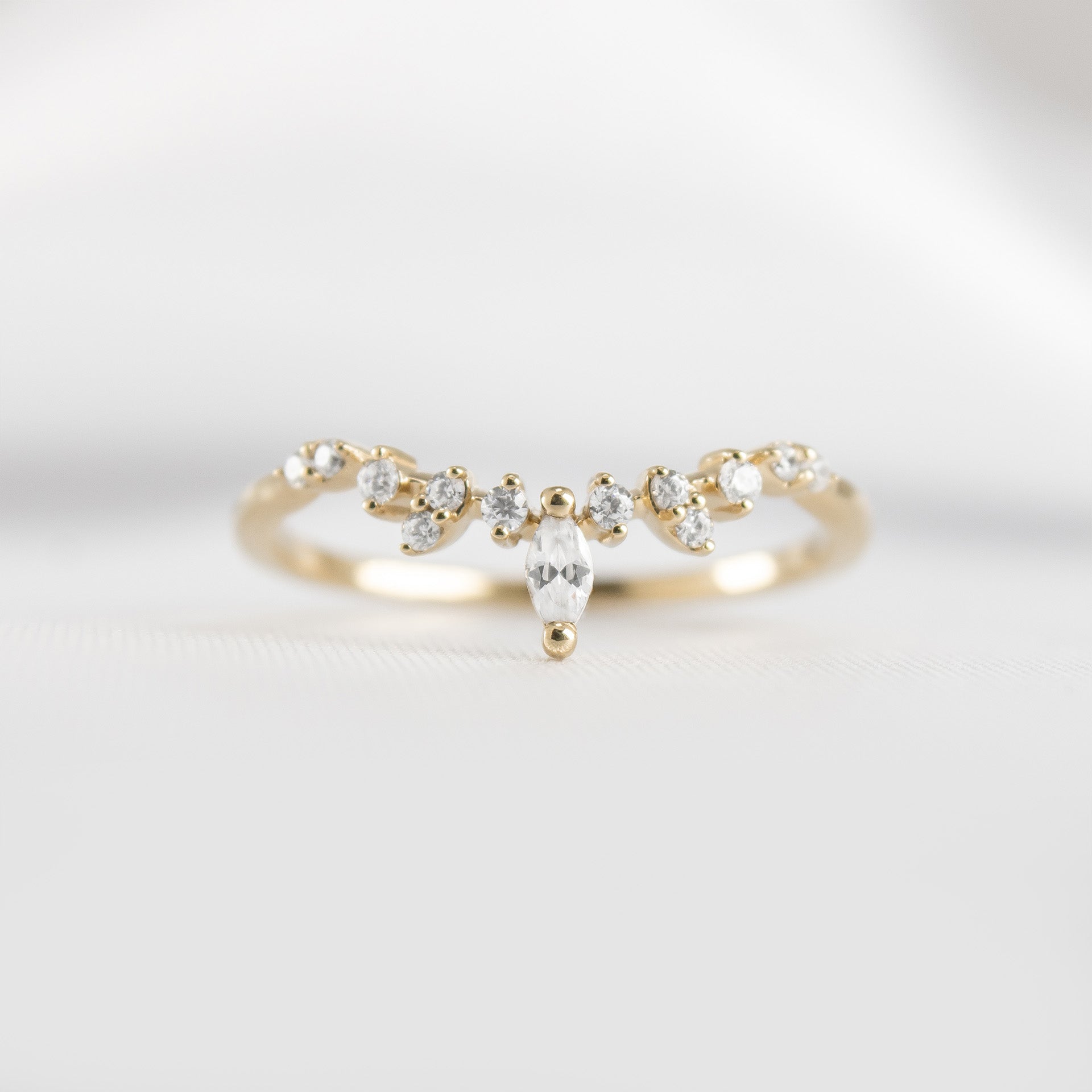
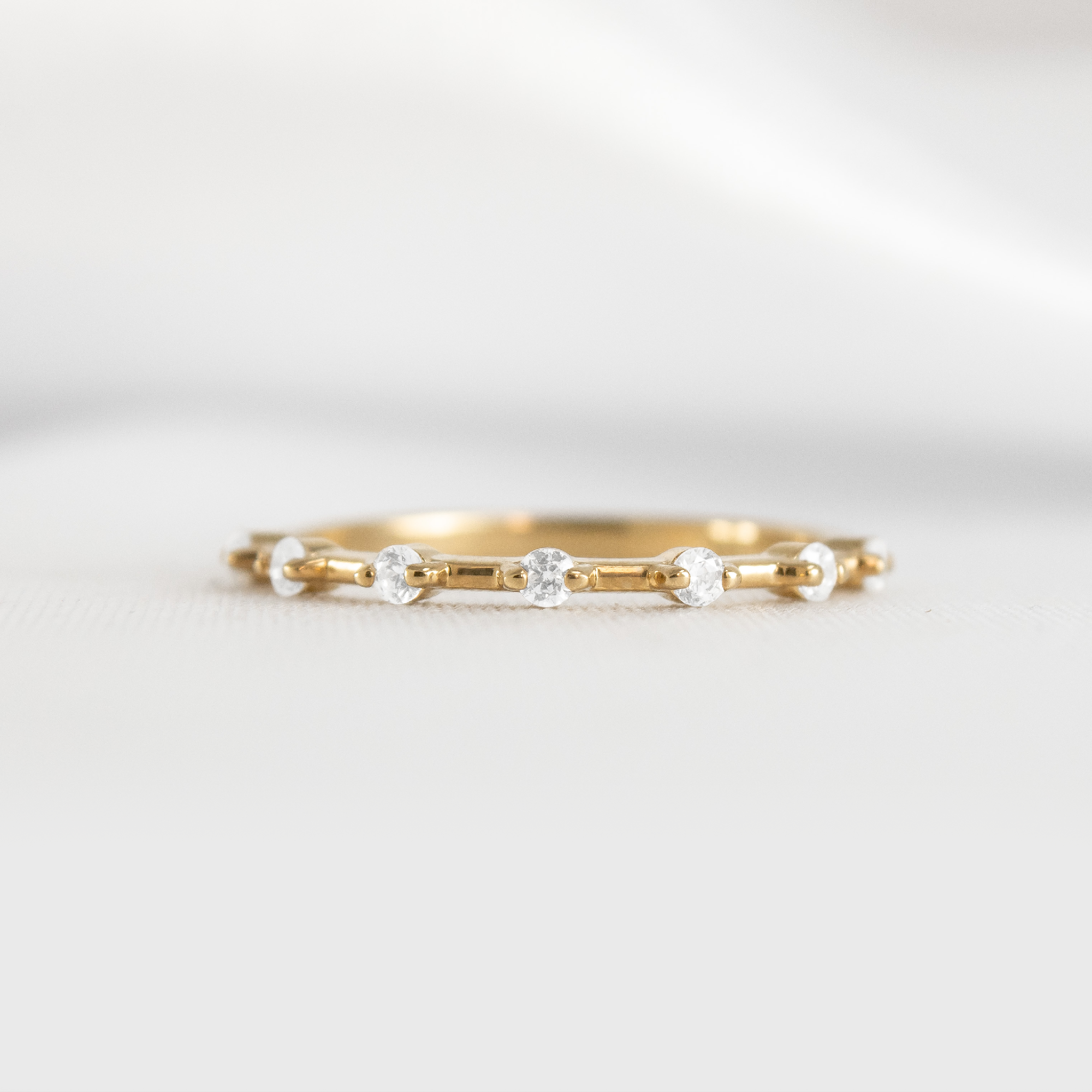
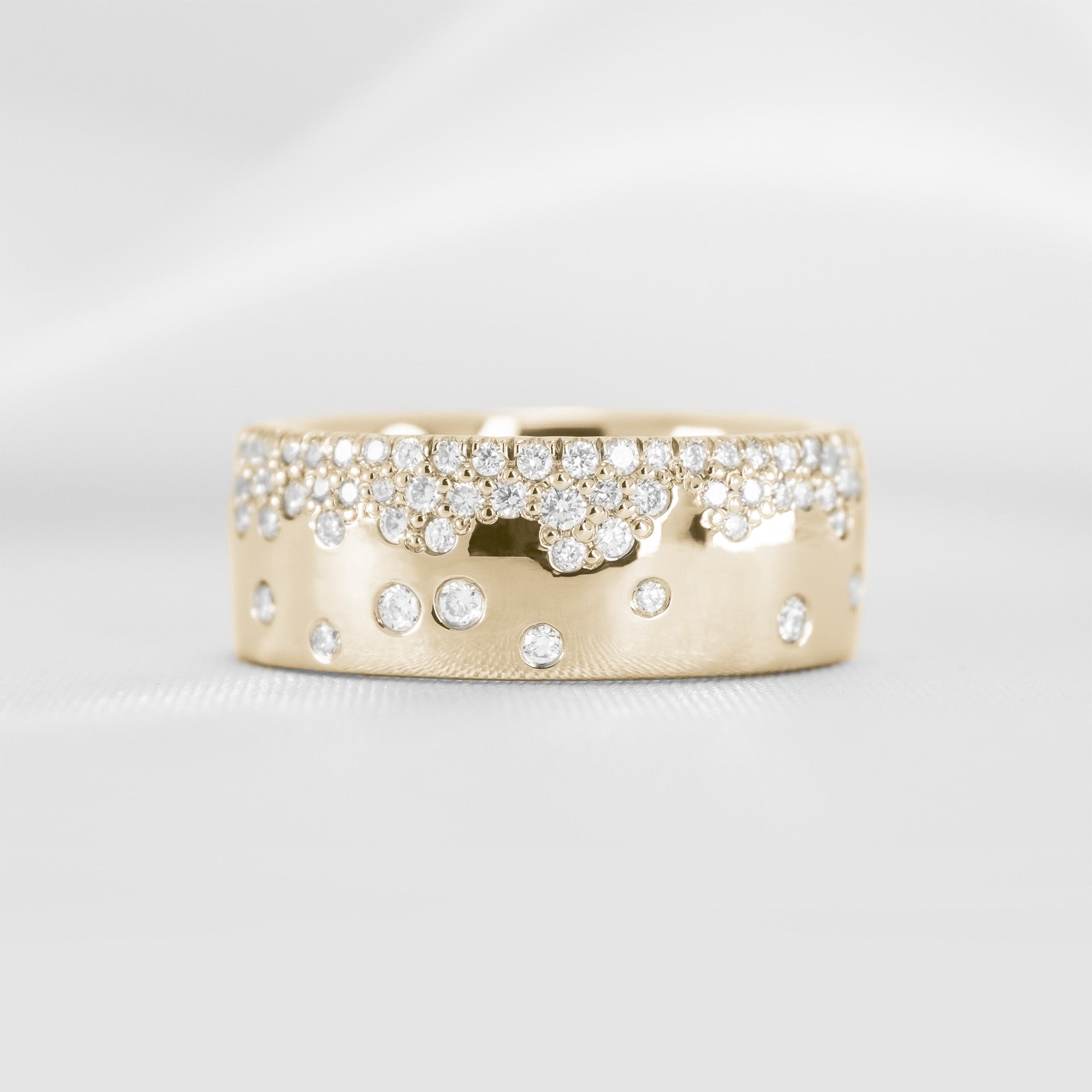
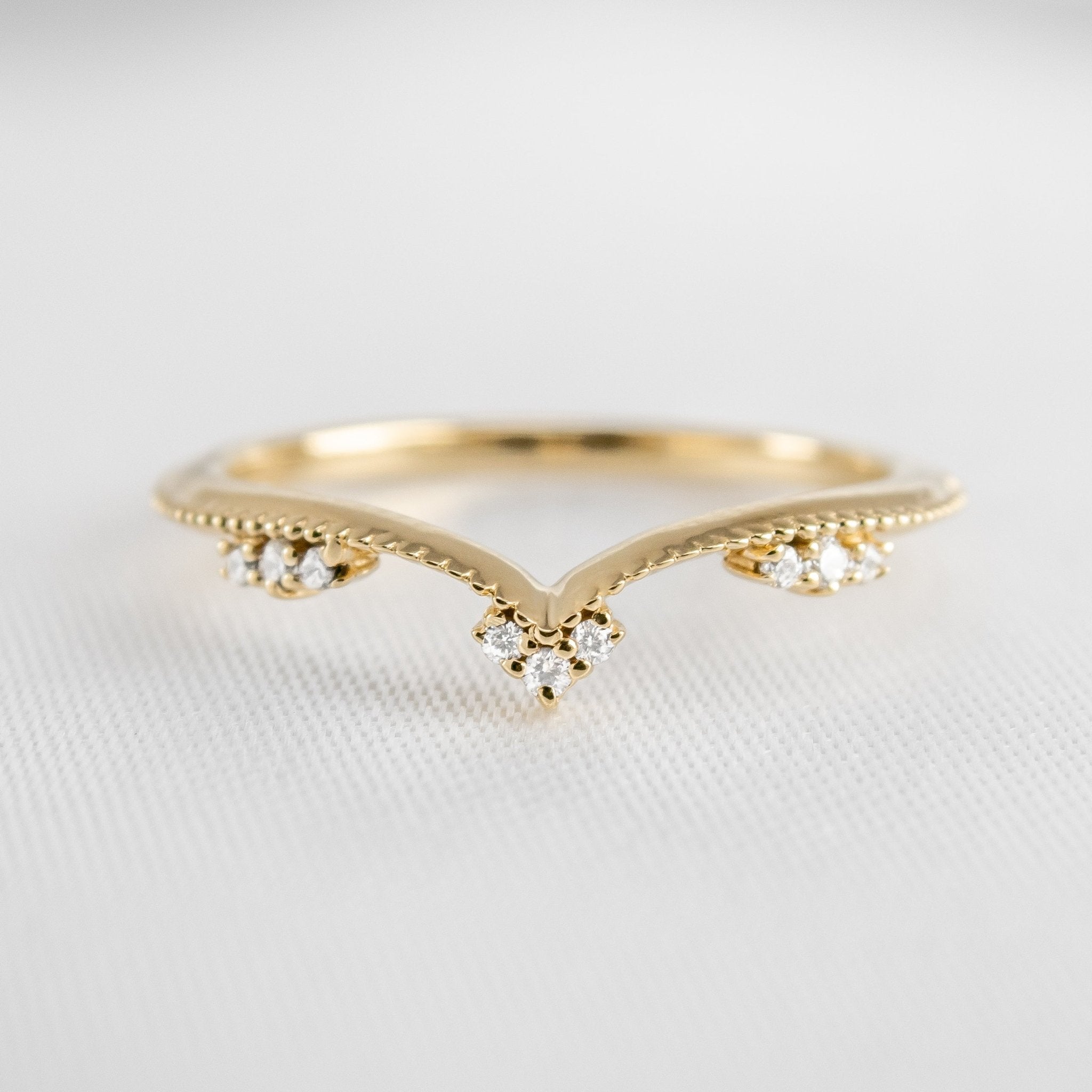
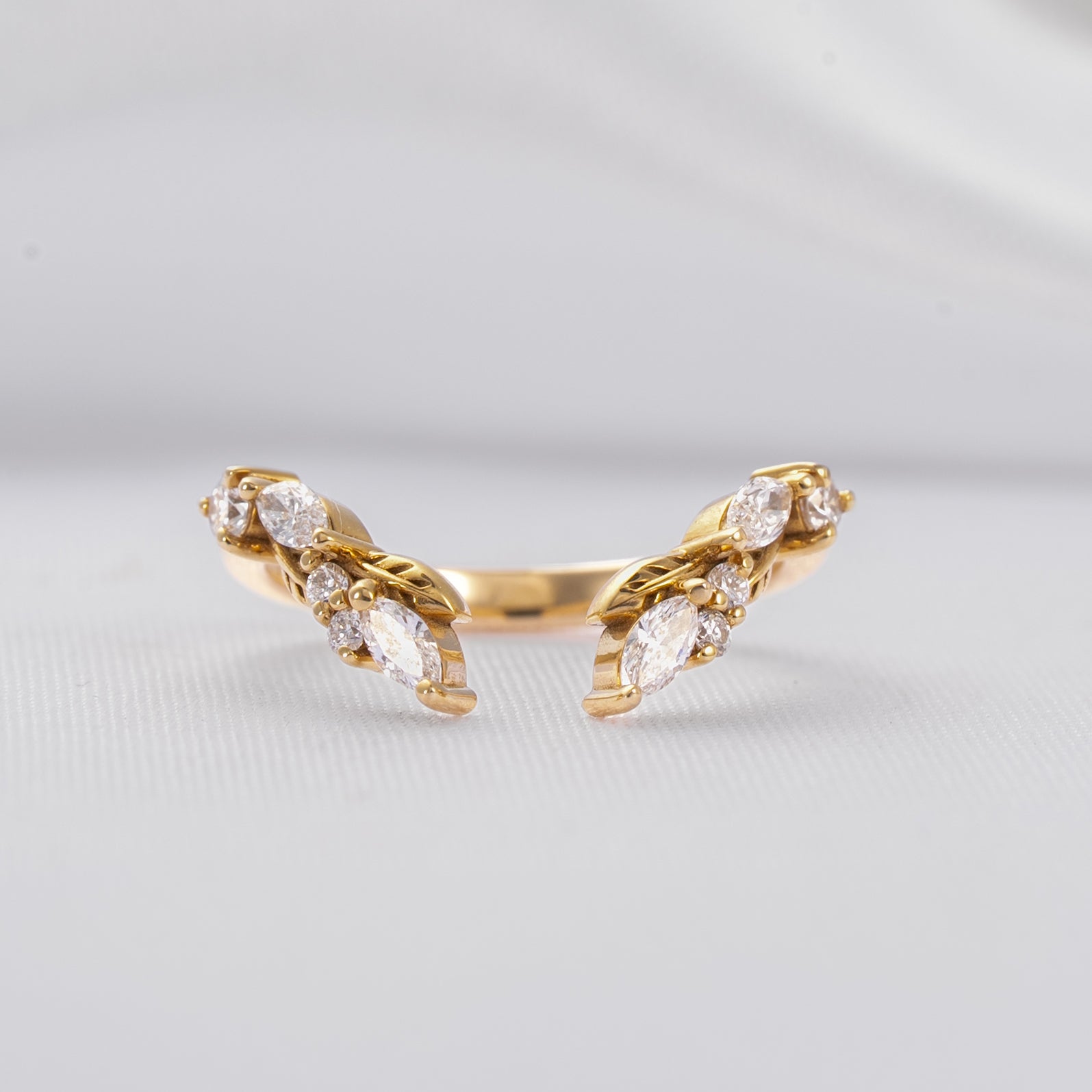
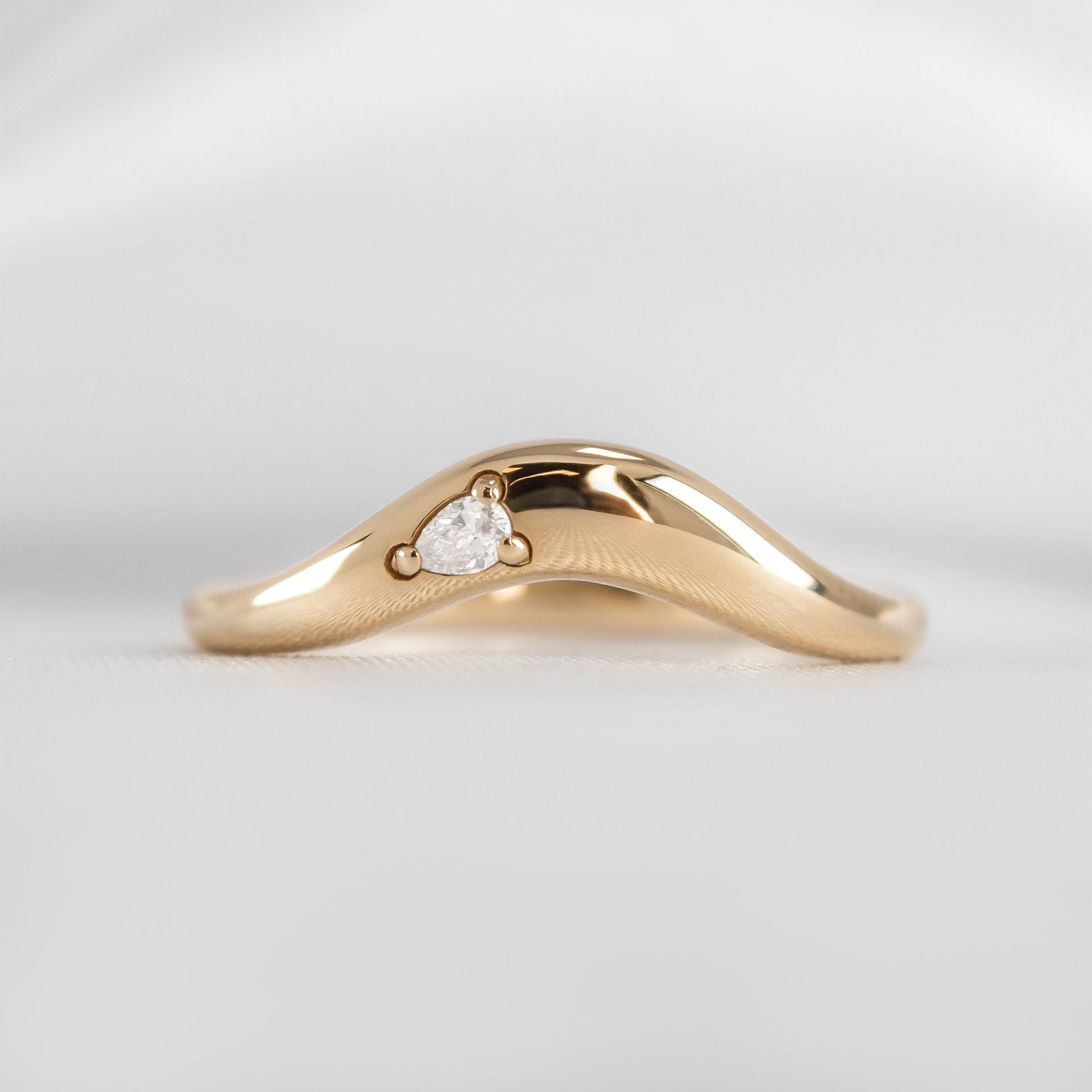
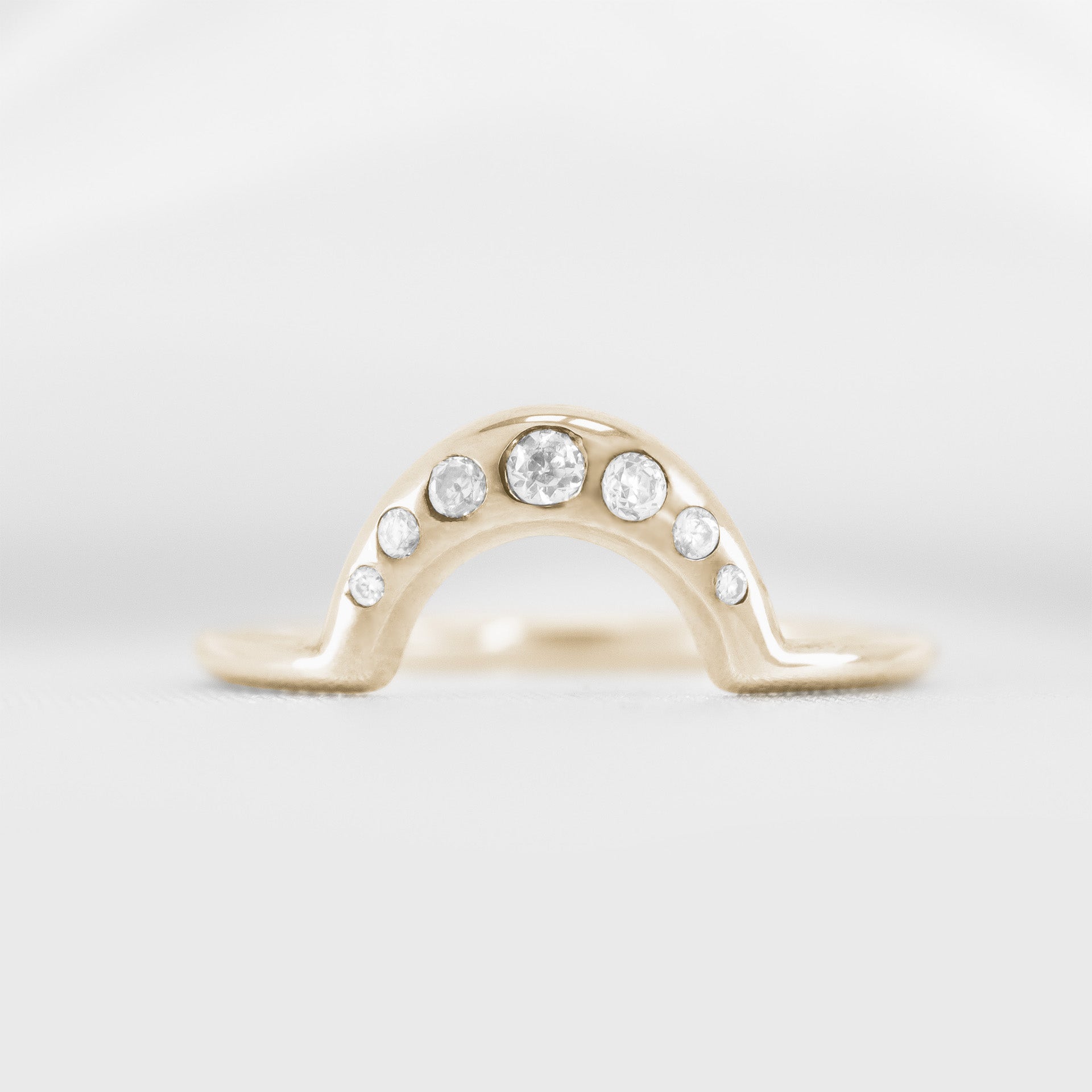
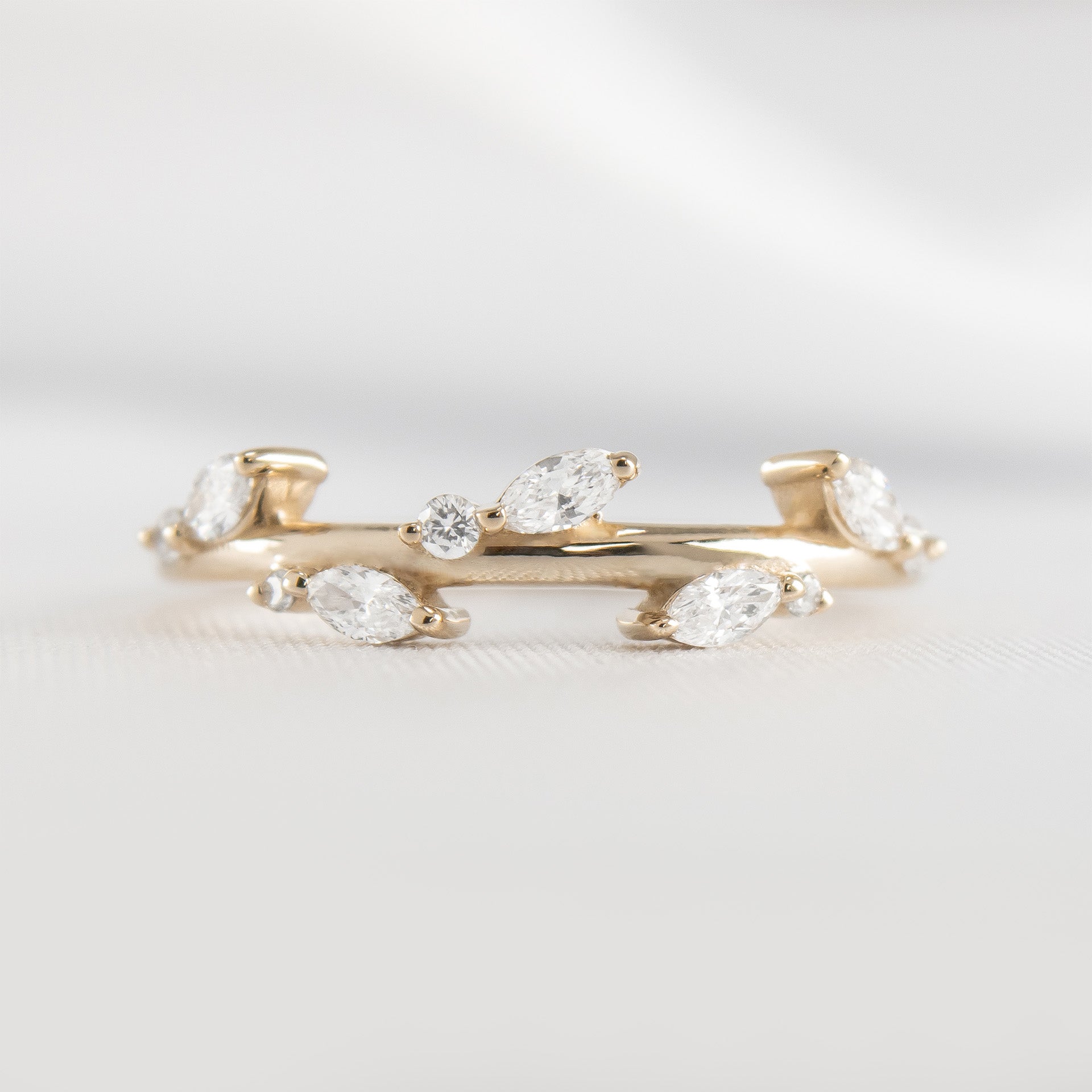
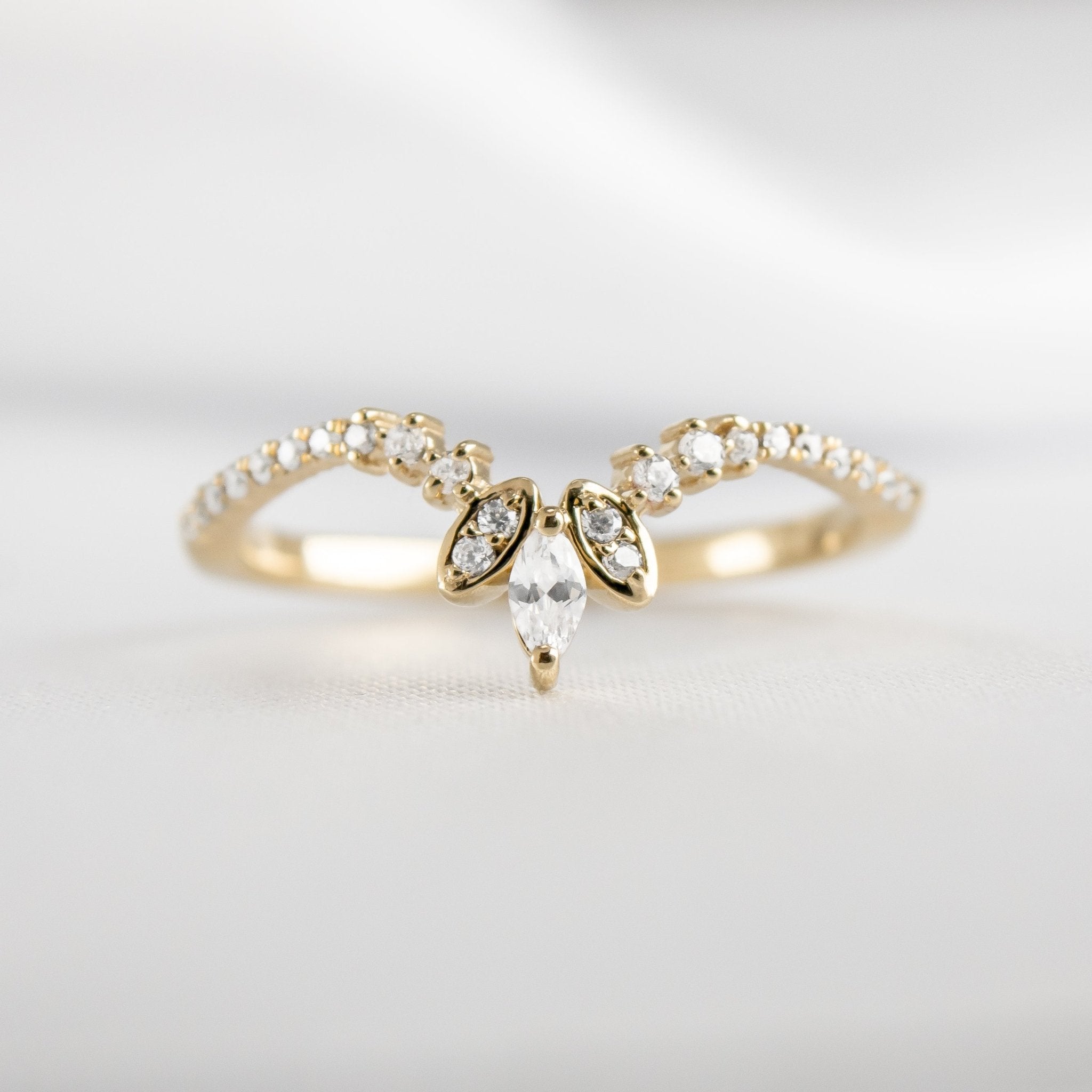
Distinctive diamond pattern bands: Twilight (curved scatter diamond), Verity (spaced diamonds), Channing (multi-stone arrangement).
Pavé, Eternity, and Half Eternity — Understanding the Differences
Three primary diamond wedding band constructions cover most of the category. Each has distinct properties.
Pavé diamond bands: Small diamonds (typically 0.01 to 0.05 carat each) set close together across the band's top surface, separated by tiny prong or bead settings. Pavé produces continuous sparkle across the band — the visual effect is glittering, refined, and continuous rather than discrete. Pavé bands can be very narrow (1mm or less) or substantial (3-4mm wide) depending on the diamond size and rows. Most pavé wedding bands carry diamonds across the visible top only, not around the full circumference.
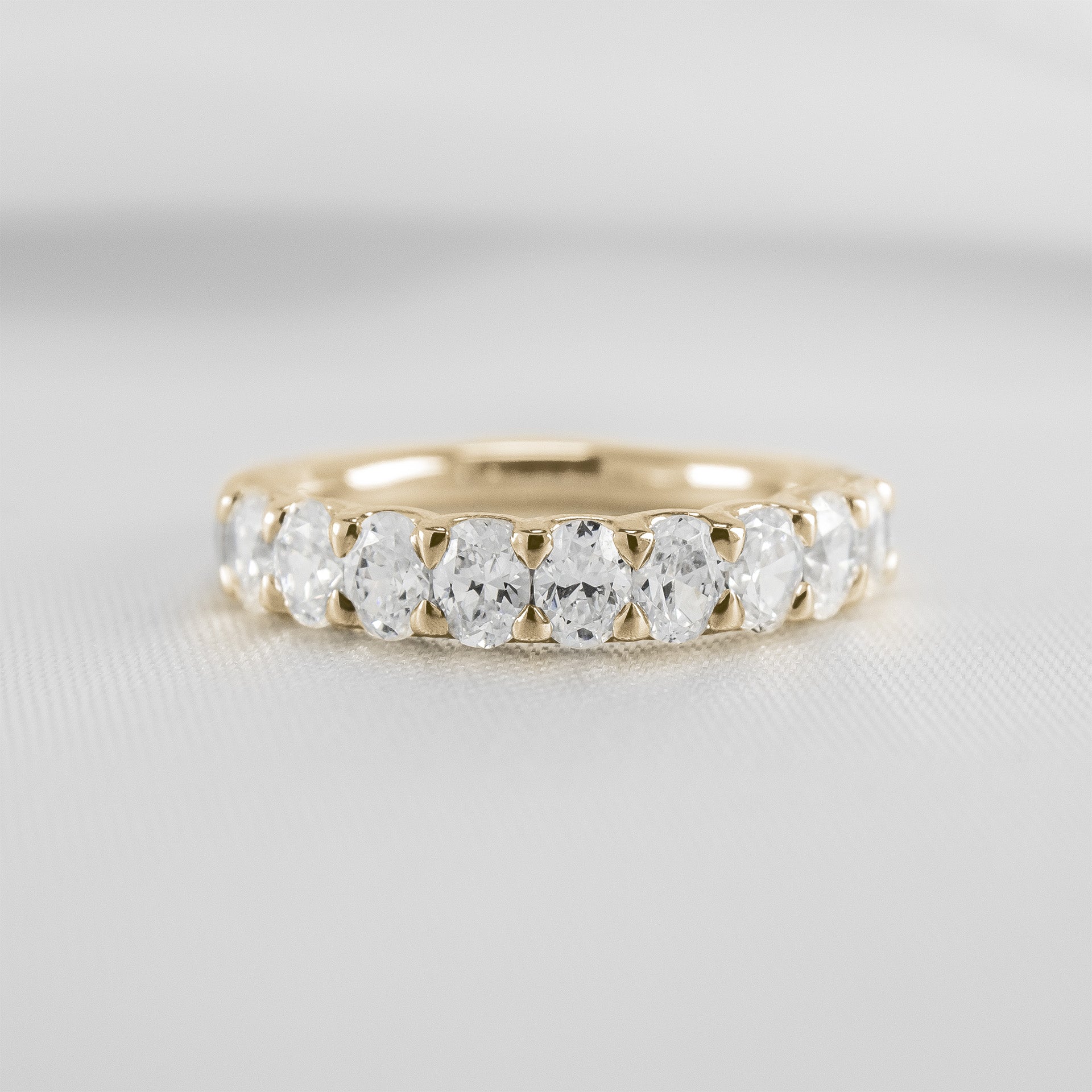
Half eternity diamond bands: Diamonds across the top visible portion of the band (typically 180 degrees), leaving the underside in solid metal. Visually identical to full eternity bands from the wearing angle (looking down at your hand). The advantages: half eternity bands can be resized in the future (full eternity cannot), and the solid metal underside is more comfortable against adjacent fingers.
Full eternity bands: Diamonds around the entire circumference — top, sides, and underside. Visually identical to half eternity from the wearing angle but more visible from the sides. Full eternity bands cannot be resized after diamonds are set, so accurate sizing before crafting is critical. They carry more total diamond carat weight and more total cost than half eternity bands.
The choice depends on how you weigh resizability (half eternity wins) versus full diamond brilliance from all angles (full eternity wins) versus cost (half eternity costs less due to fewer diamonds).
Diamond Cuts in Wedding Ring Design
Diamond wedding rings can use any diamond cut, and the choice affects both visual character and how the band pairs with engagement rings.
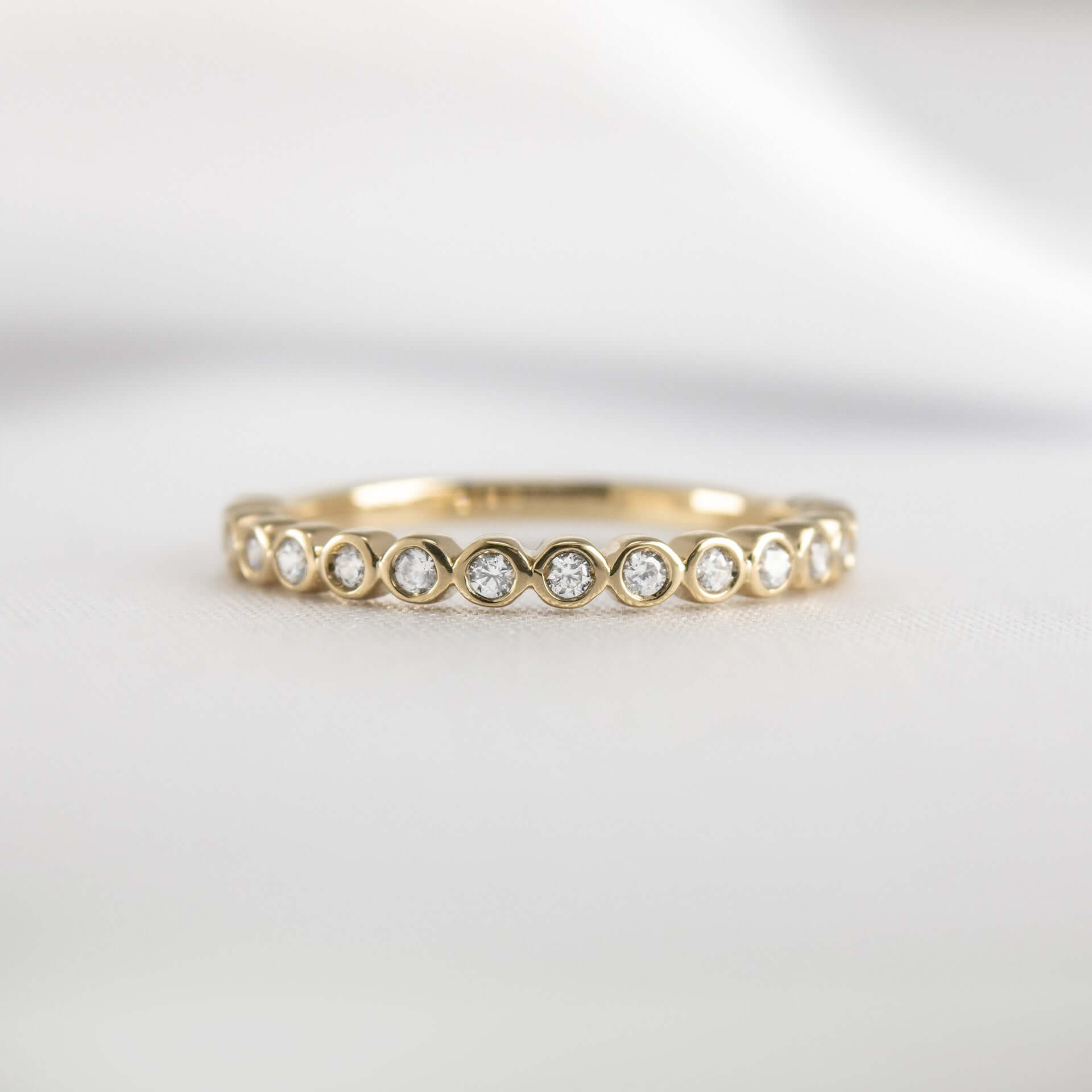
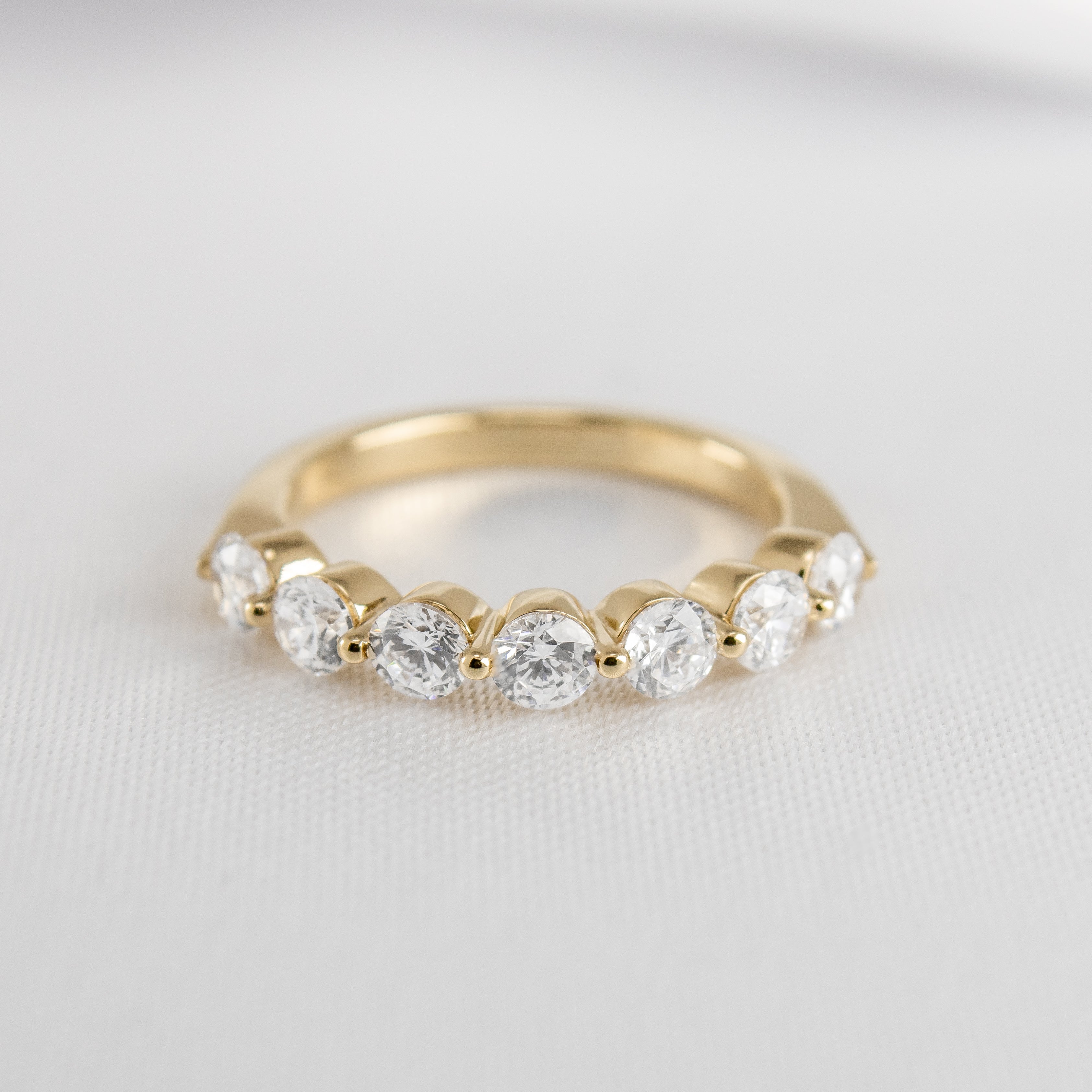
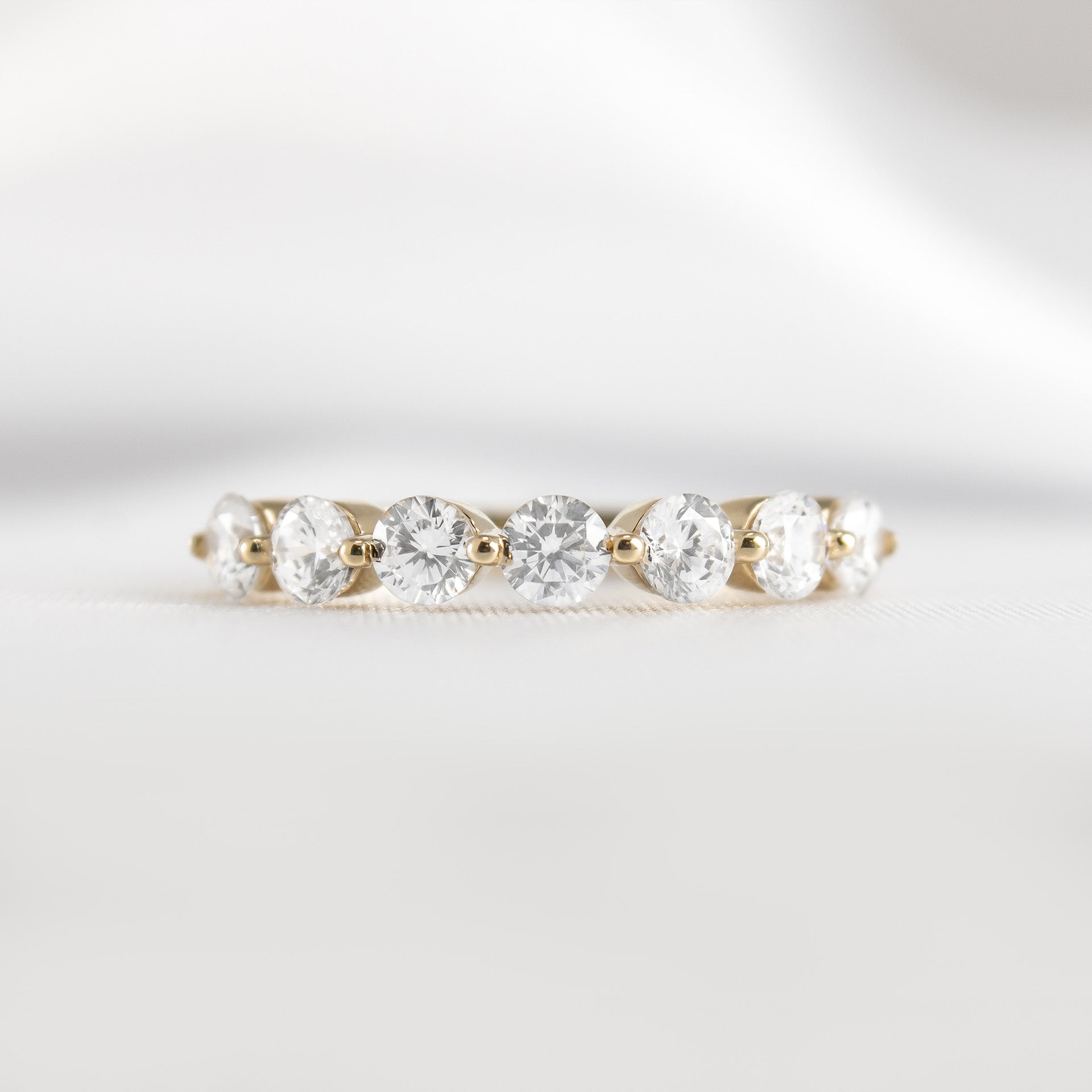
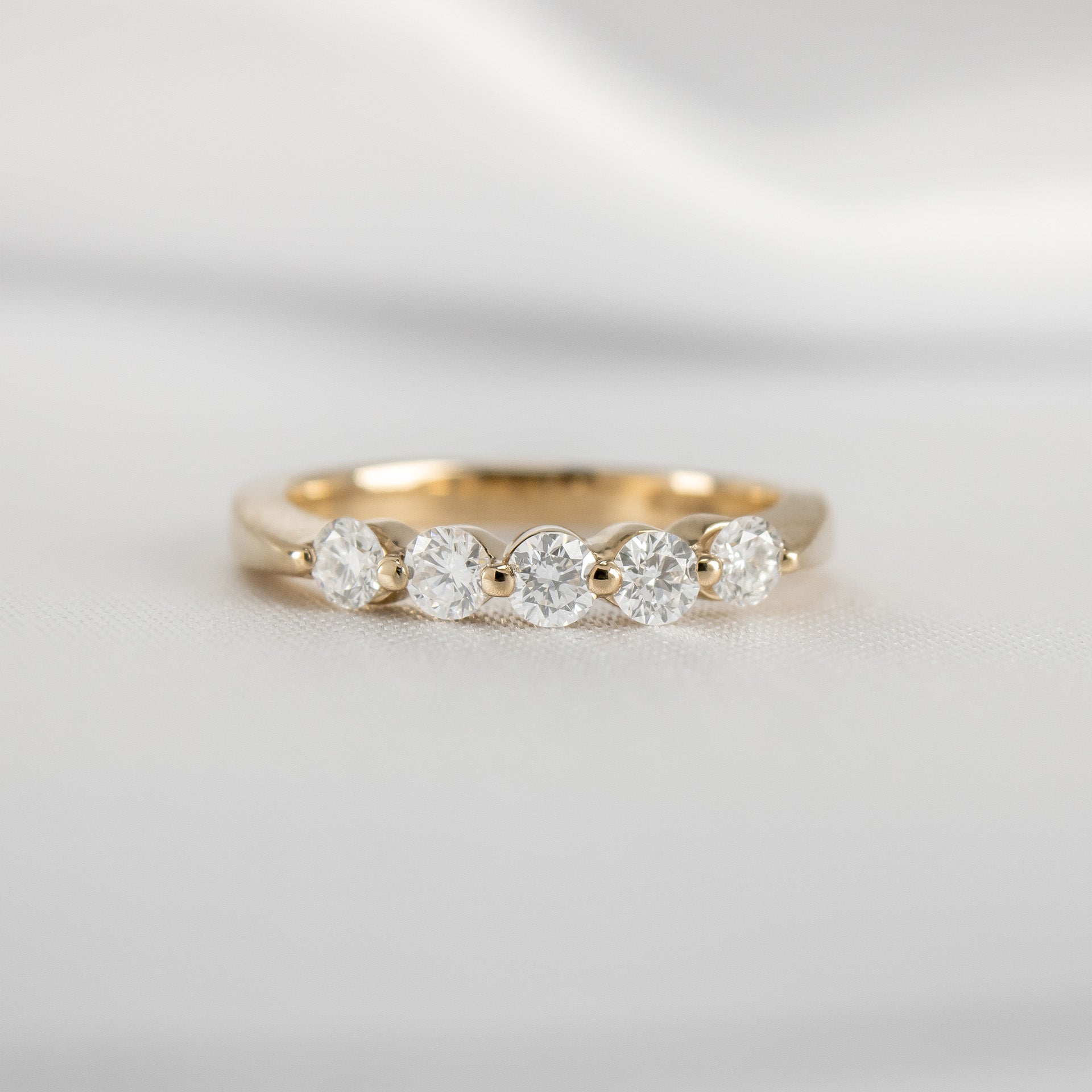
Round brilliant diamonds: The most common cut for wedding band pavé and accent diamonds. Round brilliants produce maximum sparkle through 57-58 facets arranged in radial pattern. Round brilliant wedding bands pair coherently with most engagement ring styles. Used in Macey, Drew, Valentina, Marla, and many others.
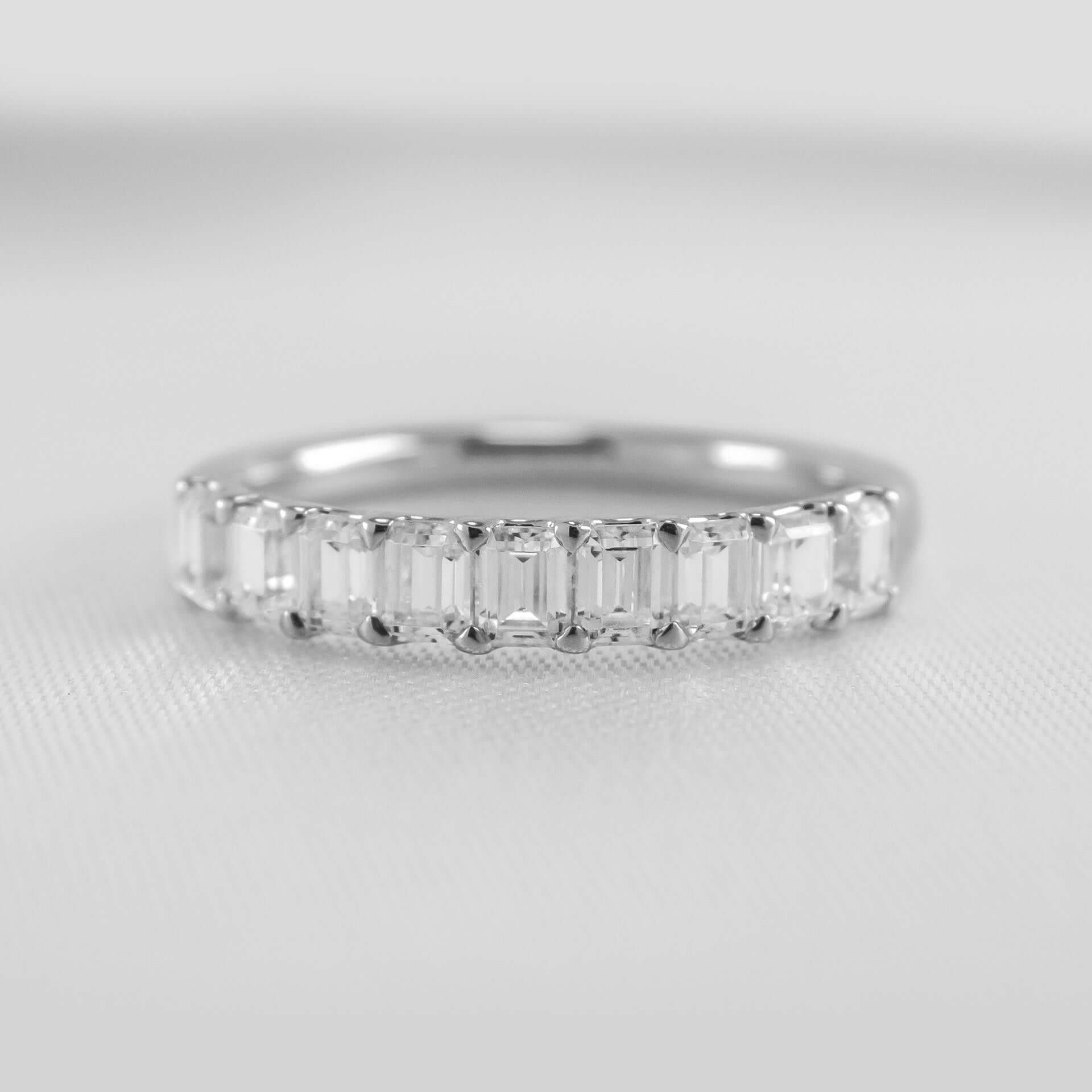
Emerald cut diamonds: Step-cut rectangular diamonds with corners. Emerald cut wedding bands read architectural and refined. They pair particularly well with emerald cut, asscher cut, or radiant cut engagement rings. Used in Aniston, Mercer, Mayumi, Avery.
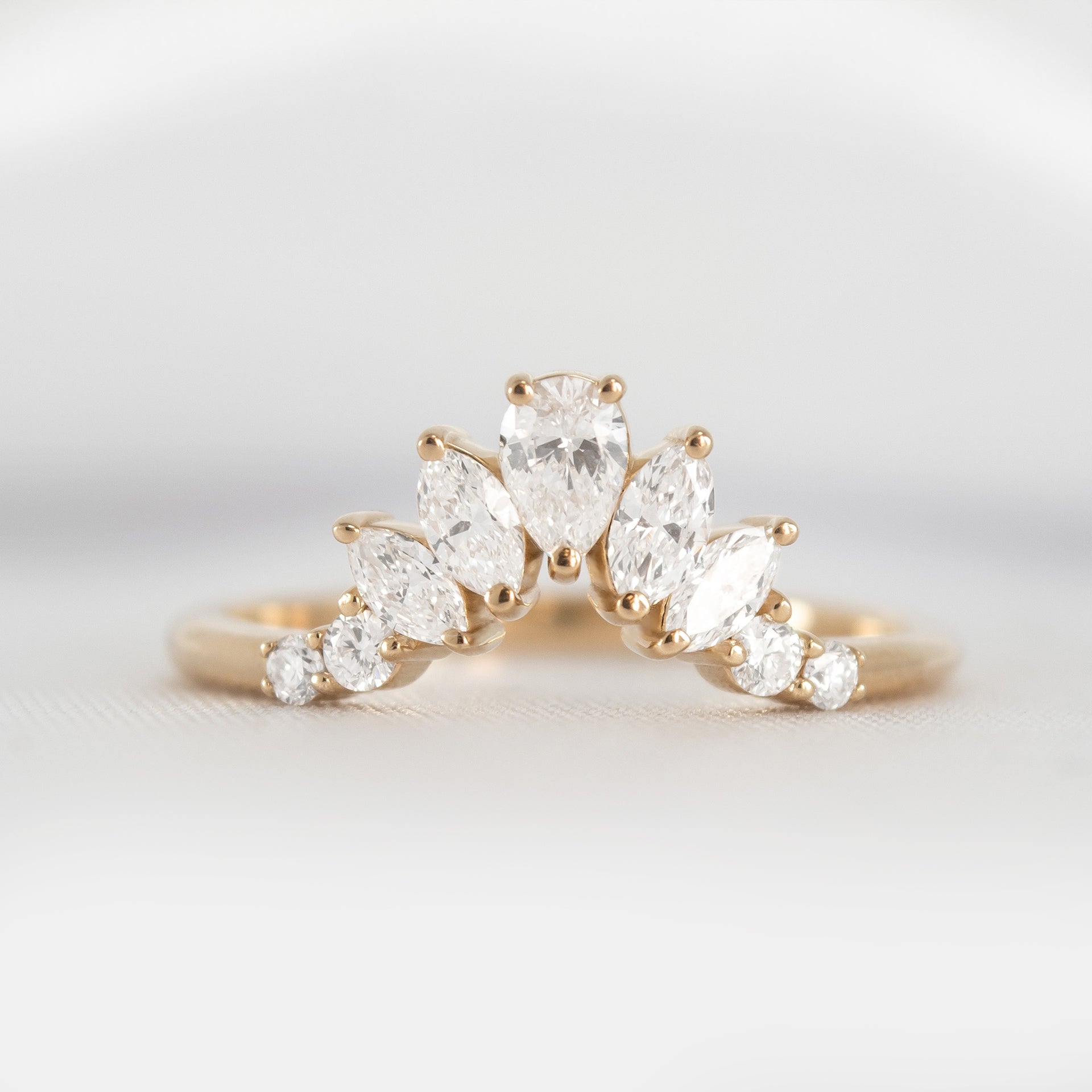
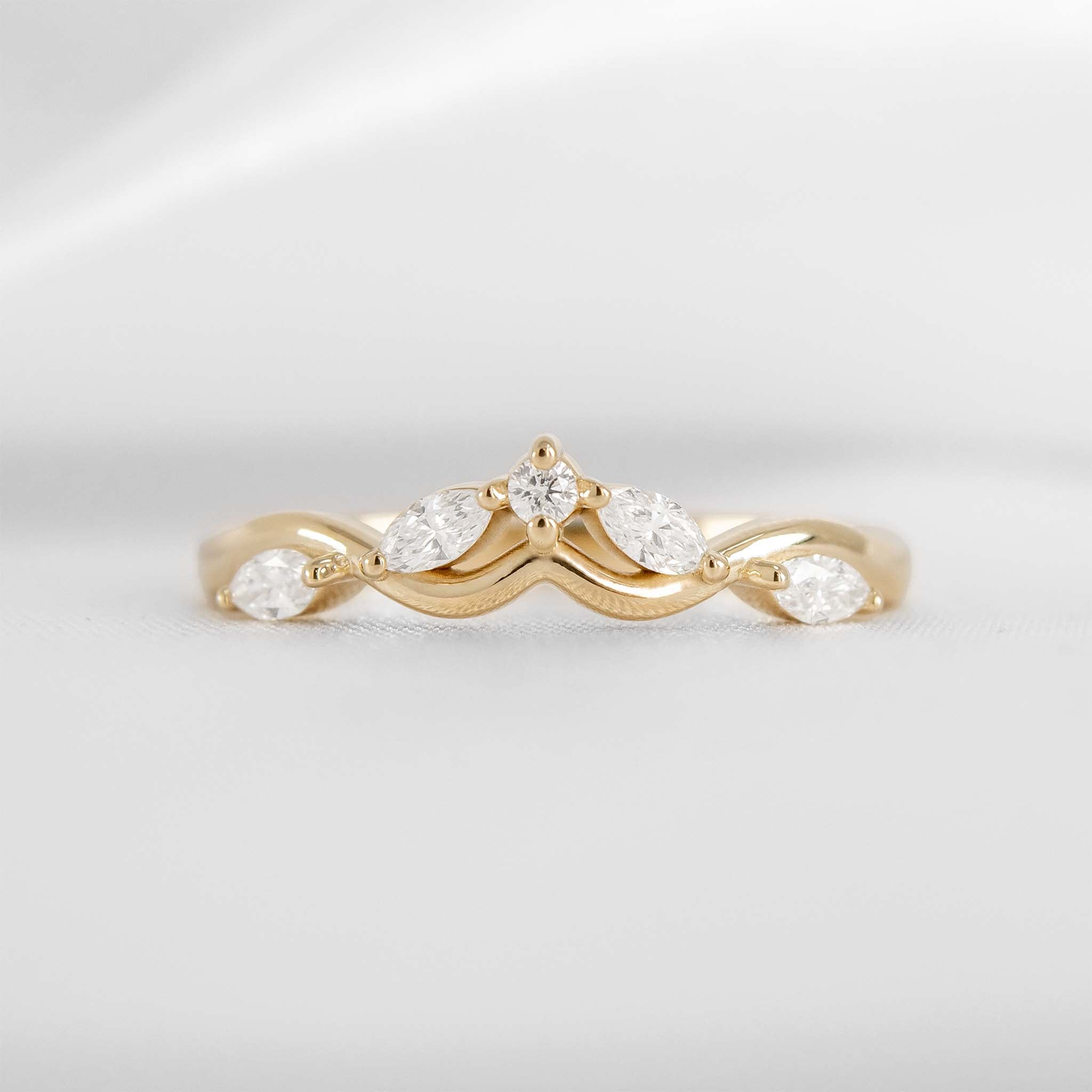
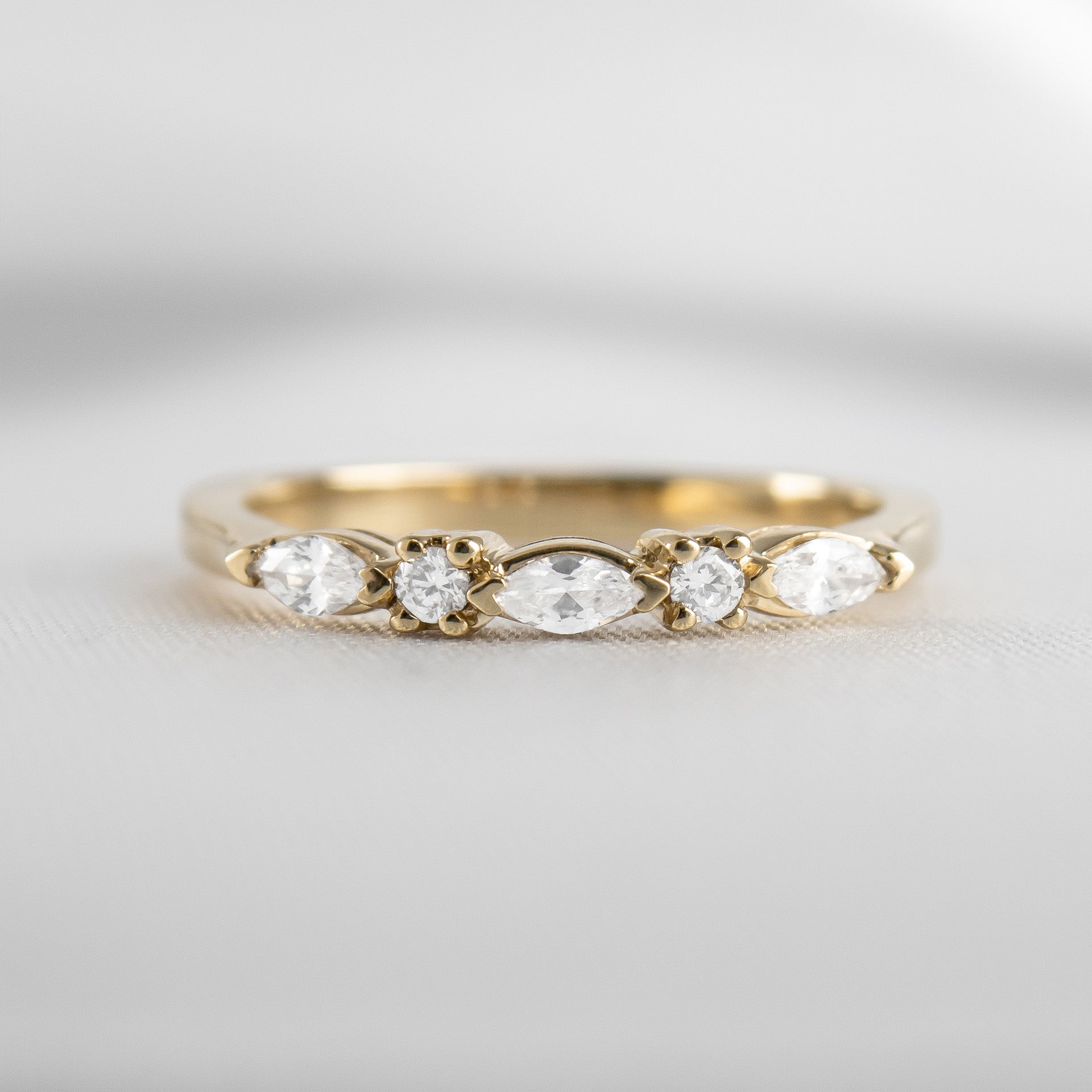
Marquise diamonds: Pointed-oval brilliant cut. Marquise wedding bands read distinctive and pair well with marquise, oval, or pear center engagement rings. Used in Vashti, Frances, Halee, Claire, and others (see Marquise Diamond Wedding Rings collection).
Princess cut diamonds: Square brilliant cut. Princess cut wedding bands read angular and modern. Used in Lindon.
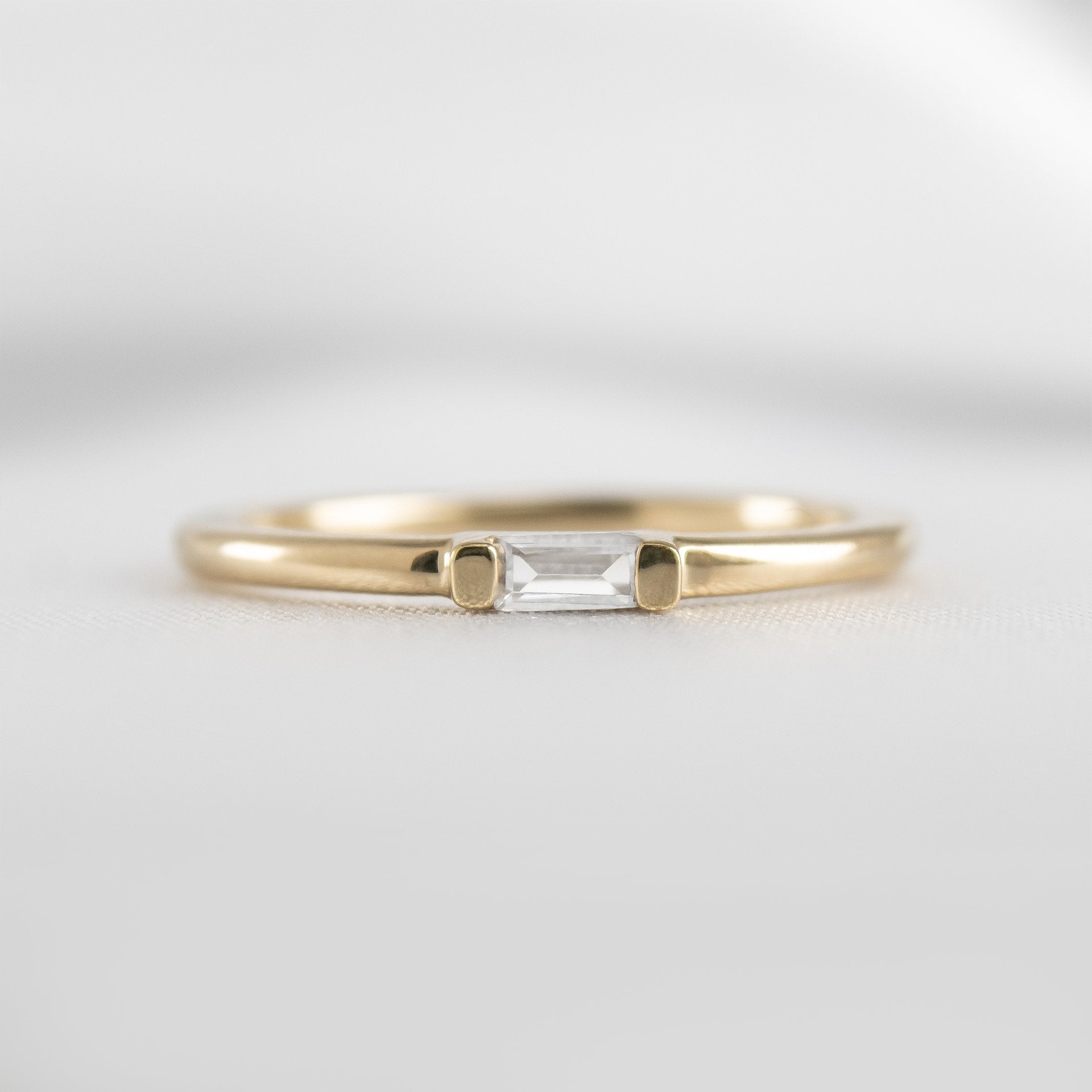
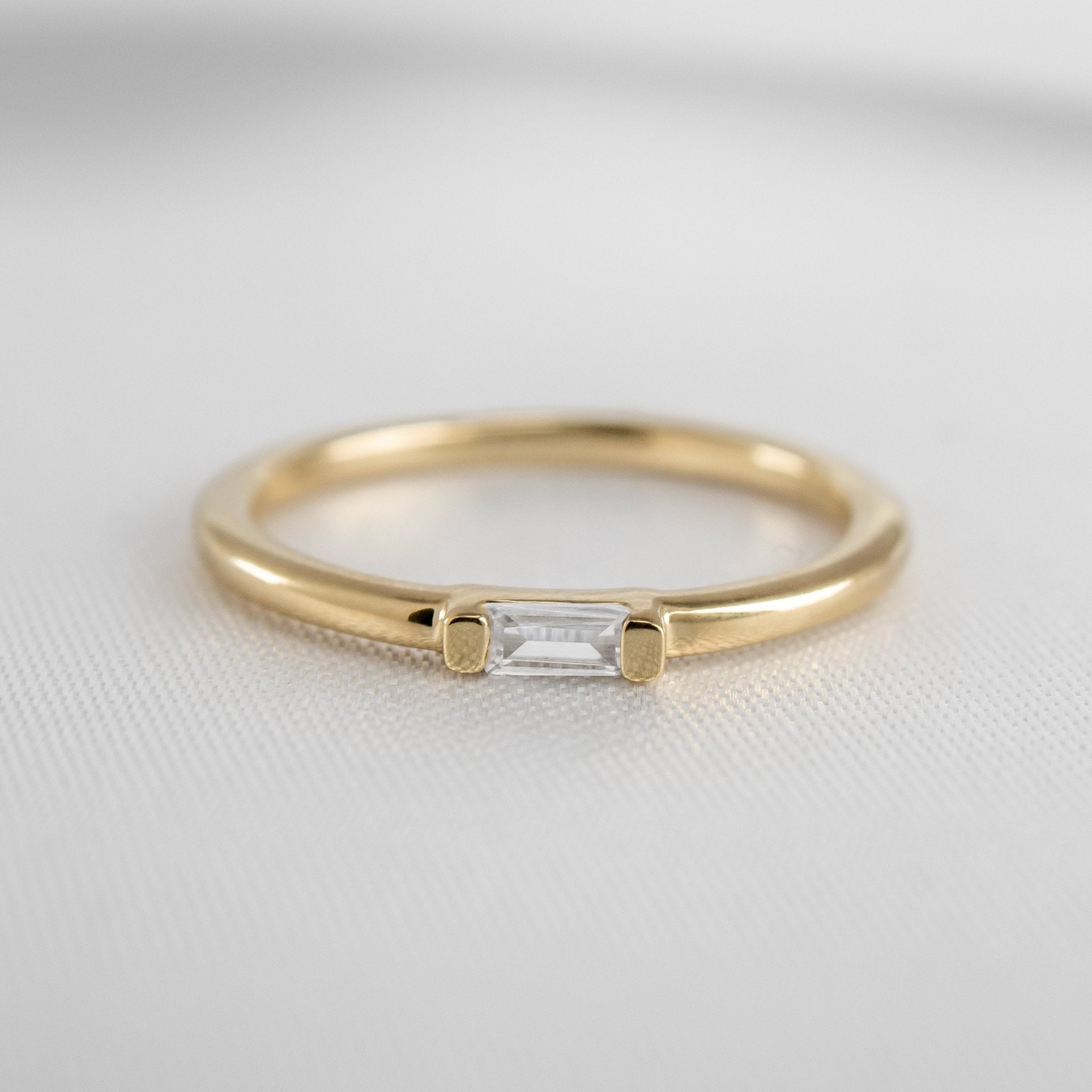
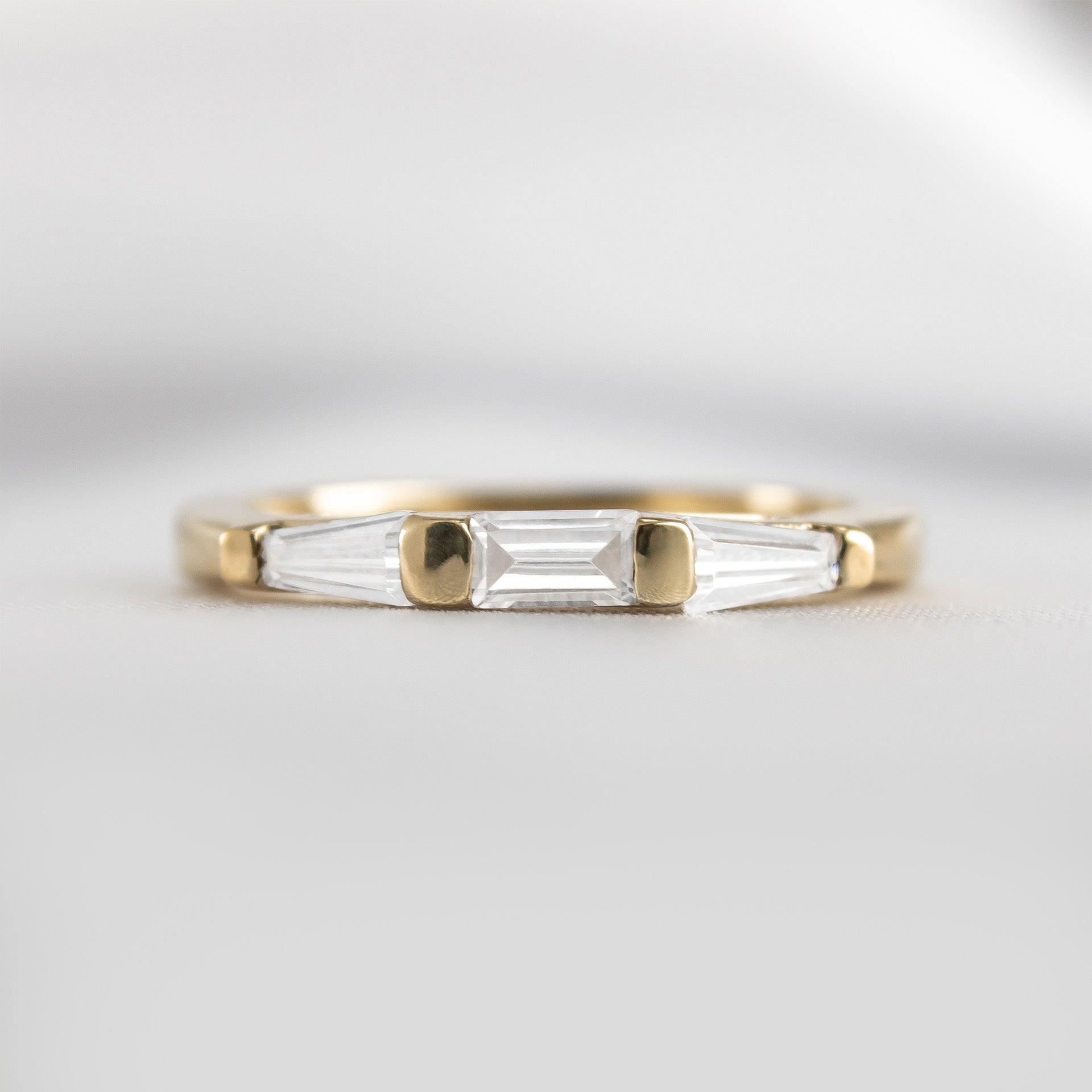
Baguette diamonds: Rectangular step-cut diamonds. Baguette wedding bands read geometric and art deco. Used in Blaine, Dillon (see Baguette Diamond Wedding Rings collection).
Oval diamonds: Elongated brilliant cut. Oval wedding bands read elegant and modern. Used in Samara, Sutton.
Lab Grown vs Natural Diamonds for Wedding Rings
All diamonds in this collection can be specified as lab grown or natural. Both are real diamonds with identical physical properties — the difference is origin and price.
Lab grown diamonds: Diamonds created in controlled laboratory environments using high-pressure high-temperature (HPHT) or chemical vapor deposition (CVD) processes. The crystal structure, hardness, optical properties, and chemical composition are identical to natural diamonds. Lab grown diamonds cost approximately 40-60% less than natural diamonds of the same specifications (carat, color, clarity, cut). Most accent diamonds in wedding bands today are lab grown.
Natural diamonds: Diamonds formed in the earth's mantle over billions of years and mined from natural deposits. Natural diamonds carry historical significance and traditional value. They cost more than lab grown diamonds of the same specifications and may be chosen for that reason — either because of preference for natural origin or because of investment/heirloom considerations.
For wedding bands carrying accent diamonds (pavé, half eternity, full eternity), most couples choose lab grown for the cost advantage. For wedding bands carrying few but larger diamonds, some couples choose natural for the meaningful gem origin. The visual difference between lab grown and natural is undetectable; both are graded on the same color and clarity scales by the same gemological labs.
Pairing Diamond Wedding Rings with Engagement Rings
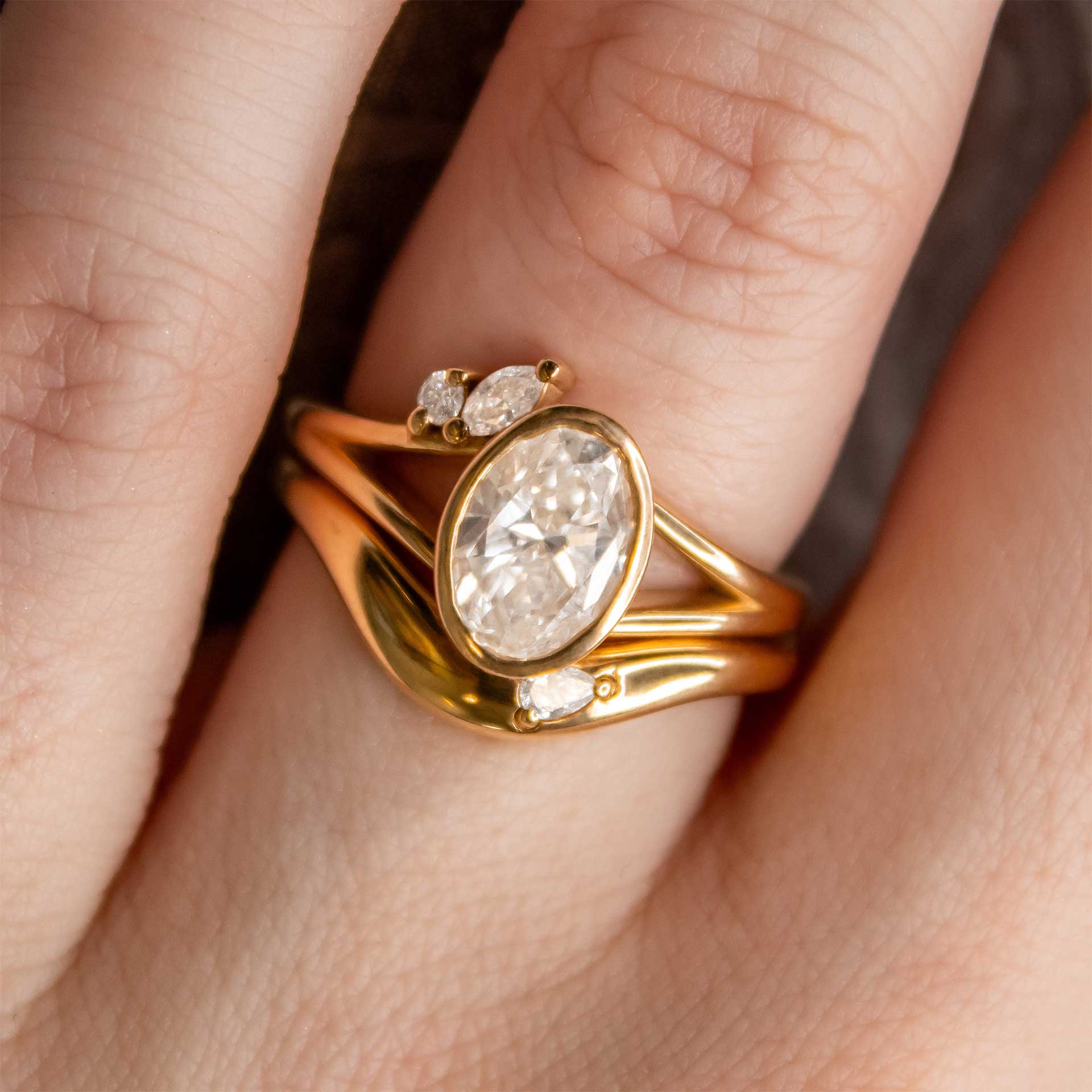
Diamond wedding bands work across most engagement ring styles. The pairing decisions involve four primary factors.
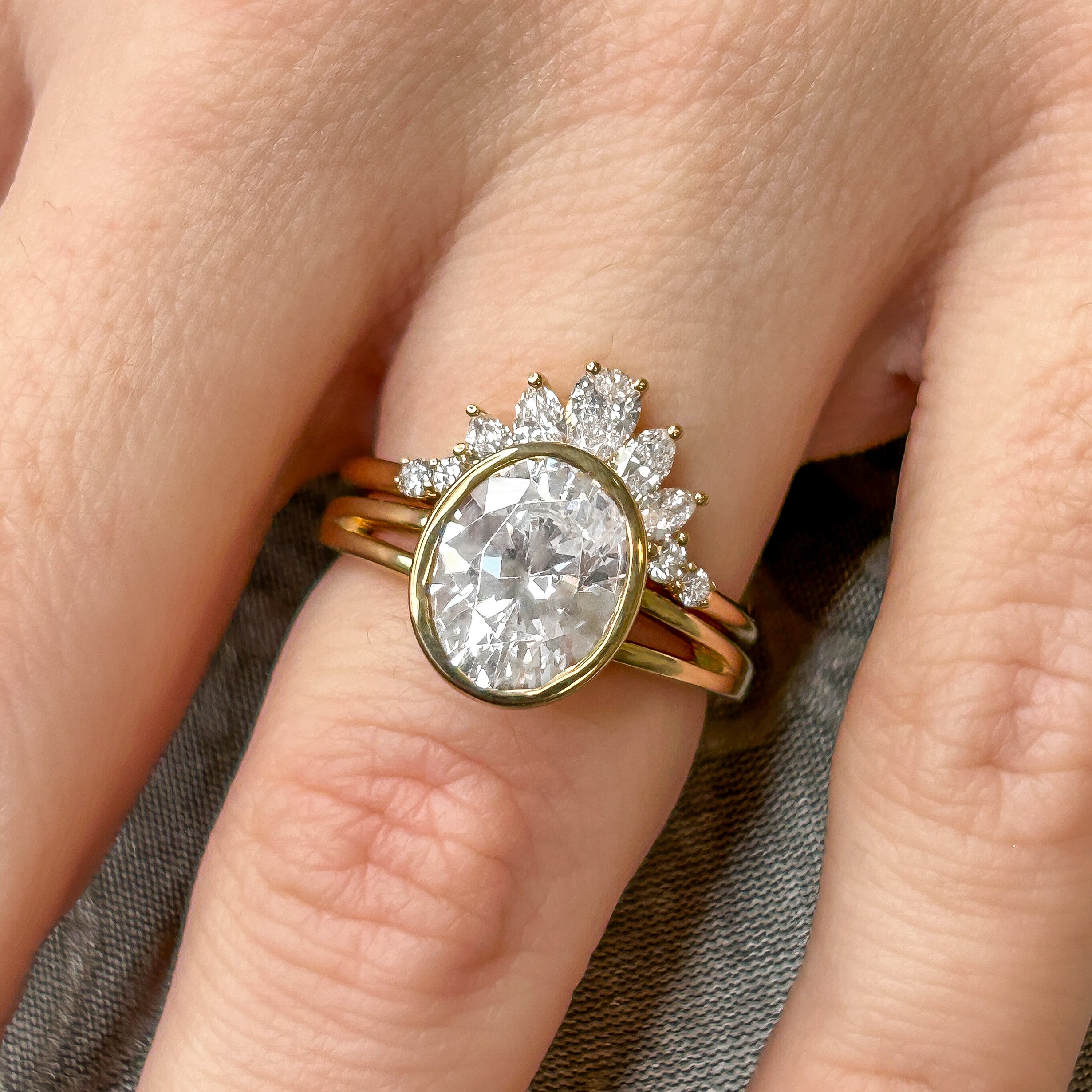
Diamond cut vocabulary match: Brilliant-cut wedding bands (round, oval, marquise, pear) pair most coherently with brilliant-cut center engagement rings. Step-cut wedding bands (emerald, asscher, baguette) pair most coherently with step-cut center engagement rings. Mixing vocabularies can be intentional but reads as deliberate design rather than coincidental coordination.
Metal coordination: Most couples choose a wedding band in the same metal as the engagement ring. Mixing metals can be a deliberate design choice (a white gold engagement ring with a yellow gold wedding band, for example) but works best when intentional rather than accidental.
Width proportion: The wedding band's width should typically be narrower than or equal to the engagement ring's shank width. A 2mm engagement ring shank with a 4mm wedding band creates visual imbalance.
Design language: Vintage diamond wedding bands pair best with vintage engagement rings; art deco with art deco; modern minimal with modern minimal. The shared design vocabulary reads as a coordinated pair.
We confirm pairing fit during the design conversation, ideally with the engagement ring on hand or with detailed photographs.
Diamond Quality, Origin, and Customization
Diamond wedding rings in this collection are made-to-order with customization at multiple levels.
Diamond origin: Lab grown or natural diamonds. Lab grown is approximately 40-60% less expensive for the same specifications.
Diamond quality: Standard accent diamond quality is VS-SI1 clarity in E-F-G color — high quality but not the maximum. Higher quality (VVS clarity, D-E-F color) is available at increased pricing. Most accent diamonds in wedding bands are too small to show visible inclusions or color tint, so the higher grades are typically chosen for the engagement ring's center stone rather than for wedding band accents.
Diamond carat weight: For some designs, total diamond carat weight can be increased or decreased within the design's structural constraints. The Gabby's 0.90 carat total weight, for example, can be specified higher with larger diamonds or lower with smaller diamonds.
Metal choice: 14K or 18K gold (yellow, white, or rose) or platinum.
Custom diamond wedding band designs: For couples wanting diamond wedding bands outside this collection, Lisa designs custom diamond wedding rings during a private design appointment.
Care, Resizing, and Lifetime Service
Diamond wedding rings are designed for lifetime daily wear. The construction quality determines how the ring holds up to that wear; the service we provide determines what happens when the ring needs attention.
For care: remove the ring before heavy manual work, gym workouts with weights, gardening, and activities involving harsh chemicals. Clean weekly with warm soapy water and a soft cloth. Diamond wedding bands benefit from annual professional cleaning and prong inspection — this is a free service we provide for any ring we've crafted.
Resizing: Half eternity and partial-diamond bands can be resized within a reasonable range (typically 2-3 sizes up or down). Full eternity bands generally cannot be resized because diamonds run around the entire circumference. We discuss resizability during the design conversation if future sizing flexibility matters to you.
Long-term service: Diamond wedding rings can be re-tipped (replacing worn prongs), have settings replaced, or have stones replaced if lost. We maintain records of every ring we craft and provide service indefinitely.
Diamond Wedding Rings — Frequently Asked Questions
Can the diamonds in a wedding band be replaced if one falls out?
