




Twist Engagement Rings
Twist Engagement Rings — Movement, Asymmetry, and the Path of Two.




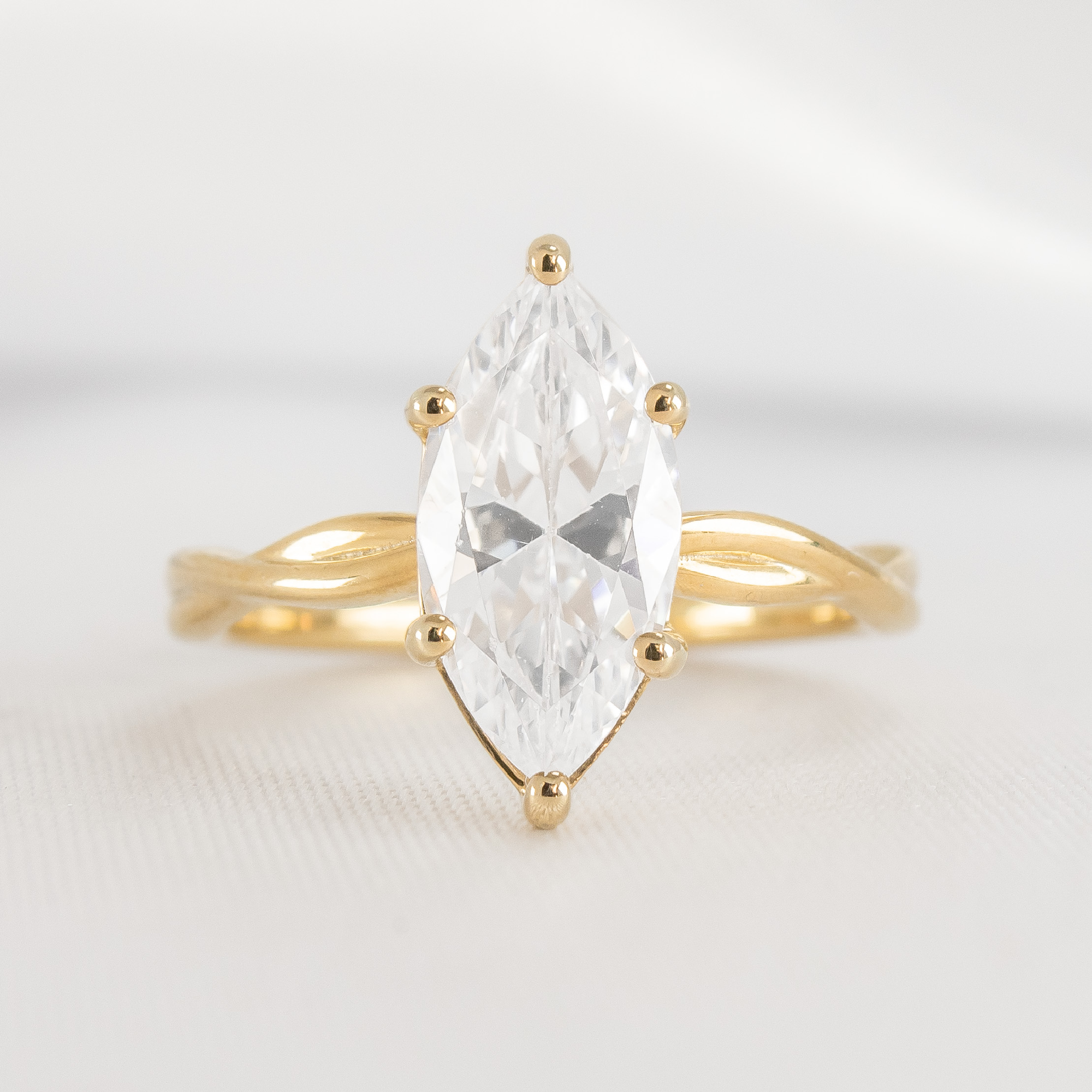


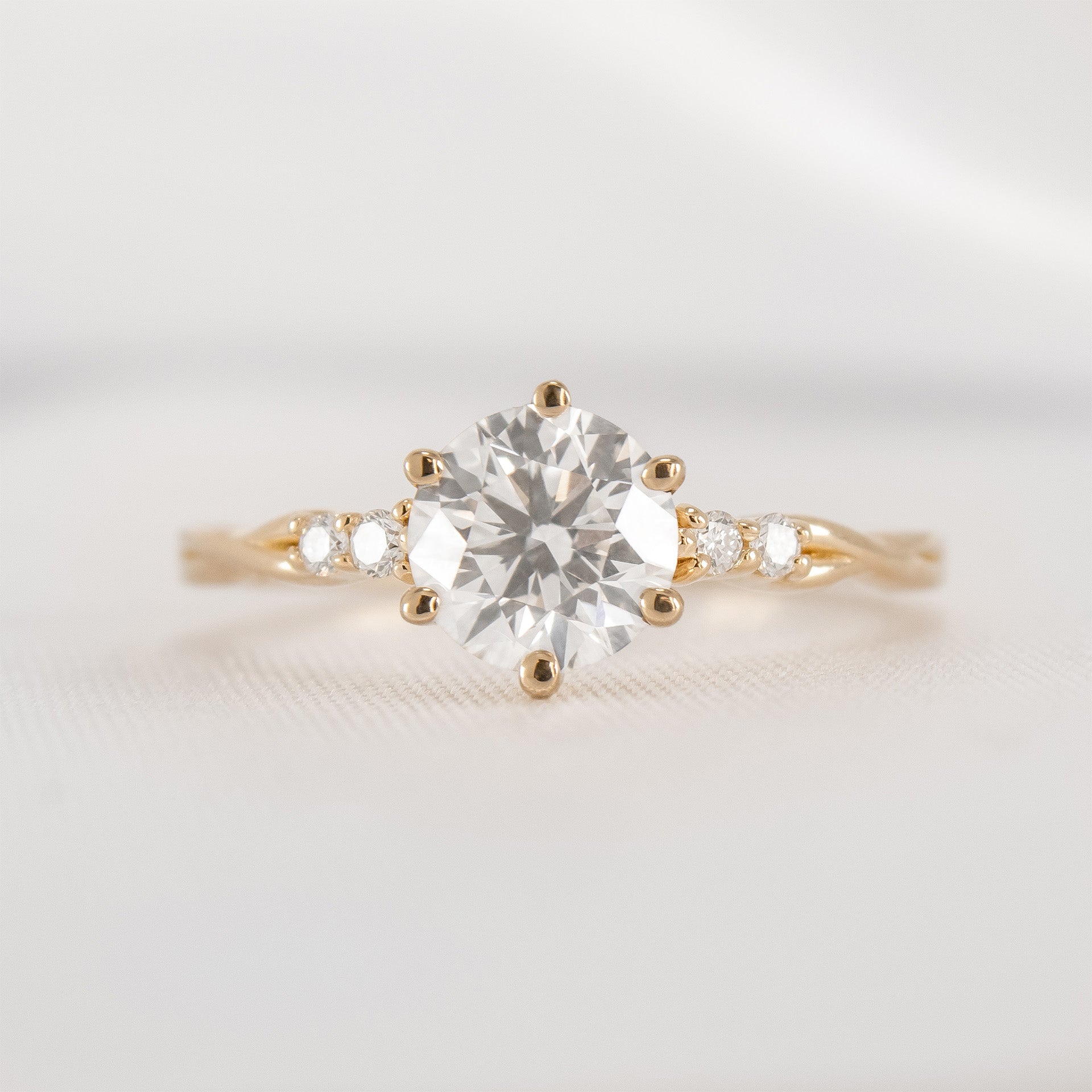

Twist Engagement Rings — Movement, Asymmetry, and the Path of Two.
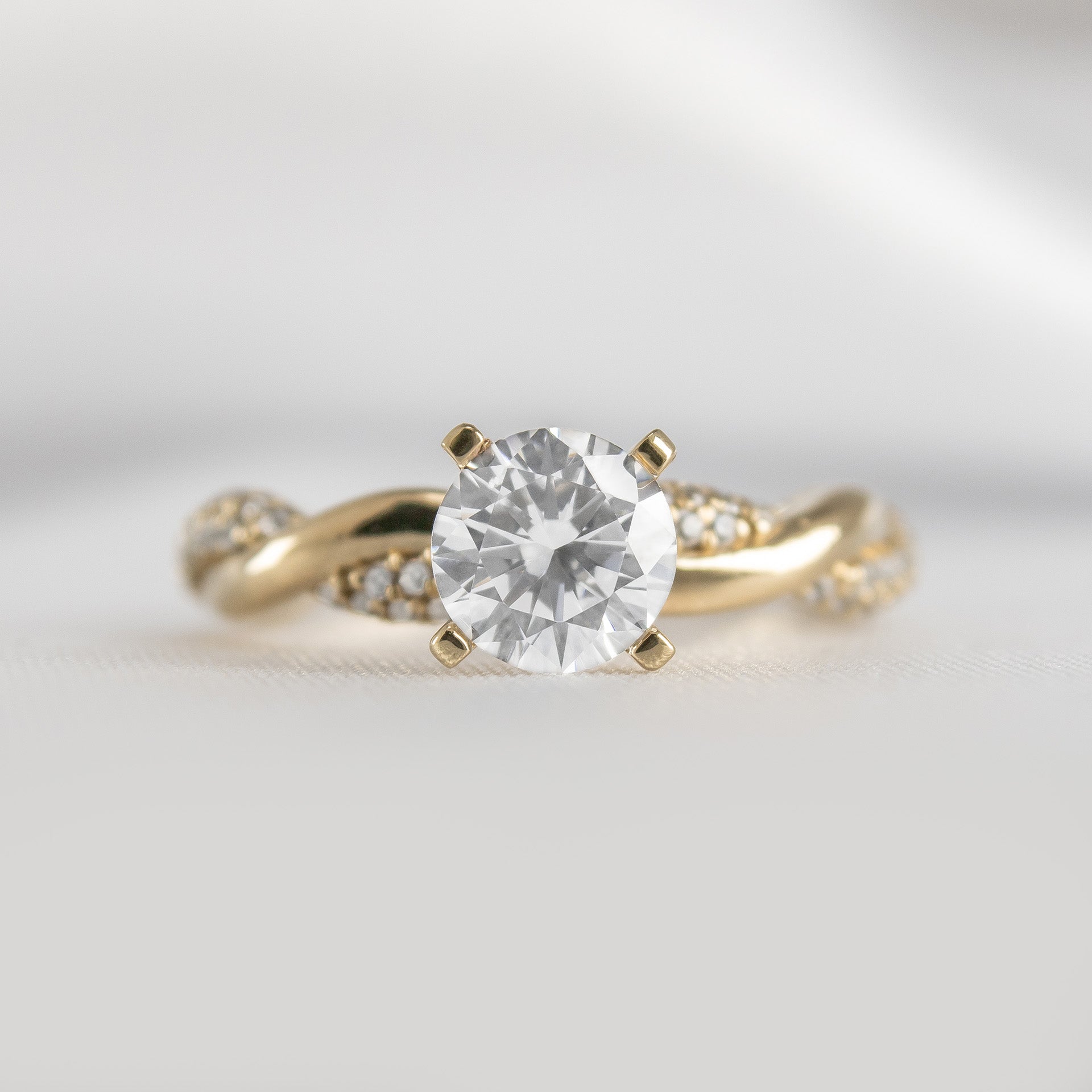
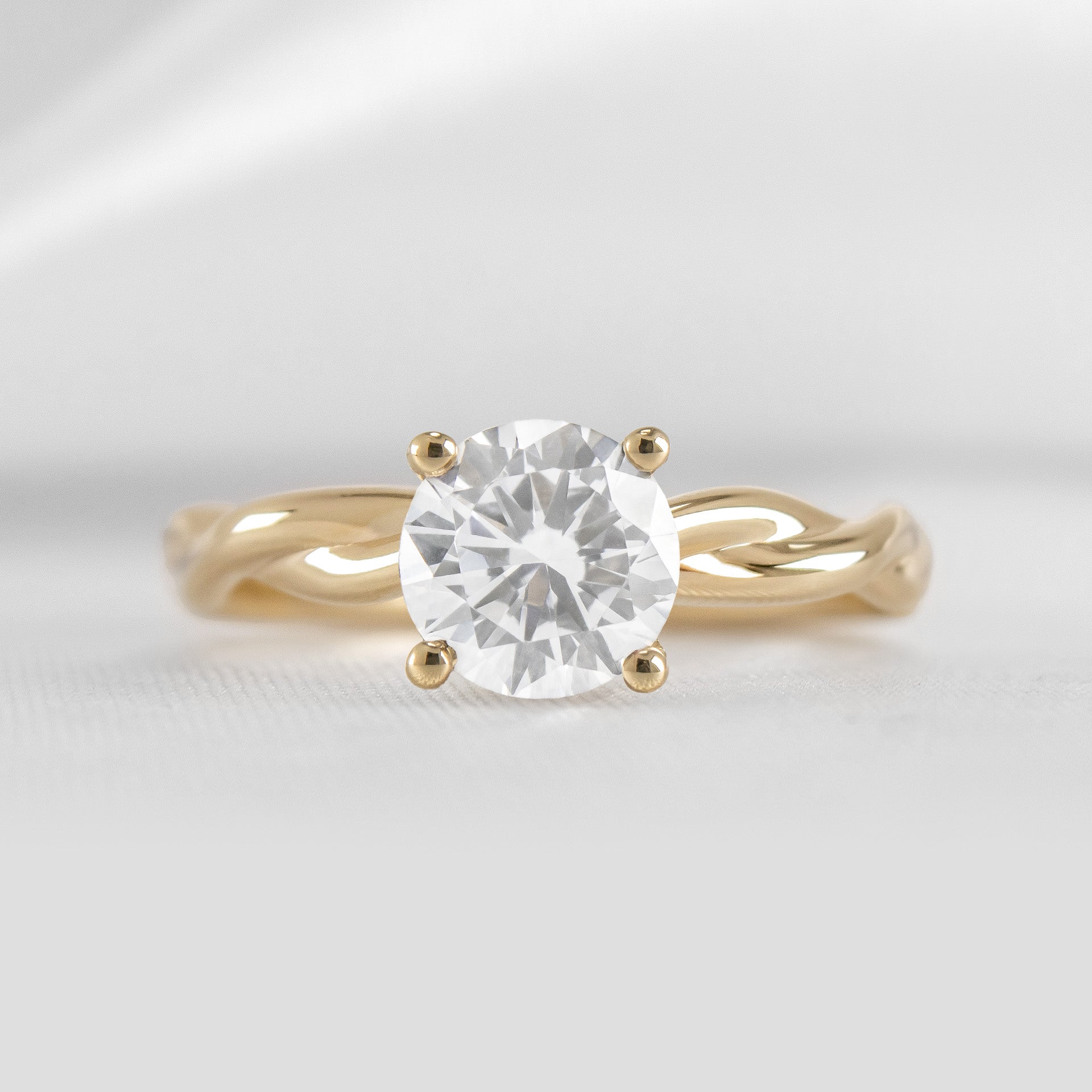
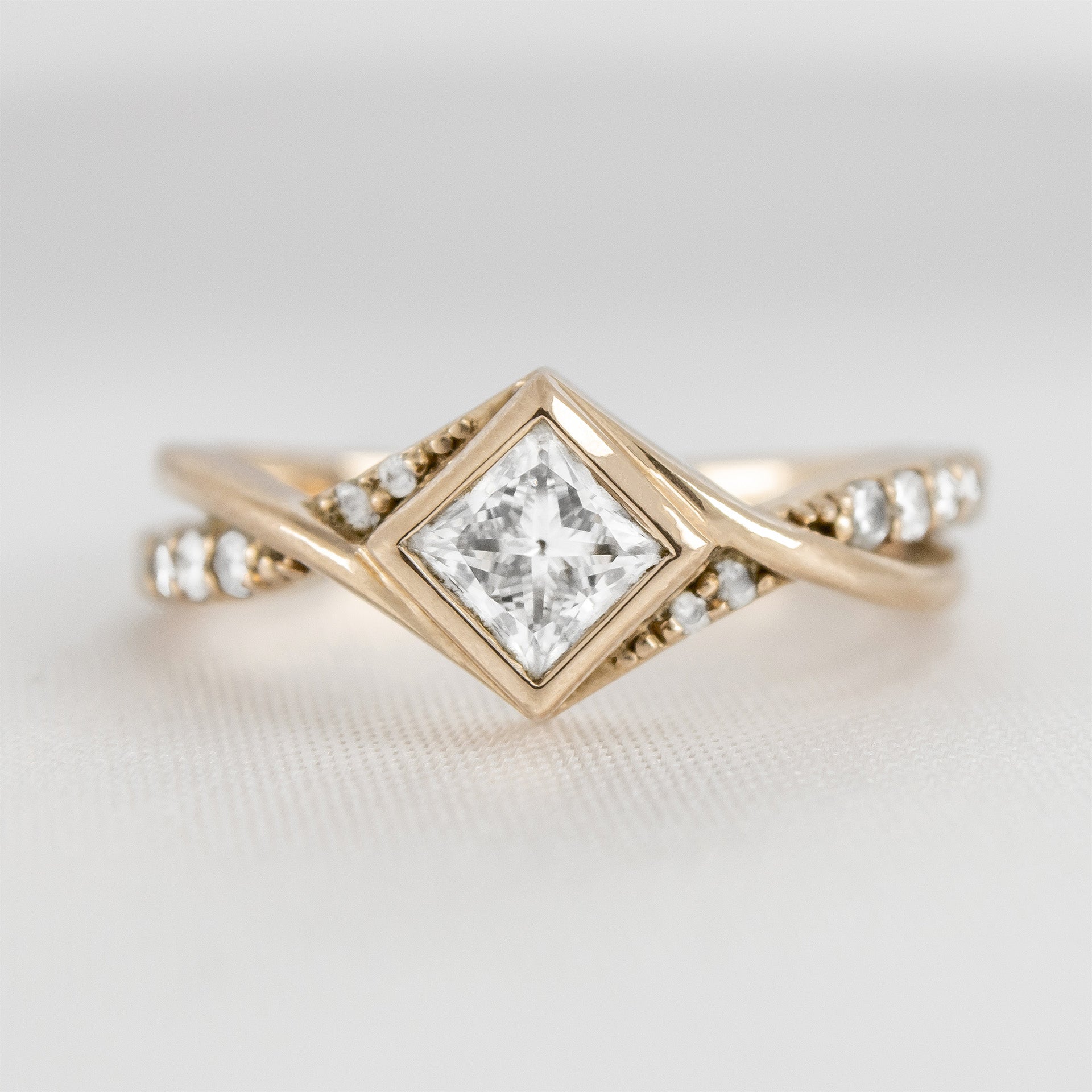
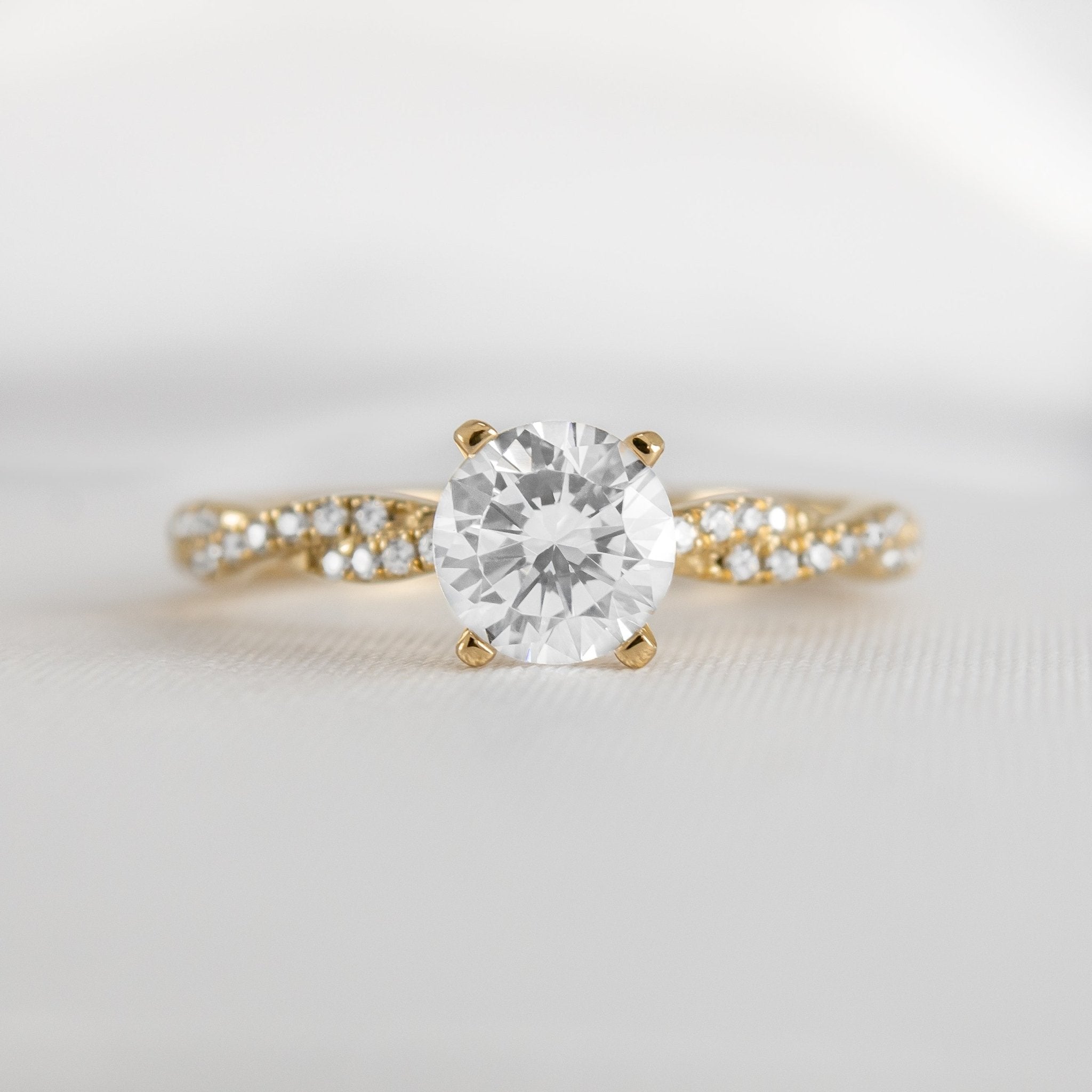
A twist engagement ring carries motion in the band itself. Where a classic shank is a straight, smooth circle of metal, a twist shank weaves, crosses, or spirals — sometimes a single strand twisting around a central axis, sometimes two strands intertwining, sometimes a band crossing over itself in a single asymmetric gesture. The diamond sits at the center of the movement, anchored by the twist beneath it.
The movement is the meaning. Twist designs are widely associated with the path of two lives intertwining — the shank as metaphor for partnership, with the diamond as the point where the paths meet. Some couples are drawn to that symbolism explicitly. Others simply love the visual movement. Either reading works.
Twist Engagement Rings — Movement, Asymmetry, and the Path of Two.
A twist engagement ring carries motion in the band itself. Where a classic shank is a straight, smooth circle of metal, a twist shank weaves, crosses, or spirals — sometimes a single strand twisting around a central axis, sometimes two strands intertwining, sometimes a band crossing over itself in a single asymmetric gesture. The diamond sits at the center of the movement, anchored by the twist beneath it.
The movement is the meaning. Twist designs are widely associated with the path of two lives intertwining — the shank as metaphor for partnership, with the diamond as the point where the paths meet. Some couples are drawn to that symbolism explicitly. Others simply love the visual movement. Either reading works.
The Lisa Robin Global Diamond Collection
Twist engagement rings work with every diamond shape — but the twisting band has its own visual rhythm, so the diamond shape matters less than in styles where the band reads quietly. Round diamonds anchor the movement clearly. Oval and emerald cut work especially well because their elongated shapes echo the directional motion of the twist. Marquise and pear shapes ride the twist as if they're being carried by it.
Every diamond in every Lisa Robin twist engagement ring is selected from the Lisa Robin Global Diamond Collection — a curated inventory of natural and lab grown diamonds in every standard shape. You can browse and select diamonds online or during a private design appointment. Lab grown and natural are both available; we share itemized pricing for every option so you can compare what's right for your design and budget.
Twist Engagement Ring Types in This Collection
Single twist engagement rings have one strand of metal wrapping in a continuous twist around the band. The twist runs the full circumference or only the front half, depending on the design. Single twists read elegant and subtle from a distance and reveal the twist motion up close.
Double twist engagement rings use two strands of metal that intertwine around each other. The double twist creates more visible movement and reads more pronounced — a clear visual statement of two strands woven together.
Criss cross engagement rings have a band that crosses over itself once at a specific point — typically just below the center diamond. The cross is a single moment of asymmetry rather than a continuous twist. The Leila Twist is one of our most-requested criss cross designs.
Infinity-inspired twist engagement rings reference the infinity symbol (∞) in the band's geometry — a loop or interlocking shape worked into the shank. Infinity twists carry explicit symbolic meaning for couples drawn to the visual of unending continuity.
Twist solitaire engagement rings set the diamond at the apex of a twisting band with no side diamonds. The twist provides the visual interest and the diamond carries the focal point. The Amelia Twist is our signature twist solitaire, available in any standard diamond shape.
Twist with diamond accents add small diamonds along the twist itself — set into the curves of the band at strategic points. Adds brilliance to the movement without competing with the center diamond.
If you prefer a smooth, classic shank with no movement, view the Solitaire Engagement Rings collection. For Edwardian-influenced architectural detail without movement, view the Vintage Style Engagement Rings collection.
Choosing Your Twist Engagement Ring
Twist style. Single twists are the most subtle. Double twists are more pronounced. Criss cross designs concentrate the asymmetry at one point. Infinity twists carry explicit symbolic geometry. We help you find the twist style that matches the visual energy you want — from quiet movement to bold statement.
Diamond shape. Round diamonds anchor the twist clearly and let the band carry the visual interest. Oval and emerald cut diamonds echo the directional motion. Marquise and pear shapes flow with the twist. Cushion and asscher shapes ground the movement with their geometric form. Every shape works — the choice depends on whether you want the diamond to anchor the twist or join it.
Metal pairing. Two-tone twist engagement rings (yellow gold twisting with white gold, for example) use the metal change to emphasize the twist's two-strand structure. Single-metal twists keep the focus on the geometry of the twist itself. Both options are available.
Band width and proportion. Slim twist bands (1.4-1.6mm) read delicate and feminine. Medium twist bands (1.7-1.9mm) read substantial without overwhelming. Wider twist bands (2.0mm+) carry significant visual weight and pair best with larger center diamonds.
Wedding ring coordination. Twist engagement rings often pair best with a curved or contoured wedding ring that follows the line of the twist rather than fighting it. Some twist designs allow a straight band to sit flush; others need a custom contoured band. We plan the wedding ring during the engagement ring design.
Twist Engagement Ring Symbolism and Meaning
Couples who choose a twist engagement ring most often describe wanting a ring that holds explicit symbolism in its design — the two strands of metal as the two lives intertwining, the criss cross as the moment two paths meet, the infinity twist as endurance through time. The visual is the meaning, on the hand, every day.
Twist designs also appeal to couples drawn to movement and asymmetry as design language. A classic solitaire is symmetrical and still; a twist engagement ring carries motion built into the metal itself. The ring reads dynamic rather than static. For couples who want their ring to feel alive — to feel as though it's in motion even when it's still — a twist delivers that visual energy.
Designed in Dayton. Made in the USA.
Every Lisa Robin twist engagement ring is designed in our Dayton, Ohio studio and crafted in our New York workshop. Twist work is precision metalwork — the strands have to wrap consistently, the curves have to flow smoothly into each other, and the seams where the twist meets the head have to be clean. Crafting takes 3–4 weeks. Order online or book a private design appointment to walk through twist styles, diamond shape, and band proportions with Lisa.
More about Lisa Robin twist engagement rings
