




Solitaire vs Three Stone vs Cluster Engagement Rings
Solitaire, three stone, or cluster: the choice comes down to how many diamonds you want to see when you look down at your hand. One diamond holds all the attention. Three share it. A cluster gathers many into a single shape.
This guide compares the three side by side: what you notice first, how each one wears, and where the budget goes. Every ring is designed by Lisa Robin in Dayton, Ohio and made to order, with settings from $2,195 to $4,195 in 14K gold. Whether you choose a design as shown or refine it in a private design appointment, you'll understand every choice, and every number, before your ring is made.








A Curated Collection of Solitaire, Three Stone and Cluster Rings
These six designs were chosen to show each approach clearly, so you can see the difference rather than read about it.
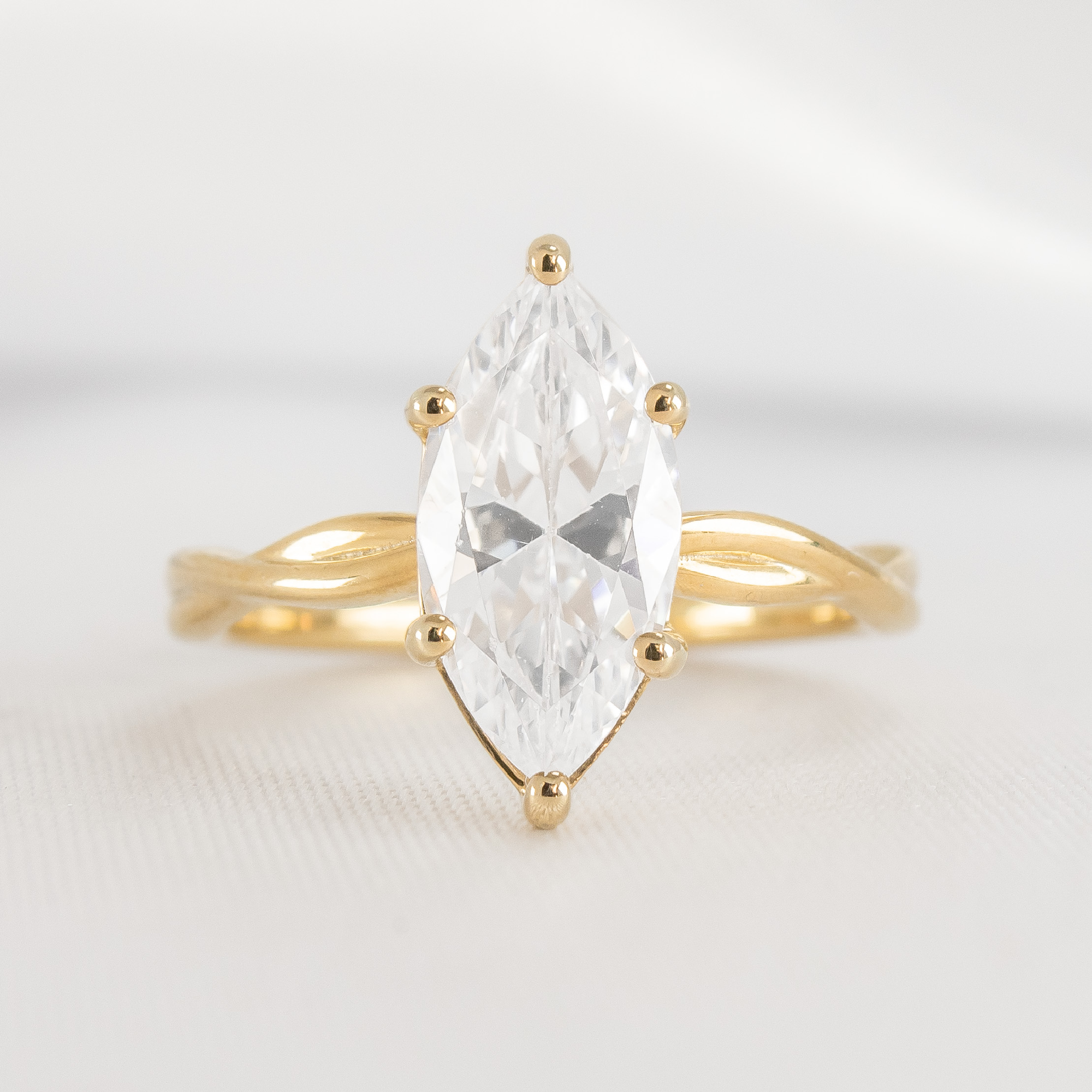
- The Delilla: a twist solitaire engagement ring with a softly twisted band.
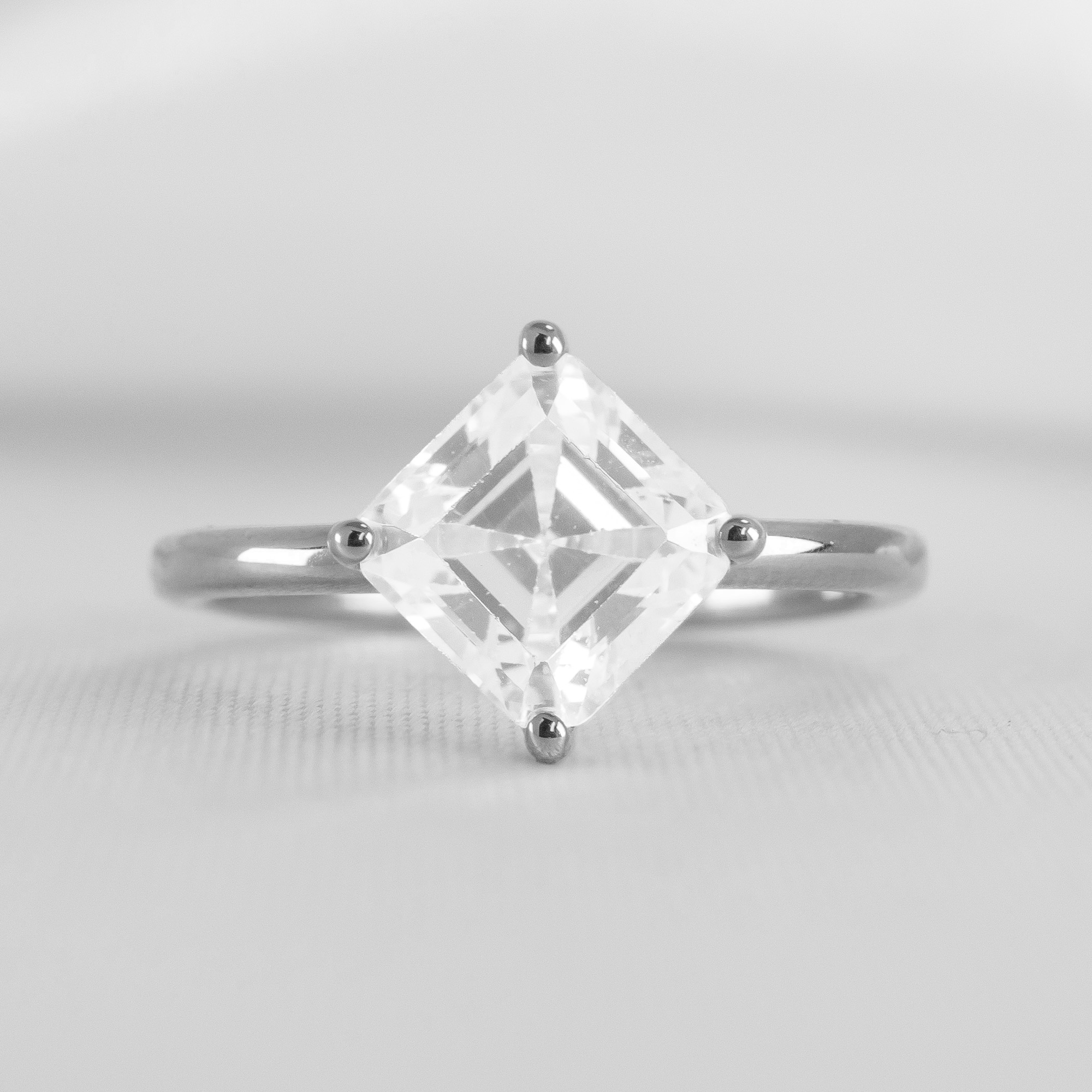
- The Stella: a compass set solitaire engagement ring, with a square diamond turned to a kite shape.
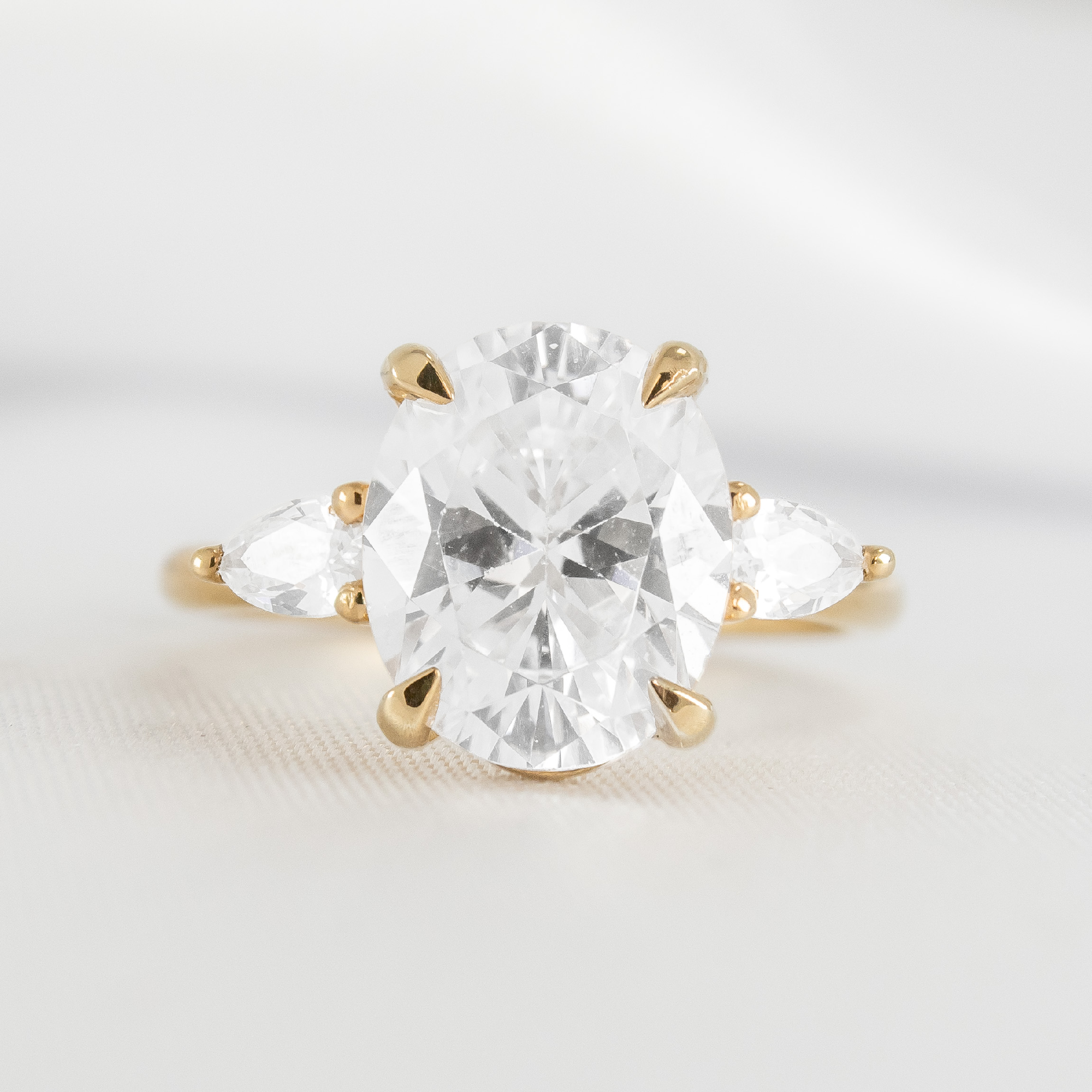
- The Melayna: a three stone engagement ring with an oval center on a high, domed setting.
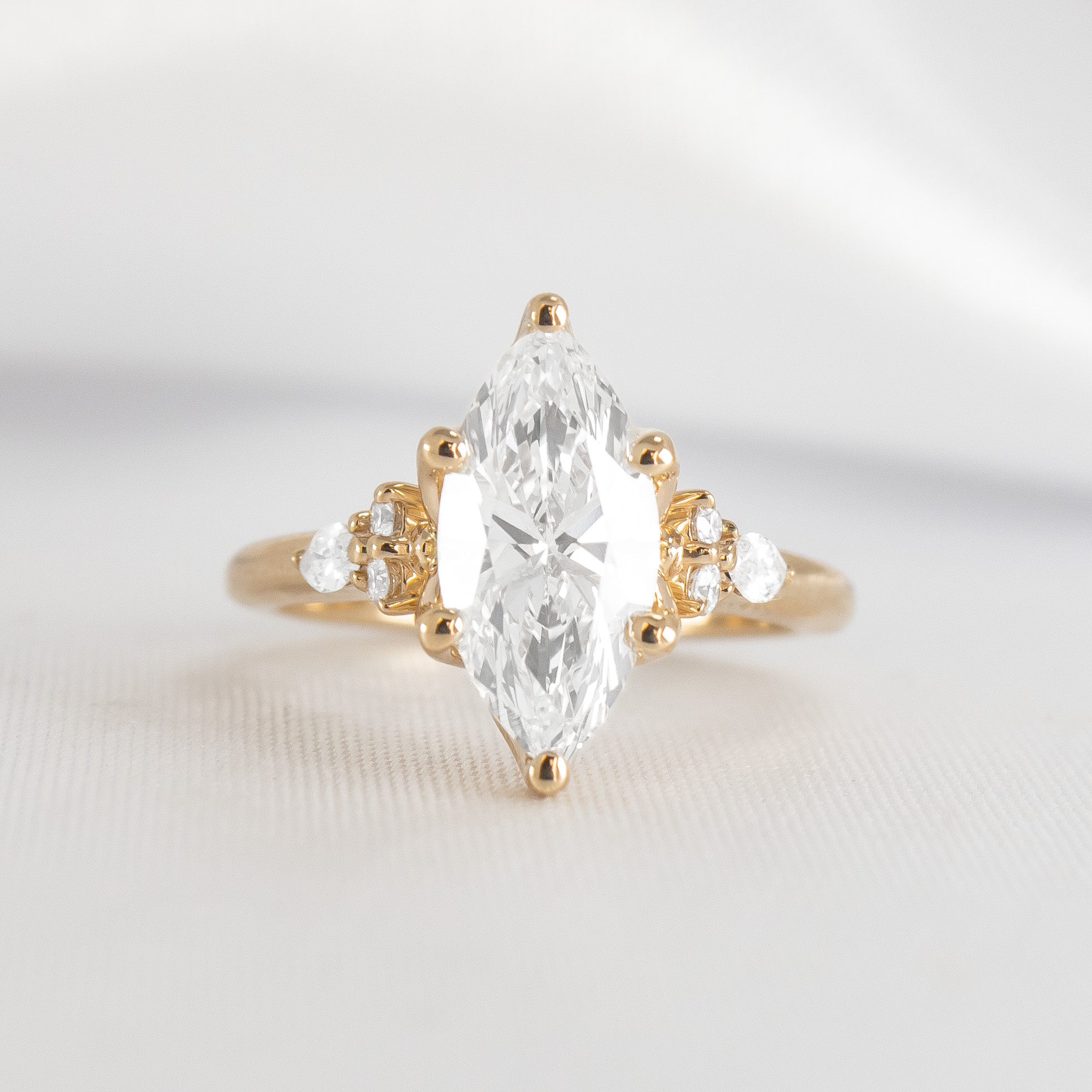
- The Meredith: a cathedral engagement ring with round and marquise side diamonds over a diamond band.
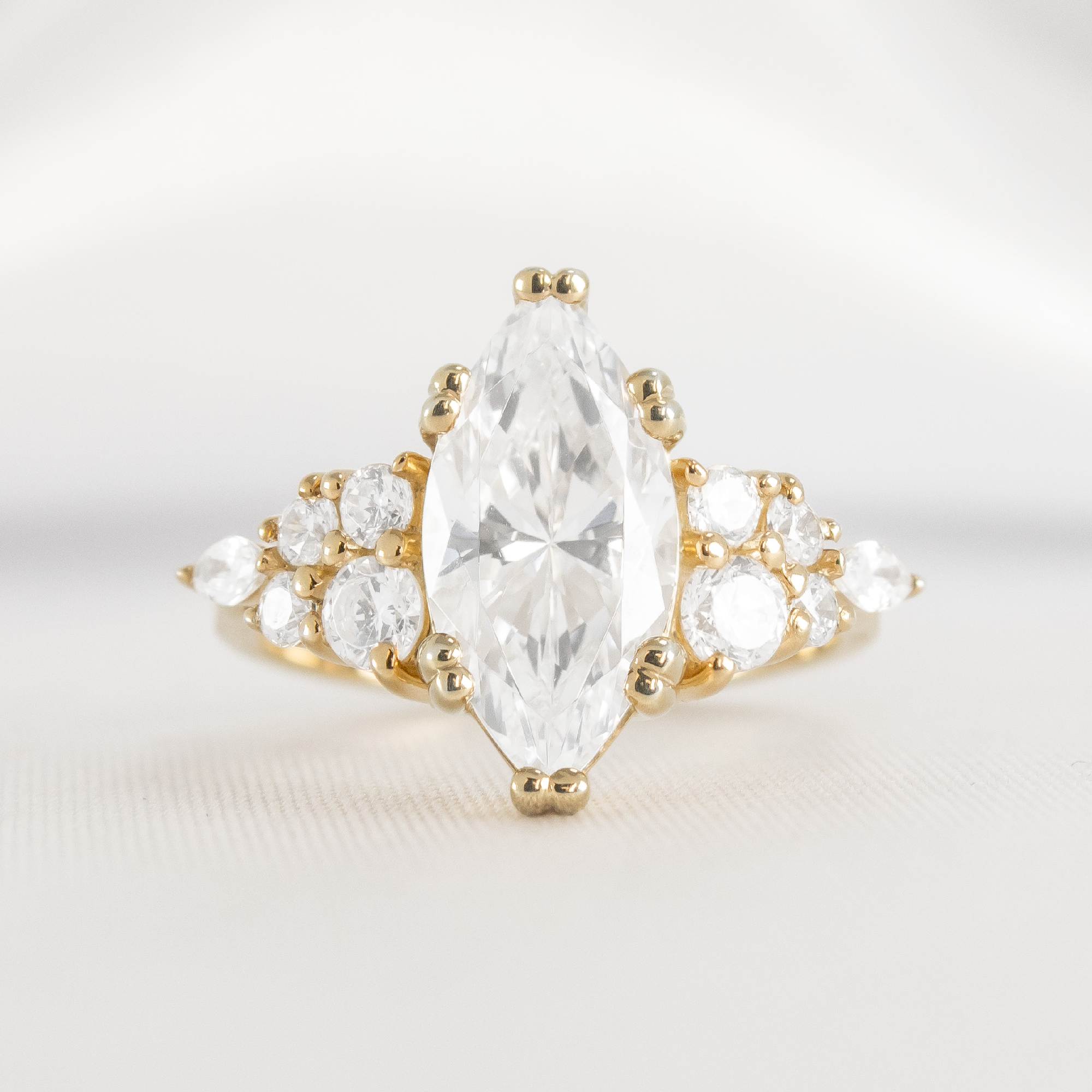
- The Dorothy: a cluster engagement ring with round diamonds stepping out to a marquise tip on each side.
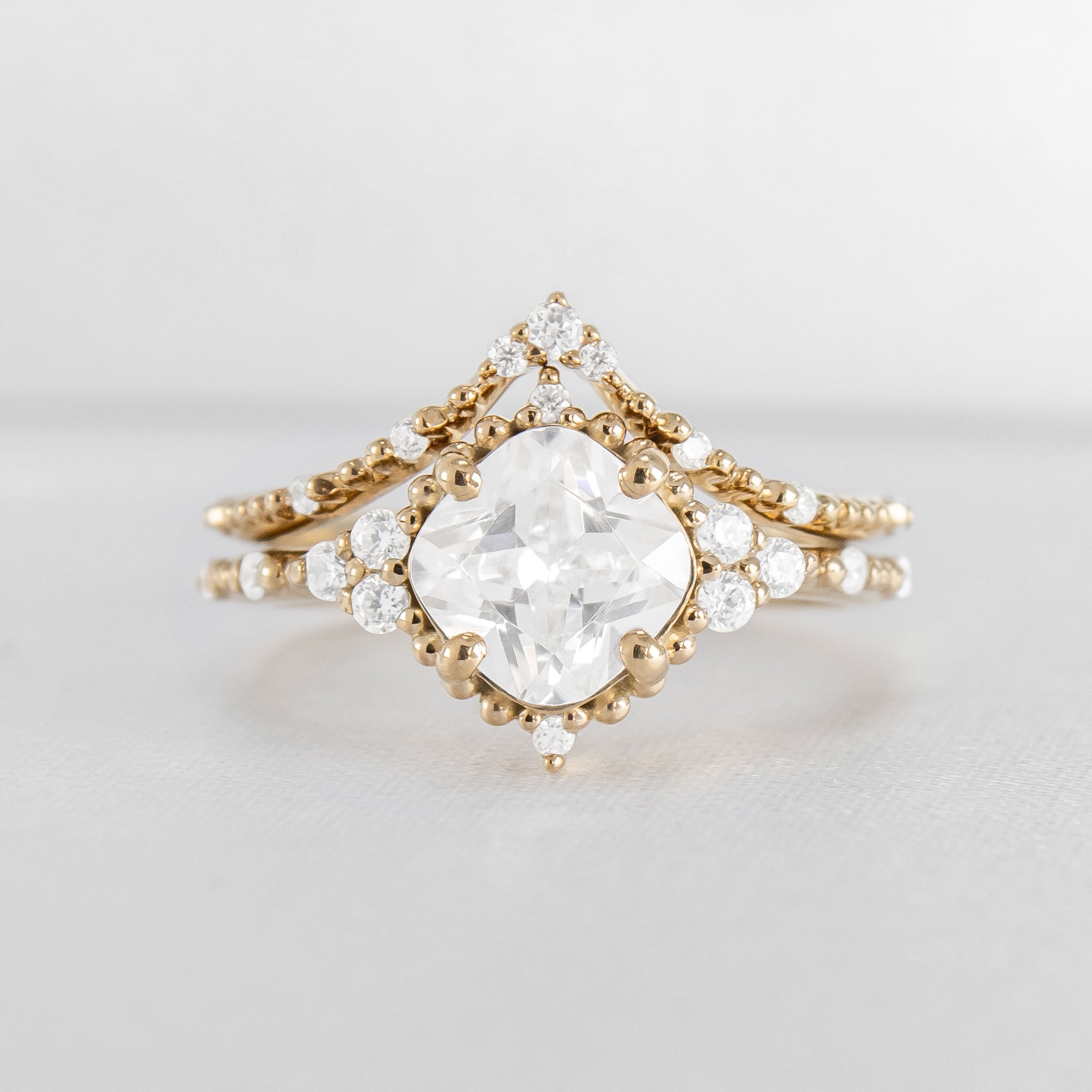
- The Galaeth and Maeve Wedding Set: a constellation cluster engagement ring with its matching milgrain chevron wedding ring.
Each design began with a real couple and an idea they couldn't quite put into words. It can be crafted exactly as presented, or refined so the details reflect you.

Solitaire, Three Stone or Cluster: Finding the One That Feels Like You
You may know what you like before you know what it's called. Noticing where your eye goes first is the first step.
If it goes to a single diamond and stays there, a solitaire engagement ring is likely yours.
If you love the center but want it held between two others, look at three stone engagement rings.
If you're drawn to the overall shape more than to any one diamond, a cluster engagement ring may feel closest.
None is more correct. The right one is the ring you keep returning to. If you're still narrowing your style, the engagement ring style quiz is a good next step.

How You’ll Know Your Choice Is Right
Choosing between a solitaire, a three stone, and a cluster engagement ring rarely starts with certainty. It starts with recognition: one ring you keep coming back to.
Most of these designs can be ordered exactly as shown. From the product page, select your diamond, your preferred metal, and your finger size.
If you'd like to refine a design, such as changing the center diamond shape or the size of the side diamonds, a 3D rendering is created so you can review every proportion before crafting begins.
That review is where clarity arrives. When the rendering looks like the ring you've been imagining, you'll know.
What One, Three or Many Diamonds Can Mean
A solitaire puts everything into one diamond. It reads as certainty: one choice, held up on its own.
A three stone engagement ring is often read as past, present, and future, the story of a relationship told in three diamonds.
A cluster gathers many diamonds into one shape, which carries its own meaning: all the small moments that add up to a life together.
Whichever you choose, the meaning is yours to give it.
What Actually Matters When Choosing Between Solitaire, Three Stone and Cluster
Three things separate these styles more than anything else: what you see first, how the ring wears, and where the budget goes. You don't need to know them before you start. Understanding them simply makes your choice clearer.
The comparisons below take the styles two at a time.
Solitaire vs Three Stone Engagement Rings
A solitaire engagement ring puts all of the attention, and all of the diamond budget, into one center diamond. Nothing competes with it, and it sits beside almost any wedding ring. The Delilla and the Stella show two ways to do it. For more pared-back designs, see our simple engagement rings.
A three stone engagement ring shares the carat weight across three diamonds, so the ring reads wider across your finger for the same center size. The Melayna holds an oval center between two side diamonds on a high, domed setting.
Choose a solitaire if you want the center diamond to be the whole story. Choose three stone if you want presence across the finger and meaning in the number.

Three Stone vs Cluster Engagement Rings
Both add diamonds beside the center. The difference is whether you can count them.
In a three stone ring, each diamond stands on its own. In a cluster engagement ring, many smaller diamonds are set close together so they read as one larger shape. The Dorothy steps round diamonds out to a marquise tip, and the Galaeth scatters them like a constellation.
Side Diamonds: The Middle Ground
If three feels like too few and a cluster too many, a side diamond design sits between them. The Meredith sets round and marquise diamonds on each side of the center, lifted on cathedral arches.
A cluster gives the most presence for a given center diamond, because the smaller diamonds do part of the work.
Metal and Diamond Options
Every design here can be crafted in 14K yellow, white, or rose gold, or in platinum, with a lab-grown or natural center diamond.
Metal matters most on a solitaire, where the band is half the design. On a three stone or cluster ring, white gold and platinum let the diamonds blend into one field of light, while yellow and rose gold outline each one.
Choosing a Wedding Ring to Match
A solitaire sits beside almost any wedding ring. Three stone and cluster rings are wider at the center, so a curved wedding ring or a chevron often sits closer than a straight band. The Galaeth and Maeve Wedding Set shows the idea: the Maeve's chevron rises to meet the Galaeth's cluster, so the two sit together without a gap.
Colored Diamond or Gemstone Centers
Each style changes when the center has color. A solitaire puts a colored diamond or gemstone on display alone, a three stone ring frames it between white diamonds, and a cluster surrounds it. Browse our colored gemstone engagement rings to see each.


- Yellow Gold outlines each diamond with warmth and gives a solitaire a classic look.
- Rose Gold adds a soft blush tone, created by copper in the alloy.
- White Gold lets side diamonds and clusters blend into one bright surface.
- Platinum is naturally white and durable, a strong choice for prongs that hold many diamonds.
Solitaire vs Cluster Engagement Rings
These are the two ends of the range. A solitaire is one diamond and a band. A cluster is many diamonds read as one.
A solitaire shows the most of its center diamond, so the cut and clarity of that diamond matter more. A cluster shows more sparkle from more facets, and reaches a larger look with a smaller center.
You may find you want both: a clear center with a quiet cluster around it. Those blended designs are often where a ring becomes yours.
Your Ring as a Starting Point
Each design is complete as presented, ready to be crafted around the diamond you choose.
If you'd like to make it your own, refinements such as a different center shape, metal, or side diamond arrangement can be explored while preserving the character of the design.
Whether you choose it as shown or personalize select details, you'll understand every choice before your ring is made.
Seeing Solitaire, Three Stone and Cluster Rings in Real Life
The difference between one, three, and many diamonds is easiest to judge on the hand. Seeing these rings worn, alongside their wedding rings, often brings clarity that photos alone can't.
Lifestyle images and renderings help you picture how the proportions will feel as part of everyday life.
Thinking Ahead: Everyday Wear
All three styles are made to be worn every day. A solitaire has the fewest settings and is the simplest to clean. Three stone and cluster rings have more prongs, and more places for lotion and soap to gather, so they benefit from a gentle cleaning at home.
A periodic professional cleaning and inspection keeps every diamond secure, whichever you choose.
Two Ways to Move Forward, Equally Guided
You can choose your solitaire, three stone, or cluster engagement ring online, selecting your diamond, metal, and finger size directly from the product page. Or you can bring the idea you can't quite describe yet to a private design appointment, by Zoom or in the studio, and find it together with Lisa Robin.
Both paths lead to the same place: a ring with a reason behind every detail, crafted for you in a few weeks.