



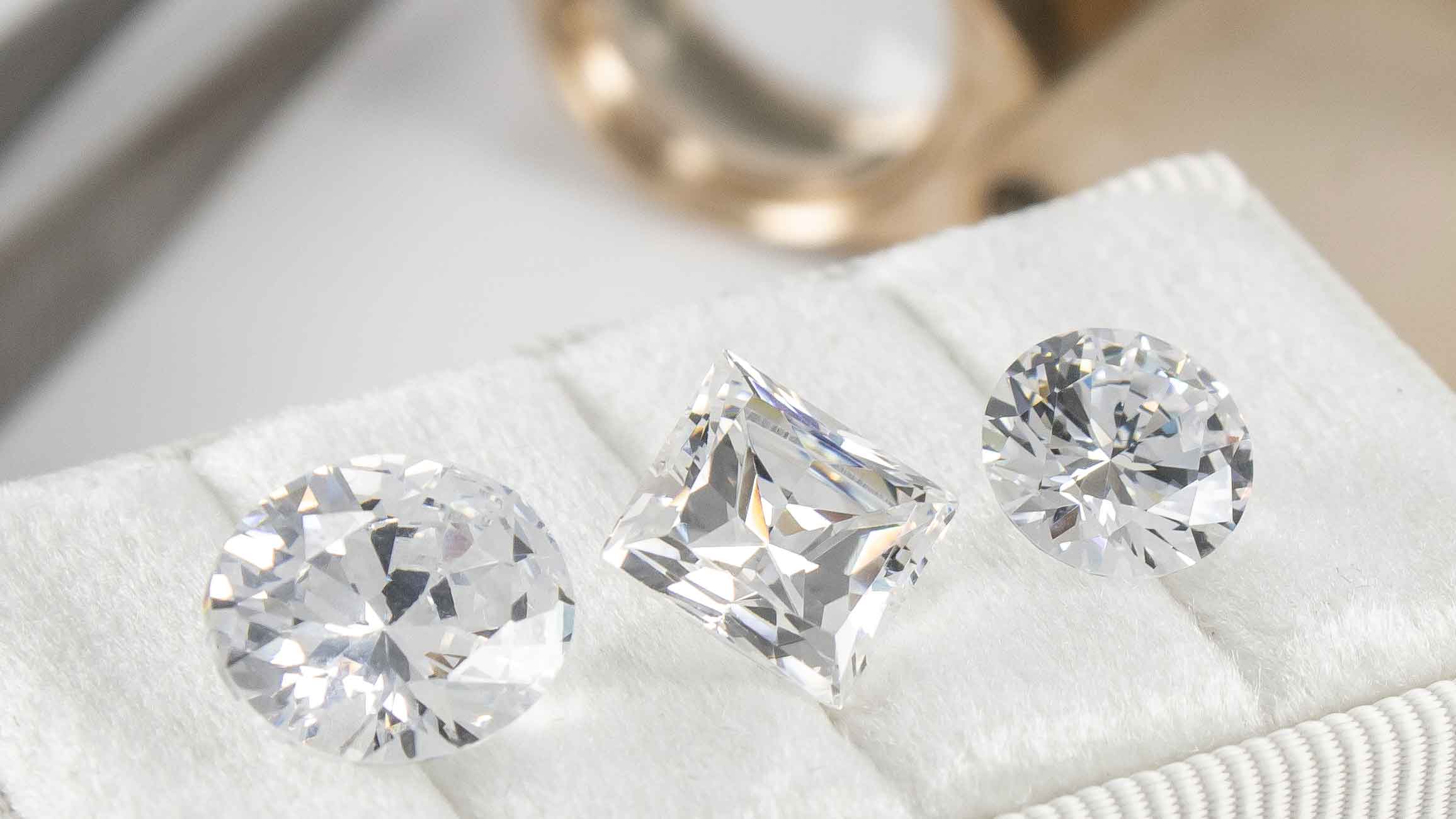
Lab Created Diamonds on White Velvet | Lisa Robin

What is Diamond Clarity?

About Diamond Clarity Scale

We must first understand how both natural and lab created diamonds are created in order to understand their clarity. As carbon is exposed to tremendous heat and pressure deep in the earth, natural diamonds are formed. Diamonds created in a lab occur in a vacuum chamber filled with hydrogen and methane. These gases are activated by energy sources—typically a microwave. As a result of this process, there can be a variety of internal characteristics called "inclusions," and external characteristics called "blemishes."

Small crystals can become trapped in a diamond when it’s forming. Sometimes as a crystal grows, it can develop irregularities in its atomic structure. The size, position and visibility of inclusions can have a significant impact on diamond clarity.

Clarity is evaluated by determining the number, size, relief, nature, and position of these characteristics, as well as how they affect the overall appearance of the stone. It is important to remember that no diamond is perfectly pure when determining what is the best clarity for a diamond. However, the closer it comes to purity, the better its clarity.

The Diamond Clarity Scale has 6 categories, some of which are divided, for a total of 11 specific grades.

  • Flawless (FL) No inclusions and no blemishes visible under 10x magnification
  • Internally Flawless (IF) No inclusions visible under 10x magnification
  • Very, Very Slightly Included (VVS1 and VVS2) Inclusions so slight they are difficult for a skilled grader to see under 10x magnification
  • Very Slightly Included (VS1 and VS2) Inclusions are observed with effort under 10x magnification, but can be characterized as minor
  • Slightly Included (SI1 and SI2) Inclusions are noticeable under 10x magnification
  • Included (I1, I2, and I3) Inclusions are obvious under 10x magnification which may affect transparency and brilliance

Diamond Clarity Scale graphic | Lisa Robin

Diamond Clarity Chart

Clarity is evaluated by determining the number, size, relief, nature, and position of these characteristics, as well as how they affect the overall appearance of the stone. It is important to remember that no diamond is perfectly pure when determining what is the best clarity for a diamond. However, the closer it comes to purity, the better its clarity.

Diamond Inclusions

The small marks and flaws found within diamonds are given the umbrella term ‘inclusions’, but there are many different types of diamond inclusions, caused by different phenomena.

  • Crystal - a minuscule diamond (or other mineral) within the diamond; sometimes coloured
  • Pinpoints - tiny white or black crystals, appearing like a pinprick within the diamond
  • Needle - an elongated, thin line of crystal
  • Cavity or chip - usually caused by stressing a weak point during diamond cutting, a cavity in the surface
  • Feathers - an internal crack or fissure, appears light and feather-like, sometimes transparent without magnification
  • Clouds - a cluster of pinpoint inclusions, which can make a diamond appear milky or hazy
  • Knot - a small crystal that breaches the surface of the diamond, like a tiny bump on the surface
  • Graining - like you might find in wood, long streaks or lines that can look like scratches within the diamond, usually more visible from certain angles of the diamond
  • Twinning wisp - these show the moment a diamond stopped then restarted growing; often two amalgamations of pinpoints, needles, feathers and cloud inclusions that point to separate phases of growth

Diamond clarity is graded based on a number of factors, including how clear inclusions or blemishes are under magnification, where and how they are positioned within the diamond, their size, color, and of course their number.

Grading diamonds is done from the top down, so when they are set in your ring you will see the marks you see when viewed under magnification. A diamond's clarity is graded under 10x magnification, so even those not visible to the naked eye are taken into account. Diamonds are graded according to their clarity based on their flaws, which are displayed on a diagram.

Diamond Clarity and Pricing

There are benefits to having inclusions in a diamond. The most significant benefit is that diamonds with inclusions are much less expensive than flawless diamonds. However, if the inclusions are large or severe enough to be seen without magnification, or if they obstruct light reflection, they may detract from the beauty of the stone. Inclusions are natural and some people appreciate the presence of inclusions as they indicate the stone's history and natural origins. Counterfeit or imitation diamonds will not have inclusions, so any flaws in the stone can help determine its authenticity. Our recommendation is to search for diamonds with minor inclusions graded between VS2 to SI1 for the best balance between value and beauty.

Diamond Clarity and Sparkle

From 'Flawless' to 'Very Slightly Included 2', any inclusions within the diamond will not generally affect its sparkle. Graded lower, however, diamonds may have inclusions that inhibit their sparkle. Large or heavy inclusions interfere with internal light reflection, reducing the amount of light leaving the diamond to reach your eyes. As a result, only diamonds graded 'Slightly Included 2' and lower will have inhibited sparkle.

The Beauty of Inclusions: Salt and Pepper Diamonds

In the world of diamonds, there is a captivating allure that goes beyond the traditional clear and colorless stones. Enter the realm of salt and pepper diamonds - a truly extraordinary and unconventional choice for those seeking a one-of-a-kind piece of jewelry. What sets salt and pepper diamonds apart is their distinctive appearance, with a mesmerizing mix of black, white, and gray inclusions that resemble specks of salt and pepper. Rustic diamond engagement rings possess an inherent beauty that celebrates imperfections, making it a perfect symbol of uniqueness and individuality.

Unlike their flawless counterparts, salt and pepper diamonds exude a raw and organic charm that is both rustic and refined. Their enigmatic patterns, created by nature itself, tell a story of inclusion and diversity. Whether adorning an engagement ring or a pendant, salt and pepper diamonds are a bold statement, elevating any piece of jewelry to unparalleled levels of elegance and sophistication. Join us on a journey to discover the magnificent world of salt and pepper diamonds, where the ordinary is transformed into the extraordinary.

The Diamond Report

To gain a complete understanding of a diamond's flaws, it's essential to examine both the inclusion plot at the bottom of the certificate and the comments to the left. The "Grading Results" section provides information about clarity, cut, diamond color, and carat weight, while the section below includes details on polish, symmetry, fluorescence, and additional notes about inclusions.

It's worth noting that there are no objective criteria for determining a diamond's clarity, cut, and color. Expert gemologists at the IGI and GIA compare the diamond to a given standard and decide where it falls on the scale. While carat weight is objective, you should expect no difference in the carat weight regardless of which lab grades it.

The report for laboratory-grown diamonds is distinct from other reports, as even the subheadings include the phrase "laboratory-grown." In the comments section, you'll find information about the process used to create the diamond. IGI certifications for lab-grown diamonds also include similar comments.

About Diamond Grading

When assessing a diamond, experts look at its color, cut, carat weight, and clarity, to issue a certification. Learn what labs issue certificates and how to understand the certification report.

GIA Diamond Certification Report | Lisa Robin

Diamond Certificates

There are two popular diamond certification laboratories; International Gemological Institute or IGI and the Gemological Institute of America or GIA.

Lab diamonds often come with an IGI certificate, which is issued by the International Gemological Institute. This renowned institute has operated since 1975 and is the biggest independent gemological laboratory worldwide. They offer comprehensive reports for lab diamonds and also certify natural diamonds and colored gemstones. The IGI is known for being the first major organization to certify the color and cut of lab-grown diamonds.

The Gemological Institute of America, commonly known as GIA, is the leading organization for assessing the quality of diamonds. Established in 1931, GIA operates as a non-profit entity renowned for its research on precious stones and reports of natural diamonds. The standards set by GIA are widely regarded as the most stringent compared to other grading bodies, such as the IGI.

The Report

The serial number of the diamond starts with "LG" to indicate that it is lab-grown. Additionally, the girdle is engraved with the serial number and the words "lab-grown". Although the GIA offers certifications for lab-grown diamonds, they are not as widely recognized as those for natural diamonds. However, the lab-grown diamond report shares many similarities with its natural diamond counterpart and displays the
same information. The report's heading clearly differentiates it from natural diamond reports by using the letters "LGDR" to stand for "lab-grown diamond report". 

The IGI Laboratory Grown Diamond Report clearly authenticates the man-made nature of the submitted diamond, which has been analyzed and graded to the same international standards as a natural diamond, using the same 4C parameters of: Carat, Color, Clarity, and Cut. At IGI, every laboratory grown diamond submitted for a Laboratory Grown Diamond Report is automatically Laserscribed® to indicate its man-made origin.  

Diamond’s Characteristics Found on the Report

Pair large text with an image to tell a story, explain a detail about your product, or describe a new promotion.

  • Proportions
  • Shape and cutting style
  • Measurements
  • The 4C's: color, clarity, cut, and carat

Select the Right Diamond for Your Ring

That’s why we are here to guide you through every step - from understanding what carat, color, cut and clarity mean, to designing the perfect ring.

Frequently Asked Questions About Diamond Clarity

An eye-clean diamond is one where inclusions are not visible without magnification when viewed face-up. For most shapes and settings, diamonds graded VS2 or better appear eye-clean and offer an excellent balance of beauty and value.

They can. Lab-grown diamonds may show growth patterns or inclusions specific to their creation process, while natural diamonds display inclusions formed over billions of years. Both are graded using the same clarity standards and evaluated under 10x magnification.

Yes. Brilliant cuts such as round, oval, and pear tend to disguise inclusions more effectively because of their light return. Step-cut diamonds like emerald or Asscher have large, open facets that make inclusions easier to spot, often benefiting from higher clarity grades.

In most cases, no. Minor inclusions do not compromise structural integrity. However, large inclusions—especially those near the surface—can influence durability depending on their type and location. This is one reason professional evaluation matters.

Clarity affects brilliance only when inclusions interfere with light performance. Diamonds with minor, well-placed inclusions typically sparkle just as beautifully as higher-clarity stones.

Flawless diamonds require an absence of inclusions and blemishes under magnification—a rarity given the intense conditions under which diamonds form. Their scarcity is what drives their premium pricing, rather than a visible difference in appearance.

Clarity should be considered alongside cut, color, and carat—not in isolation. Our general guidance is to choose the lowest clarity grade that still appears eye-clean for your chosen shape and setting, allowing your diamond to shine where it matters most.

SHOP BY POPULAR STYLES