




Art Deco and Victorian Engagement Rings
Art Deco and Victorian engagement rings carry the character of two very different eras. Art Deco brings geometric lines, step-cut diamonds, and crisp symmetry. Victorian style brings softer silhouettes, clustered diamonds, and romantic detail. Each new design here takes one of those traditions and interprets it for the way you'll wear your ring every day.
This guide walks through how the two eras differ, which details matter most, and how to recognize the style that already feels like yours. Whether you choose a design exactly as shown or refine it together in a private design appointment, you'll understand every choice before your ring is made. If you'd rather talk it through, book a design appointment and we'll look at both eras together.
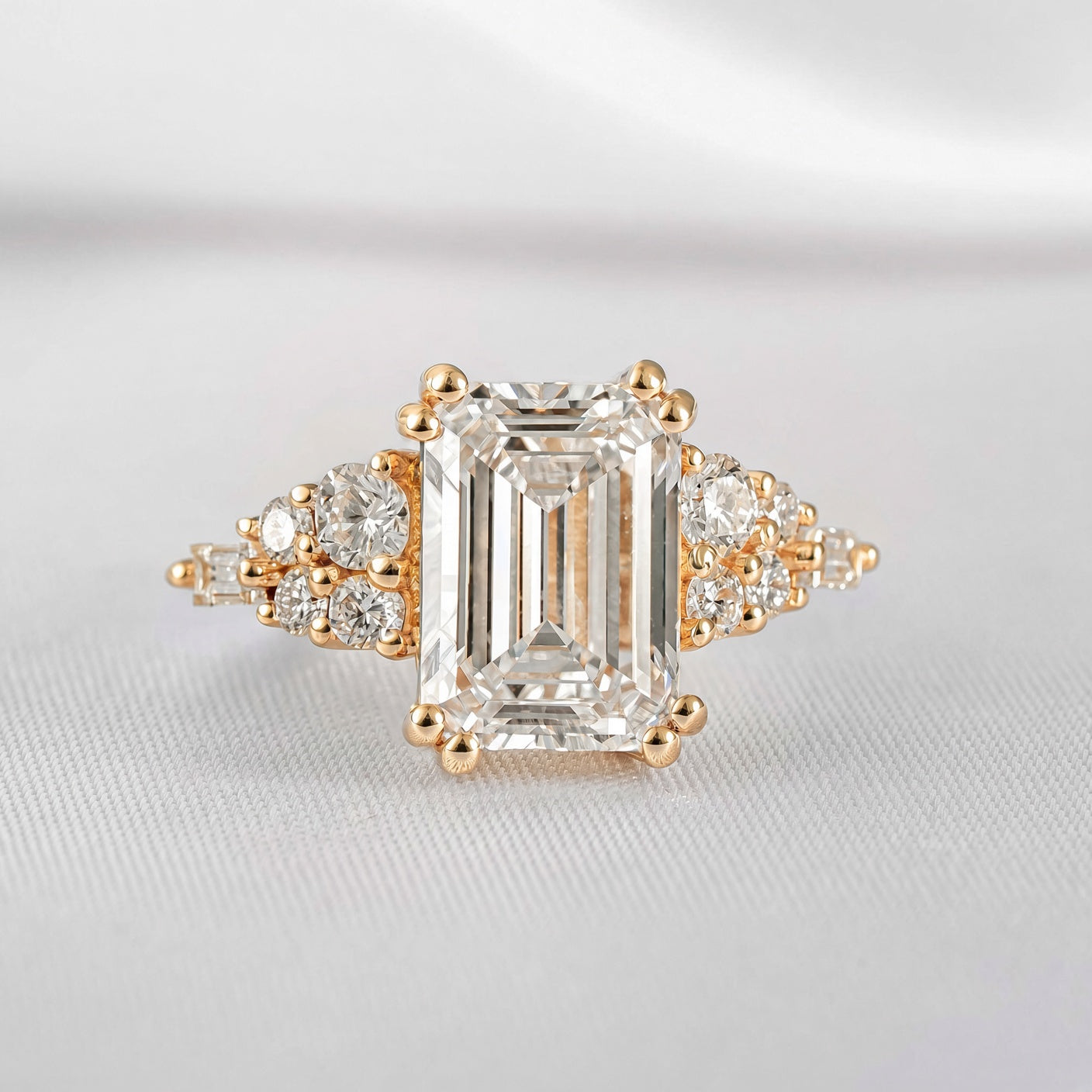

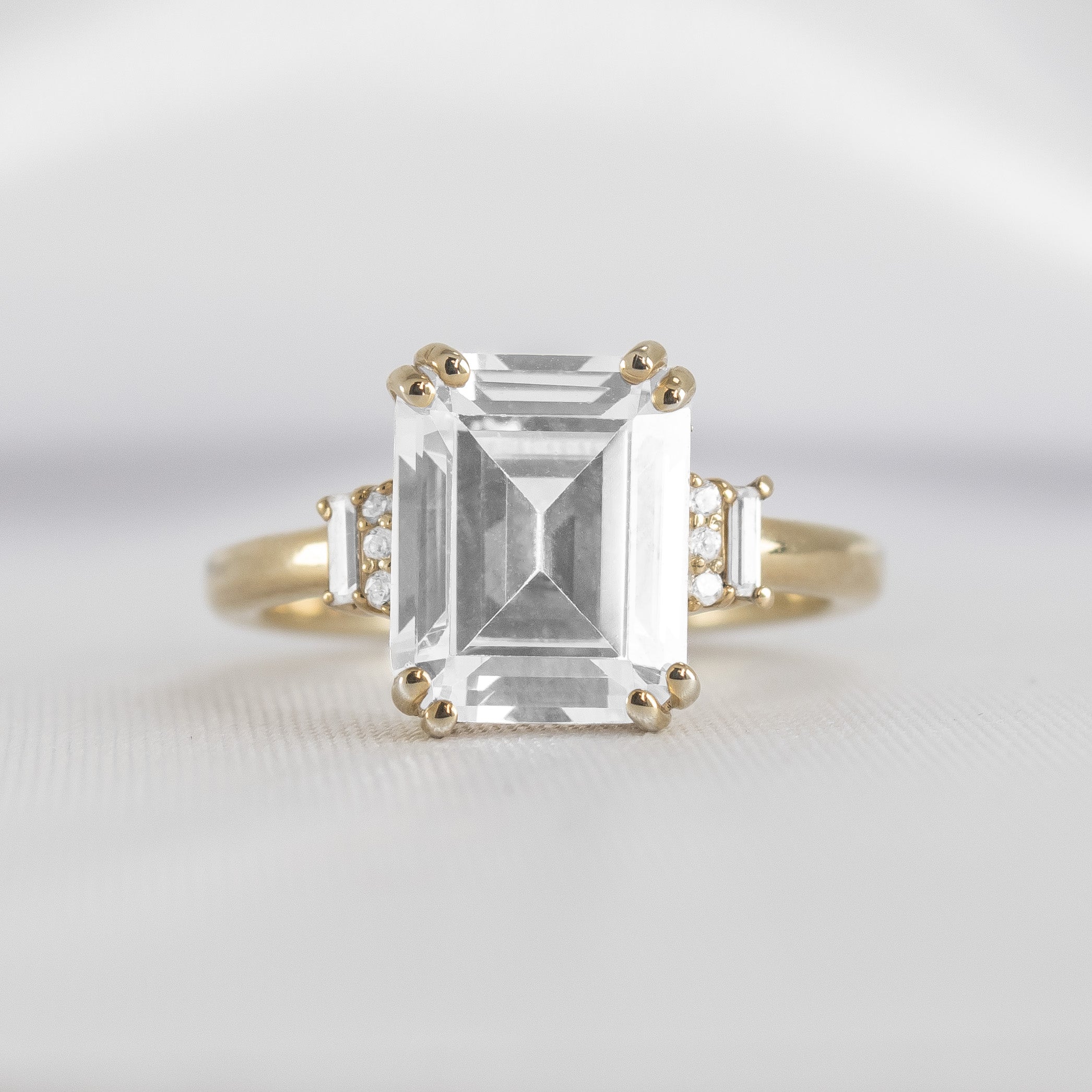

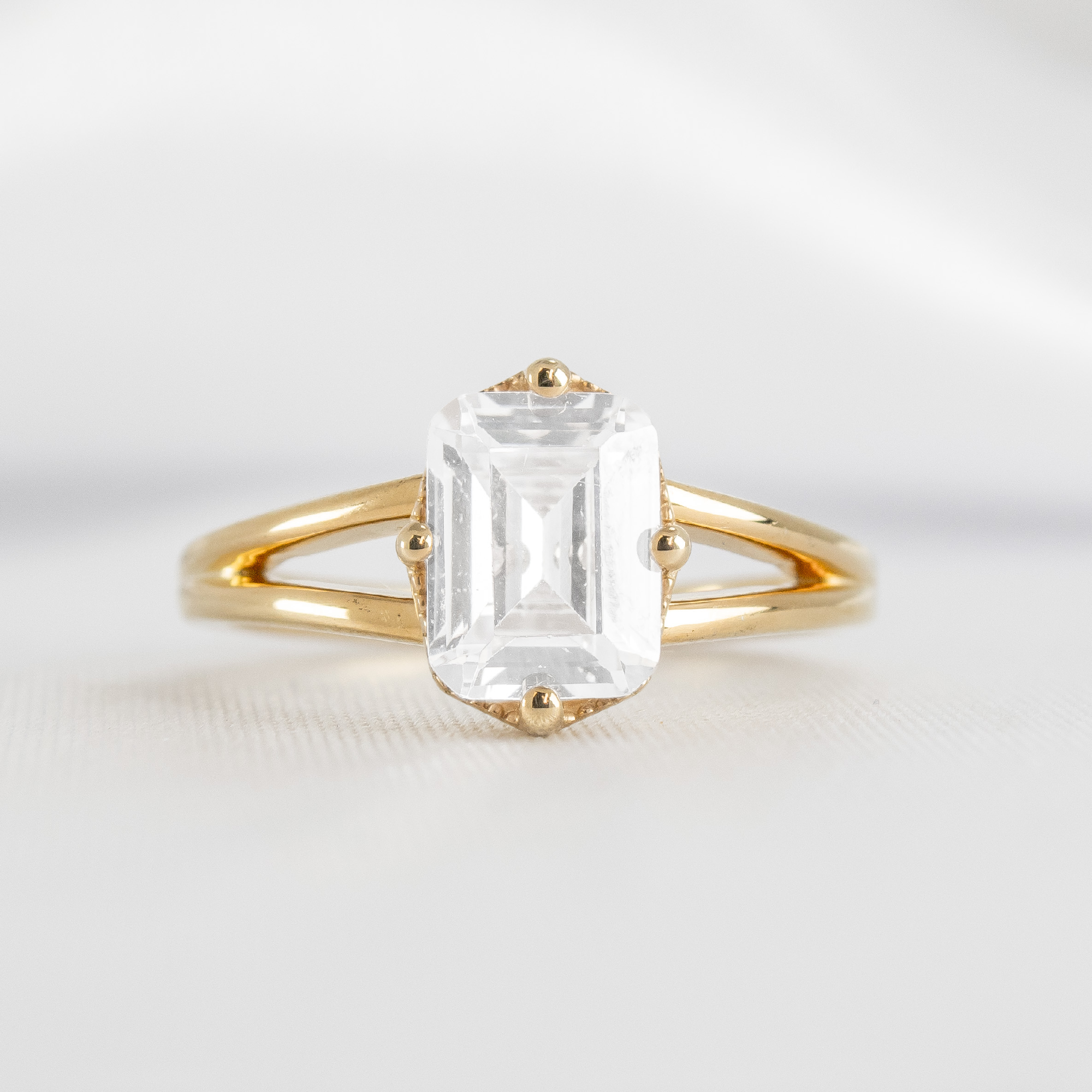


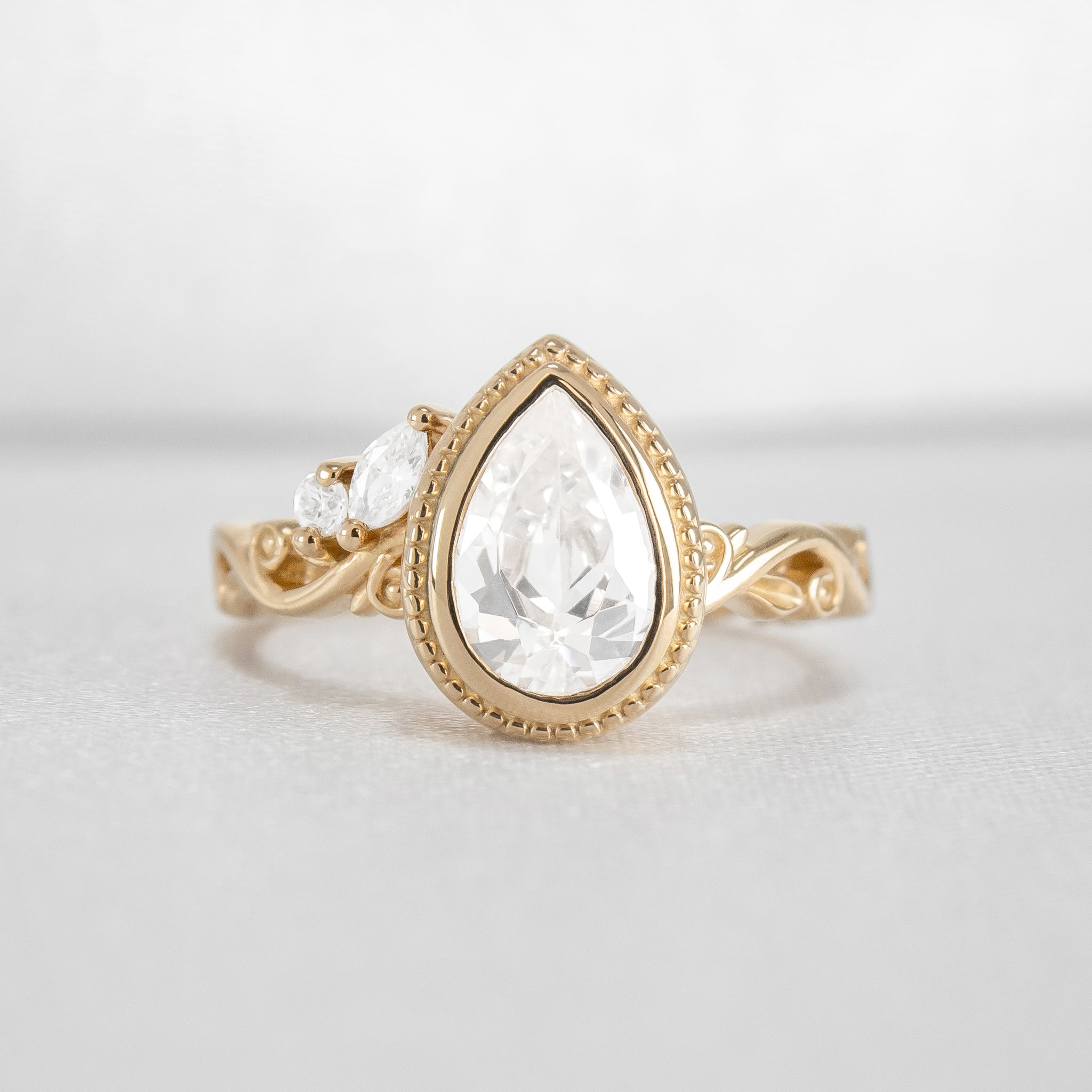

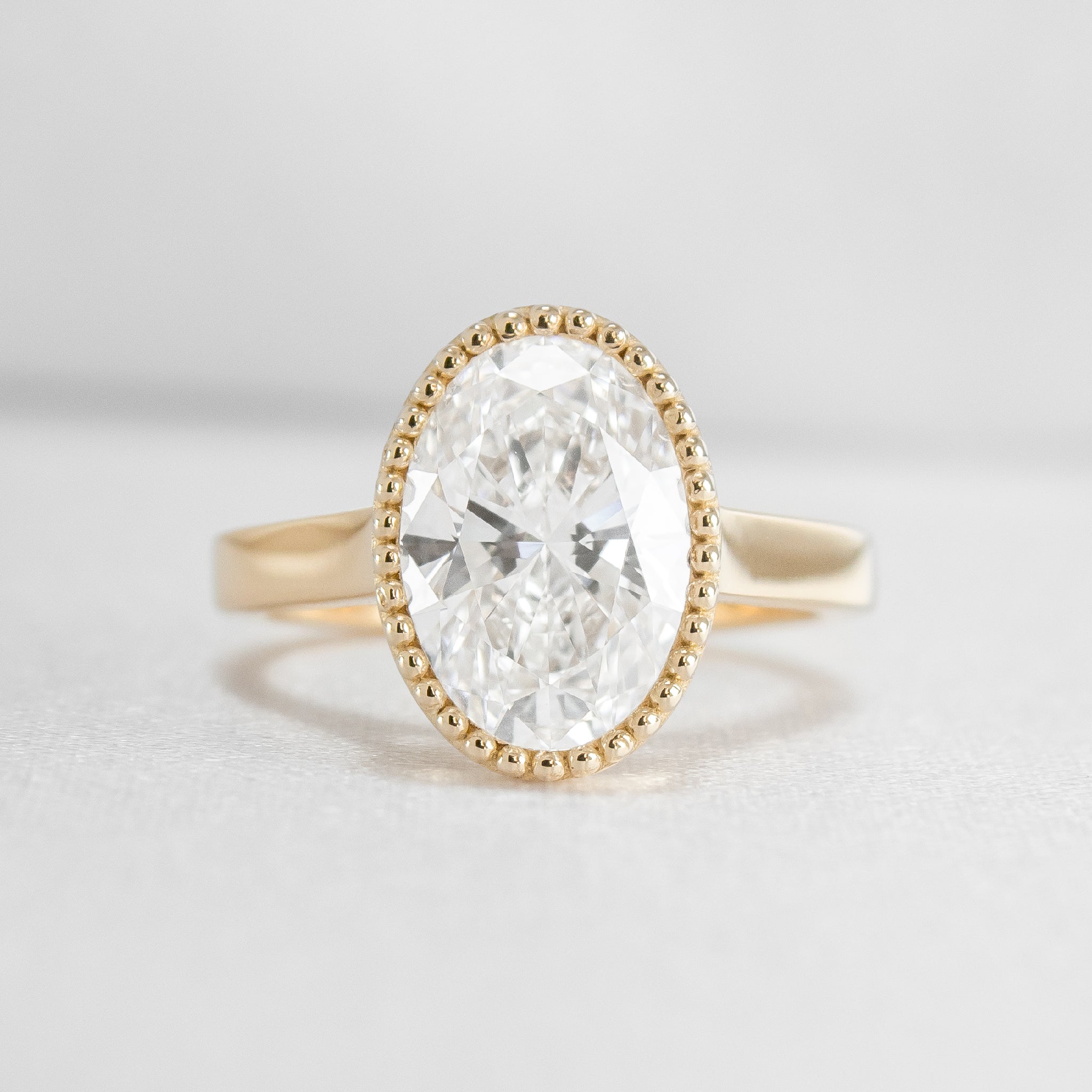

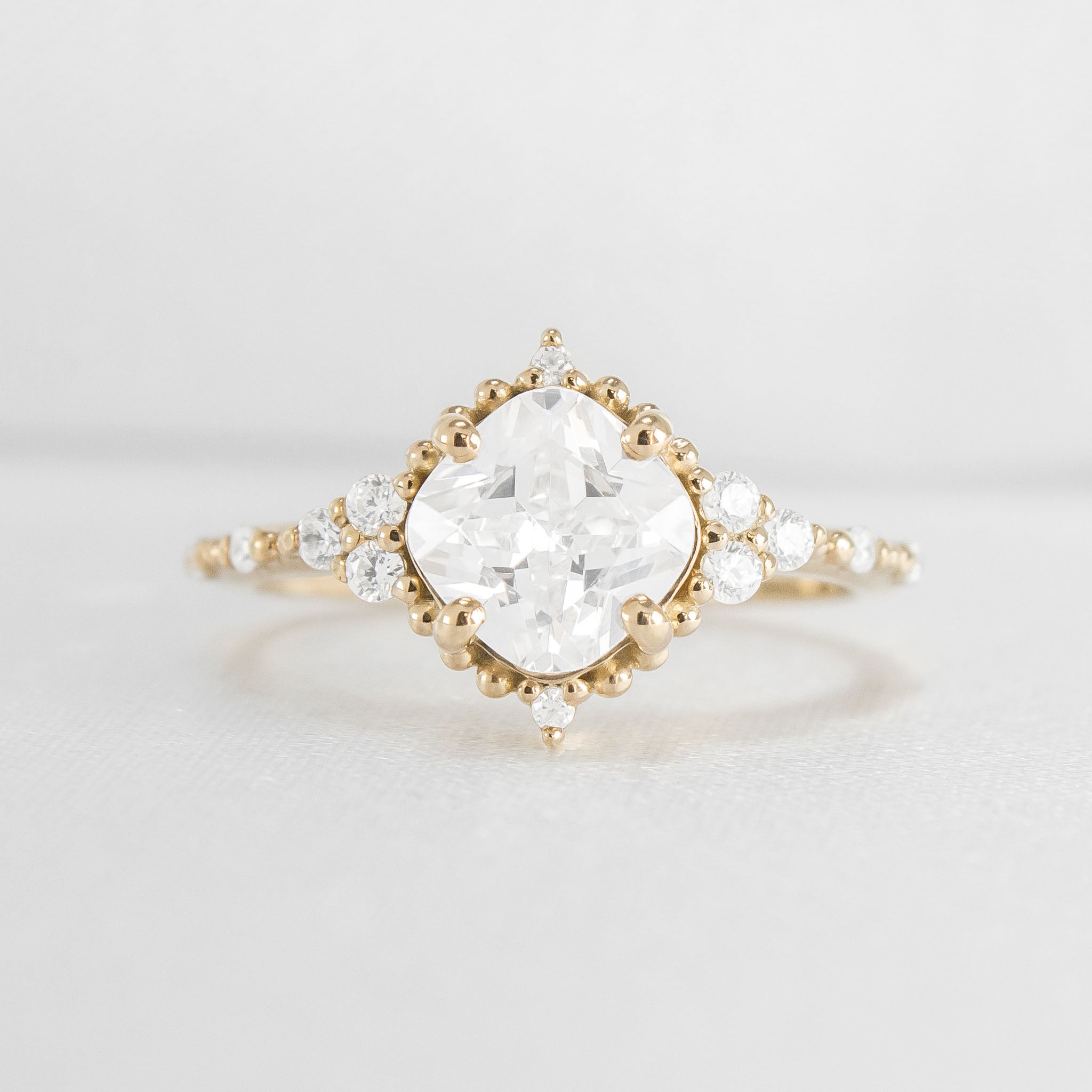


A Curated Collection of Art Deco and Victorian-Inspired Rings
These six designs were chosen because each one carries a clear point of view from its era, while still feeling at home on your hand today.
Some lean fully into Art Deco geometry, with emerald, octagon, and step-cut silhouettes framed by precise side diamonds. Others draw from Victorian romance, with clustered diamonds, milgrain edges, and gently rounded shapes.
Each design began with a real couple and an idea they couldn't quite put into words. It can be crafted exactly as presented, or thoughtfully refined so the details reflect you.

Art Deco or Victorian: Choosing the Era That Feels Like You
Most couples are drawn to vintage-inspired engagement rings before they know which era they're responding to. Noticing what catches your eye is the first step.
If you're drawn to clean architecture, contrast, and symmetry, Art Deco is likely speaking to you. The Art Deco period, roughly 1920 to 1940, favored emerald and Asscher cuts, baguette diamonds, and bold geometric frames.
If you're drawn to softness, texture, and a sense of story, Victorian style may feel closer. Victorian engagement rings, from roughly 1835 to 1900, are known for diamond clusters, pear and cushion shapes, and hand-finished detail.
Neither is more correct. The right era is simply the one you keep returning to. For a wider look across four eras, see our guide to the 12 best vintage style engagement rings.
How You’ll Know Your Choice Is Right
Choosing a vintage-inspired engagement ring rarely starts with certainty. It starts with recognition: one detail, one silhouette, one ring you keep coming back to.
Most of these designs can be ordered exactly as shown. From the product page, select your diamond, your preferred metal, and your finger size.
If you'd like to refine a design, such as changing the center diamond shape or adjusting the side diamonds, a 3D rendering is created so you can review every proportion before crafting begins.
That review is where clarity arrives. When the rendering looks like the ring you've been imagining, you'll know.
Why Vintage-Inspired Engagement Rings Feel Meaningful
Vintage-inspired engagement rings carry a sense of continuity. They echo the craftsmanship of earlier generations while beginning a story that belongs only to you.
Many couples are drawn to them because they feel personal rather than trend-driven. A milgrain edge, a step-cut diamond, or a cluster of small diamonds signals care and intention in a way that's recognized by the people who know you, not by a logo.
That quiet character is what lets a vintage-inspired ring feel like an heirloom from the day you first wear it.
What Actually Matters When Choosing an Art Deco or Victorian Engagement Ring
A few design elements shape almost everything about how a vintage-inspired engagement ring looks and wears. You don't need to know them before you start. Understanding them simply makes your choice clearer.
The following considerations have the greatest influence on the character of an Art Deco or Victorian style engagement ring.

Diamond Shape Sets the Era
The center diamond does more to define the era than any other detail. Step cuts, including emerald, Asscher, and octagon shapes, show long, mirror-like facets and clean edges that read as Art Deco.
Pear, cushion, oval, and marquise diamonds have softer outlines and more sparkle, which lends itself naturally to Victorian romance.
Lab-grown and natural diamonds are available in every shape, so the shape you choose can follow your taste first.

Setting Details: Milgrain, Bezels, Clusters and Side Diamonds
Setting details carry the craftsmanship of each era. Milgrain is a fine beaded edge worked into the metal, giving a ring a soft, hand-finished texture that appears throughout vintage jewelry.
A bezel setting surrounds the diamond with a thin wall of metal, creating a clean outline and added protection. Cathedral settings lift the center diamond on graceful arches, so the ring has presence from the side as well as the top.
Clusters and Side Diamonds
Victorian designs often gather small diamonds around a center, building a larger, softer silhouette. Art Deco designs tend to place side diamonds in precise, symmetrical lines that frame the center like architecture.
Looking at how the side diamonds are arranged is often the quickest way to tell which era a ring belongs to.
Metal and Diamond Options
Every design here can be crafted in 14K or 18K yellow gold, white gold, rose gold, or platinum, with a lab-grown or natural center diamond. Many designs can also hold a colored diamond or gemstone.
Your metal choice changes the mood of the era. Platinum and white gold sharpen Art Deco geometry, while yellow and rose gold bring warmth to Victorian detail.
Choosing a Wedding Ring to Match
Vintage-inspired engagement rings often have distinctive profiles, so the wedding ring is worth considering early. A milgrain band, a curved band that follows a cluster, or a slim diamond band each lets the engagement ring lead while completing the set.
Colored Diamond or Gemstone Centers
Both eras embraced color. A green diamond, a sapphire, or an emerald can make a Victorian cluster or an Art Deco frame feel even more personal, while the design itself stays true to its period.


- Yellow Gold adds warmth and a classic, heirloom quality to vintage-inspired details.
- Rose Gold softens Victorian silhouettes with a gentle blush tone created by copper in the alloy.
- White Gold gives Art Deco geometry a bright, crisp outline.
- Platinum is the metal most associated with the Art Deco era, prized for its natural white color and durability.

Art Deco vs Victorian Engagement Rings
Art Deco engagement rings are defined by structure. Straight lines, step-cut diamonds, and symmetrical side diamonds create a ring that feels confident and architectural. Designs like the Empire, Aston, and Gabriella octagon engagement ring express this clearly.
Victorian style engagement rings are defined by softness and detail. Clustered diamonds, pear and cushion shapes, and milgrain edges create a ring that feels romantic and storied. The Fable, Galaeth, and Ellery carry this character.
Some couples find they love elements of both, such as a step-cut center with a milgrain edge. Those blended designs are often where a ring becomes truly yours.
Your Vintage-Inspired Ring as a Starting Point
Each design is complete and intentional as presented, ready to be crafted around the diamond you choose.
If you'd like to make it your own, refinements such as a different center shape, metal, or side diamond arrangement can be explored while preserving the character of the design.
Whether you choose it exactly as shown or personalize select details, you'll understand every choice before your ring is made.
Seeing Art Deco and Victorian Rings in Real Life
Vintage details reveal themselves in motion and in natural light. Seeing these rings on the hand, alongside wedding rings, often brings clarity that photos alone can't.
Lifestyle images and renderings help you picture how the proportions and texture will feel as part of everyday life.
Thinking Ahead: Vintage Details and Everyday Wear
Vintage-inspired engagement rings are made to be worn every day. Bezel settings protect the edges of the center diamond, and well-crafted milgrain holds its texture for years with routine care.
A periodic professional cleaning and inspection keeps fine details crisp and every diamond secure, so your ring looks as considered years from now as it does today.
Two Ways to Move Forward, Equally Guided
You can choose your vintage-inspired engagement ring online, selecting your diamond, metal, and finger size directly from the product page. Or you can bring the idea you can't quite describe yet to a private design appointment, by Zoom or in the studio, and find it together with Lisa Robin.
Both paths lead to the same place: a ring with a reason behind every detail, crafted for you in a few weeks.