




Wedding Bands for Women
Wedding Bands for Women
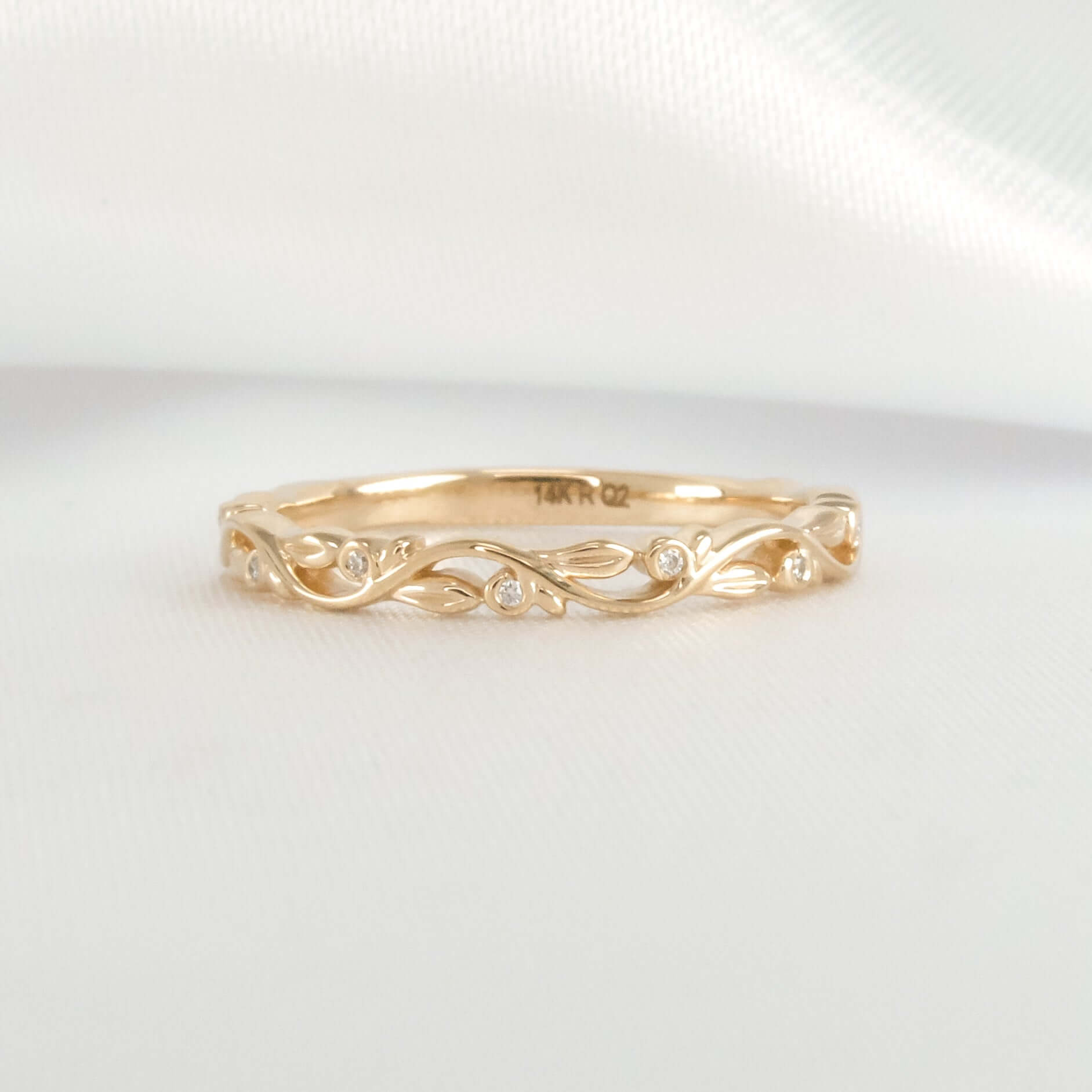

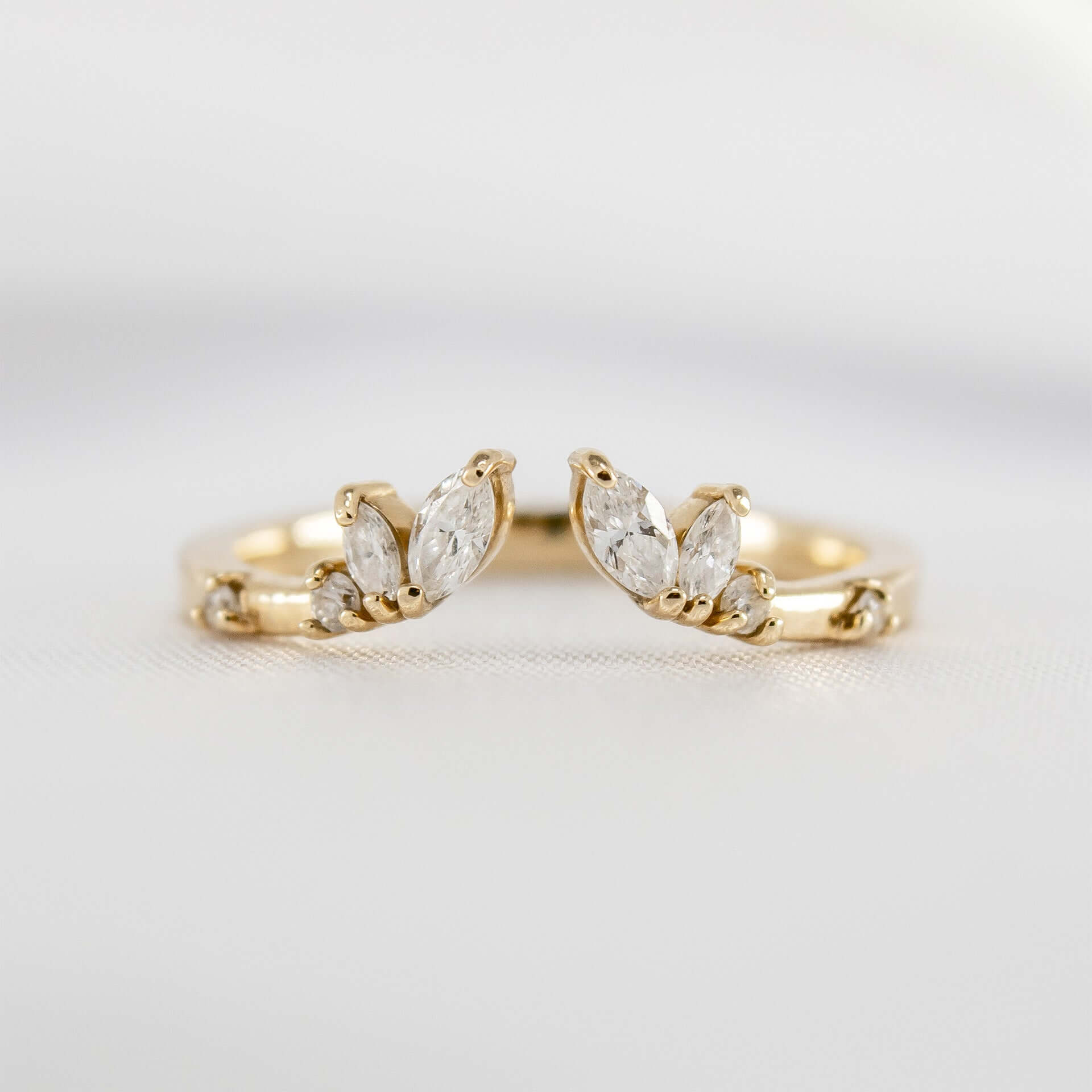

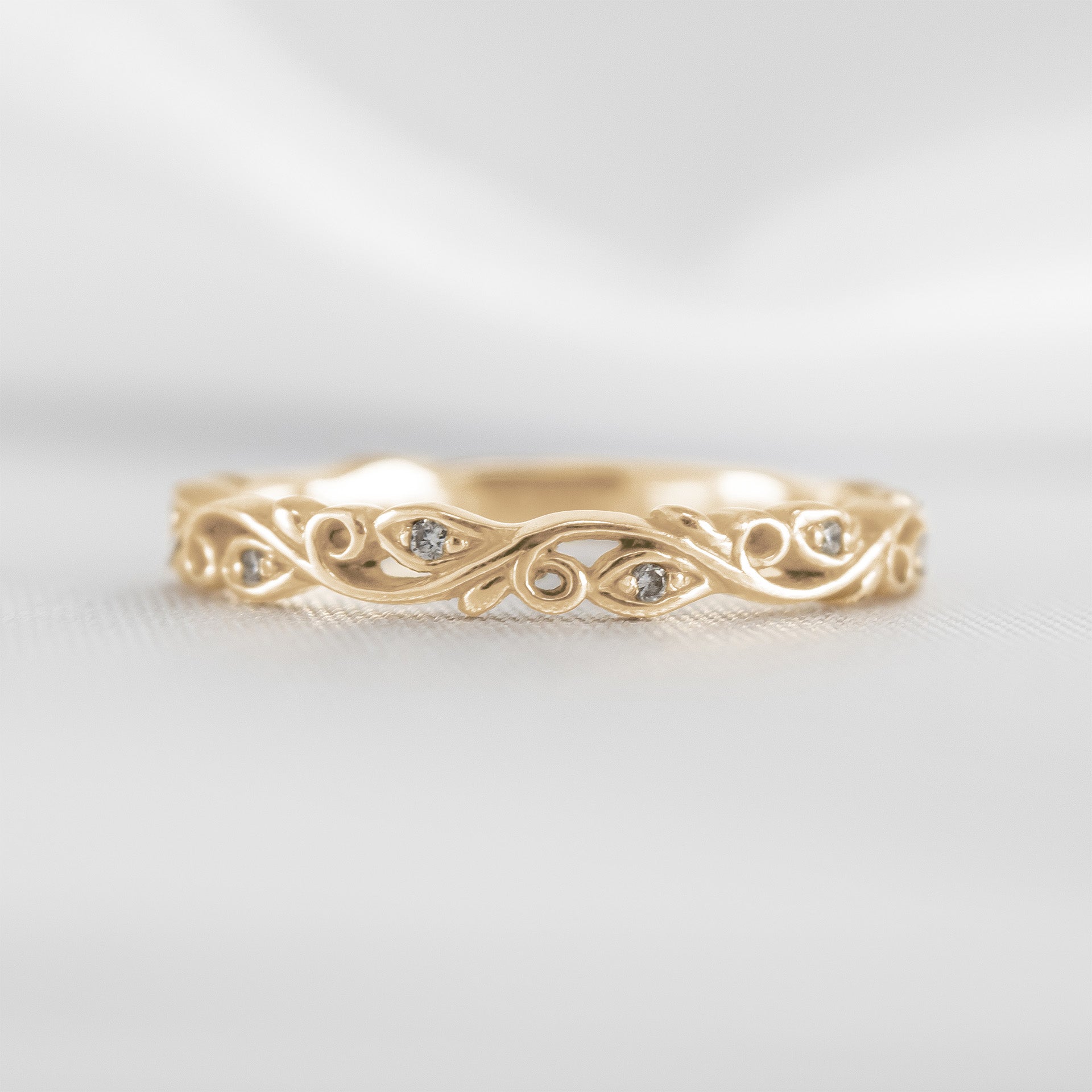

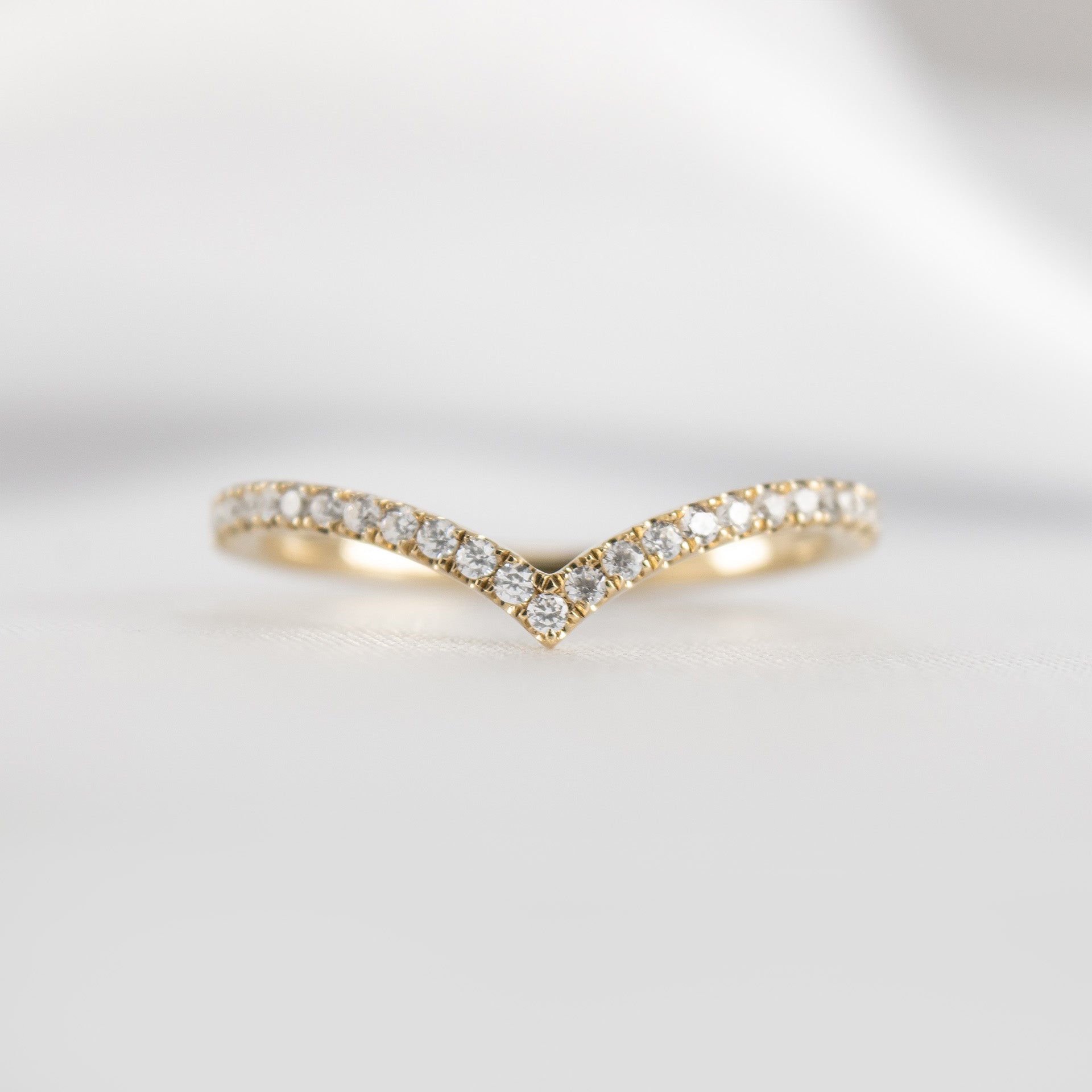

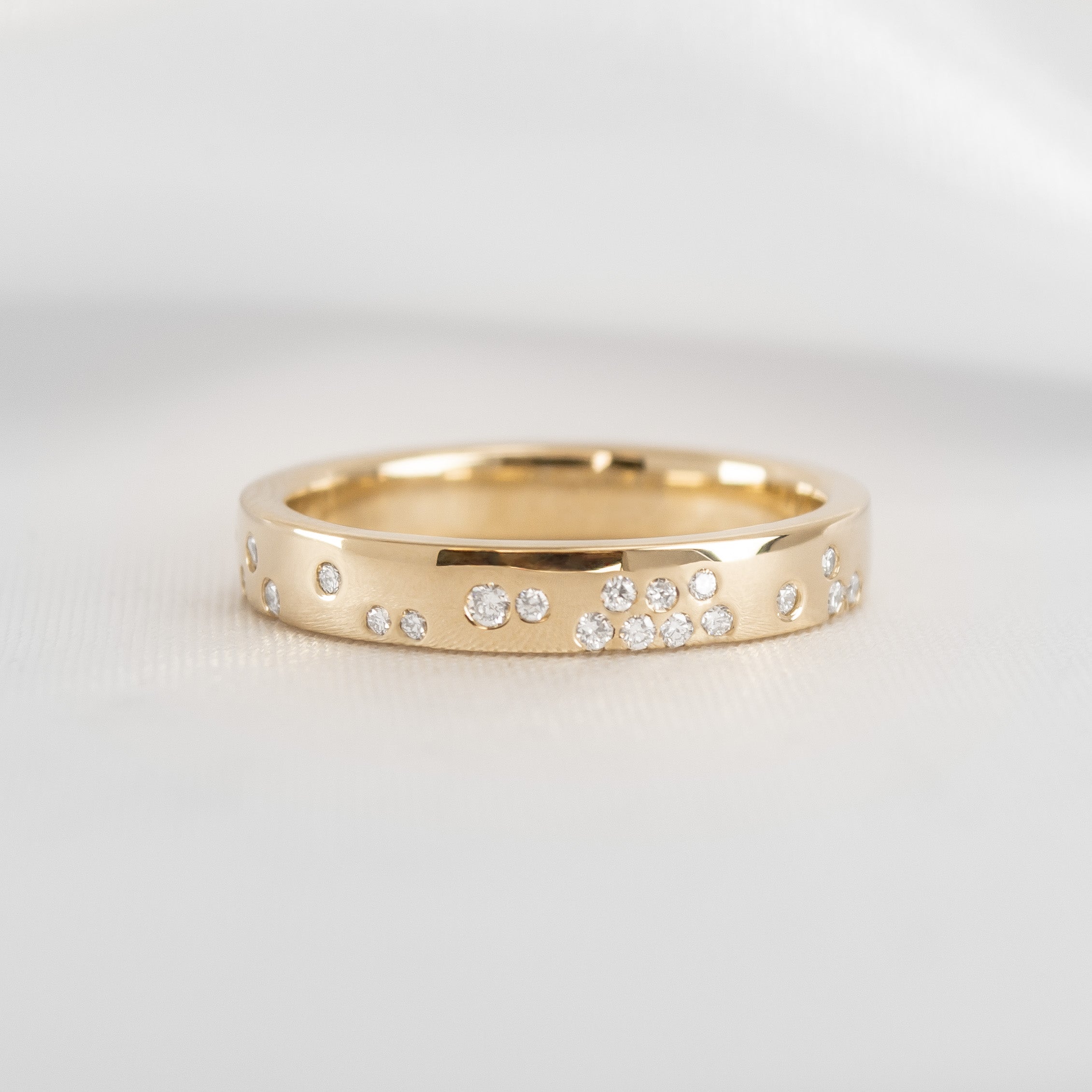

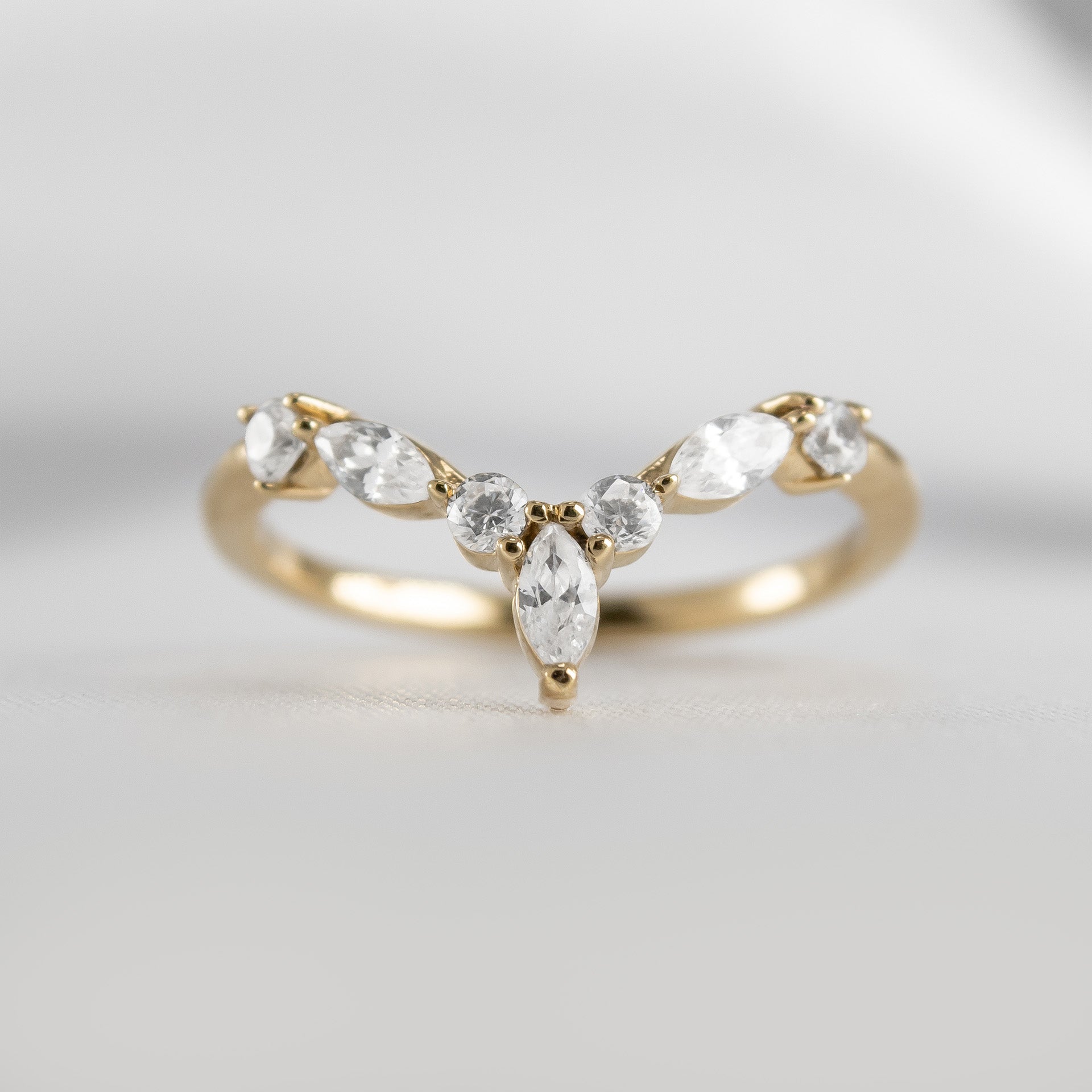

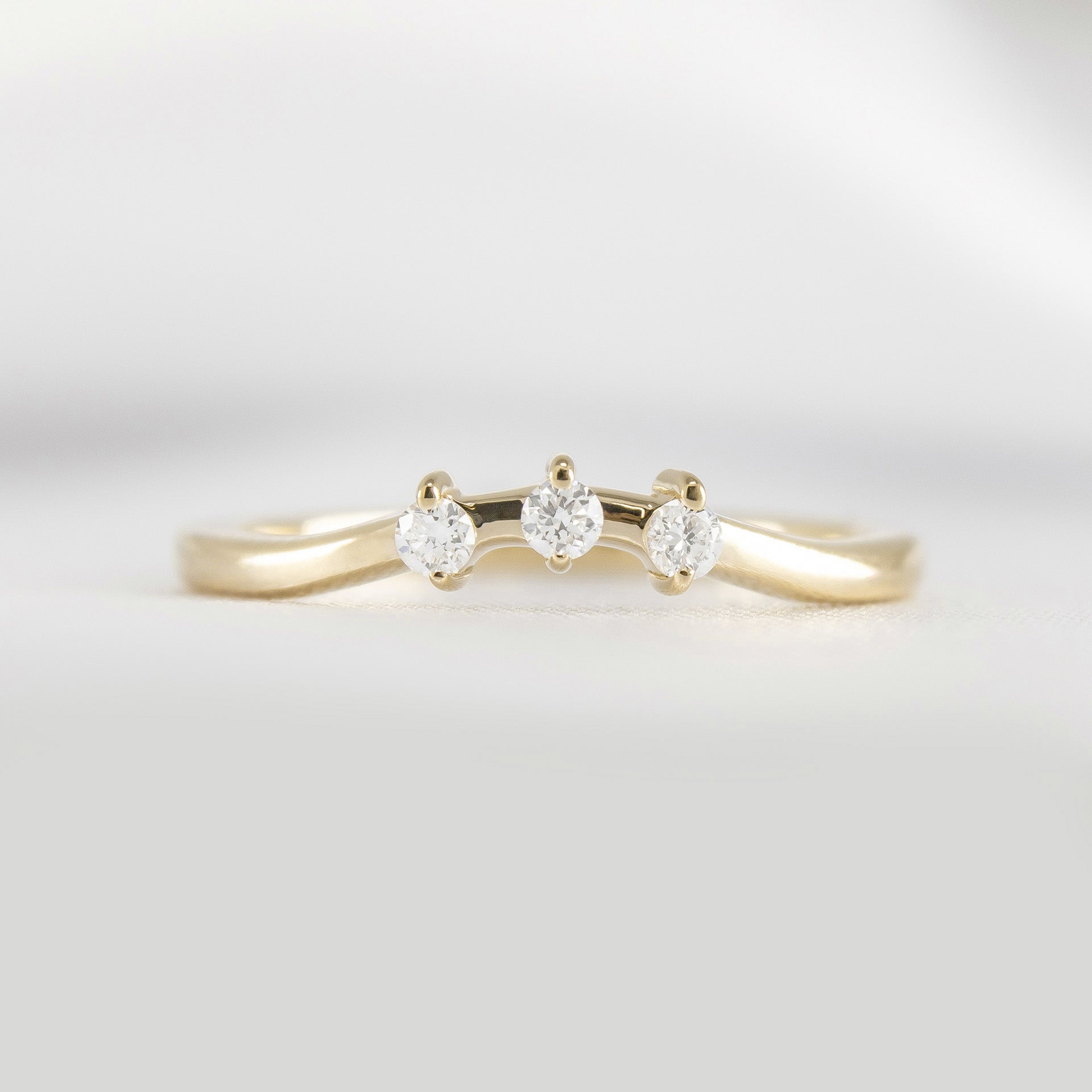
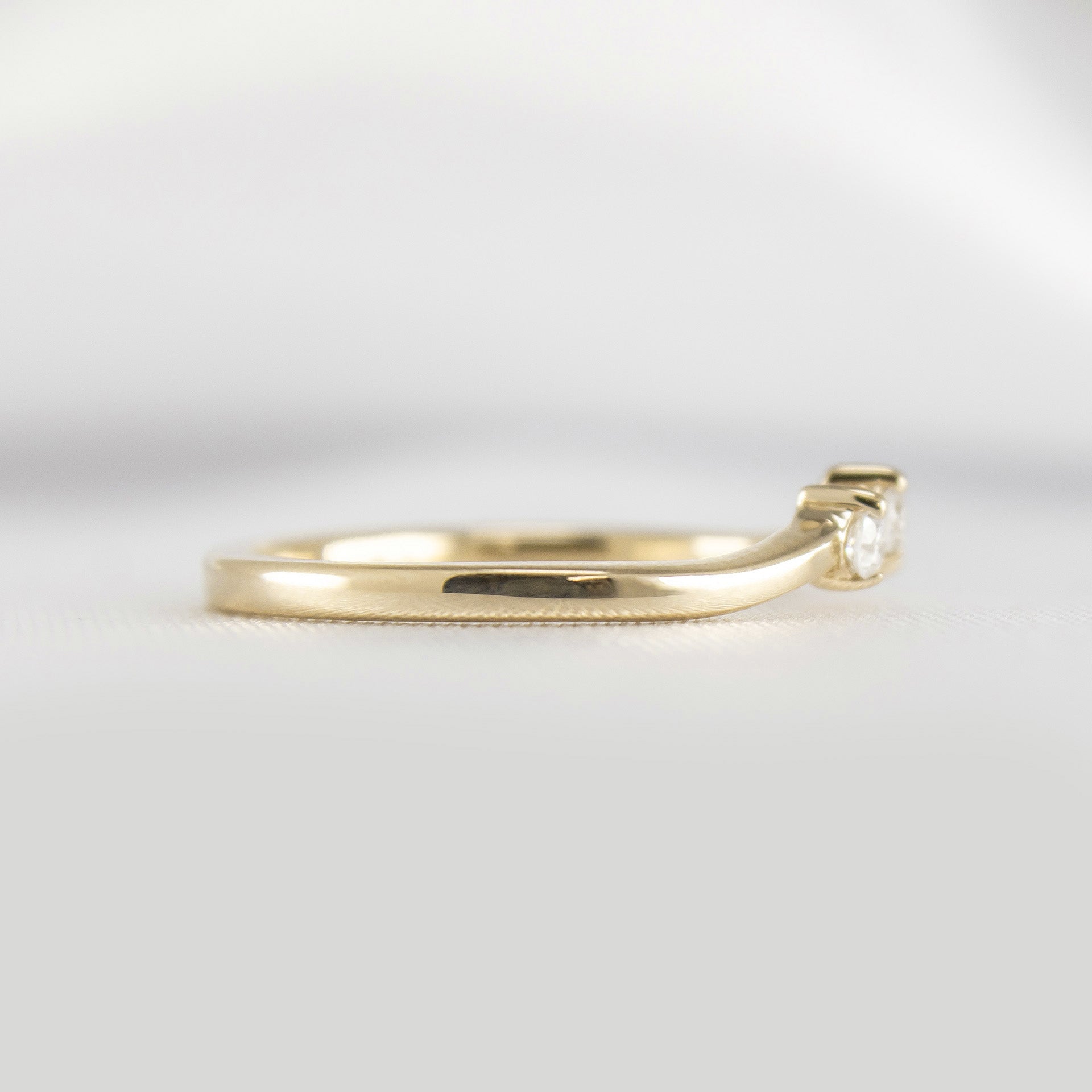


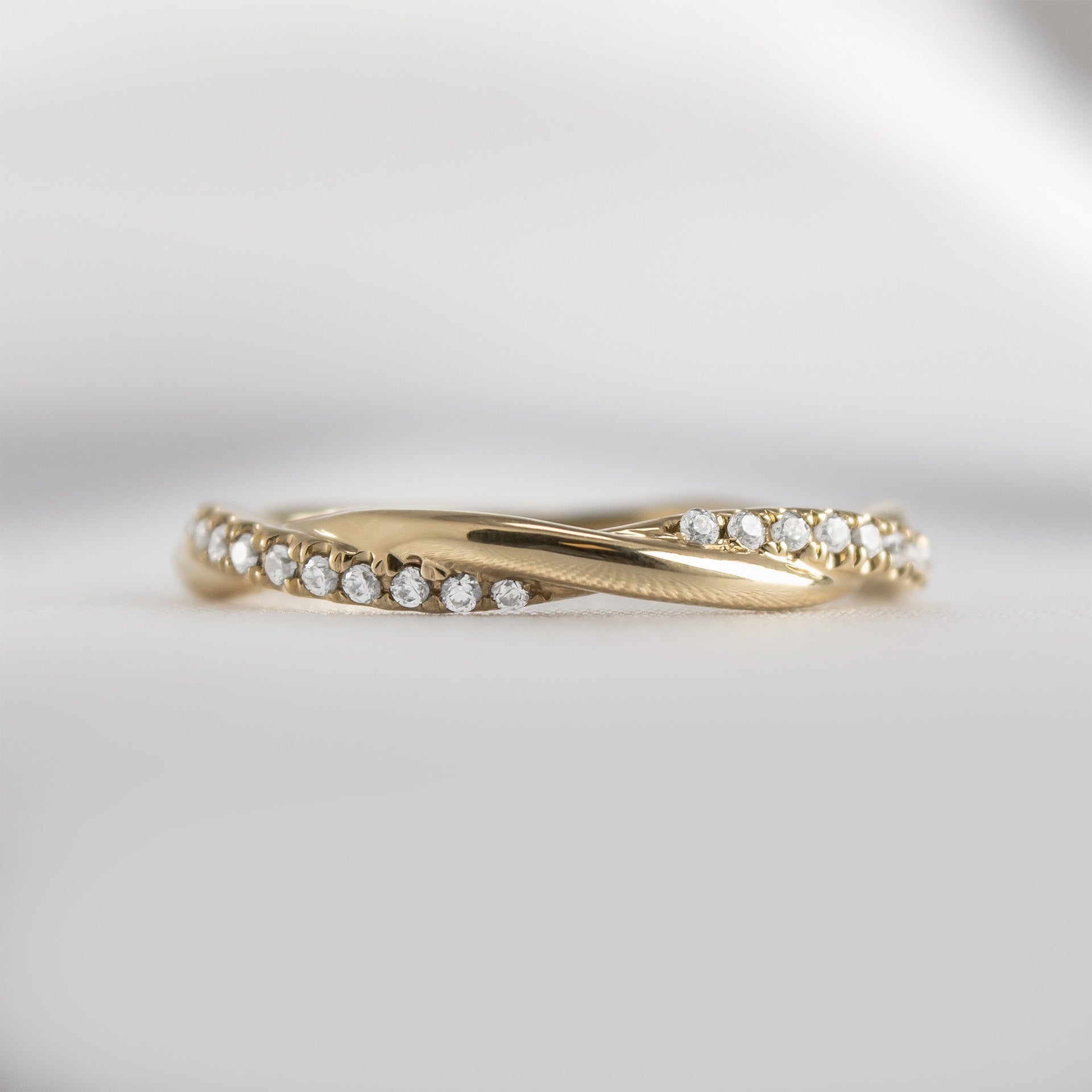
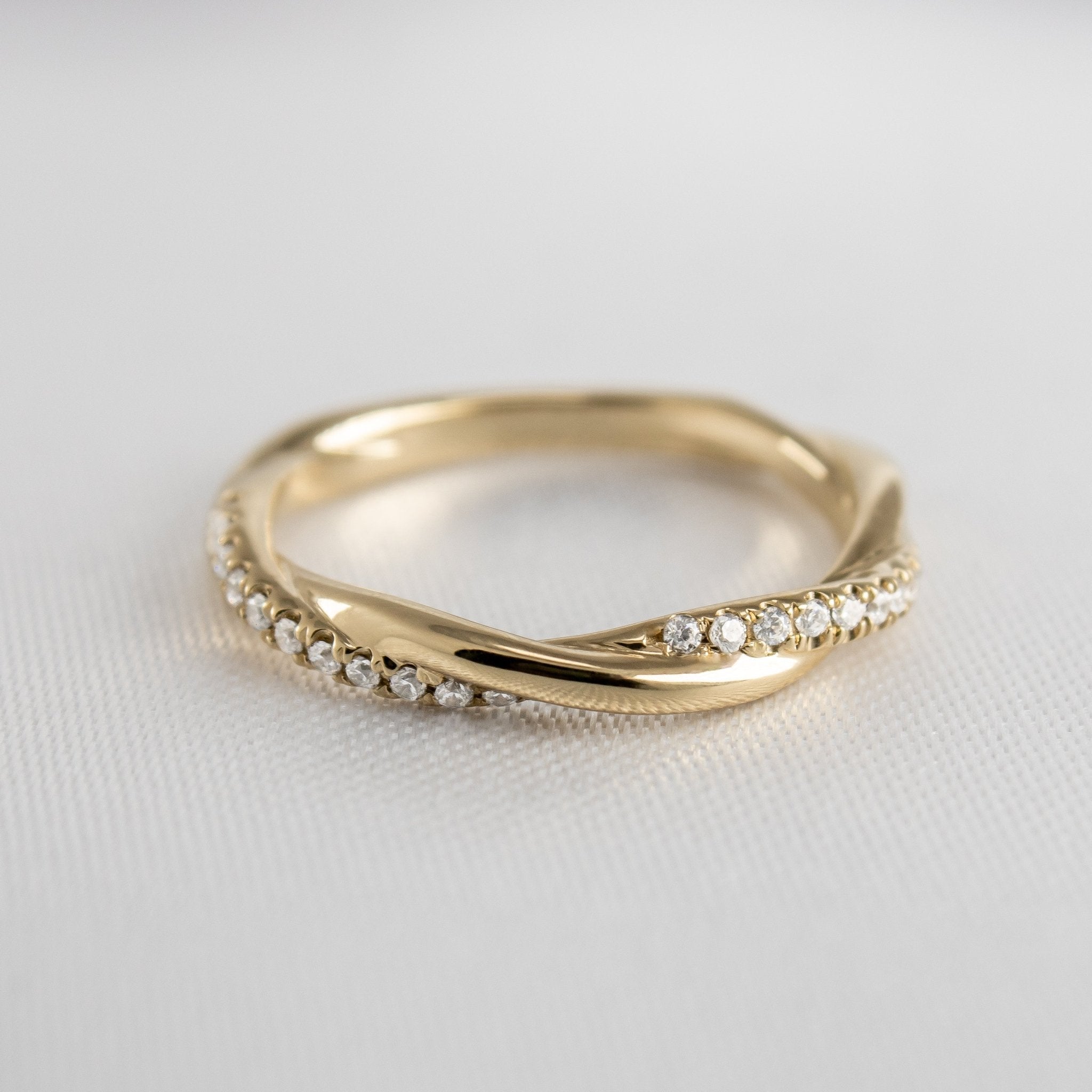
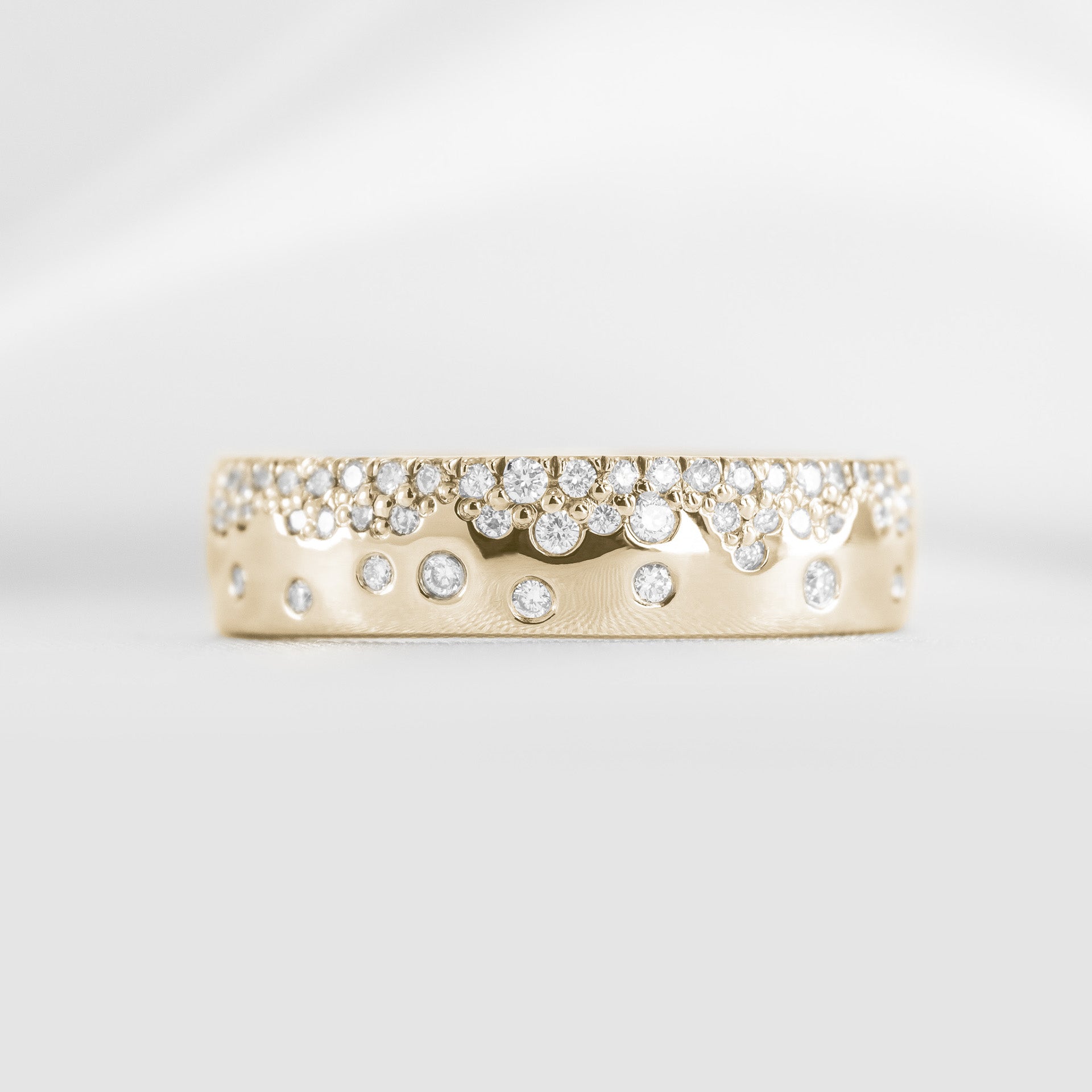

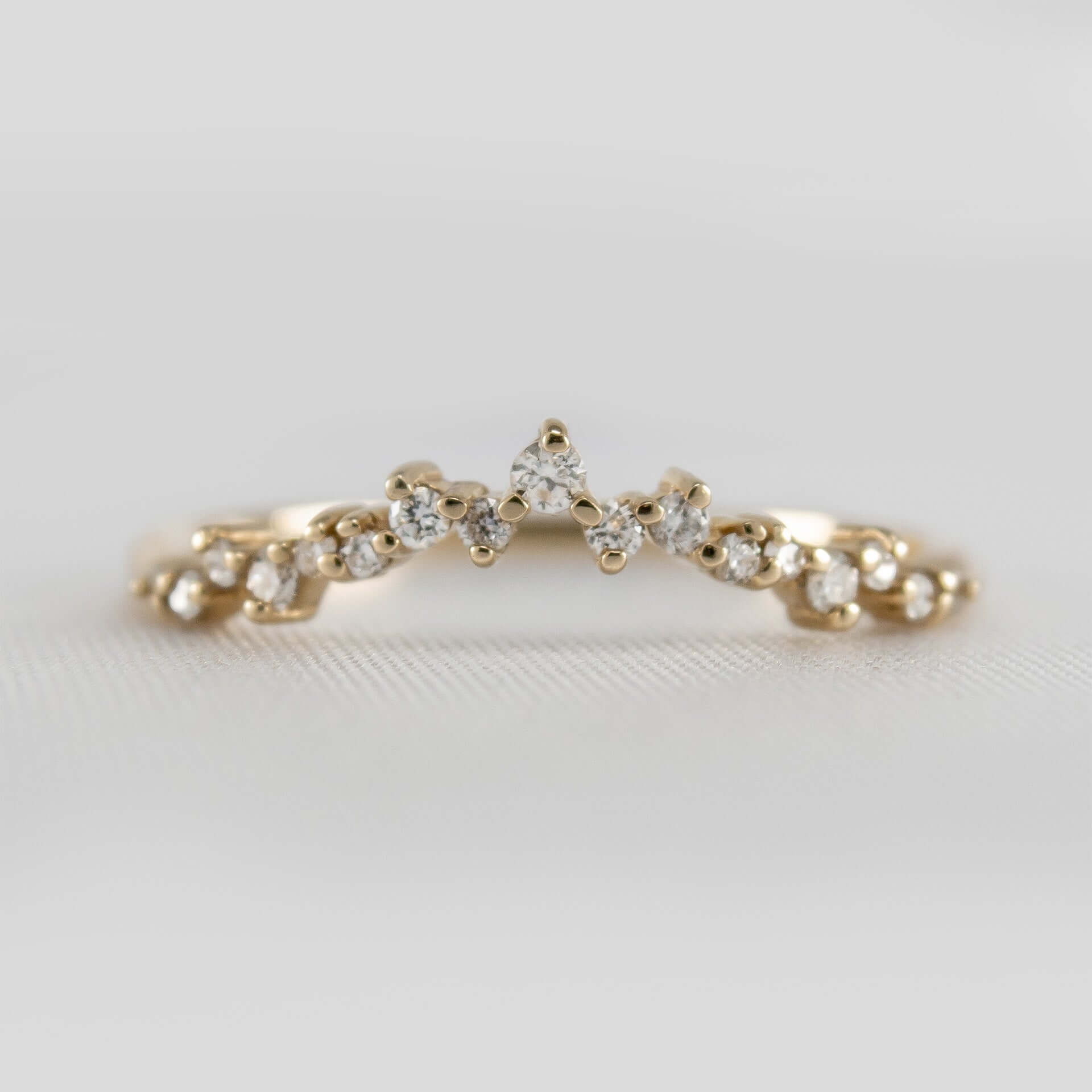

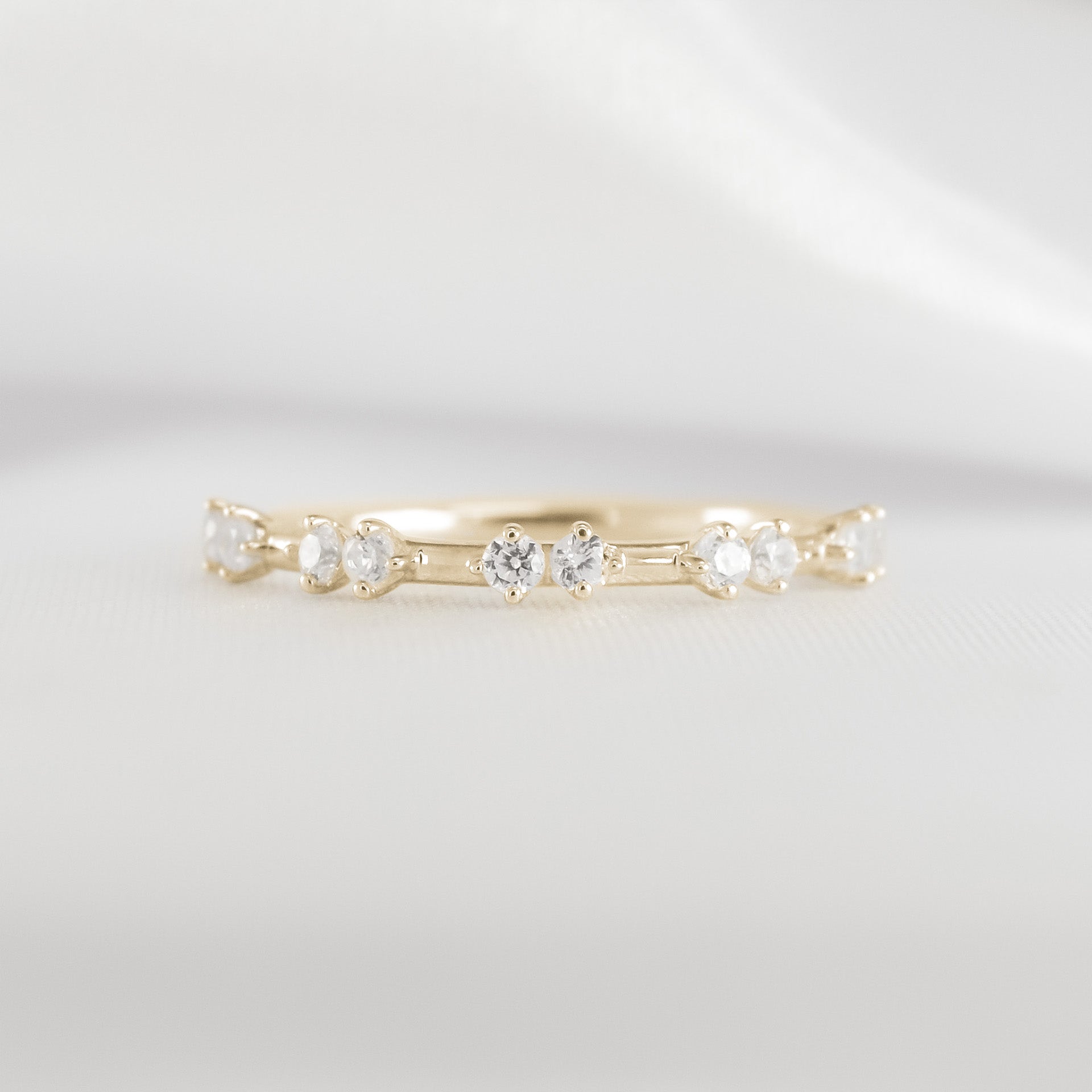
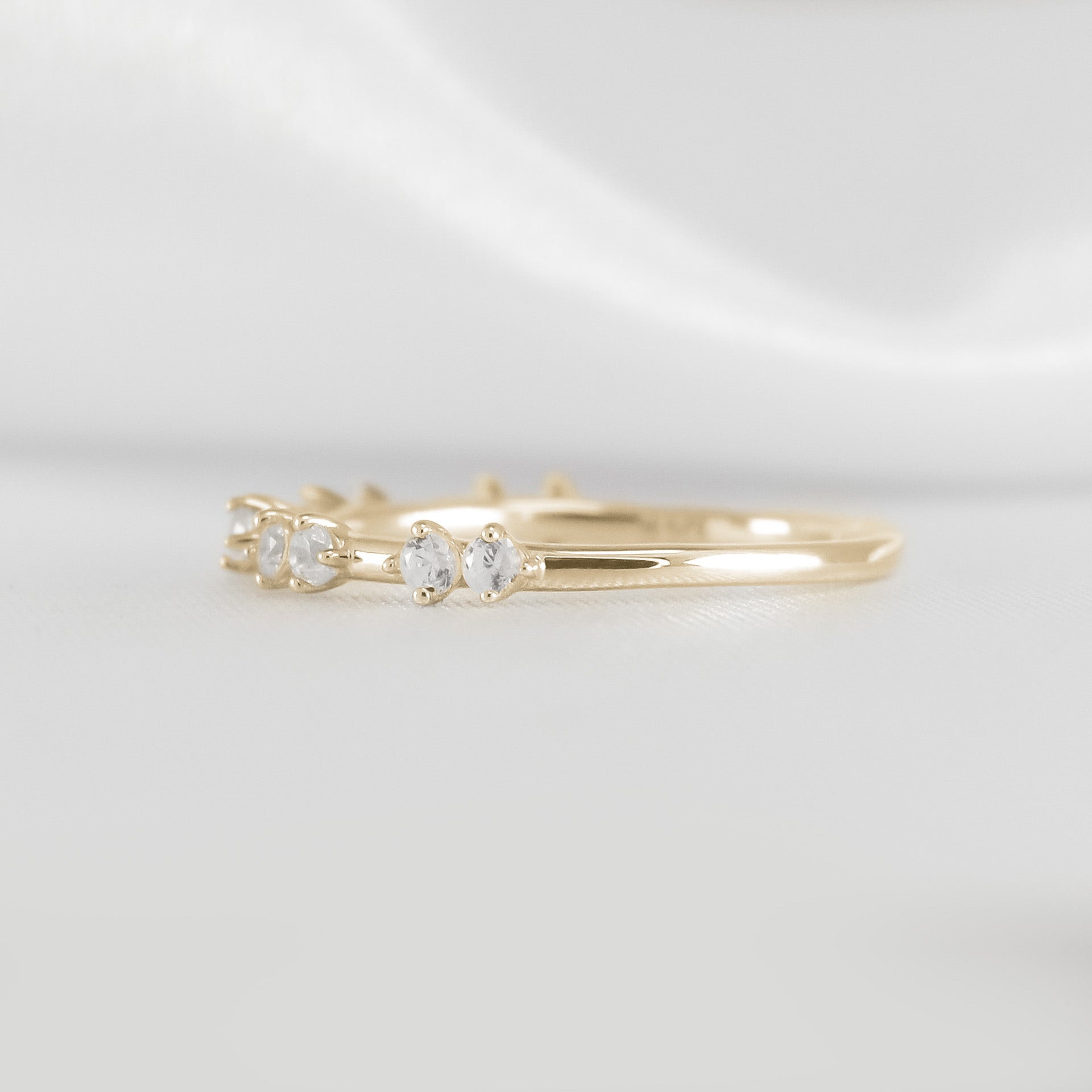


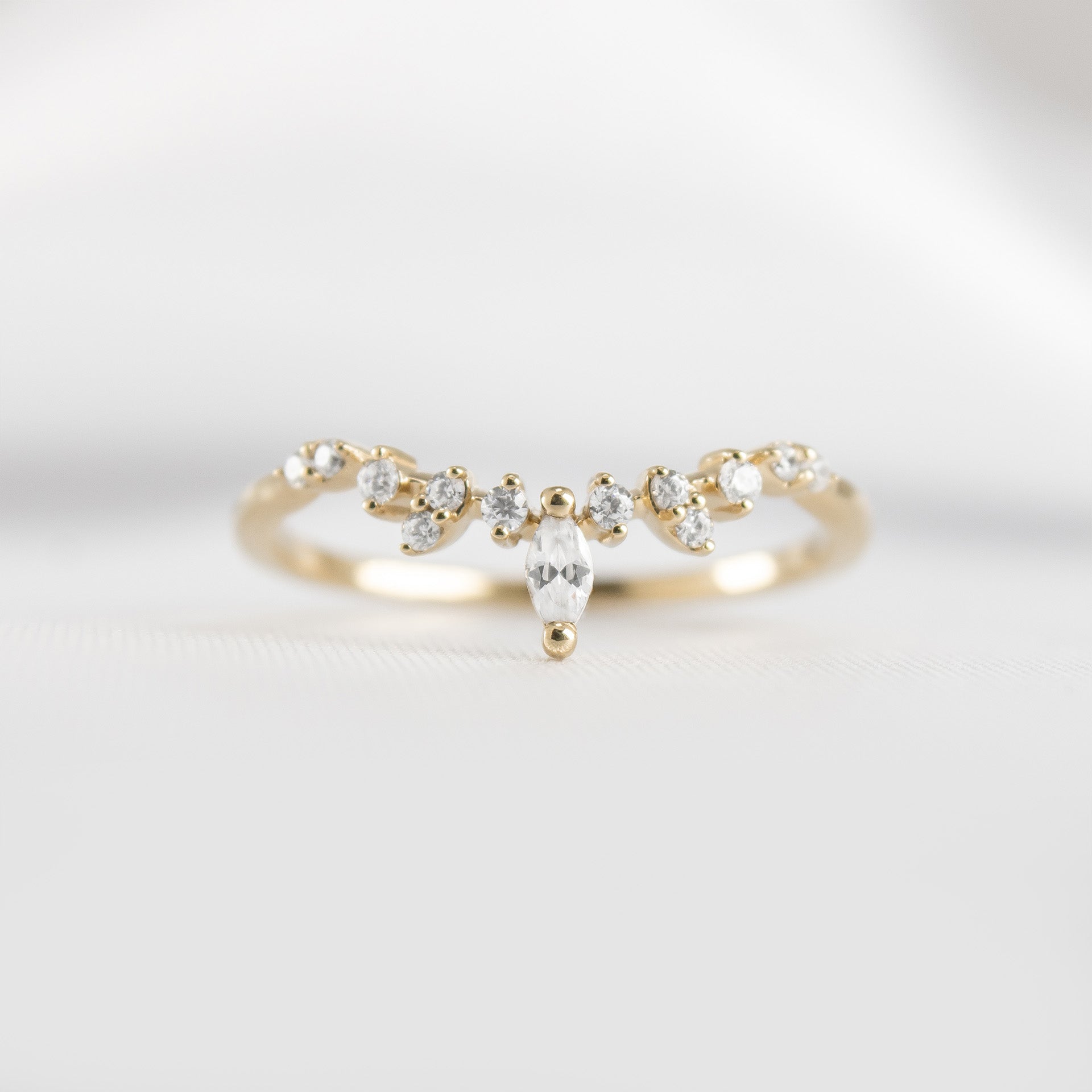

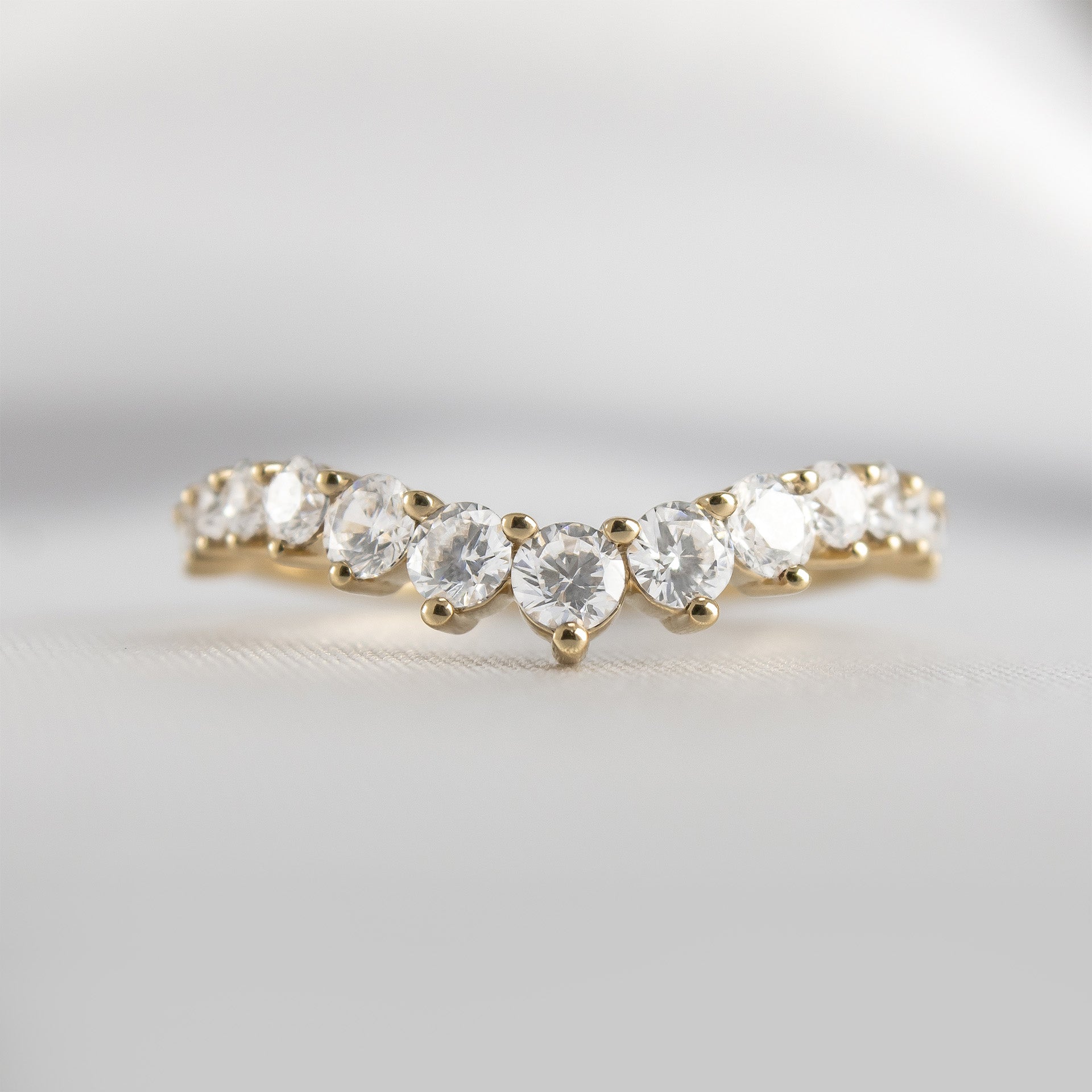

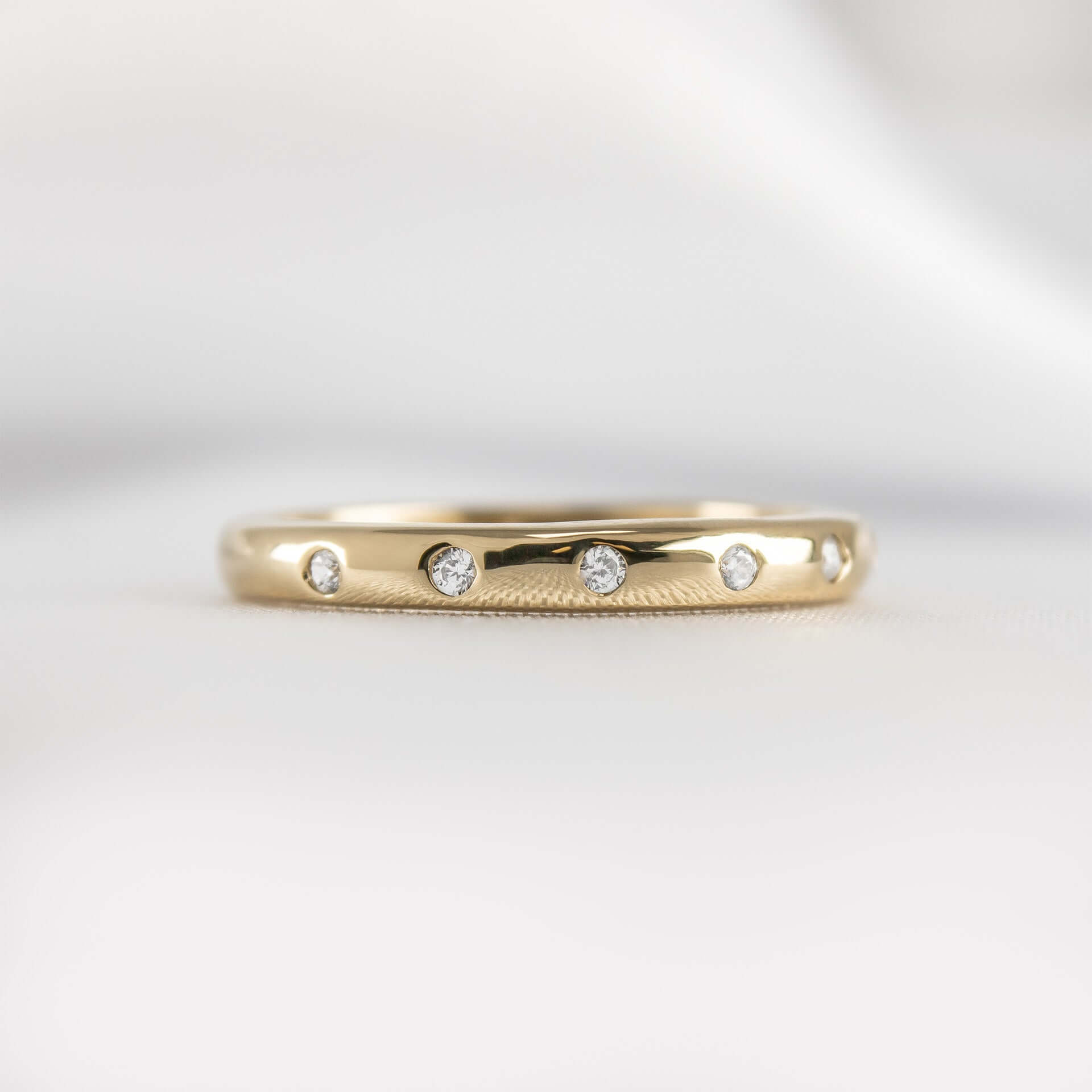

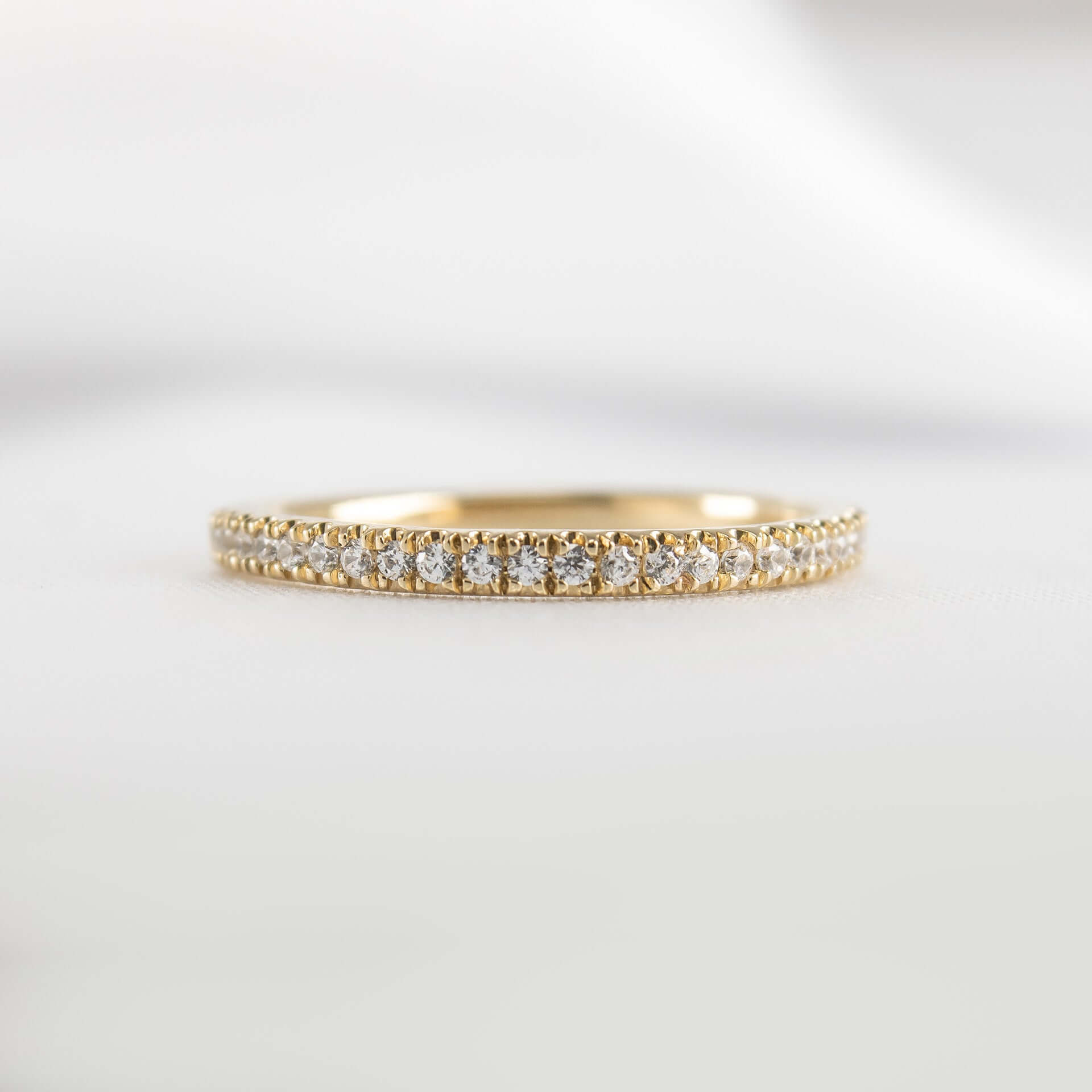

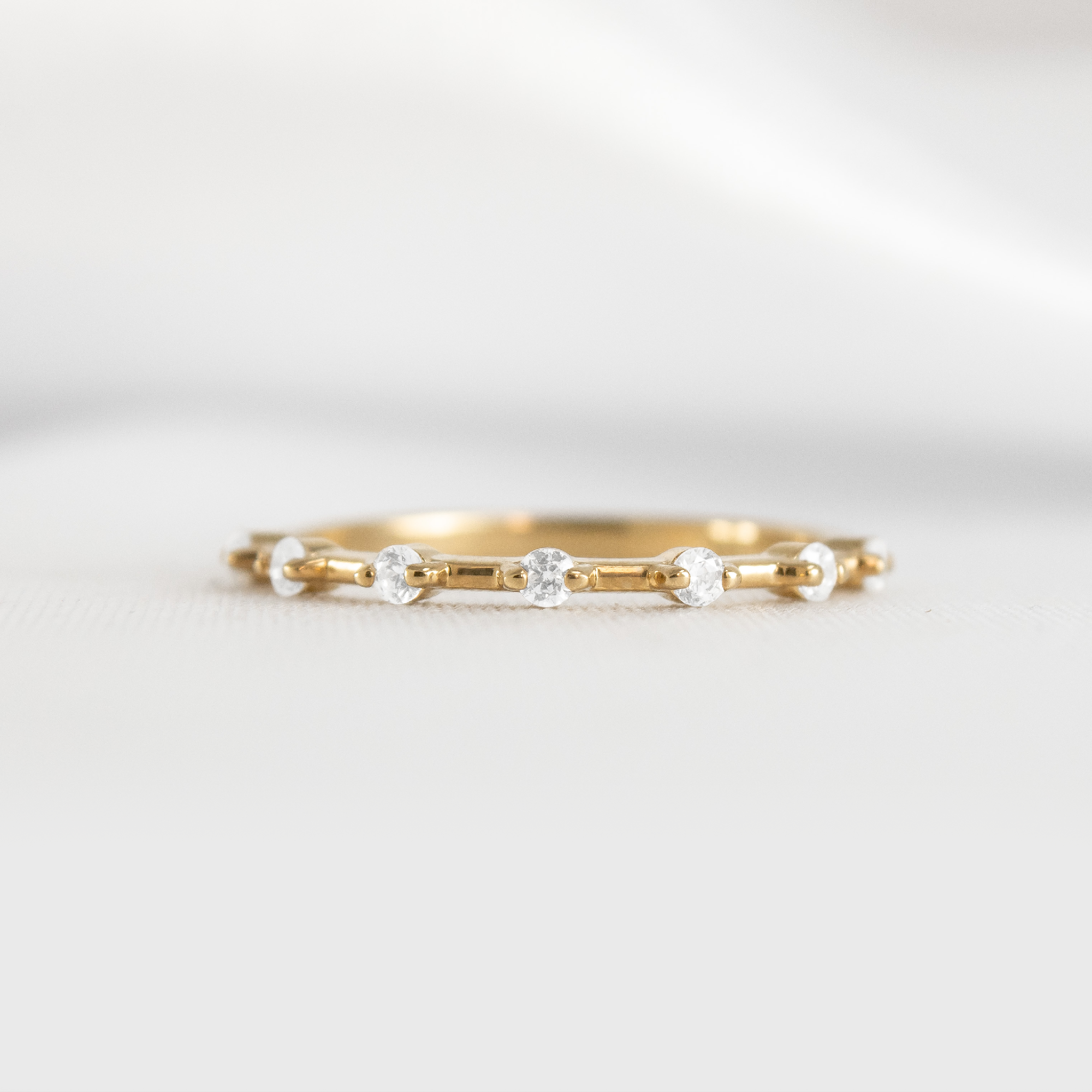

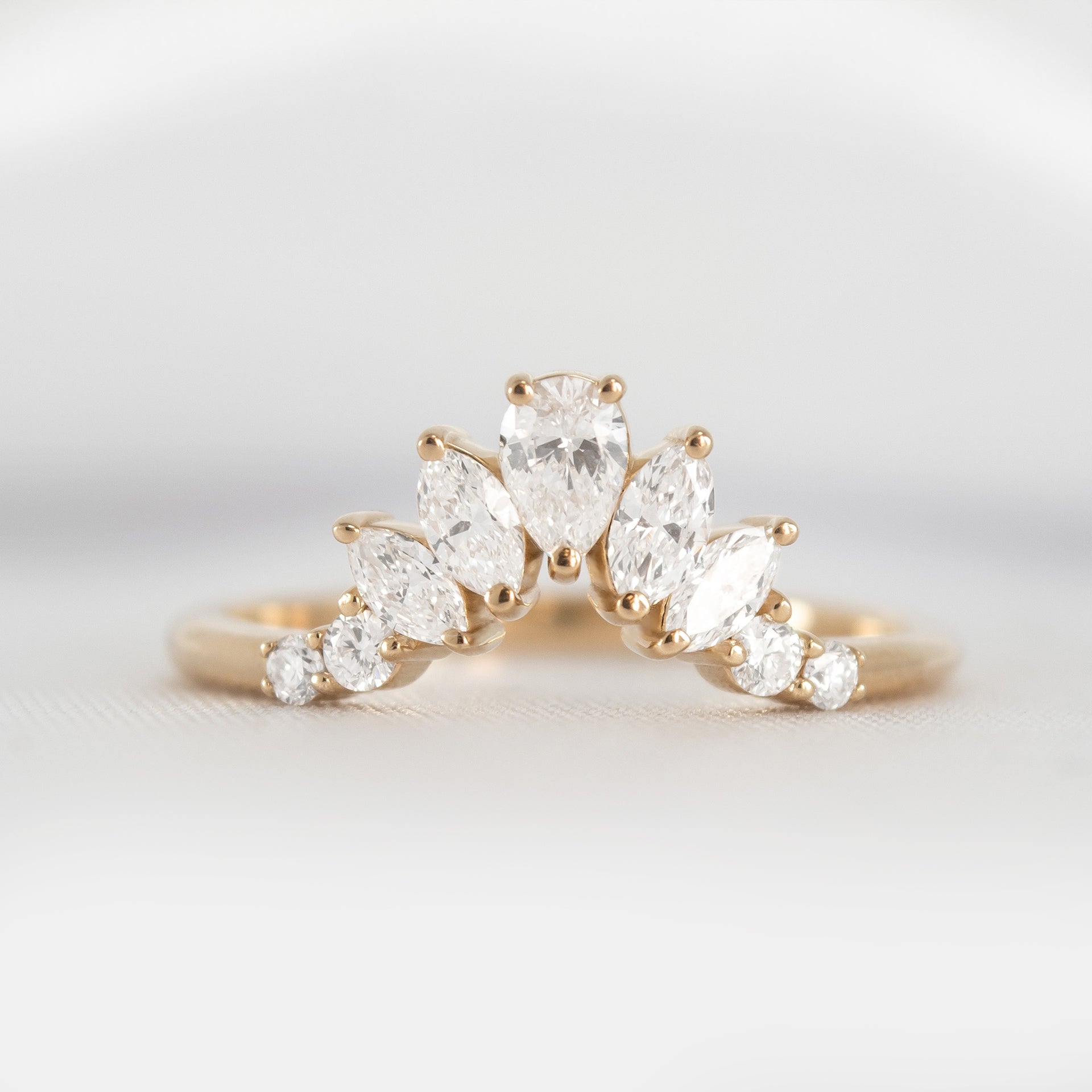
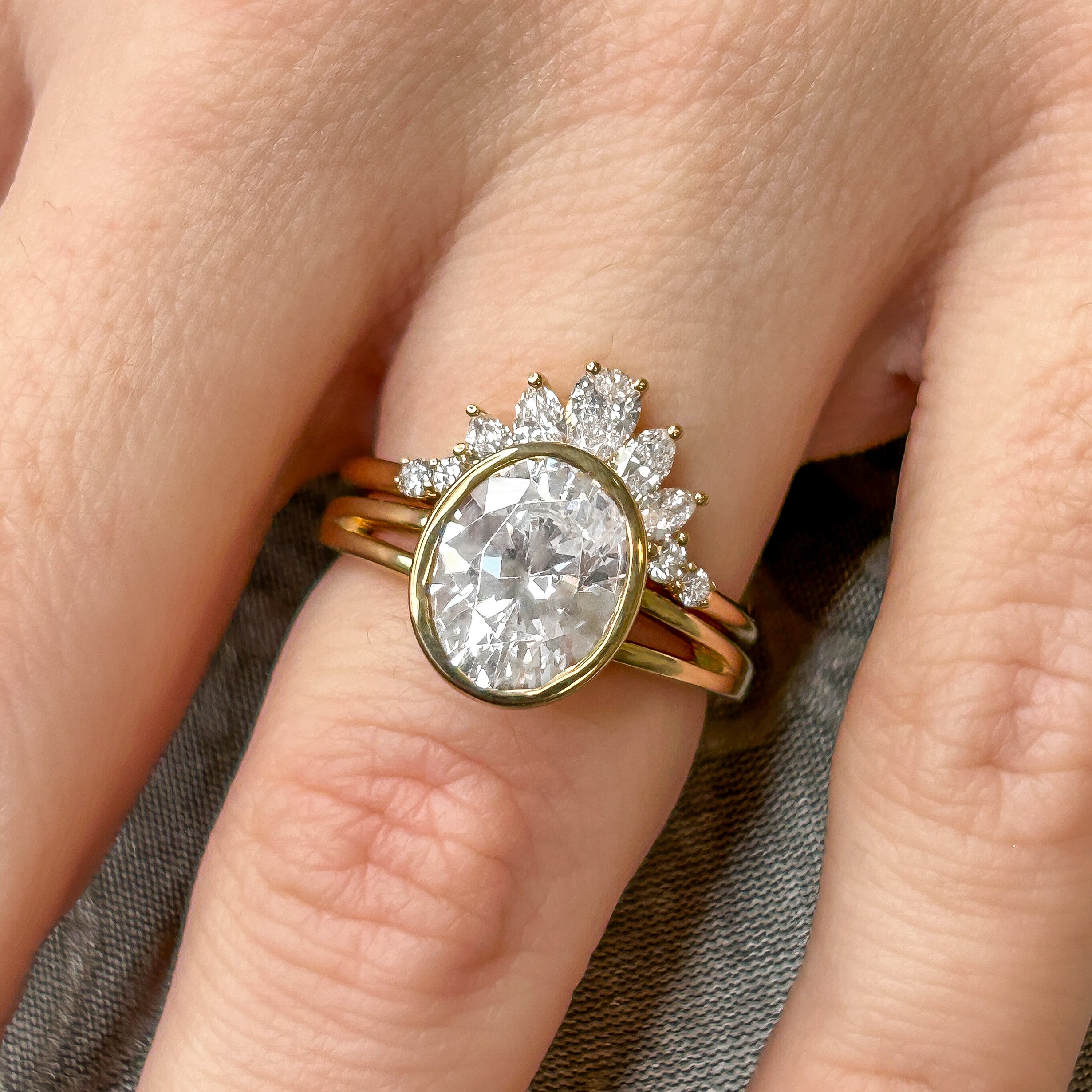
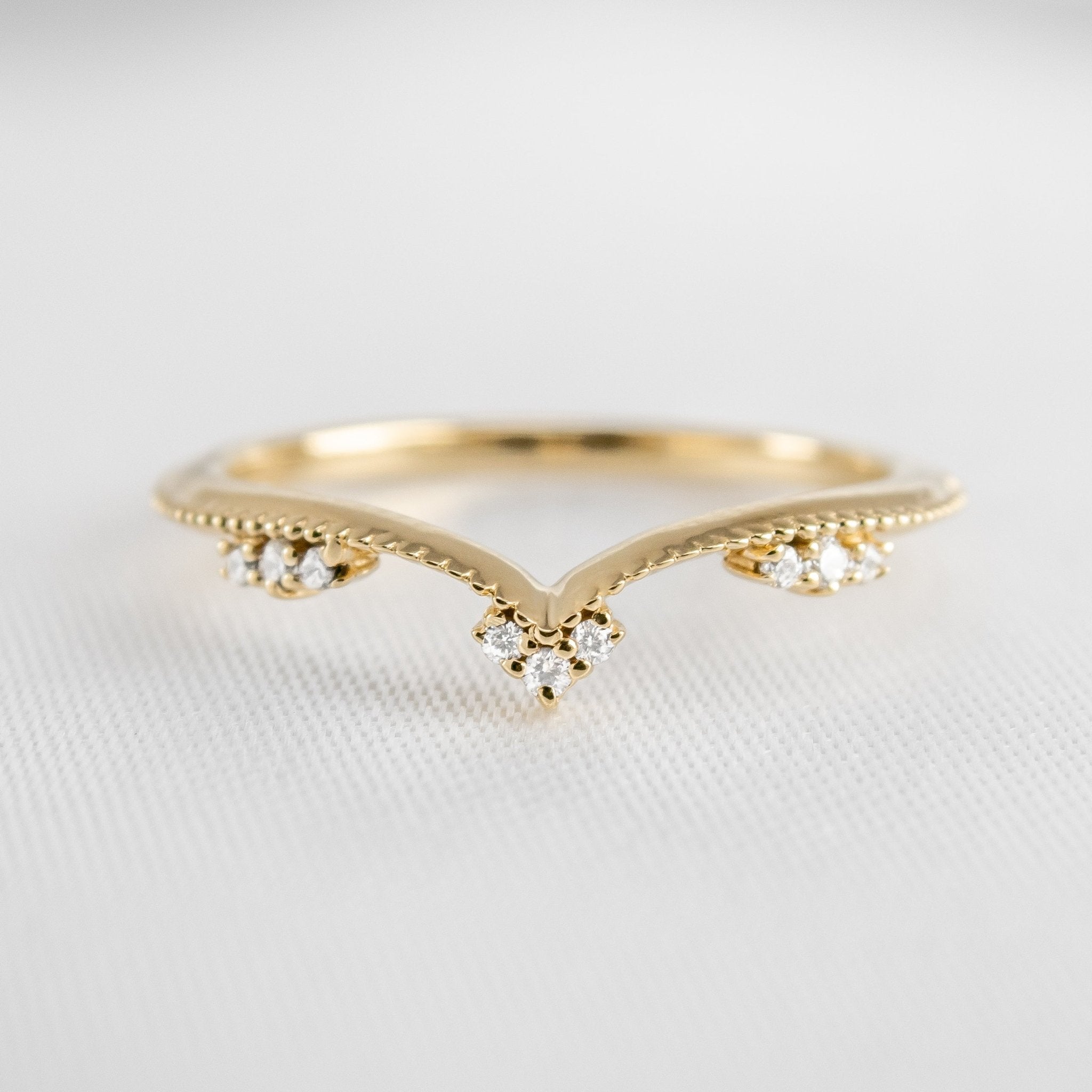

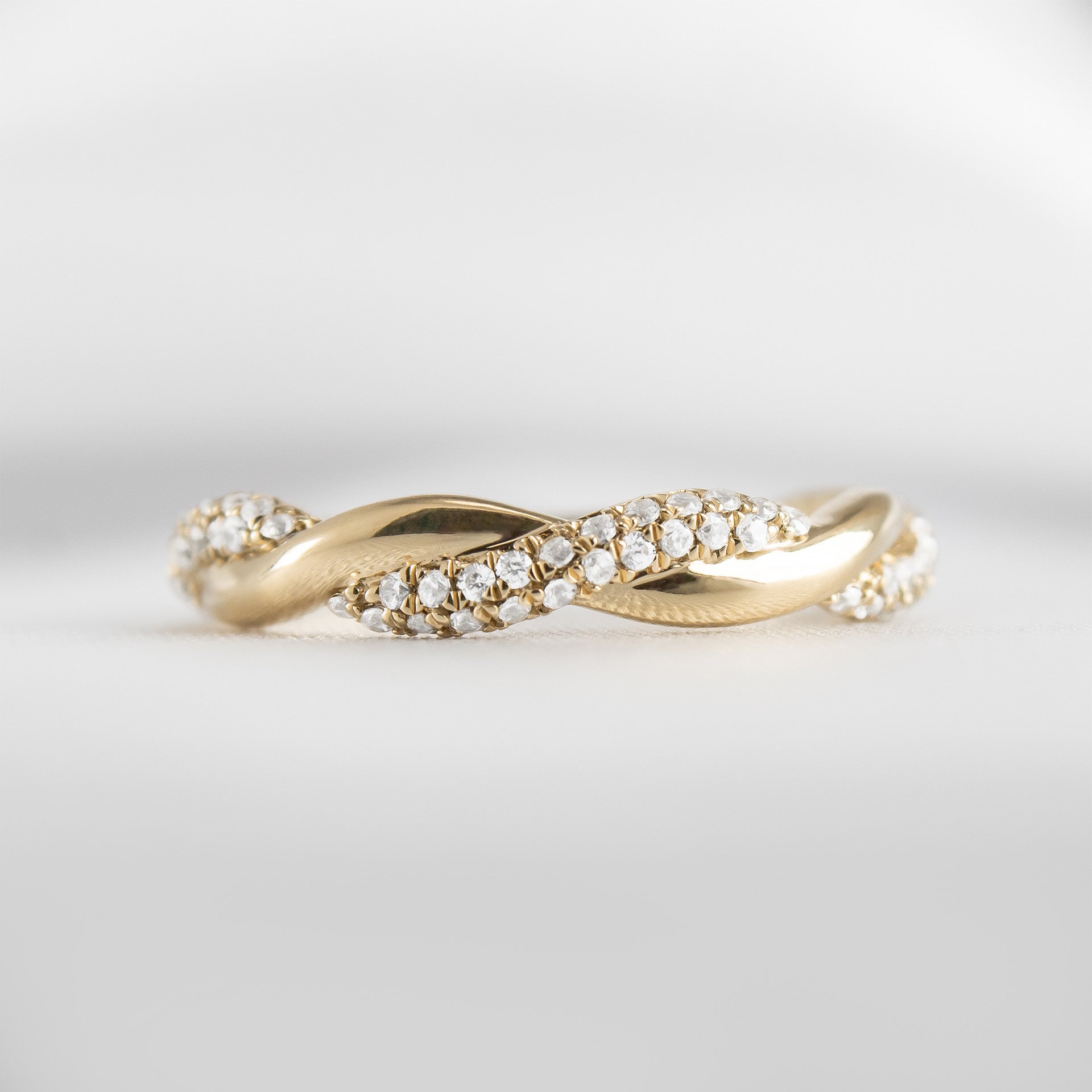
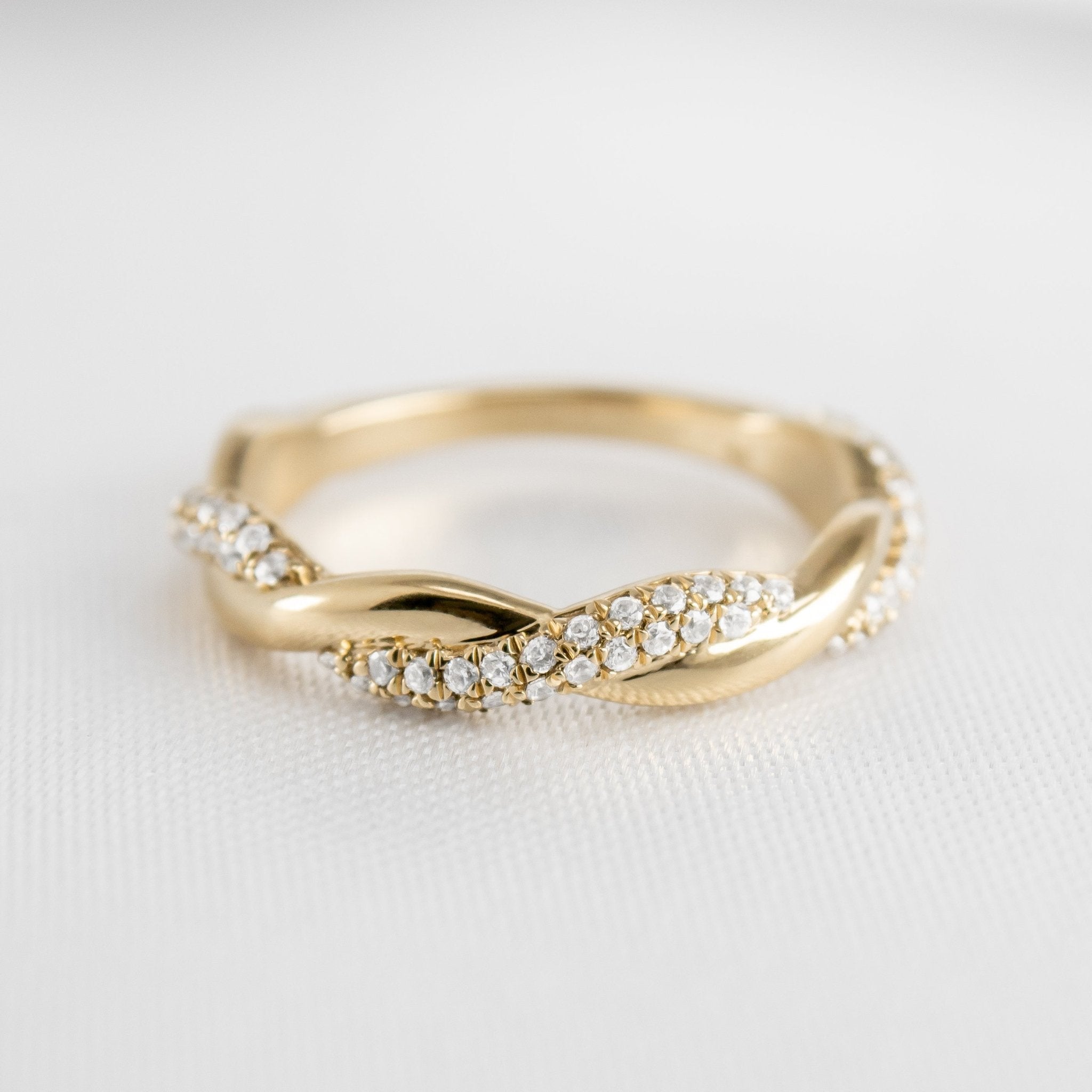
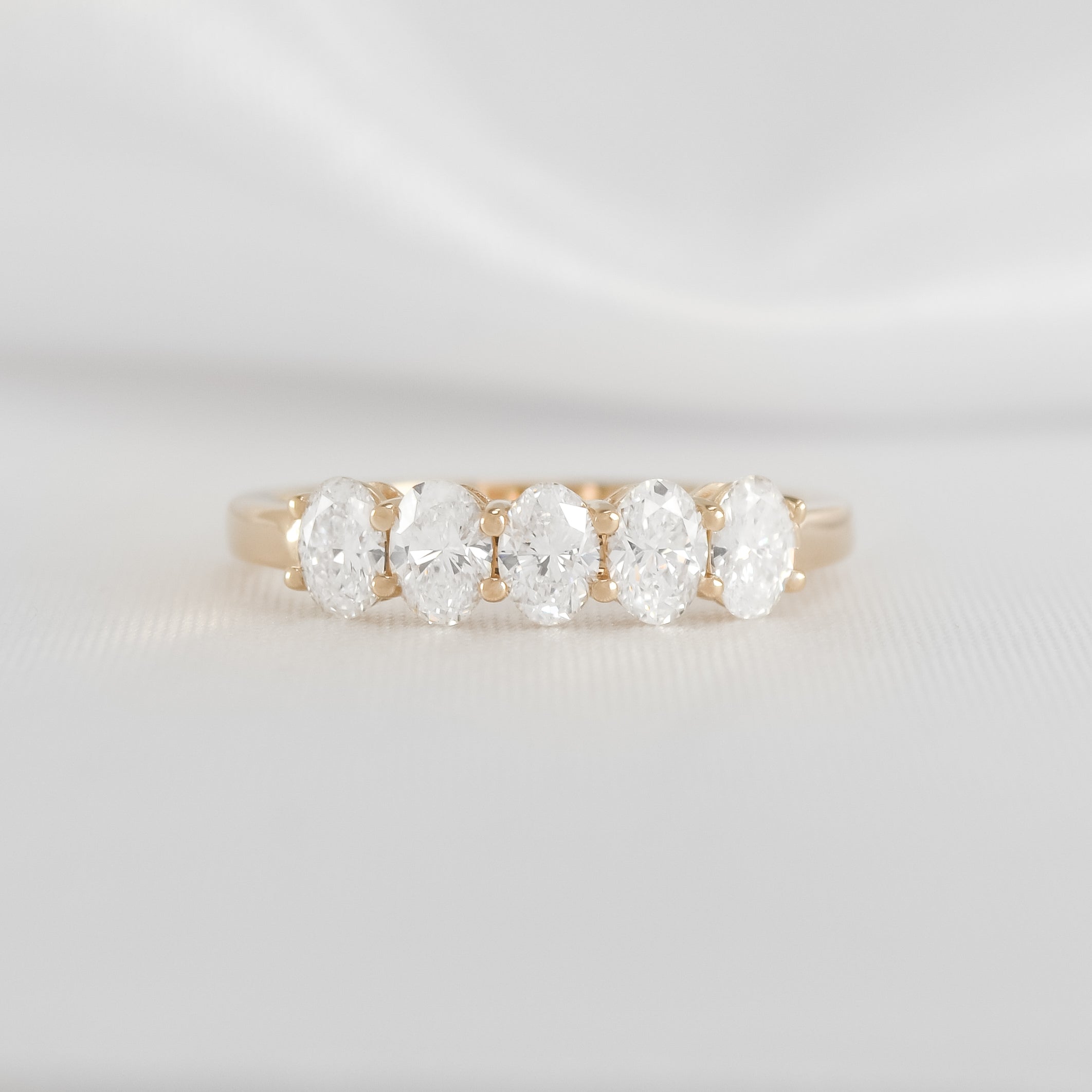

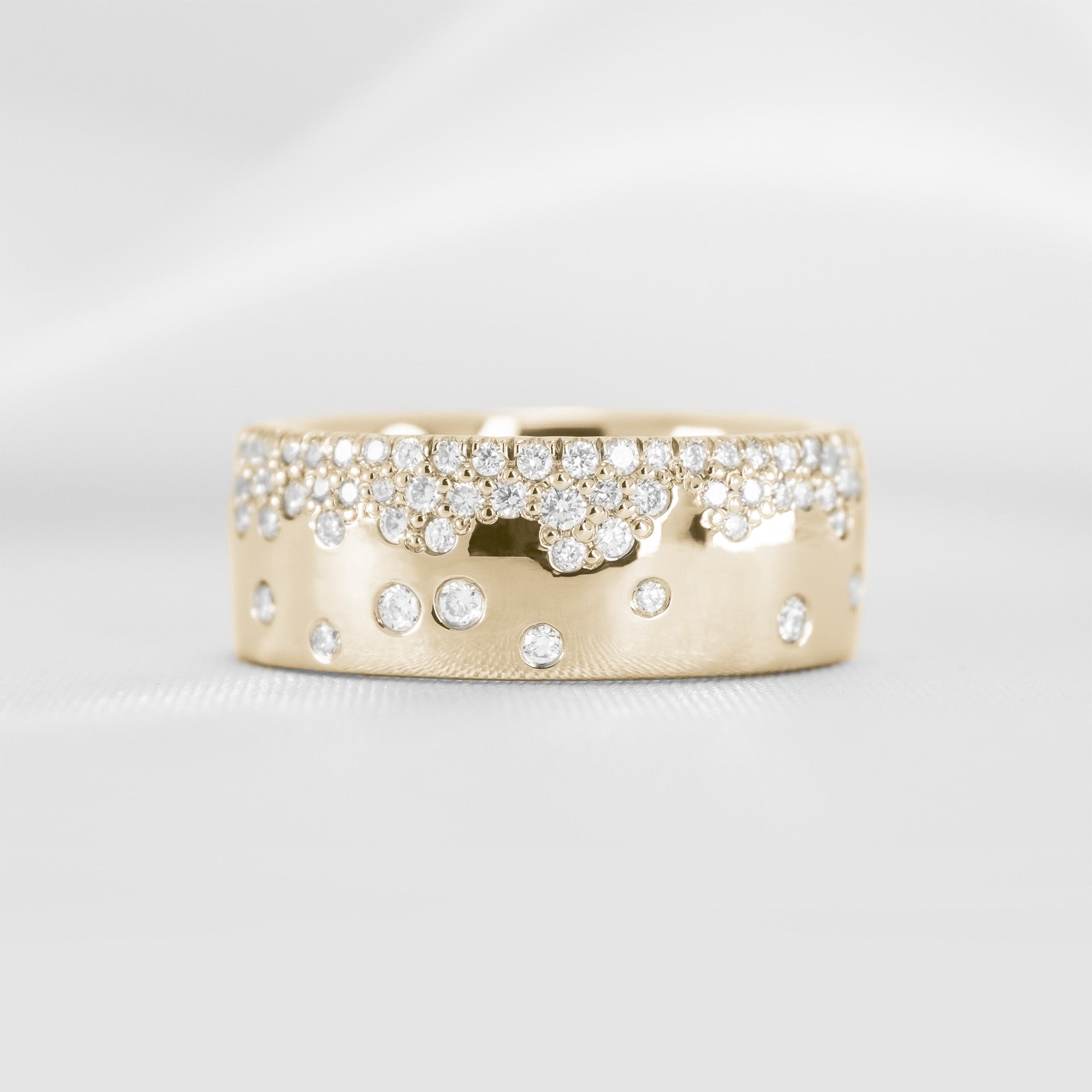

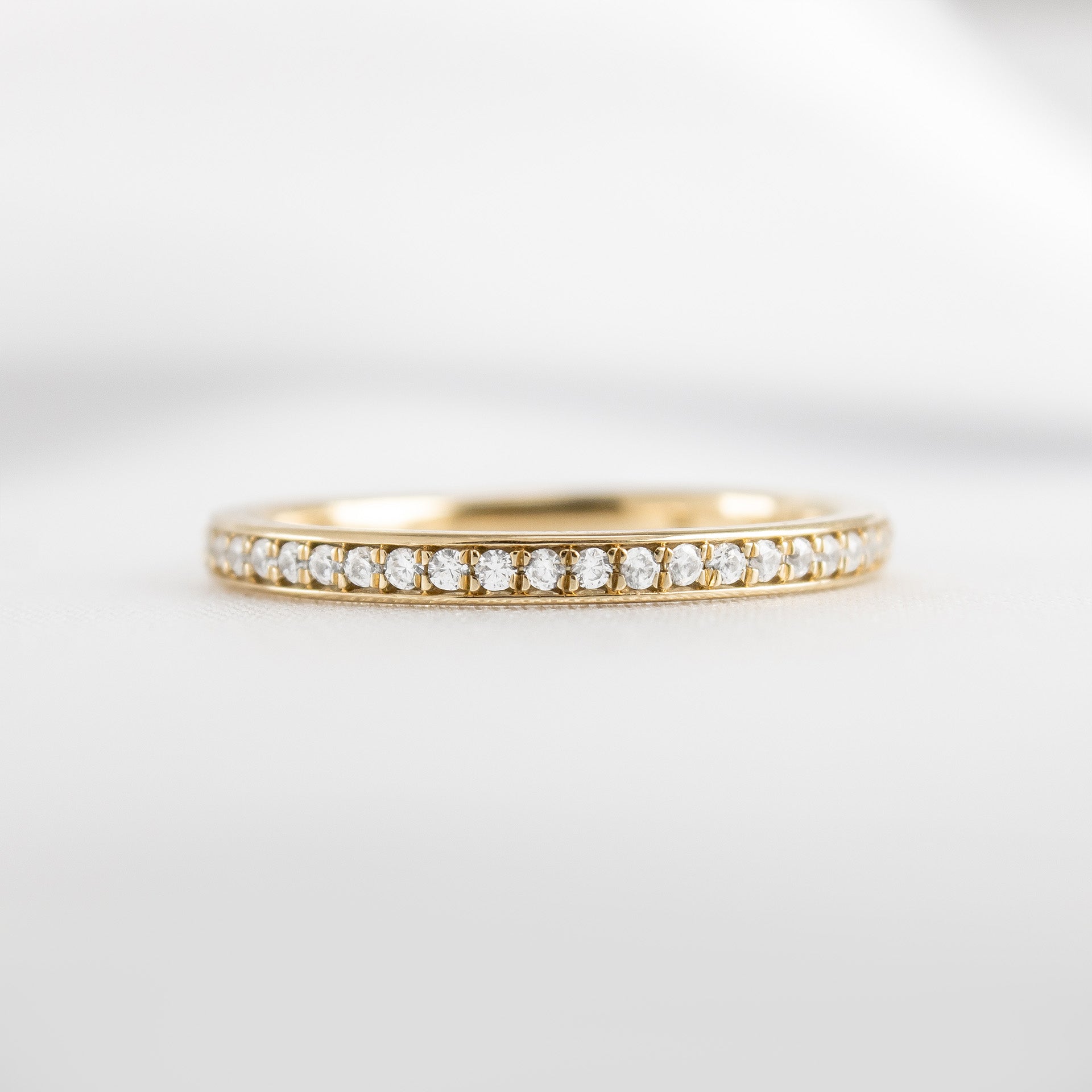

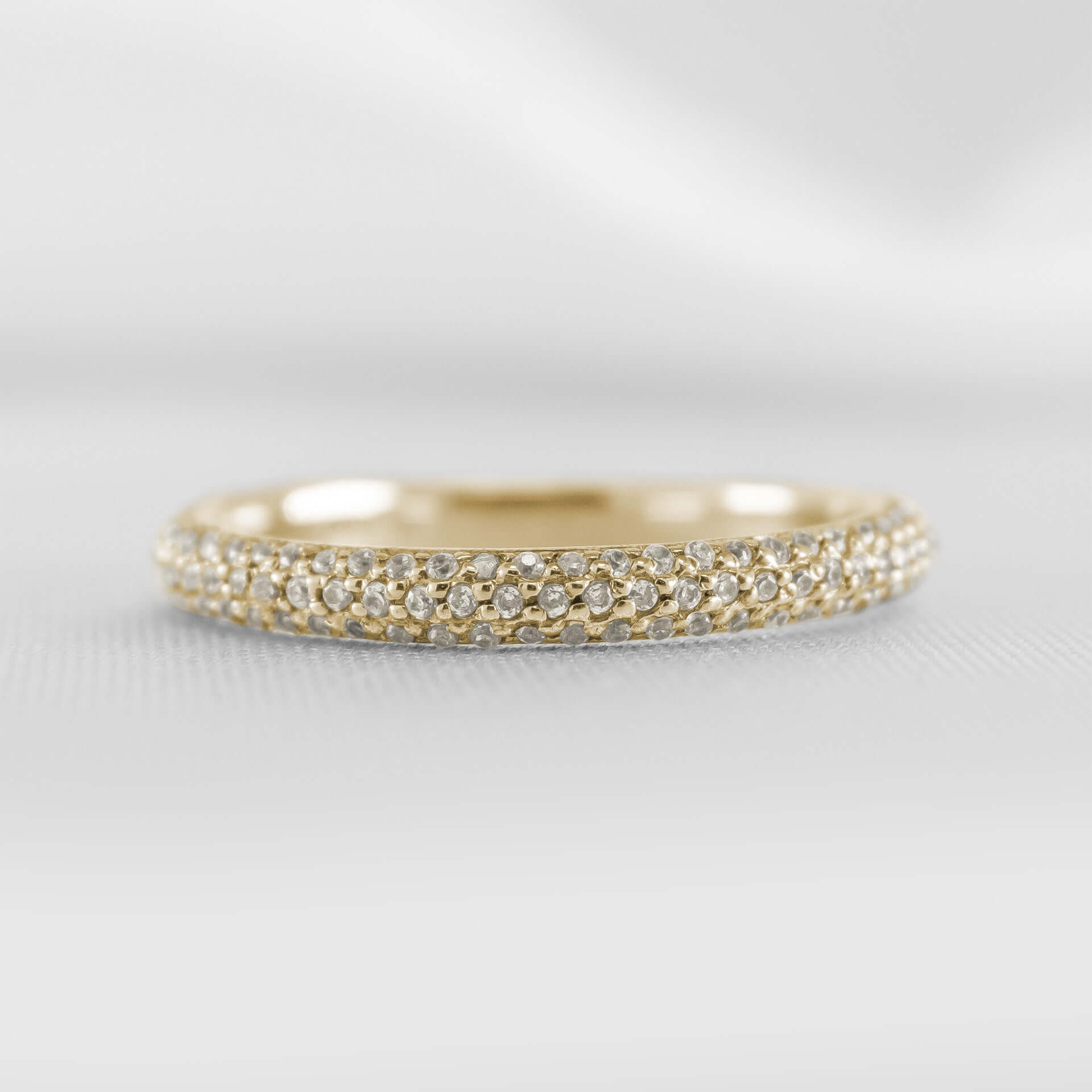

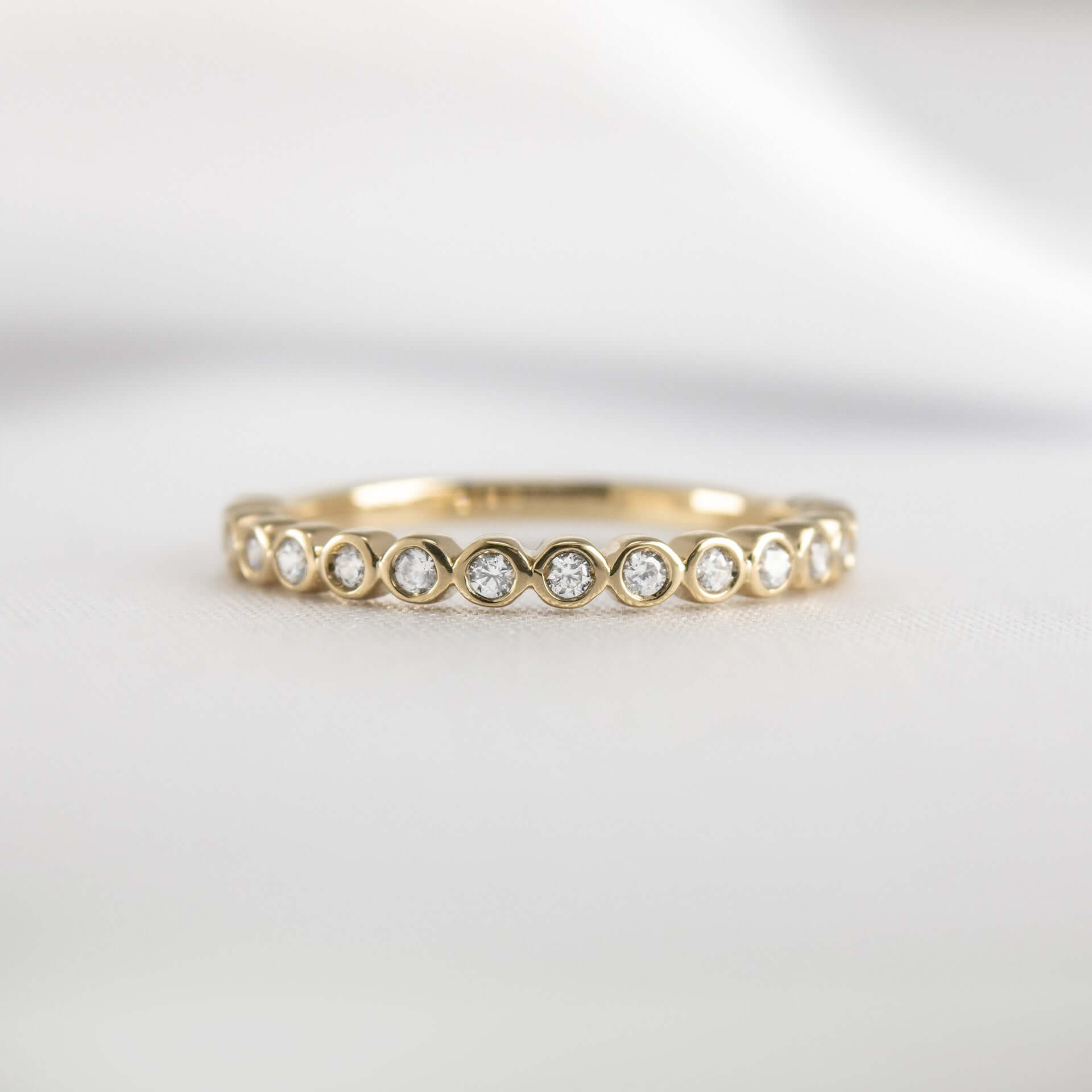

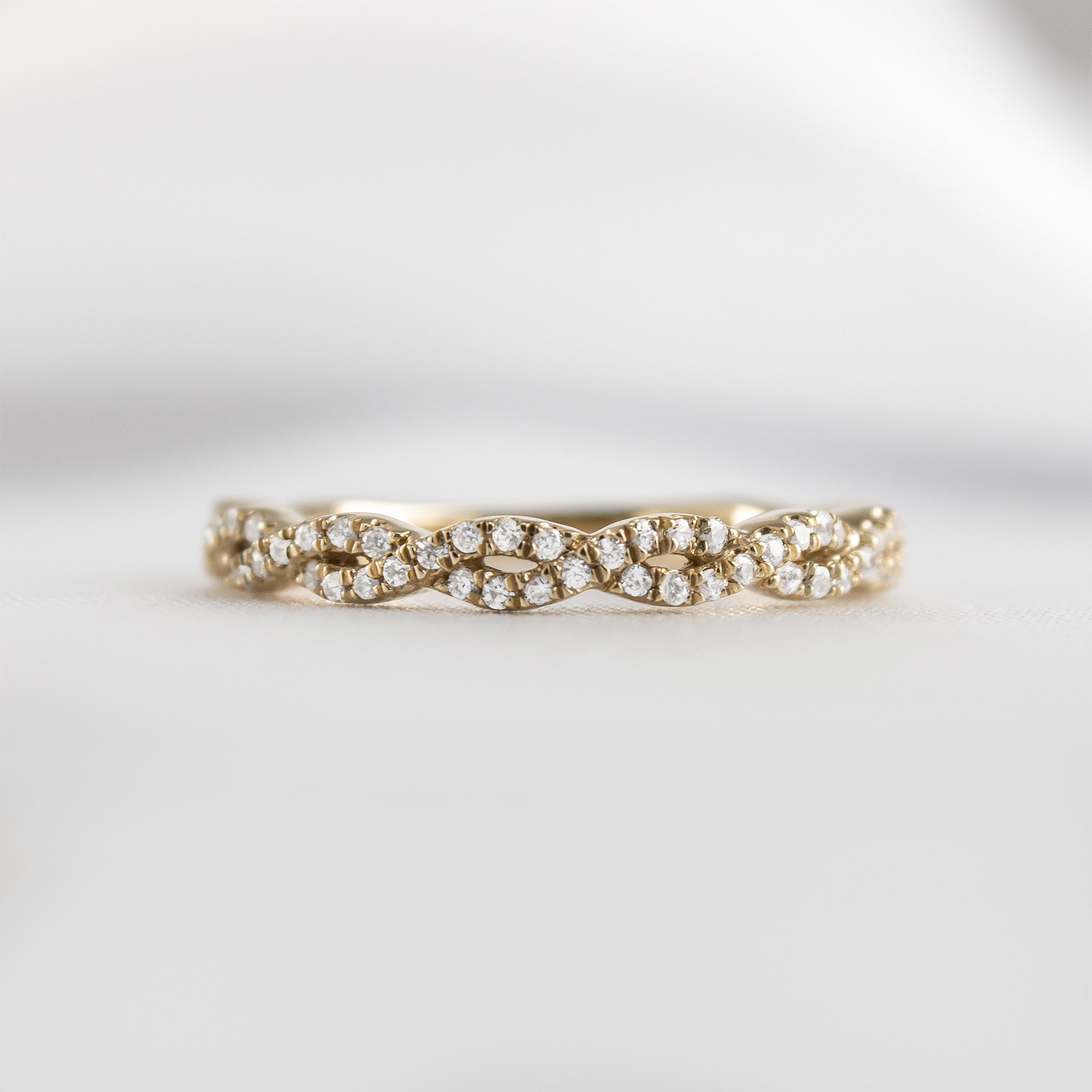


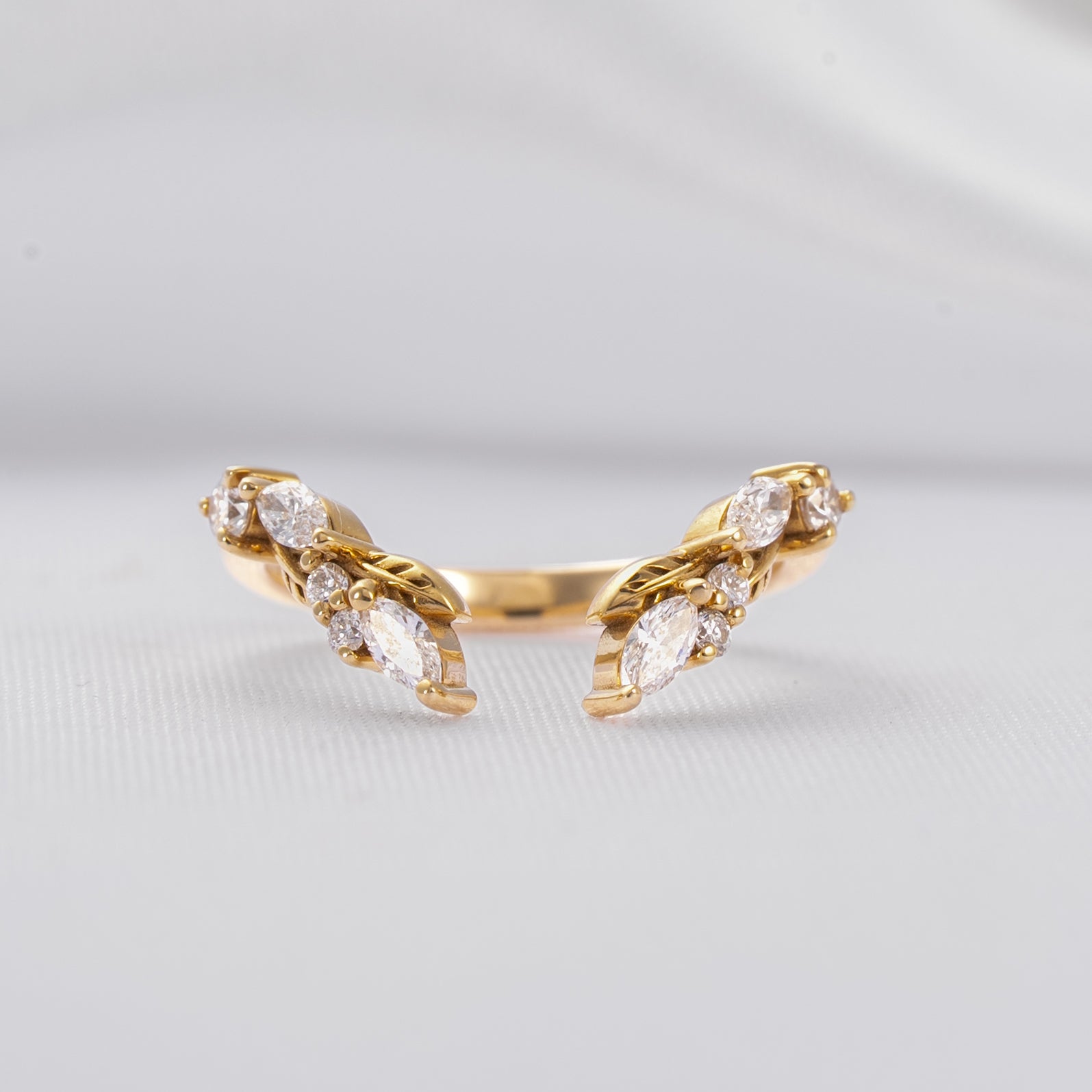

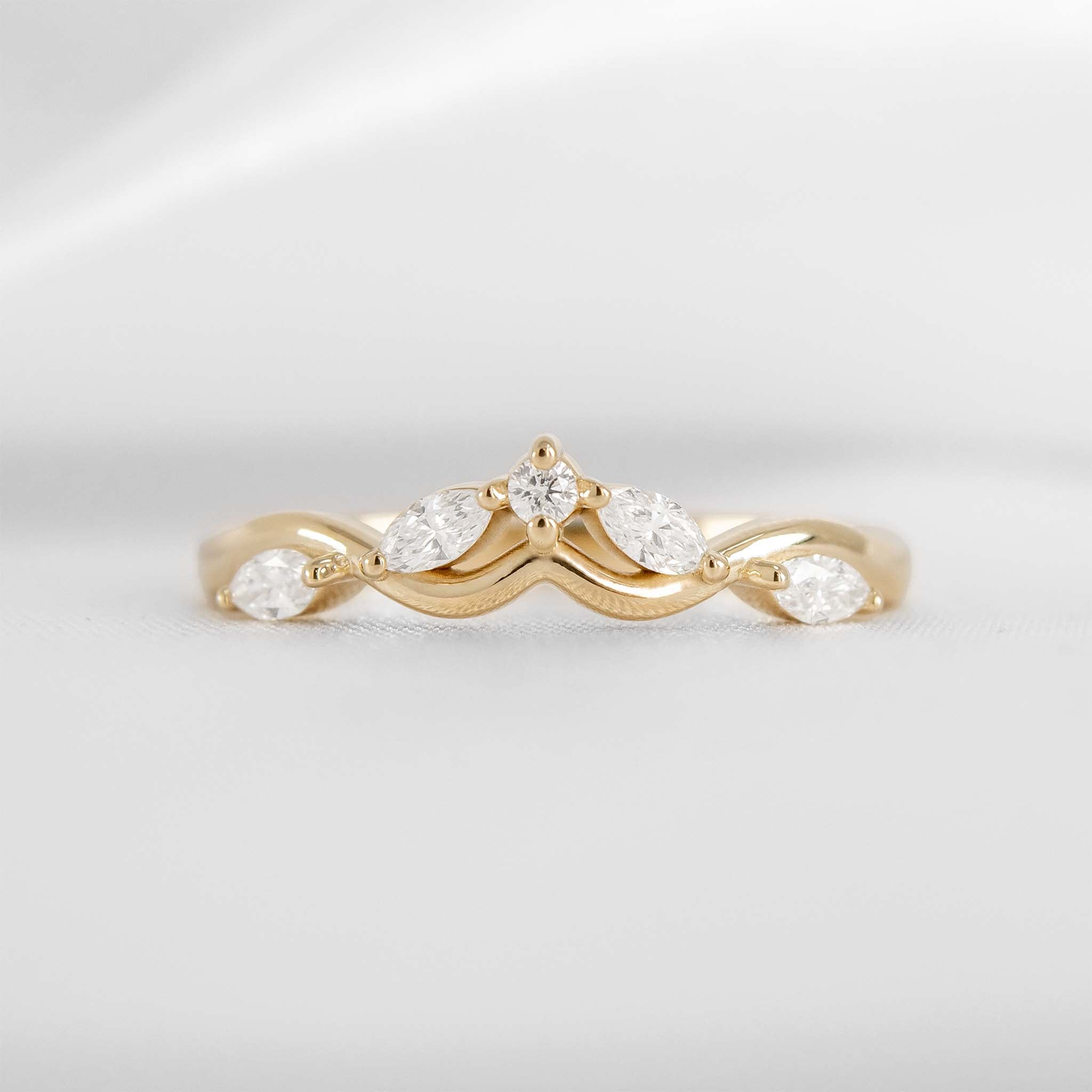

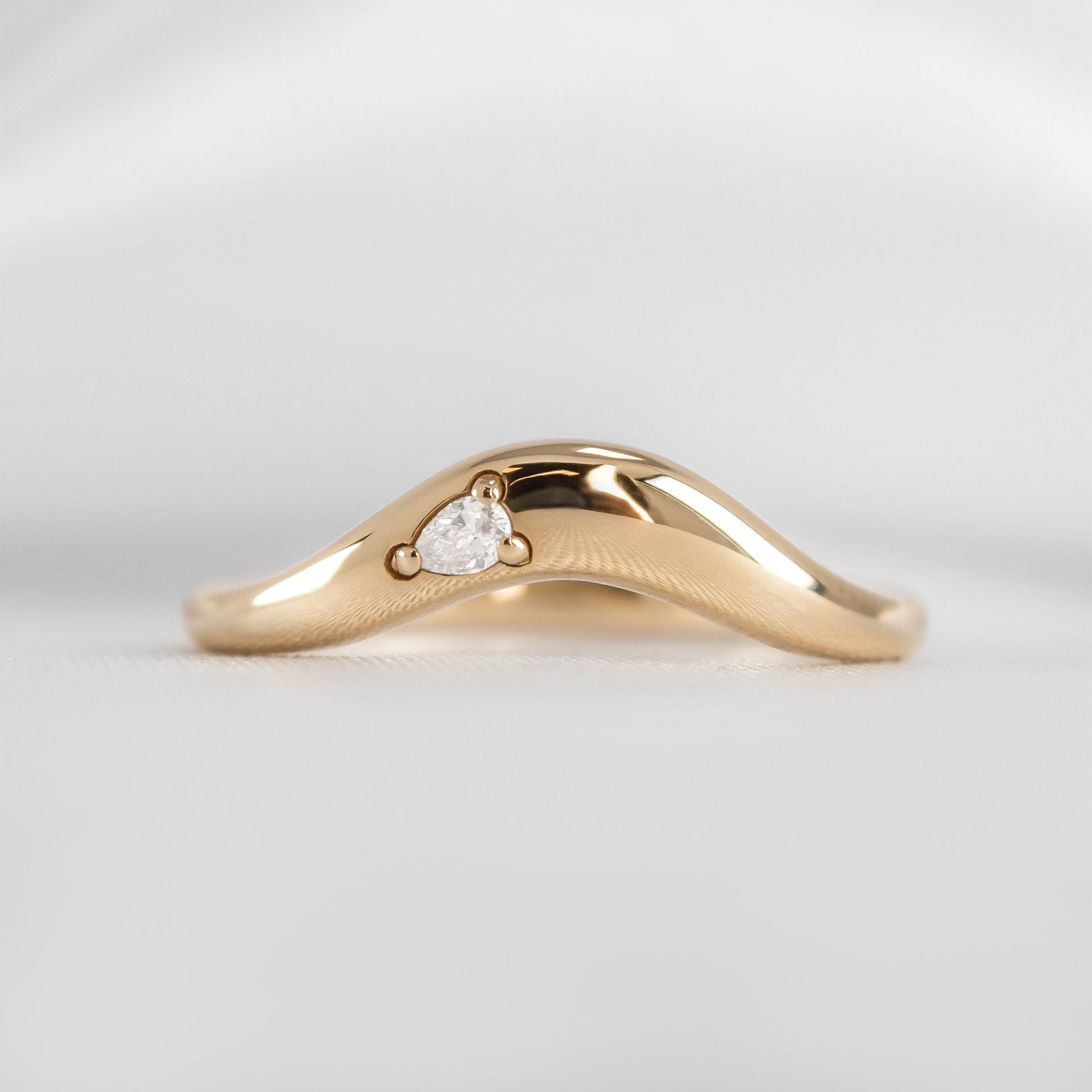
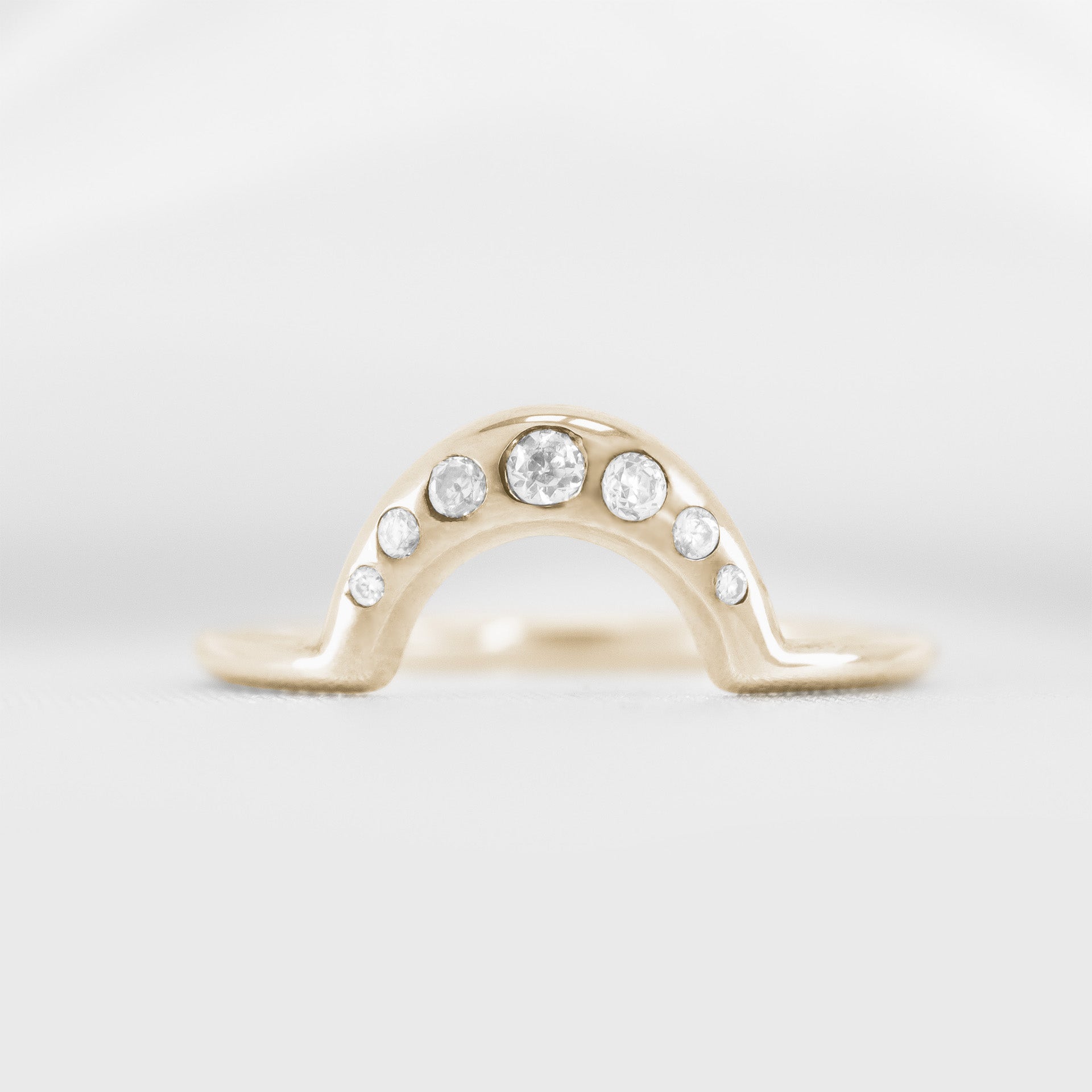

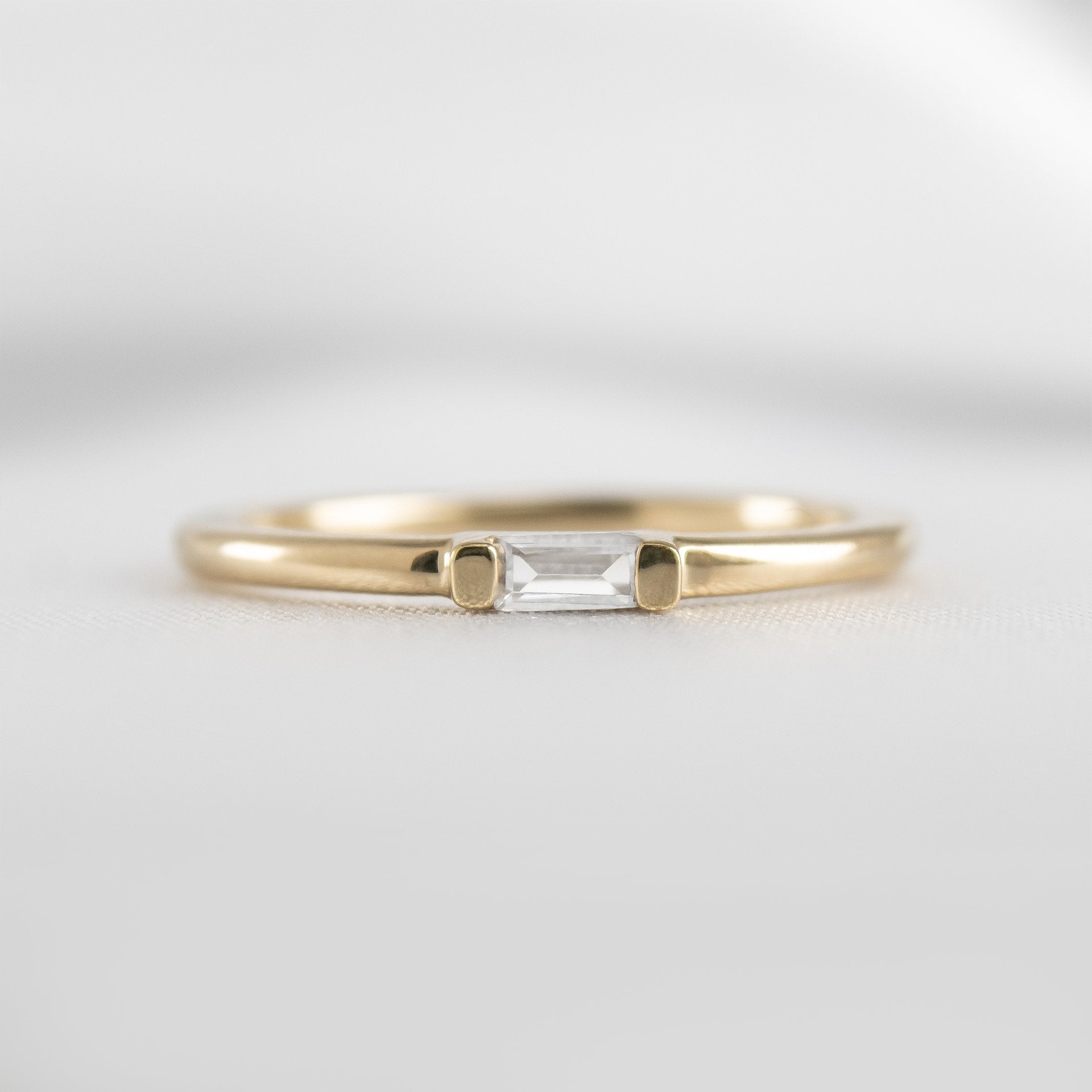
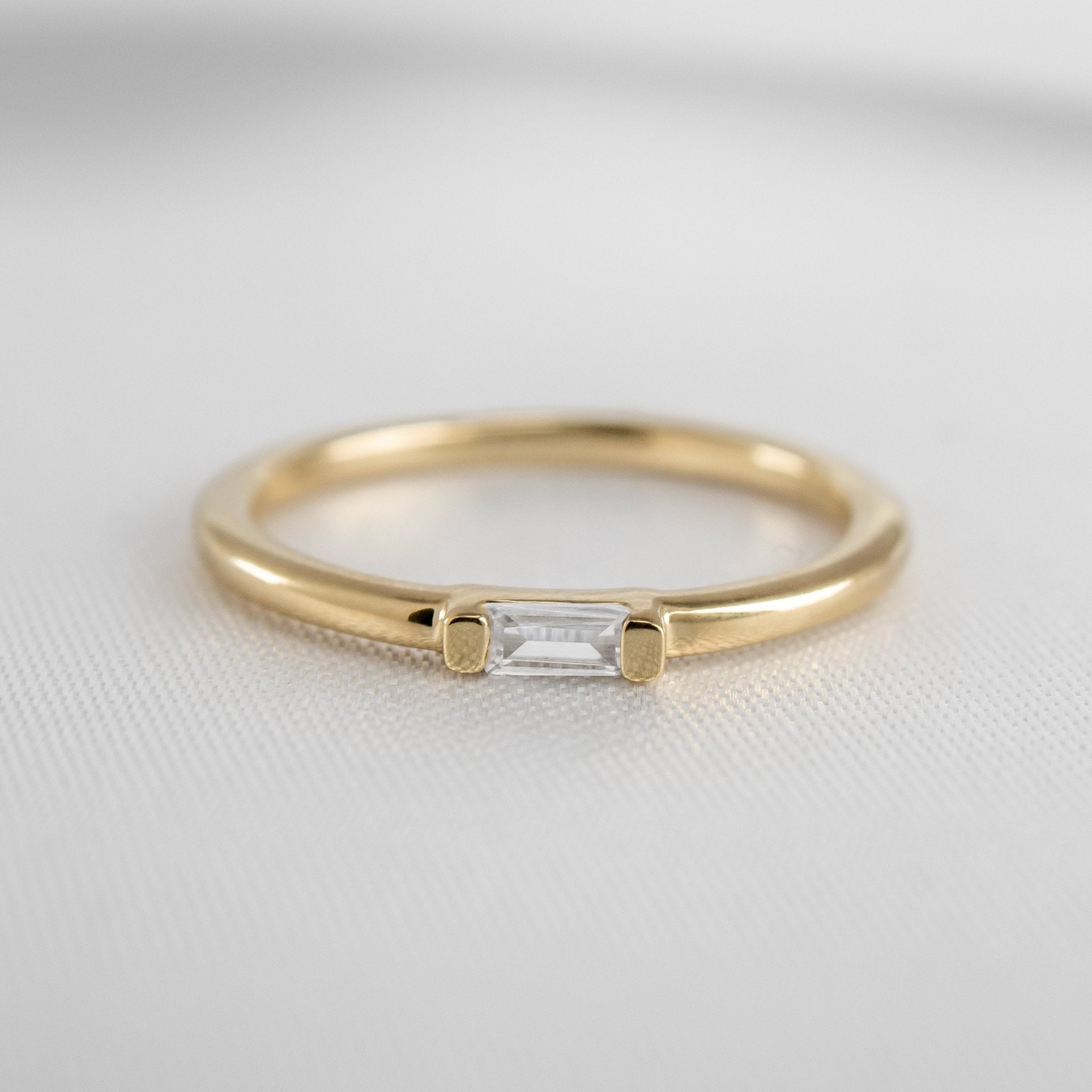
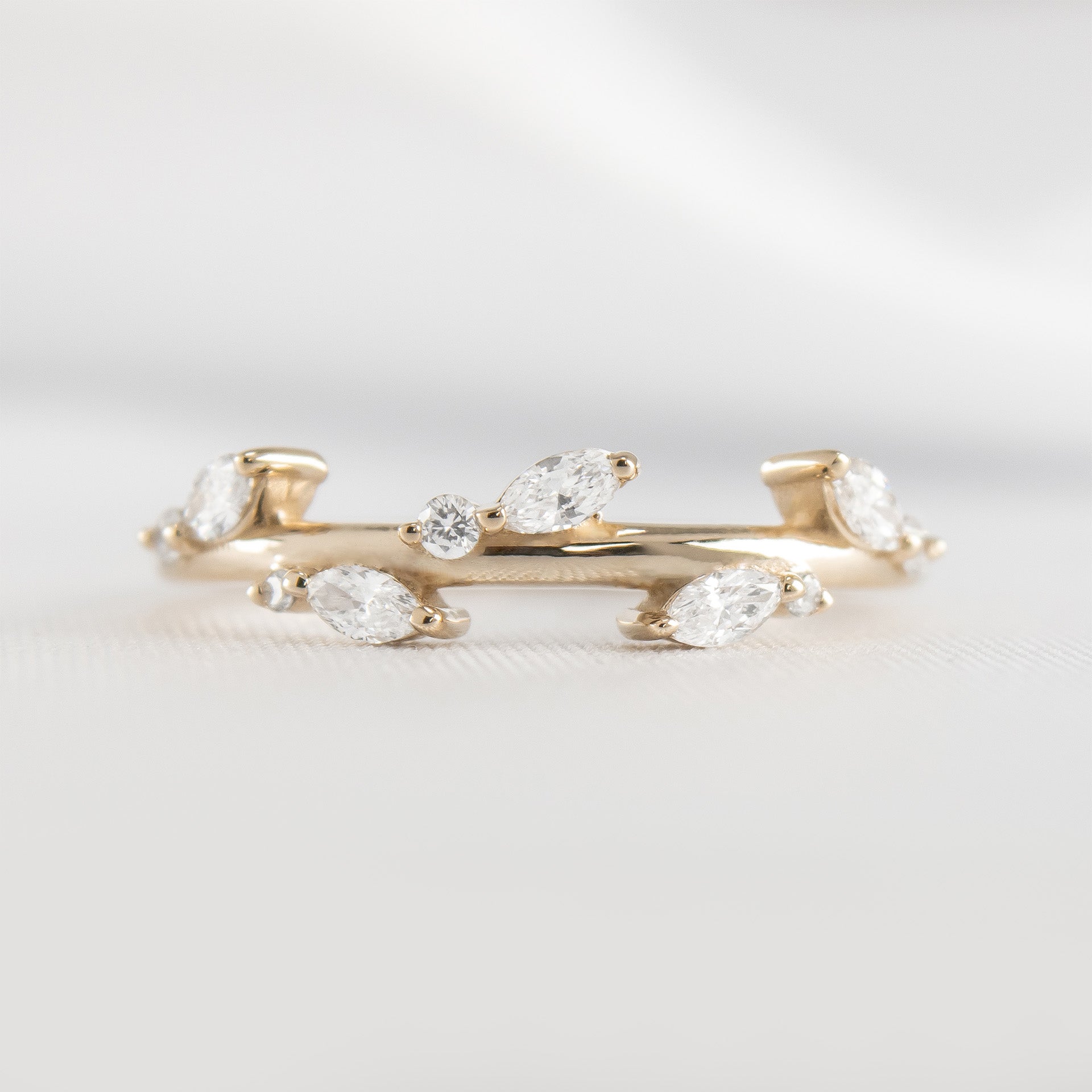

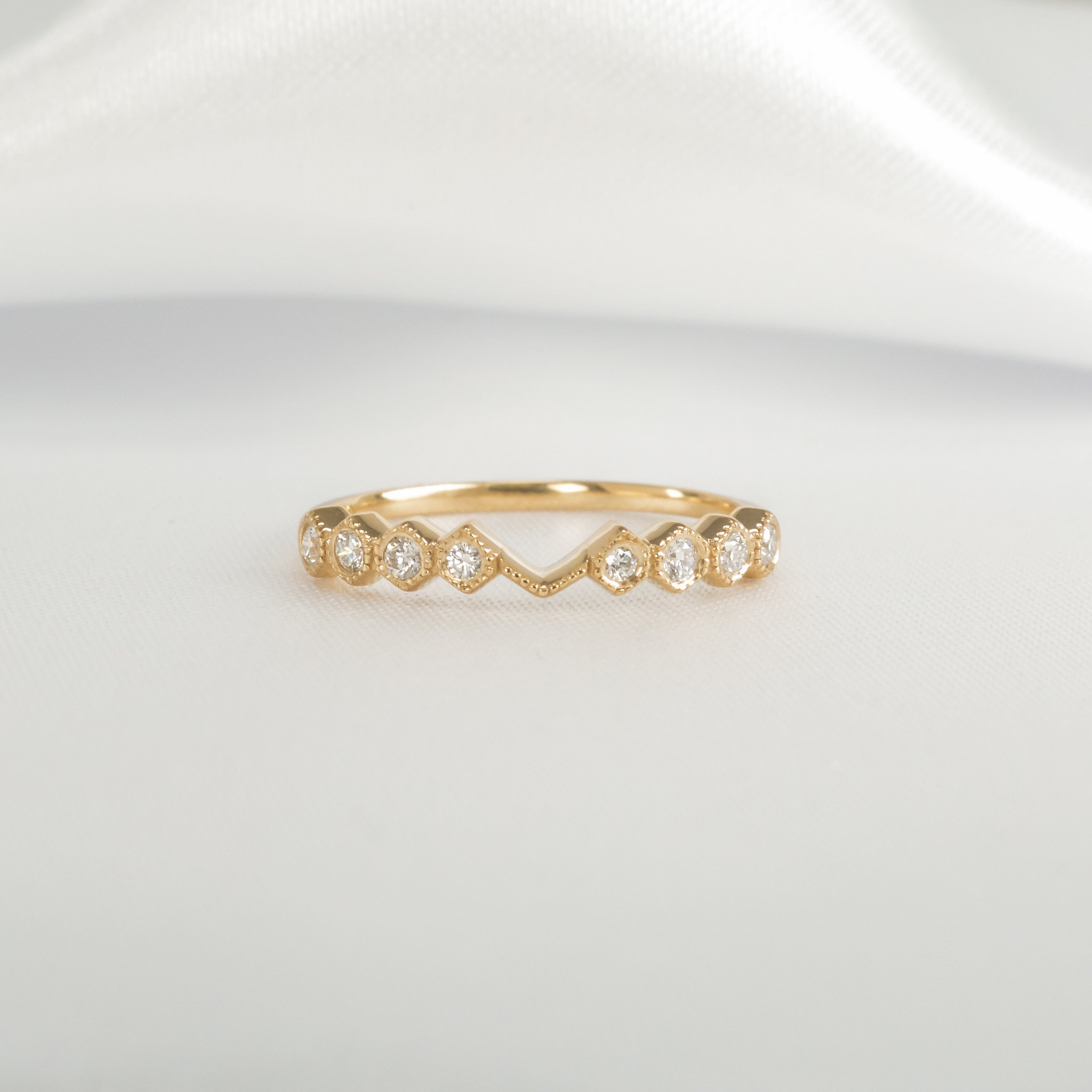

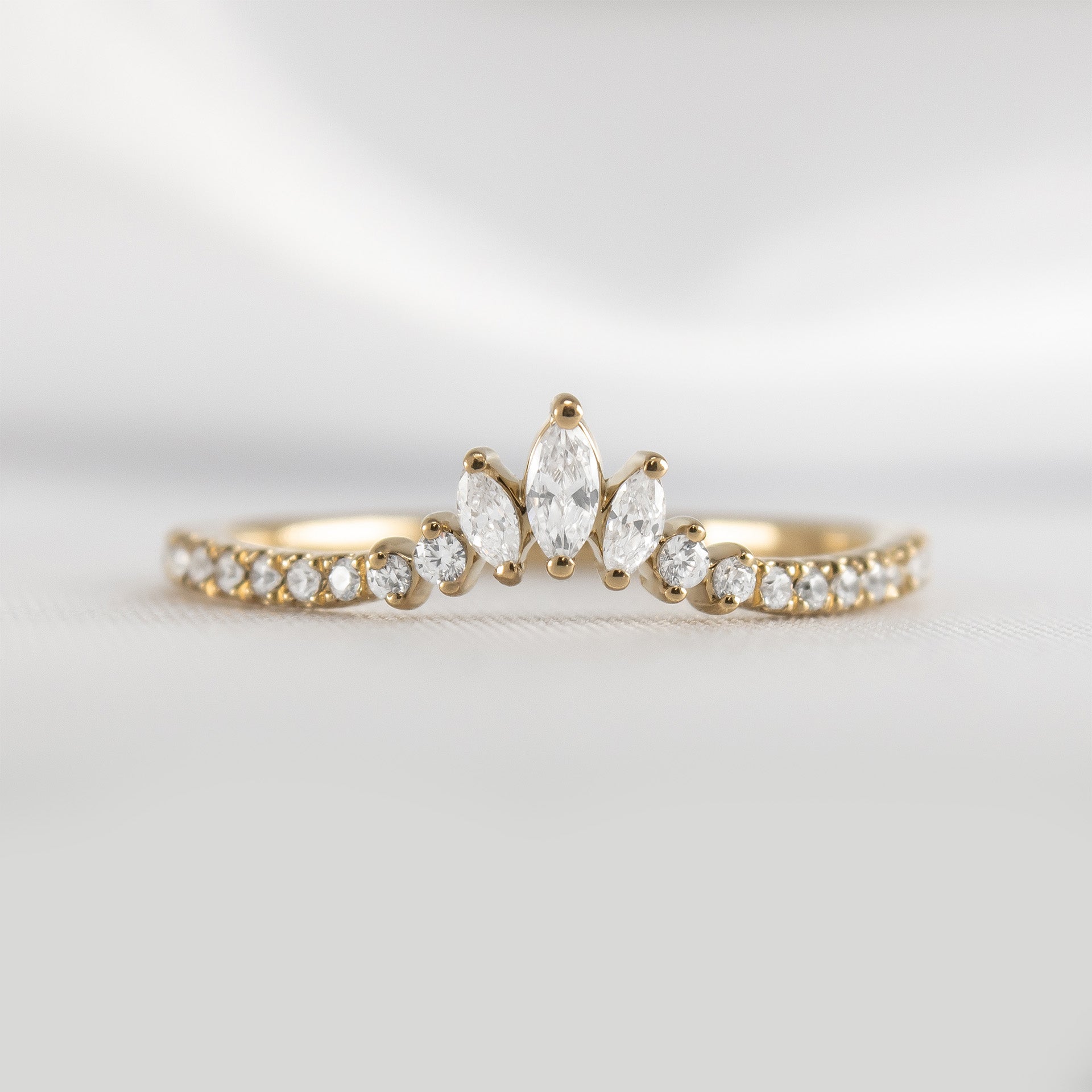
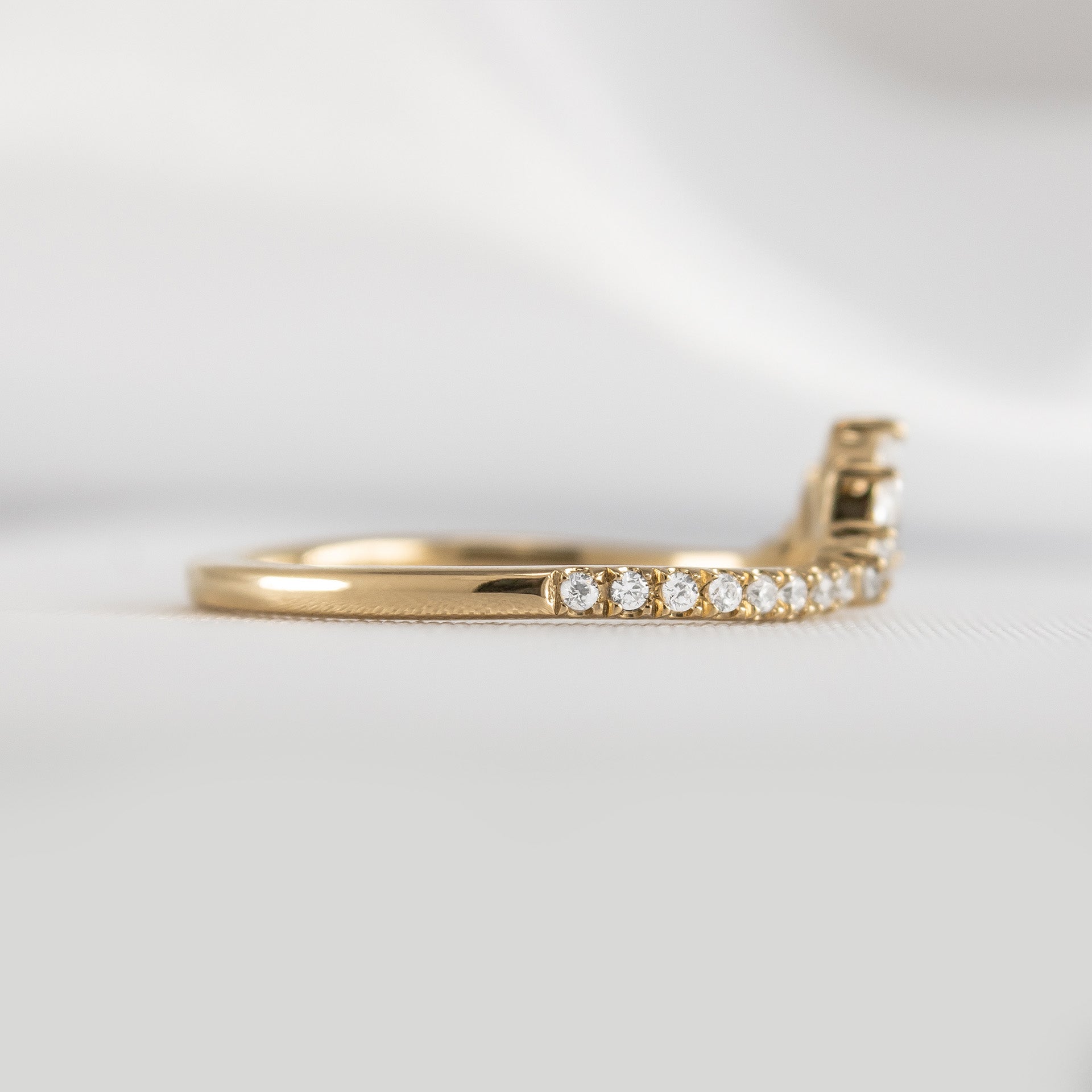
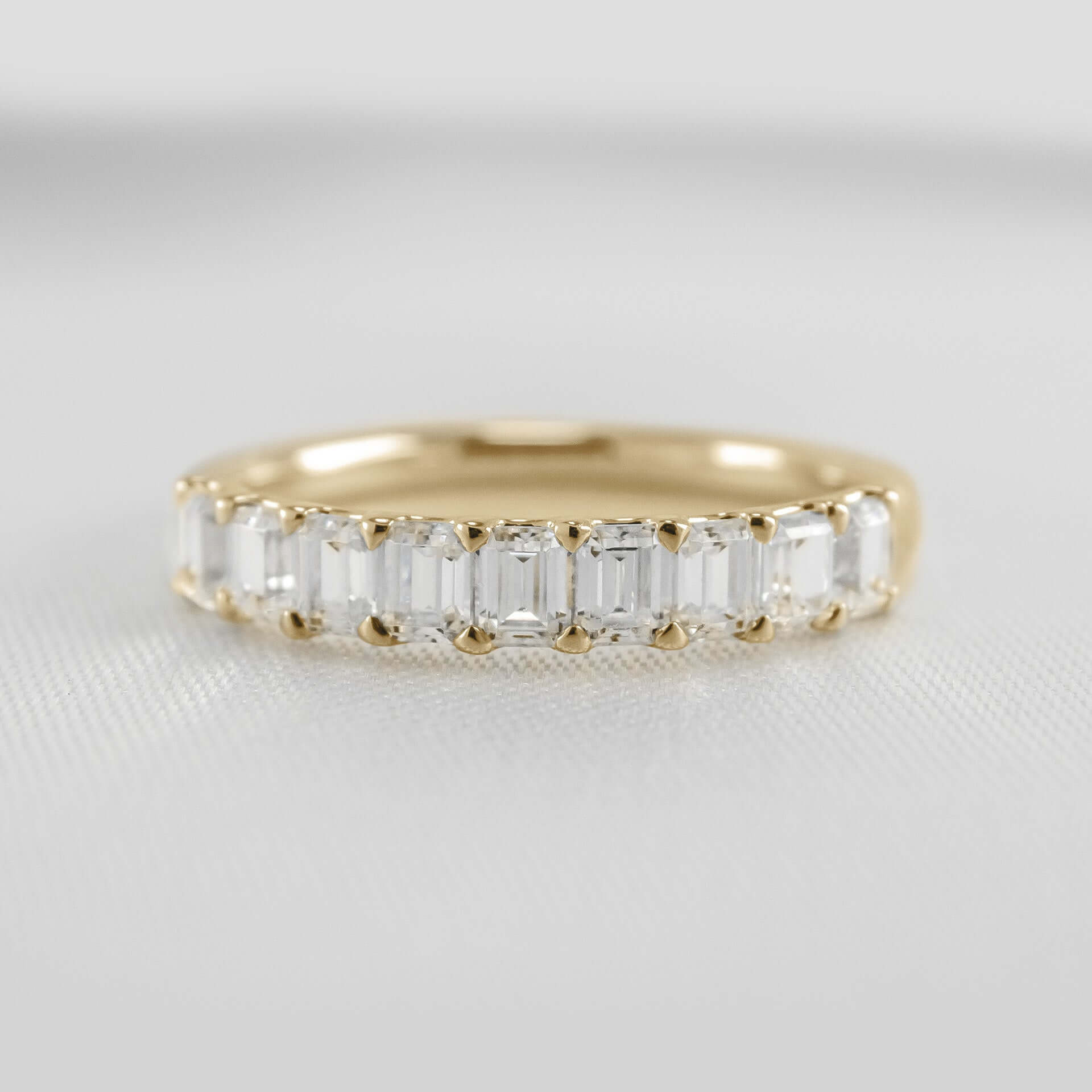
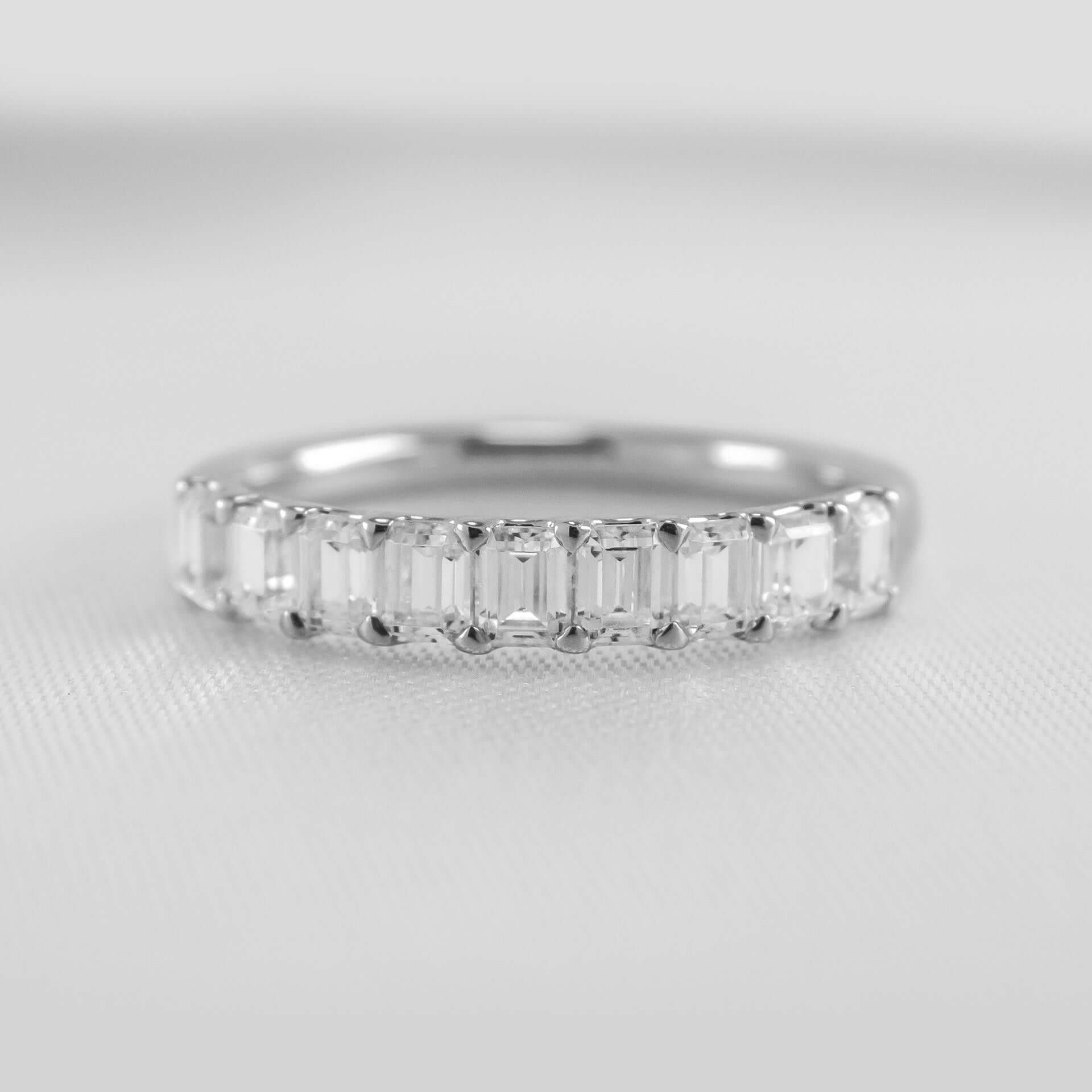
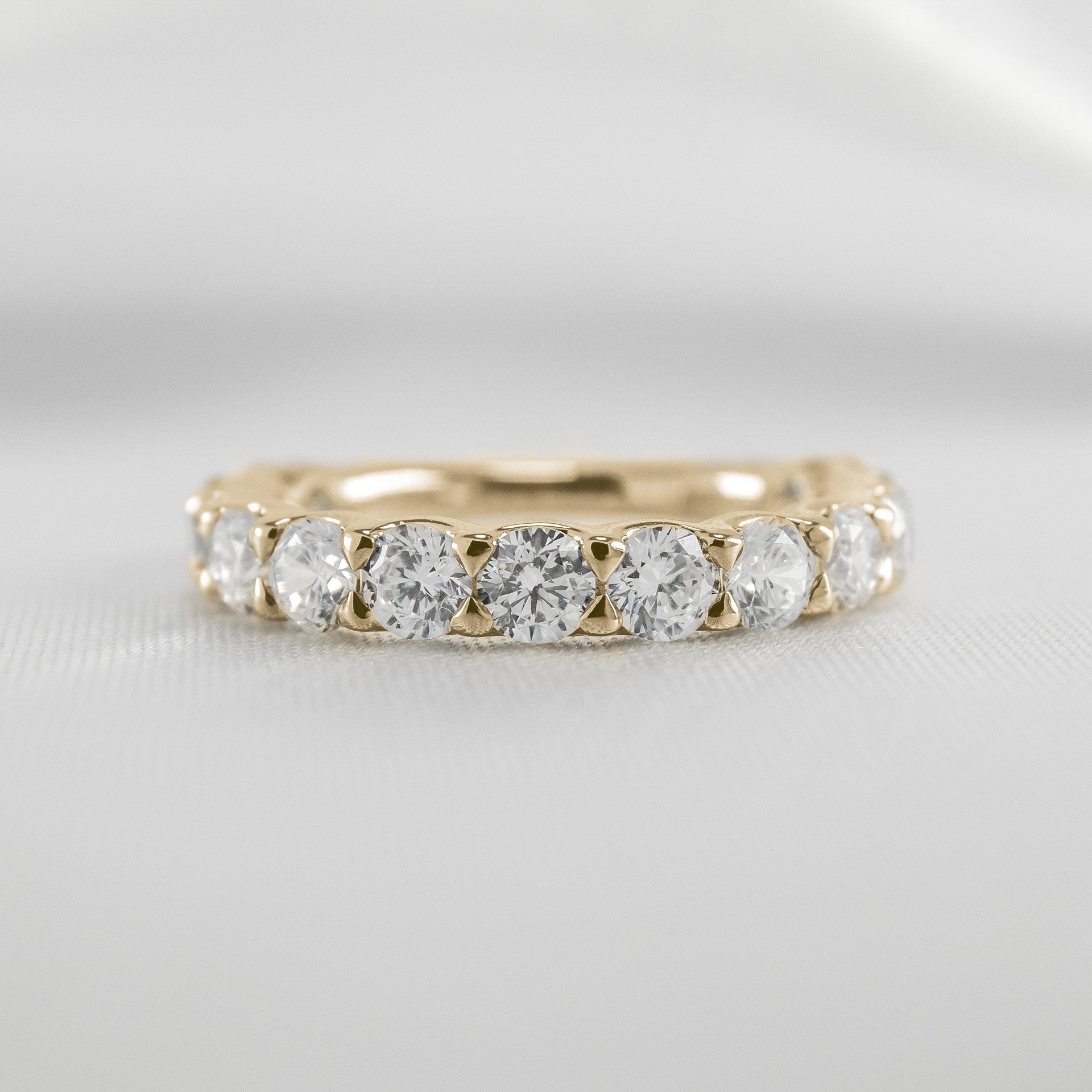

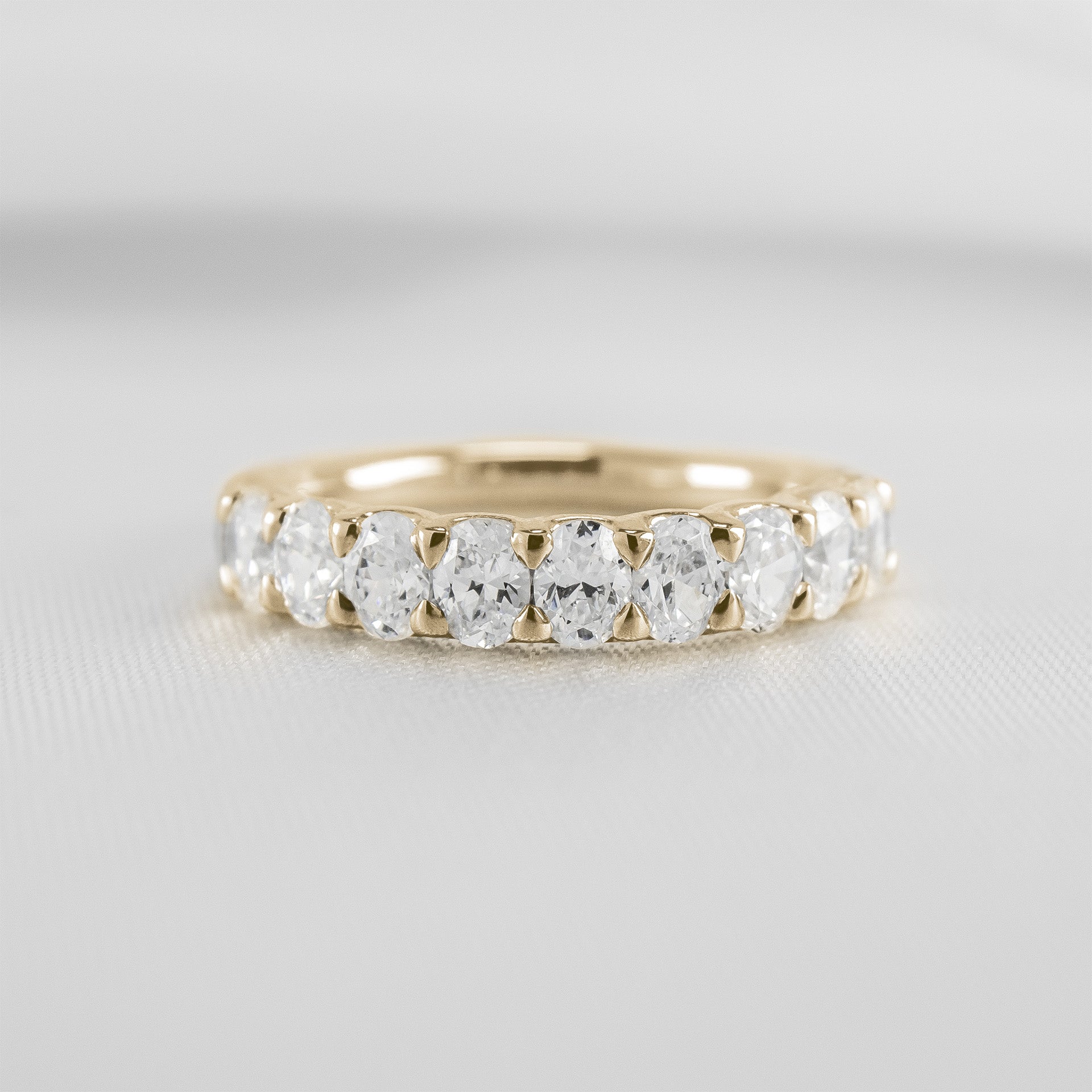

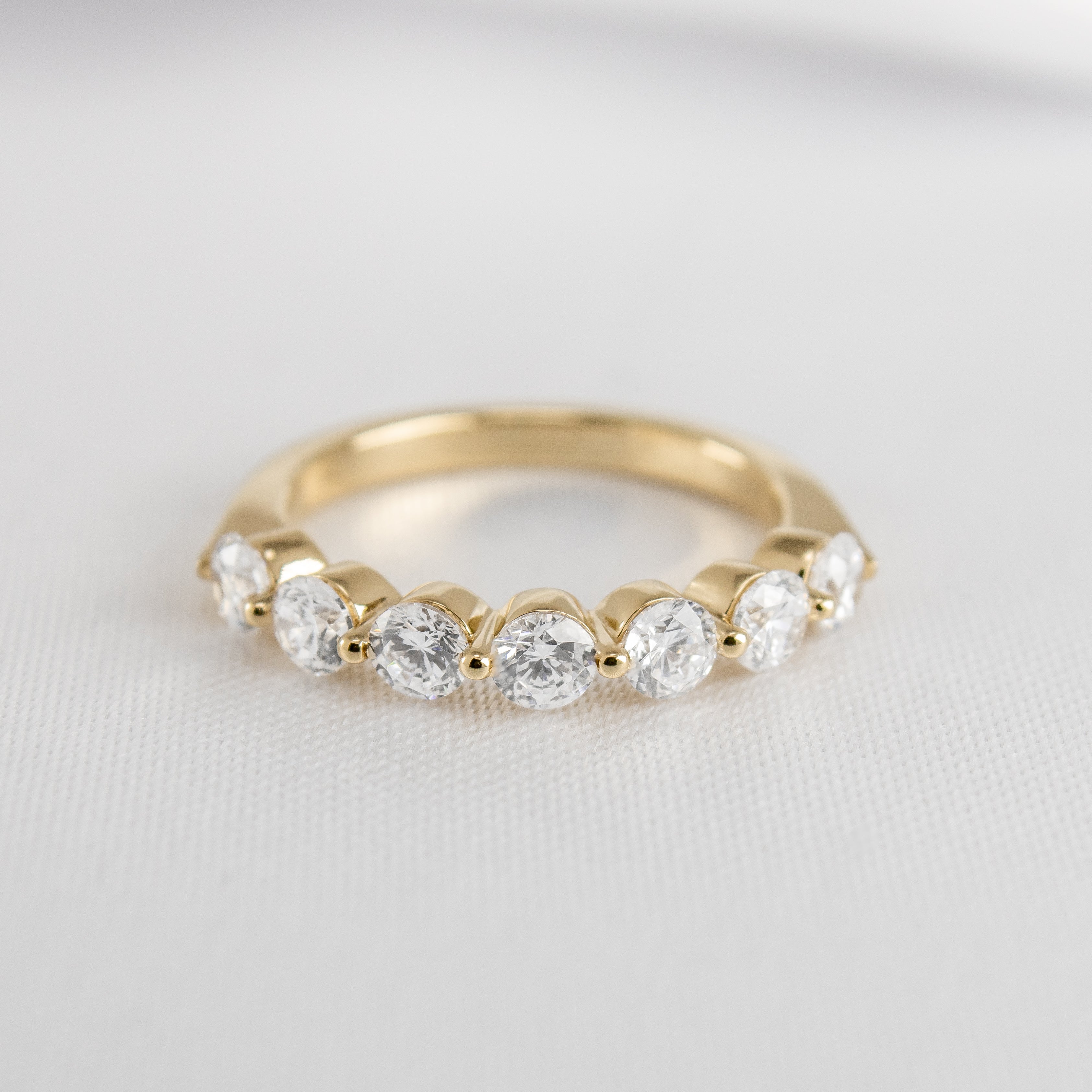
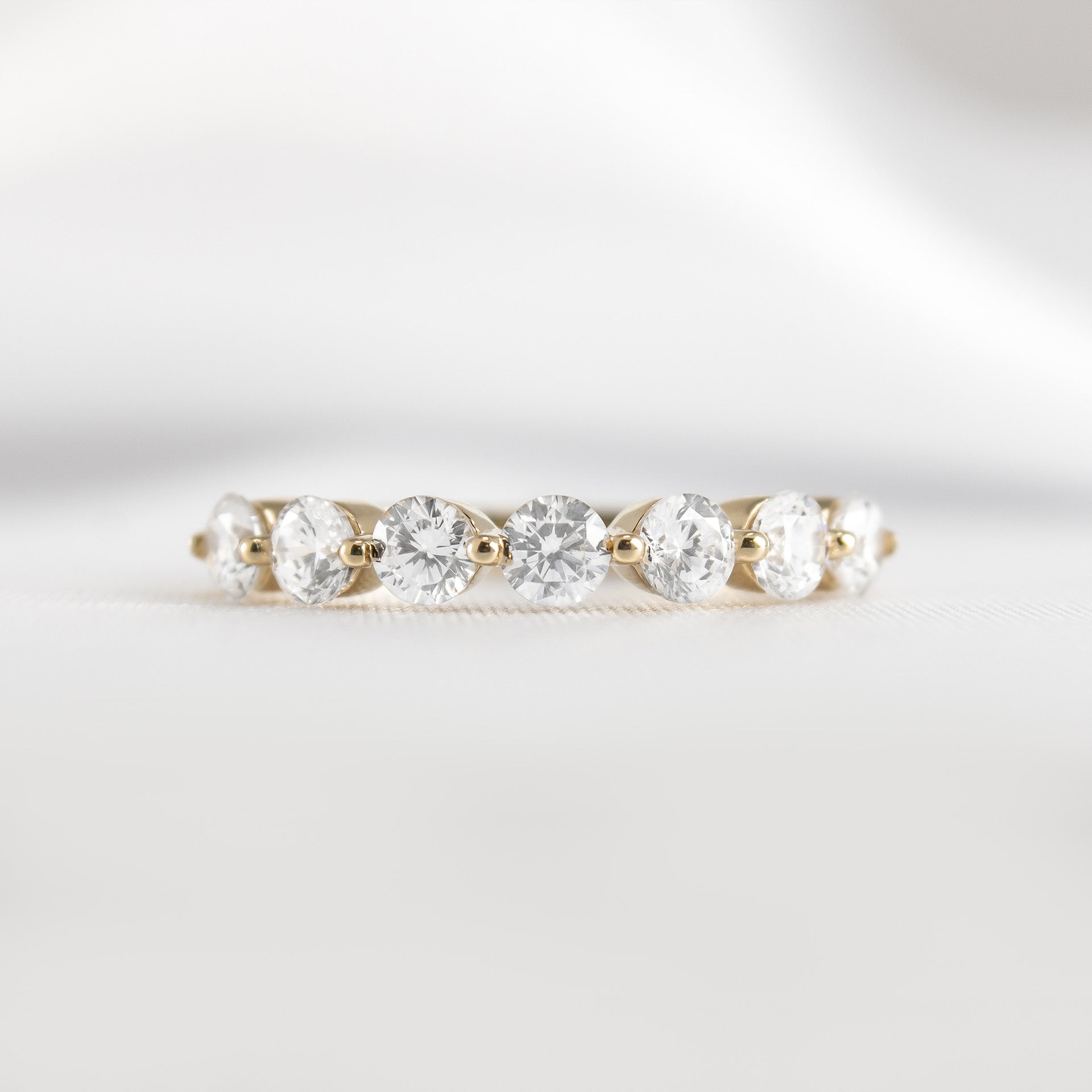
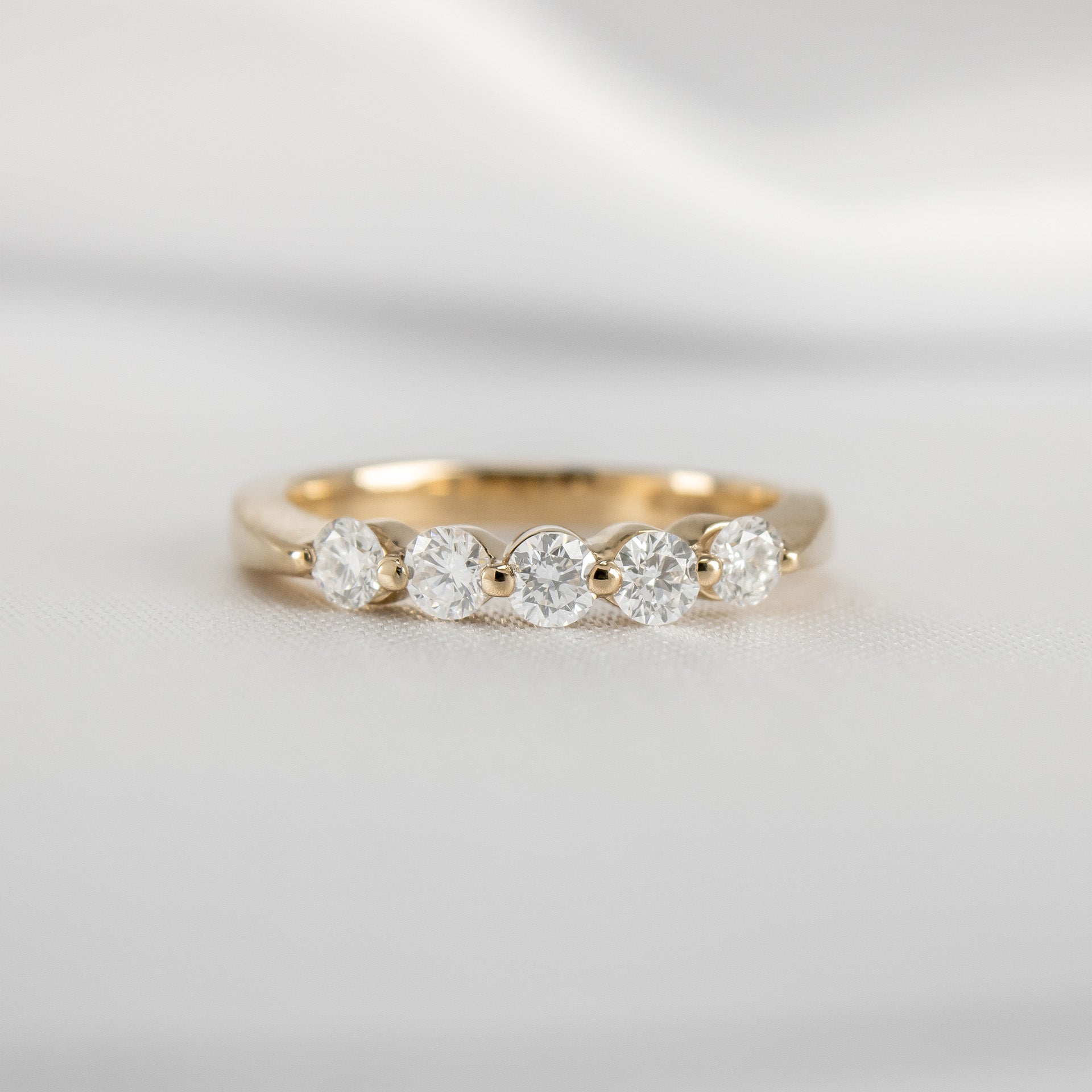
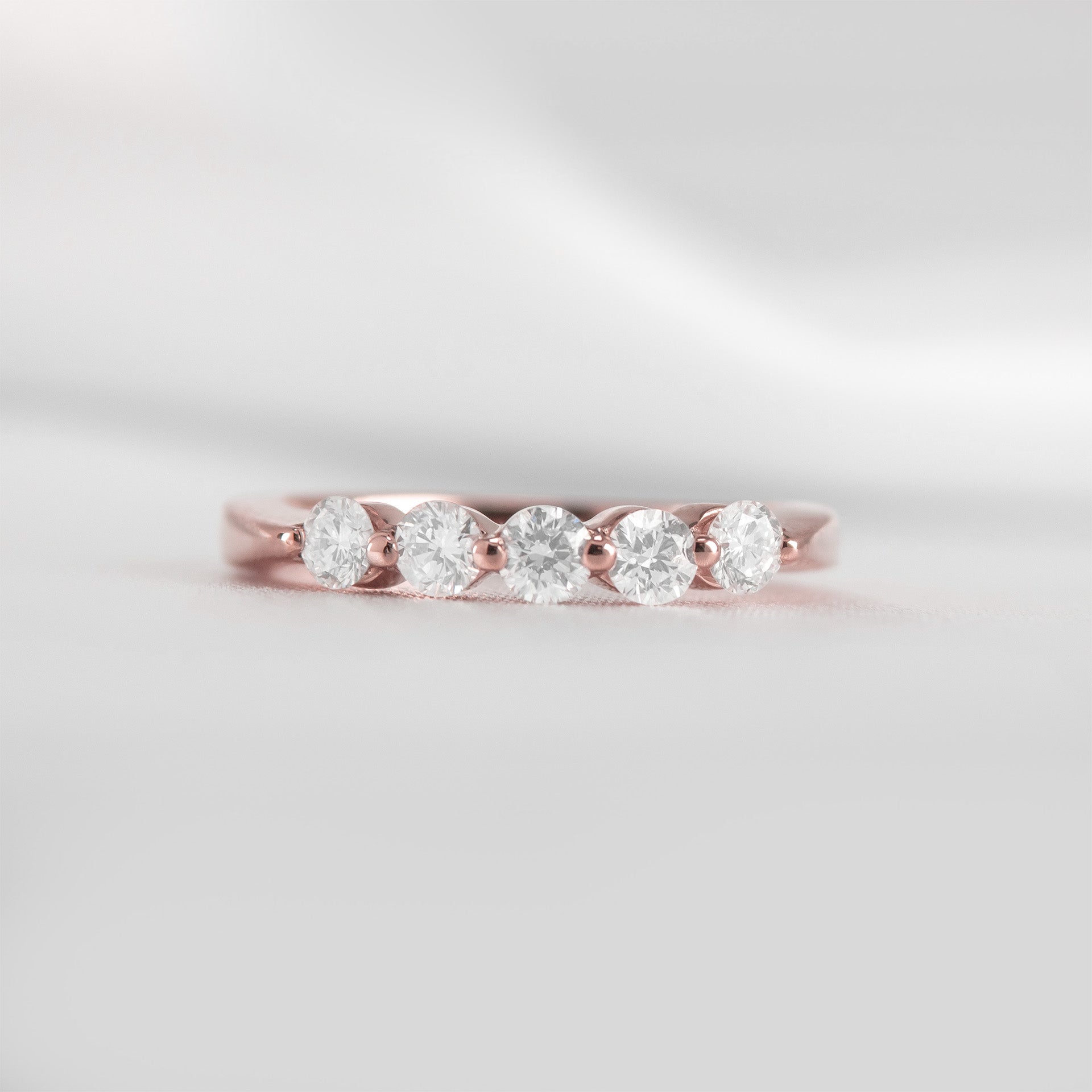
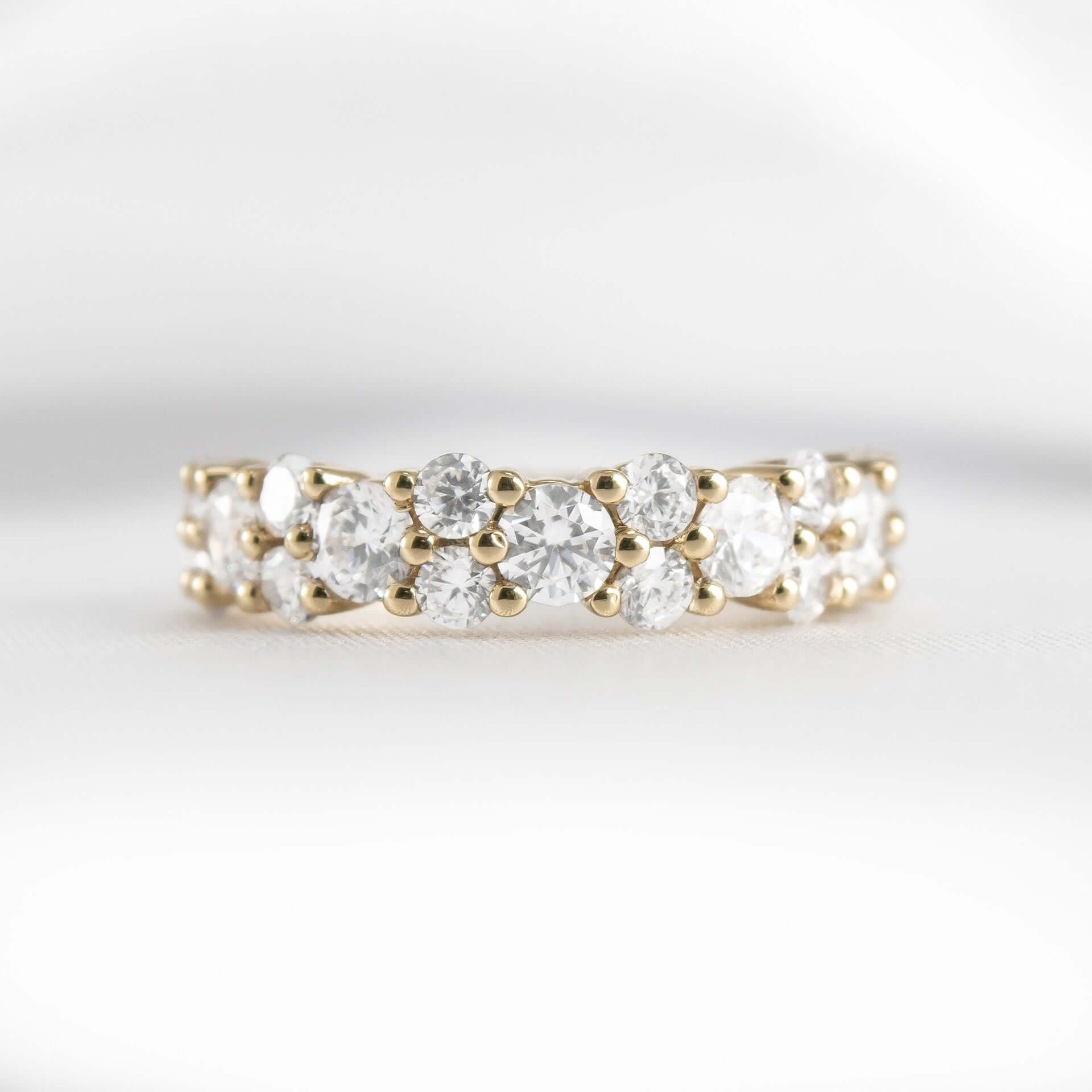
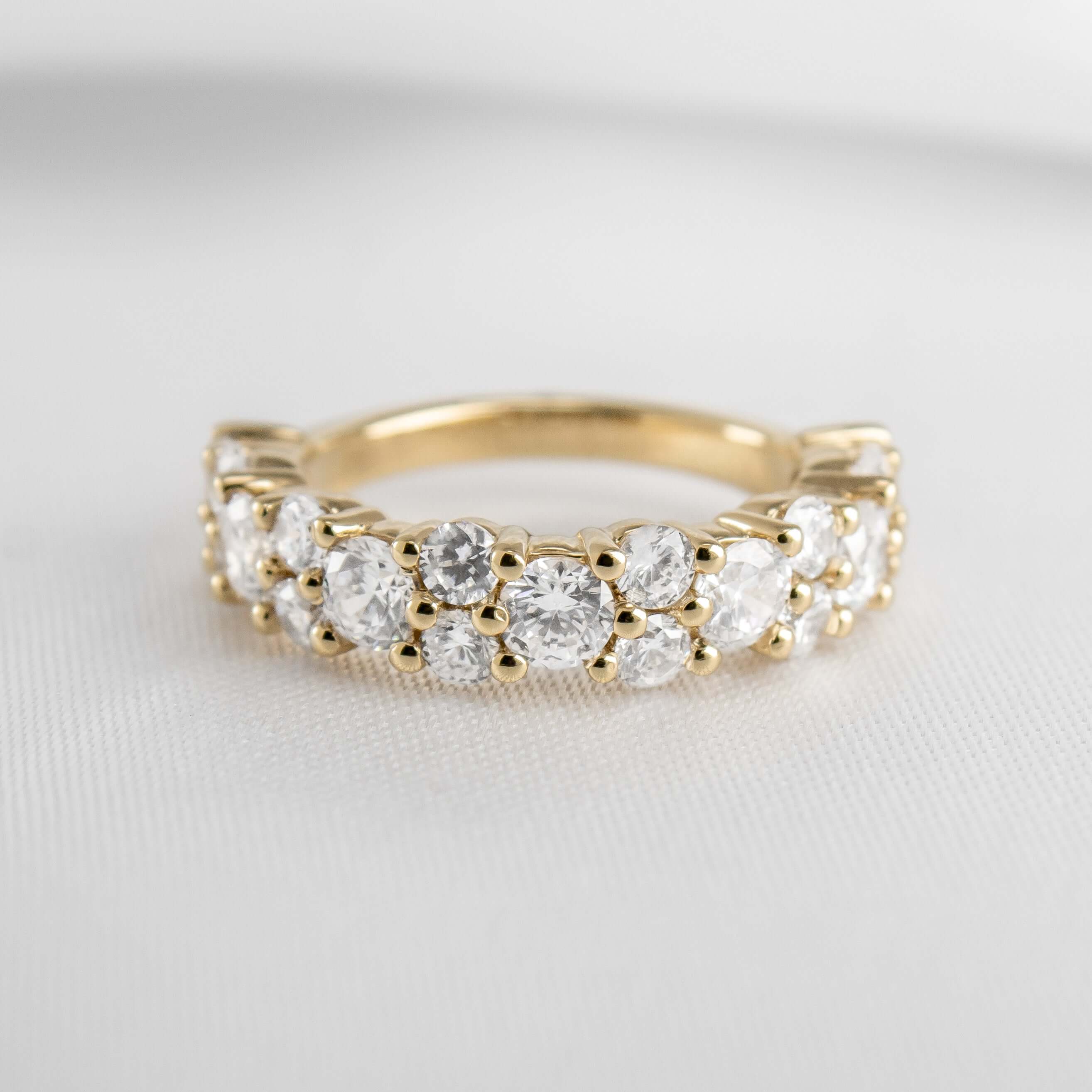
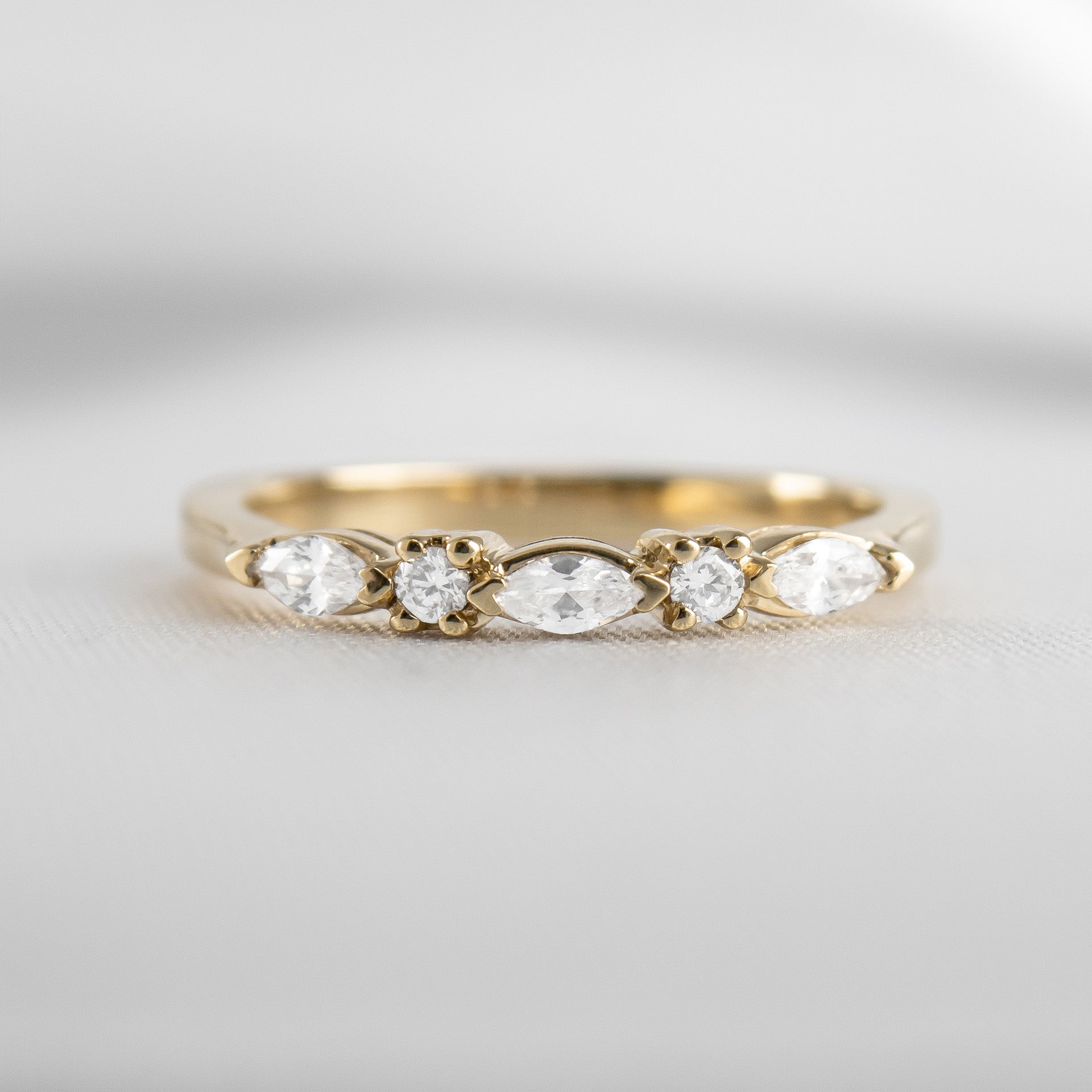

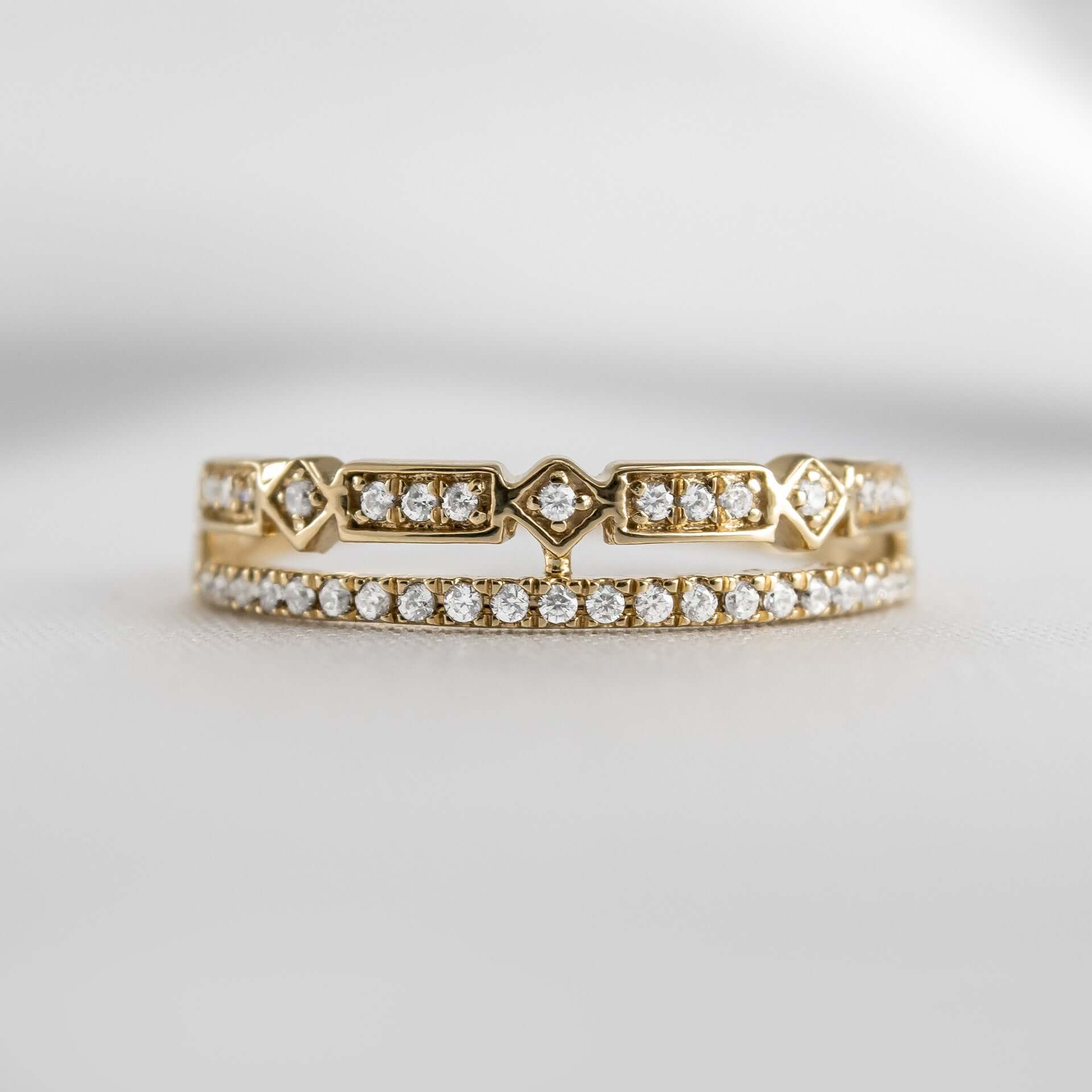
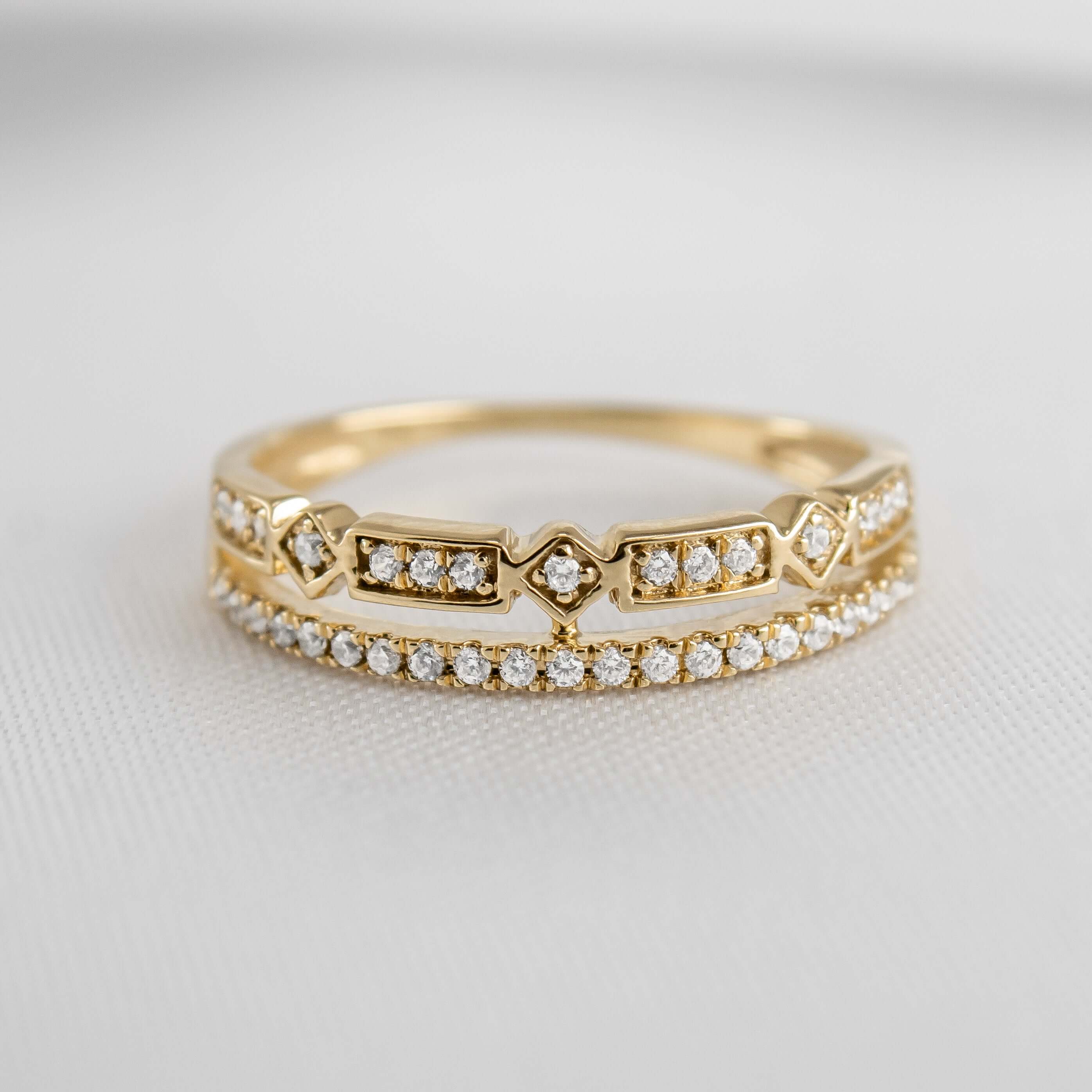
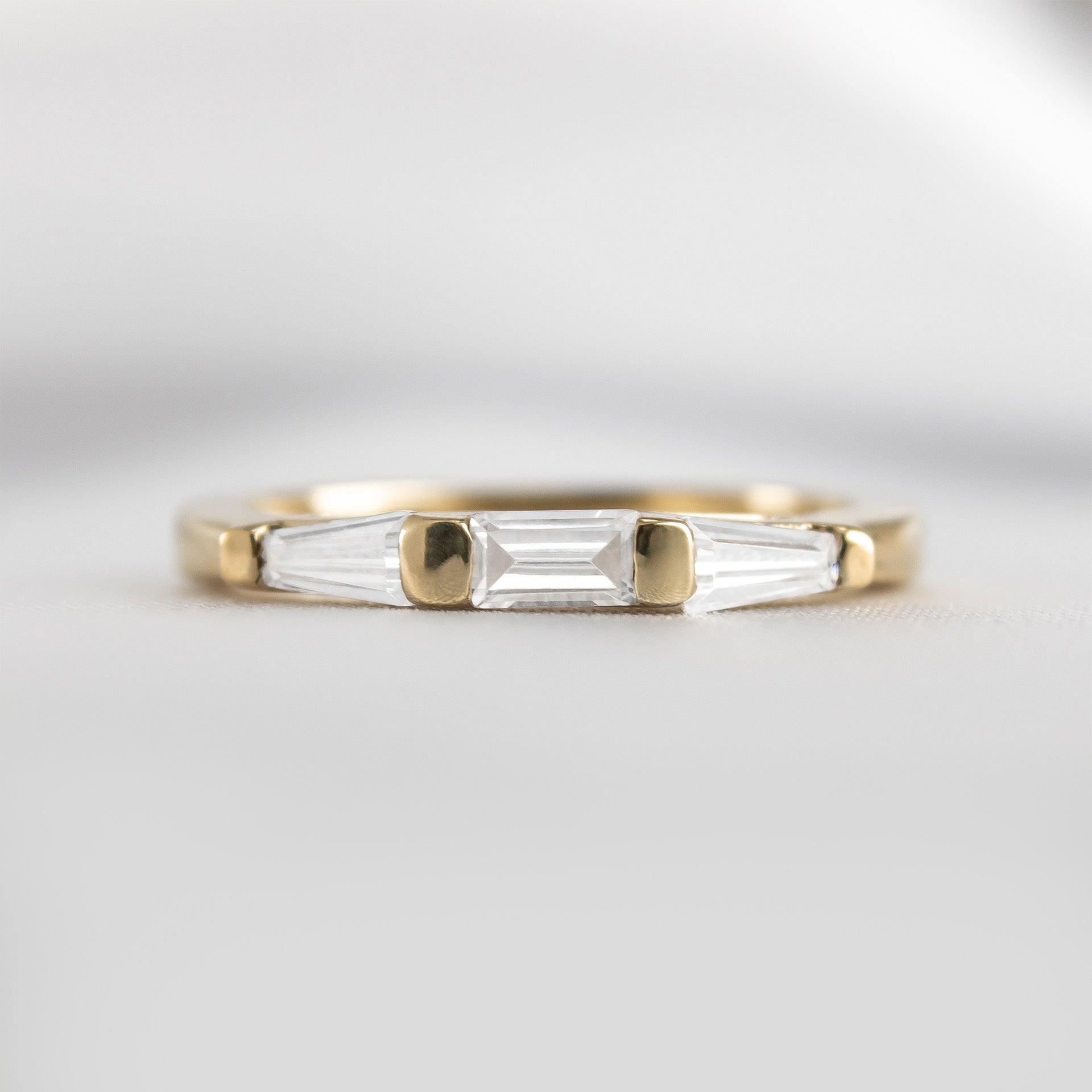

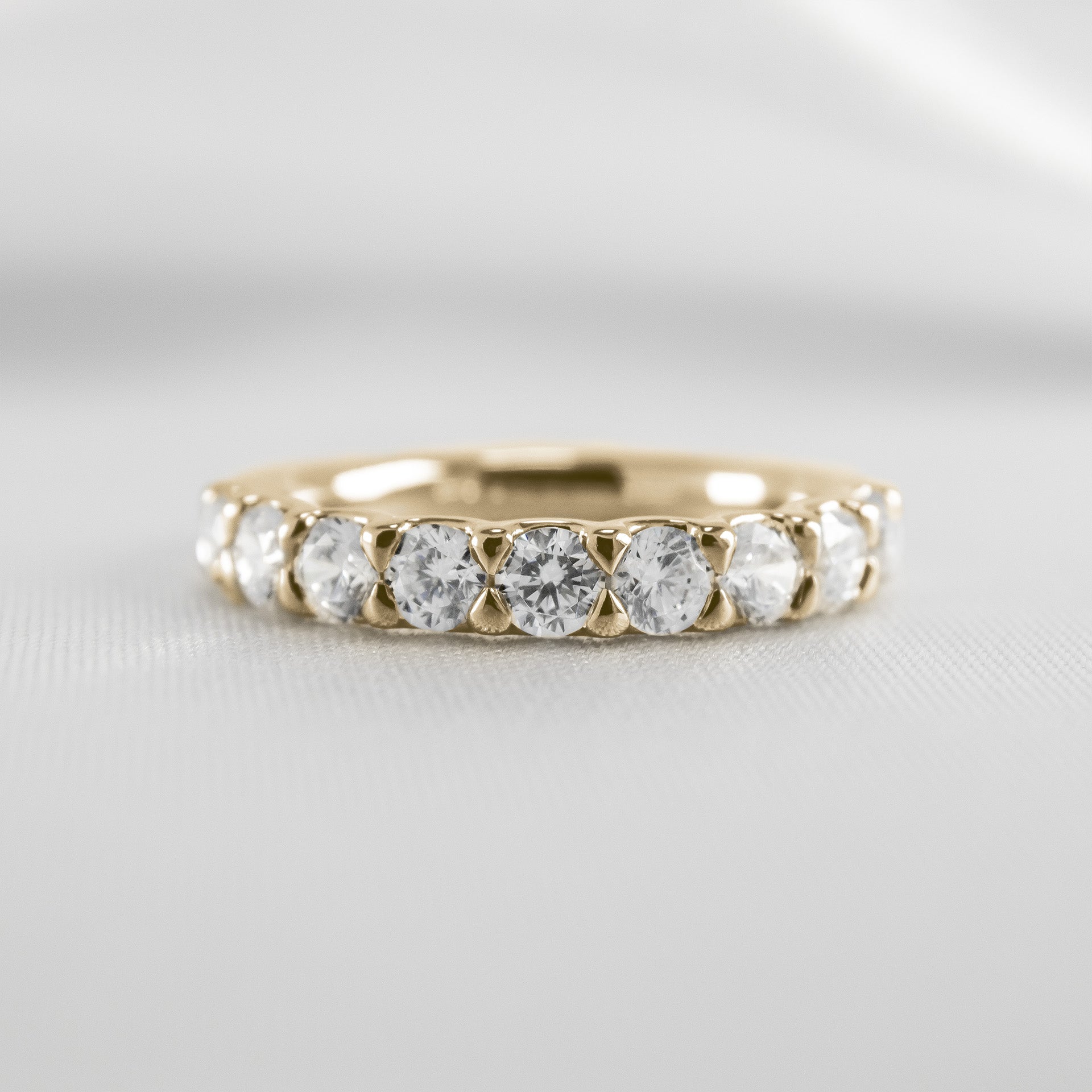
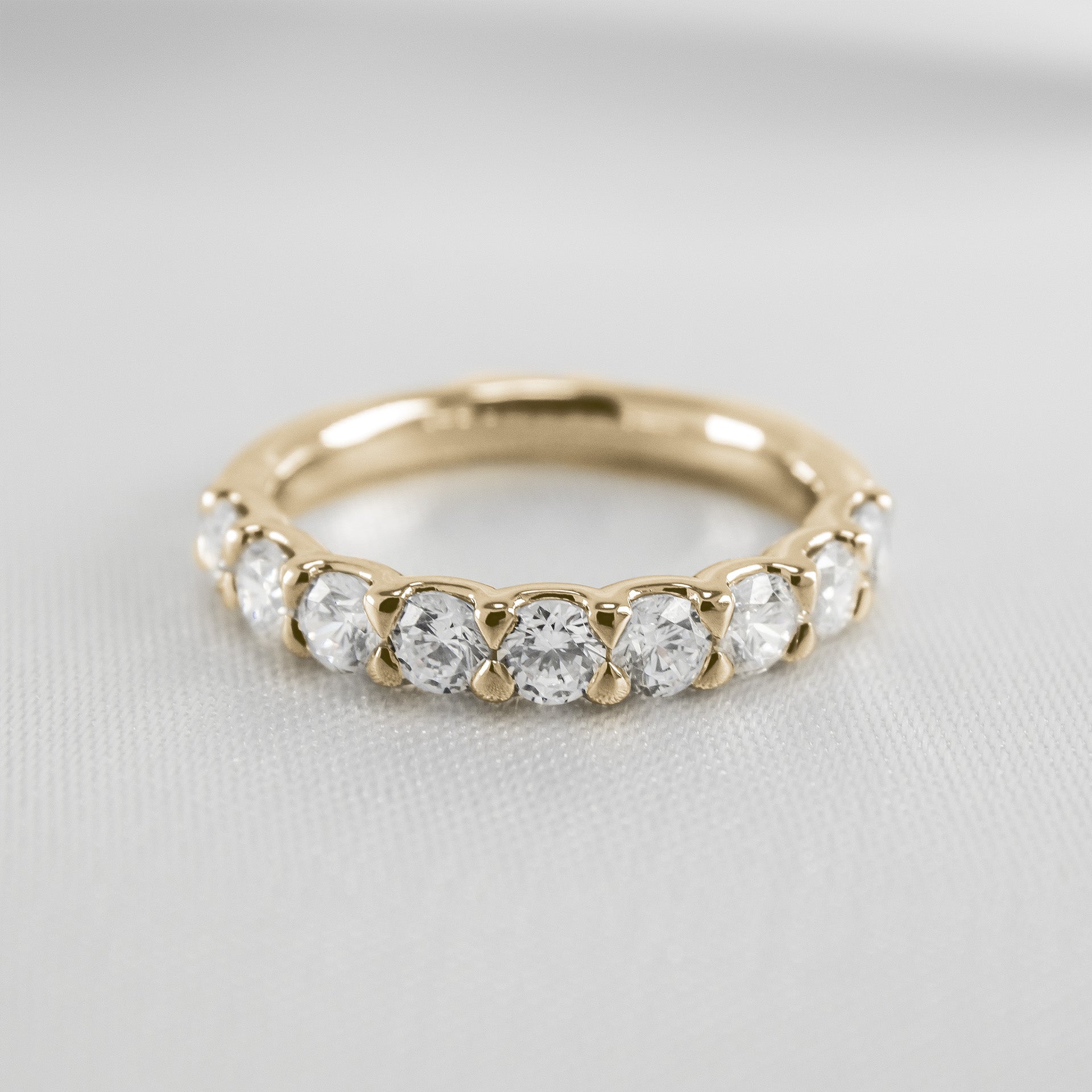
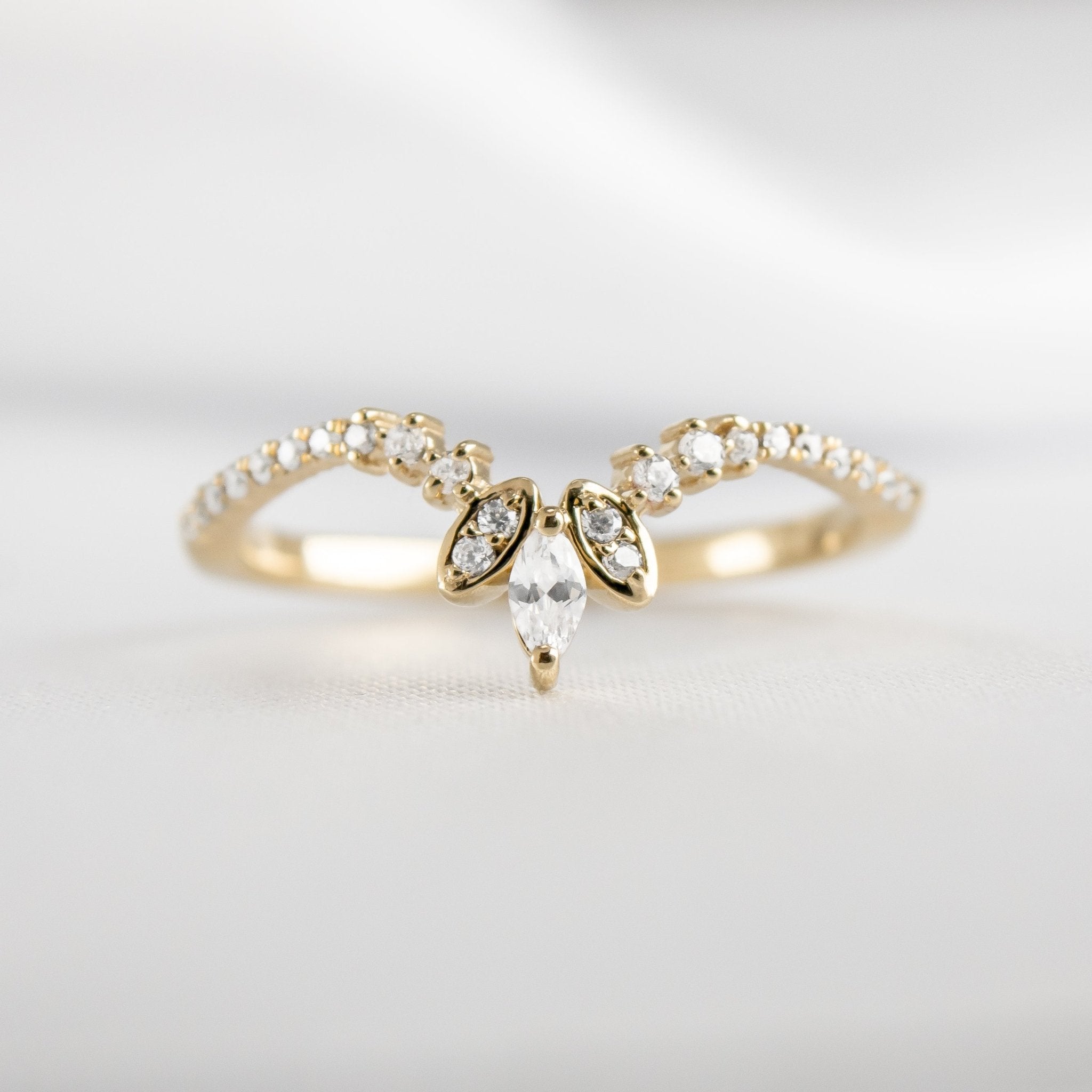

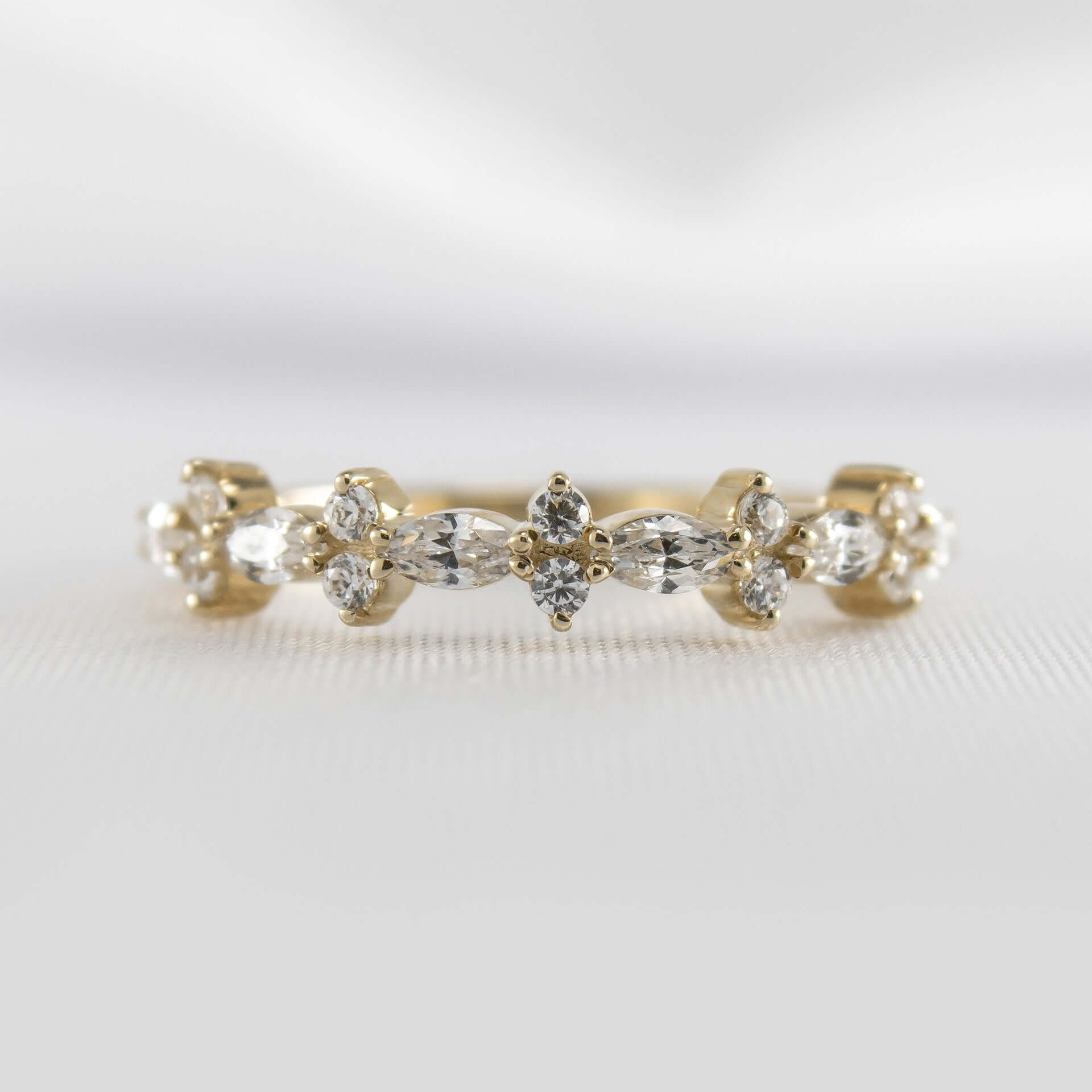

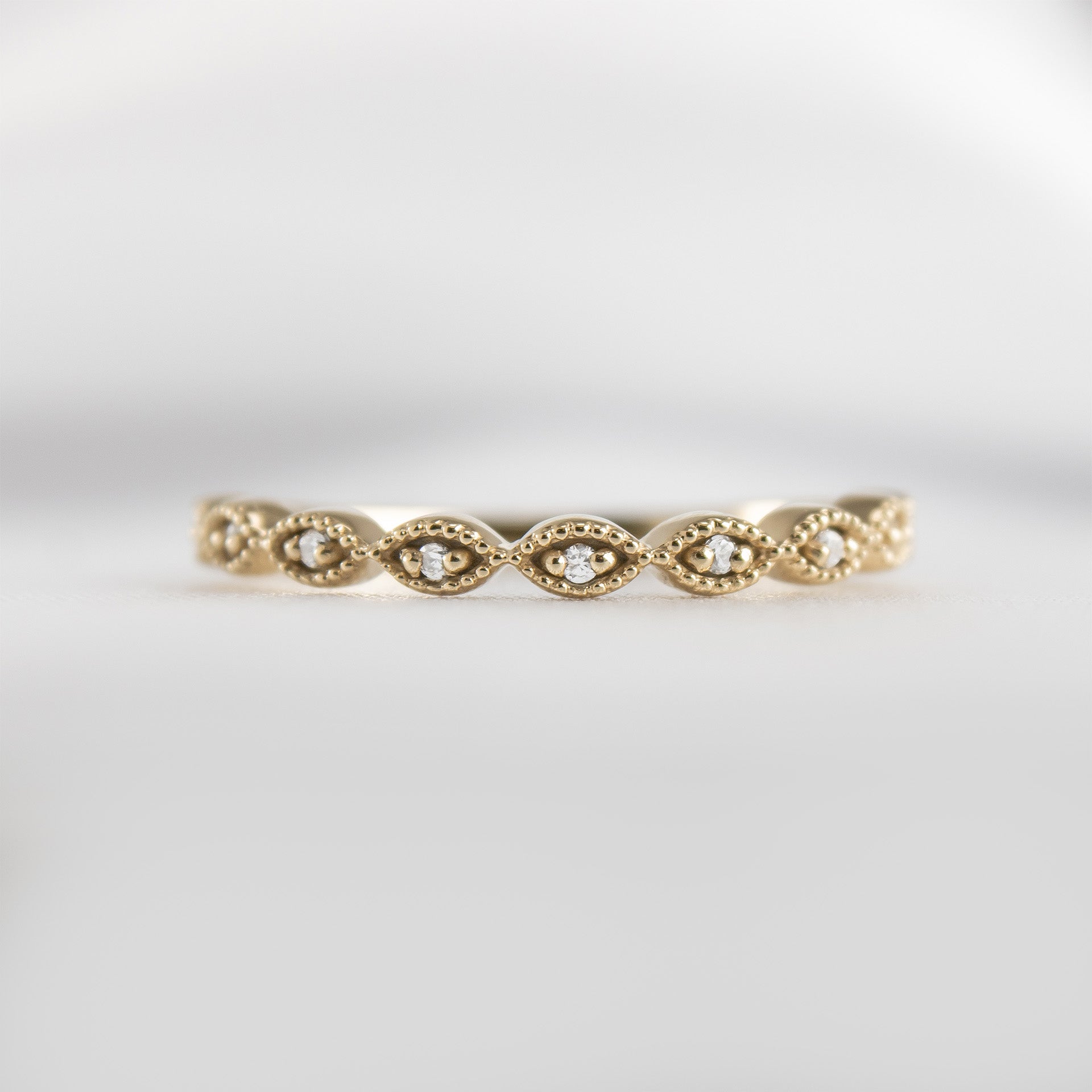

Featured Wedding Bands for Women
The 55 wedding bands for women in this collection span every band construction we craft.
Diamond pavé bands (narrow daily wear): Macey (1.5mm channel pavé), Marla (1.4mm chevron pavé), Frances (1.3mm vintage diamond).
Featured Wedding Bands for Women
The 55 wedding bands for women in this collection span every band construction we craft.
Diamond pavé bands (narrow daily wear): Macey (1.5mm channel pavé), Marla (1.4mm chevron pavé), Frances (1.3mm vintage diamond).
Half eternity bands (resizable diamond bands): Drew, Naomi (2.6mm with two parallel diamond rows).
Full eternity bands (continuous diamond setting): Aniston, Lindon, Mayumi, Samara, Sutton, Vashti, Blaine.
Curved bands (nesting fit): Talon, Halee, Twilight, Marlowe, Claire, Zoey.
Plain gold bands (Tanner family — 5 widths): Tanner 2mm, Tanner 4mm, Tanner 6mm.
Twist bands: Evara, Quinn, Maria, Milan.
Choosing the Right Band Construction
The construction decision affects how the wedding band performs over years of daily wear. Three primary construction categories serve different priorities.
Pavé and accent diamond bands: Small diamonds (0.01-0.05 carat each) set close together across the band's top surface. Construction is structurally simple — the diamonds add visual character without complicating the band form. Pavé bands resize within a reasonable range. They cost less than eternity bands because the diamond count and total carat weight are lower. Daily wear is comfortable; the small diamonds are unlikely to catch on anything.
Half eternity bands: Diamonds across the top visible portion of the band (typically 180 degrees), solid metal on the underside. Visually identical to full eternity from the wearing angle. Half eternity bands can be resized in the future, which makes them the practical choice for couples expecting potential finger size changes (pregnancy, weight changes, aging). They cost approximately 30-40% less than equivalent full eternity bands due to fewer diamonds.
Full eternity bands: Diamonds around the entire circumference. Maximum diamond brilliance from every angle. Full eternity bands generally cannot be resized after diamonds are set — accurate sizing before crafting is critical. They carry more total carat weight and cost more than half eternity bands. Most distinctive choice for couples wanting substantial diamond visual presence.
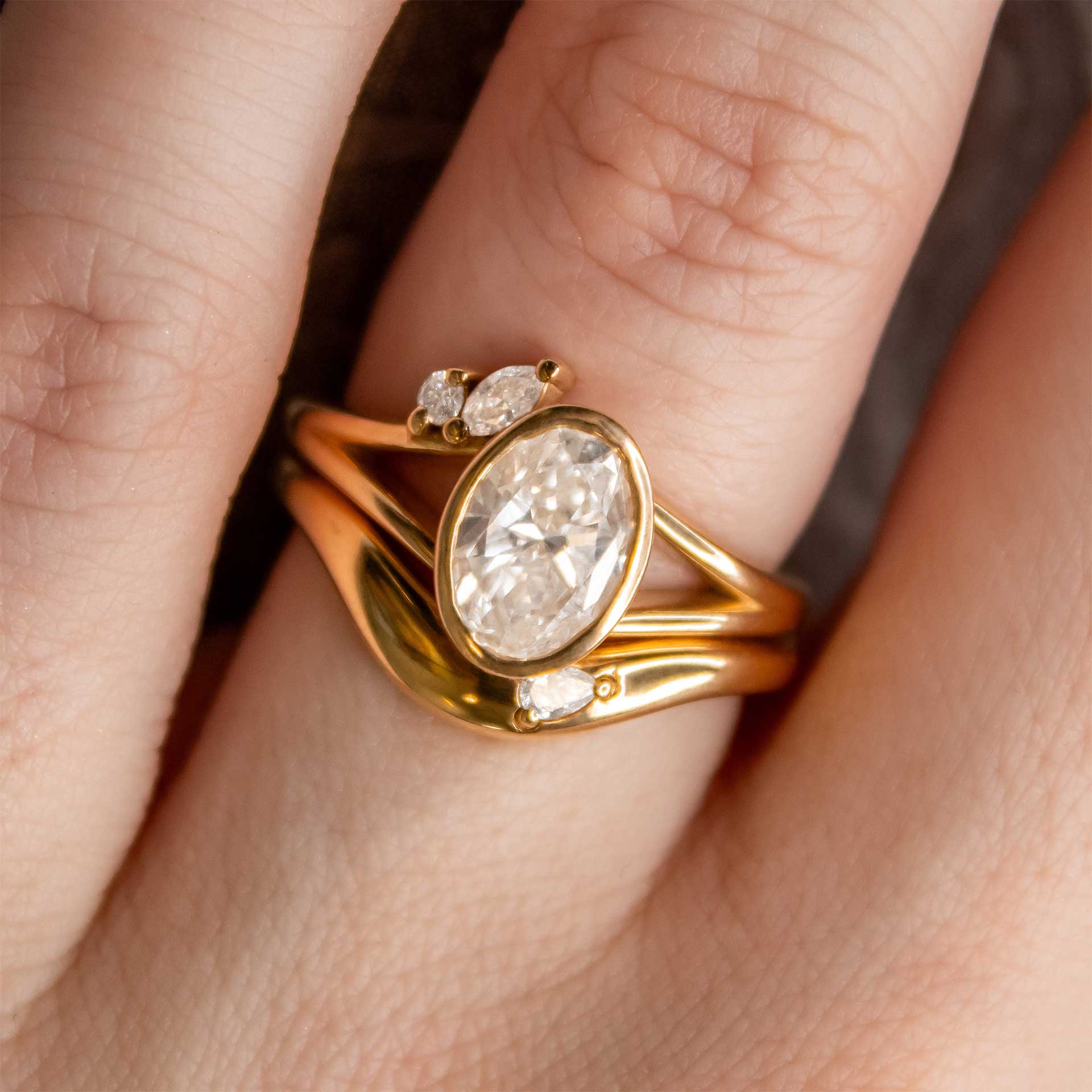
Curved and contoured bands: Shaped to nest against engagement rings rather than meeting at a flat contact point. Construction depends on the specific engagement ring's geometry. Curved bands address fit issues where straight bands create gaps or overlap. Necessary for some engagement ring styles; optional for others.
Plain gold bands: No diamonds, no decorative complexity. The metal and the band's proportion are the entire design. Plain bands are the most resizable (4-5 sizes possible), most durable (no diamond settings to maintain), and most cost-effective. Timeless visual character that holds across decades without referencing trends.
Width Selection for Wedding Bands
Width is the most visible choice in selecting a wedding band. The right width depends on hand proportion, the engagement ring you're pairing with, and personal preference for daily ring presence.
1.3mm-1.5mm (very narrow): Refined accent scale. Works for smaller hands, delicate engagement rings, or stacking with multiple bands. Examples: Frances (1.3mm vintage diamond), Macey (1.5mm channel pavé).
1.5mm-2.5mm (standard narrow): Most chosen for women's wedding bands. Reads present but refined. Pairs well with most engagement ring shank widths. Examples: Marla (1.4mm chevron), Drew (half eternity), Valentina (1.4mm curved pavé).
2.5mm-3.5mm (substantial): More visual presence on the hand. Works for medium-to-larger hands, more substantial engagement rings, or wedding bands worn as primary visual focus. Most curved bands fall in this range.
3.5mm-5mm (statement): Significant visual presence. Works for larger hands or wedding bands worn alone (without engagement ring) frequently. Some eternity bands fall in this range.
The wedding band's width should typically be narrower than or equal to the engagement ring's shank width. A 2mm engagement ring shank with a 4mm wedding band creates visual imbalance. We discuss width during the design conversation based on your engagement ring and hand proportion.
Resizable vs Non-Resizable Construction
One of the most consequential decisions in choosing a wedding band is whether the band can be resized in the future. Some wedding band constructions allow resizing; others don't.
Resizable wedding bands:
— Plain gold bands (Tanner family): 4-5 sizes resize range. Easiest to resize.
— Half eternity diamond bands: 2-3 sizes resize range. Some diamonds near the resize area may need to be reset.
— Partial-diamond bands with metal sections (Verity, Naomi): Resize through the metal sections without disturbing diamonds.
— Most curved and chevron bands: 2-3 sizes resize range, with curve shape preserved.
Non-resizable wedding bands:
— Full eternity diamond bands: Diamonds around the entire circumference prevent cutting the band for resize work.
— Some intricately set bands where resizing would damage the diamond pattern.
When resizability matters: Pregnancy frequently changes finger size; postpartum recovery often involves returning to original size, sometimes not. Weight changes from health, lifestyle, or aging affect finger size. Arthritis can change finger proportions in later years. For couples expecting any of these to be relevant within their wedding band's lifetime, resizable construction is the practical choice.
When non-resizable is acceptable: Couples with stable finger size who prioritize maximum diamond presence around the full circumference often choose full eternity bands knowing the size will be permanent. The decision involves accurate sizing before crafting and accepting the size as fixed.
We discuss resizability during the design conversation. If future sizing flexibility matters, we recommend half eternity, partial-diamond, or plain band constructions.
Pairing with Engagement Rings — Practical Fit
The wedding band's primary functional job is to sit comfortably and visually well alongside the engagement ring. Three fit factors matter most.
Physical fit between the two rings: The wedding band and engagement ring should sit flush against each other without gaps or overlap. For engagement rings with low-set centers or distinctive shanks, this often requires a curved or contoured wedding band shaped to nest against the engagement ring. Straight wedding bands fit most standard engagement rings; curved bands are necessary for engagement rings where the bottom of the center stone or the shank's geometry would otherwise prevent flush contact.
Width proportion: The wedding band's width should typically be narrower than or equal to the engagement ring's shank width. A wider wedding band against a narrower engagement ring shank creates visual imbalance where the wedding band visually dominates.
Metal coordination: Most couples choose a wedding band in the same metal as the engagement ring for cohesive visual. Mixed-metal pairings (yellow gold engagement ring with white gold wedding band, for example) can be deliberate design choices but work best when intentional rather than accidental.
For couples whose engagement ring is a Lisa Robin design, we have records of the engagement ring's specifications and can confirm which wedding bands pair well. For couples whose engagement ring is from elsewhere, send photographs and the ring's specifications (shank width, center stone size, metal) and we can recommend wedding bands that fit. For couples drawn to a wedding band that doesn't quite work with their engagement ring, Lisa designs custom contoured wedding bands during a private design appointment to fit a specific engagement ring exactly.
Daily Wear, Care, and Long-Term Service
Wedding bands for women see more daily contact than almost any other piece of jewelry — worn during work, sleep, exercise, household activities, and most of waking life. The construction and care determine how the band holds up across decades.
Daily wear considerations: Remove the band before heavy manual work, gym workouts with weights, gardening, contact sports, and activities involving harsh chemicals or solvents. The band can stay on during most office work, light household activities, sleep, and routine daily life. For couples in occupations involving extensive handwashing or contact with harsh substances, alternative metal wedding rings (not in this collection) may be more practical than gold or platinum.
Cleaning: Weekly cleaning with warm soapy water and a soft cloth removes accumulated lotions, soaps, and skin oils. Diamond-set bands particularly benefit from cleaning into the spaces between diamonds where debris can accumulate. Annual professional cleaning maintains brightness; this is a free service we provide for any ring we've crafted.
Inspection: Annual prong inspection (also free for our rings) checks for loose settings or worn prongs that could lead to diamond loss. For eternity rings with many diamonds, inspection is particularly important.
Surface restoration: Polished gold and platinum bands develop minor surface scratches over years of daily wear. Professional refinishing restores the original polish. White gold bands also need rhodium replating every 2-3 years to maintain bright white finish.
Lifetime warranty: All wedding bands carry lifetime warranty against manufacturing defects, including free prong tightening, setting maintenance, and finish restoration. We maintain records of every ring we craft to support service indefinitely.
Customizing Your Wedding Band
Wedding bands for women in this collection are made-to-order with customization at multiple levels.
Metal choice: 14K or 18K gold (yellow, white, or rose) or platinum. The metal should typically coordinate with the engagement ring it will pair with.
Diamond origin and quality: Lab grown or natural diamonds; standard VS-SI1 / E-F-G quality, with higher quality available at increased pricing. Lab grown reduces cost approximately 40-60% for the same carat weight.
Carat weight adjustments: For some bands, total diamond carat weight can be increased or decreased within the design's structural constraints.
Width adjustments: For some designs, band width can be slightly modified to better match hand proportion or coordinate with a specific engagement ring shank width.
Engraving: Interior engraving is available at no additional charge on all wedding bands. Standard engraving accommodates 30-50 characters depending on band width and font choice.
Custom wedding bands: For couples wanting wedding bands outside this collection — different proportions, custom contoured bands shaped to fit specific engagement rings, or entirely original designs — Lisa designs custom wedding bands during a private design appointment. Custom bands are crafted in 3-4 weeks after design approval.
Wedding Bands for Women — Frequently Asked Questions
Do wedding bands come with a warranty?
