



The Dillon Tapered Baguette Diamond Wedding Ring - Lisa Robin

The Dillon Tapered Baguette Diamond Wedding Ring

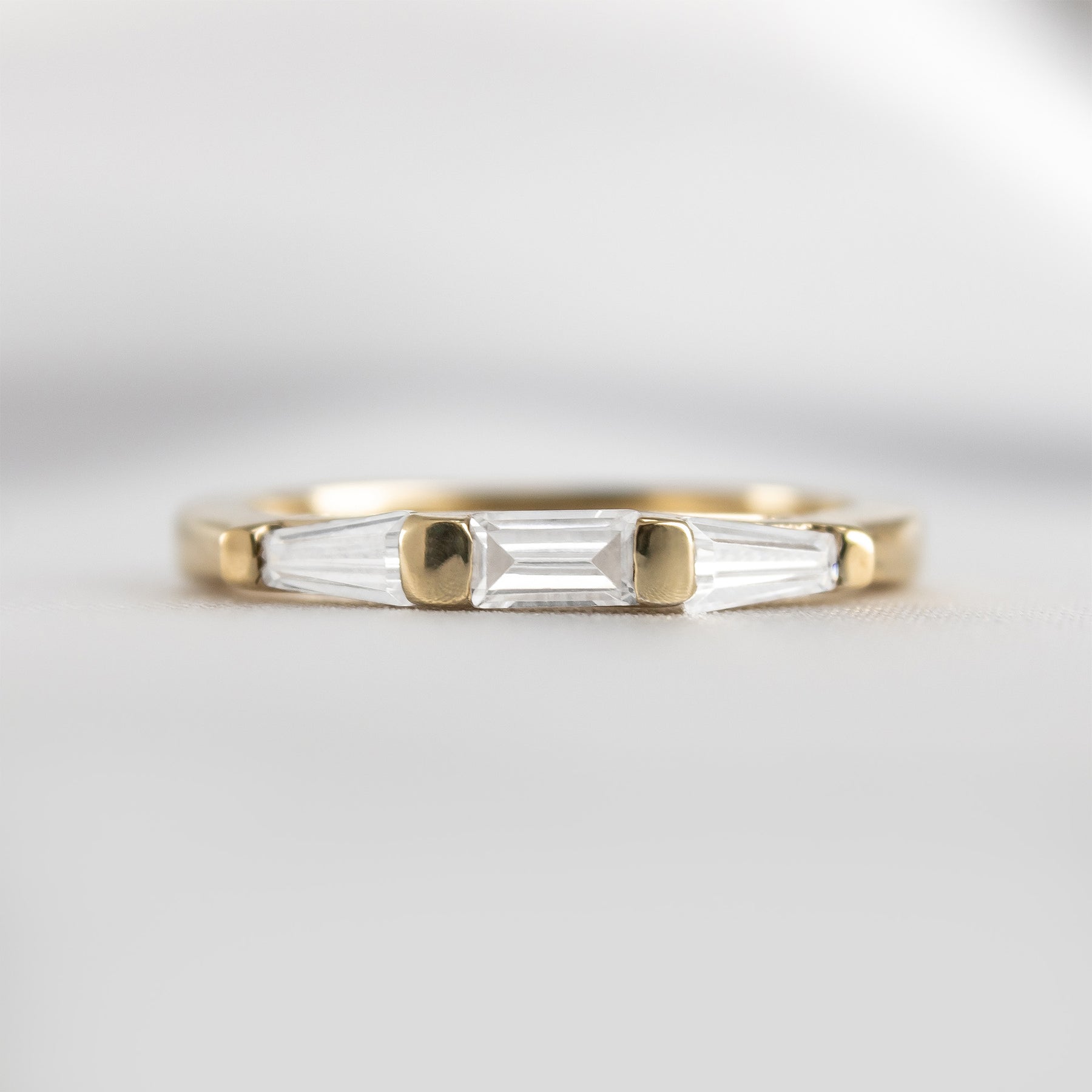
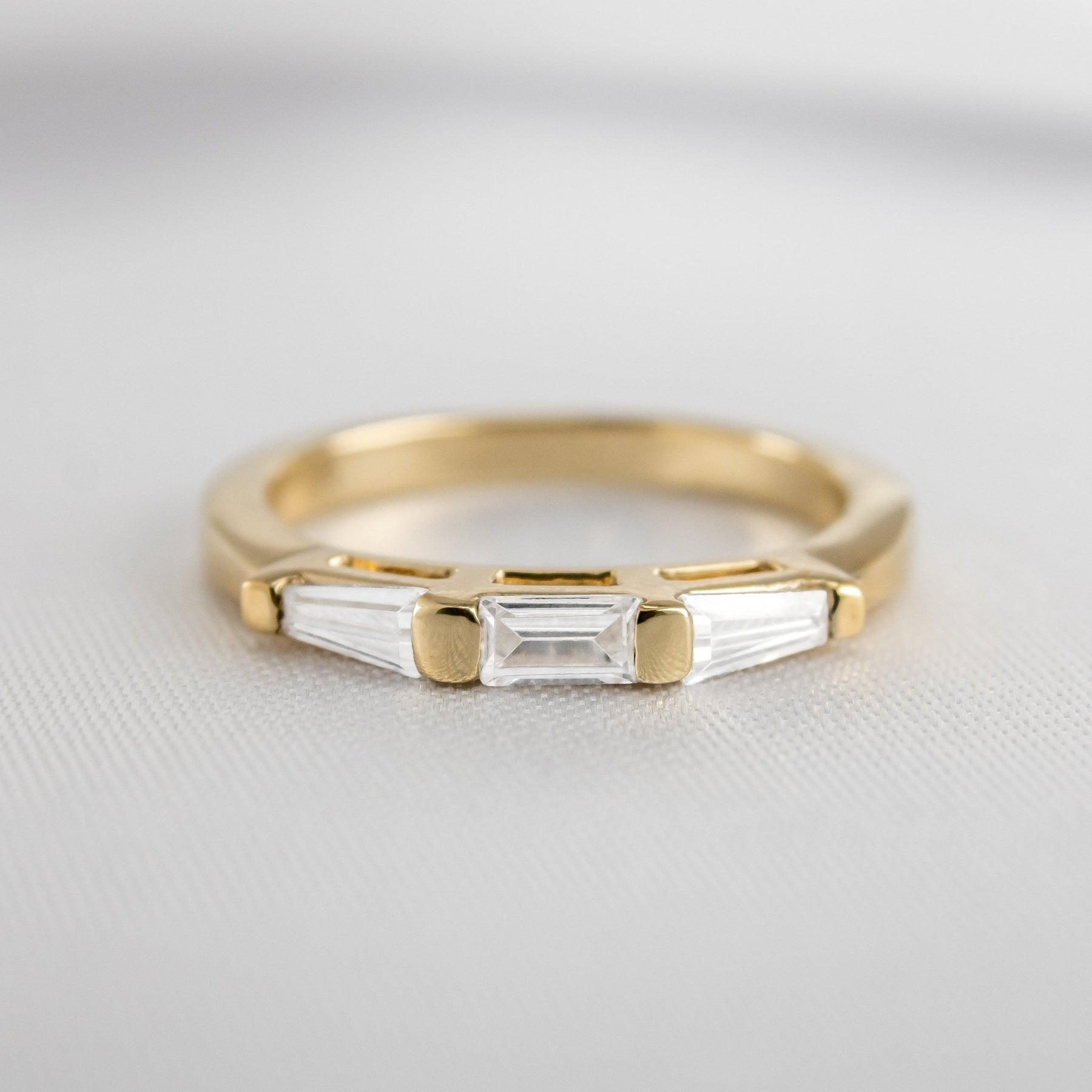
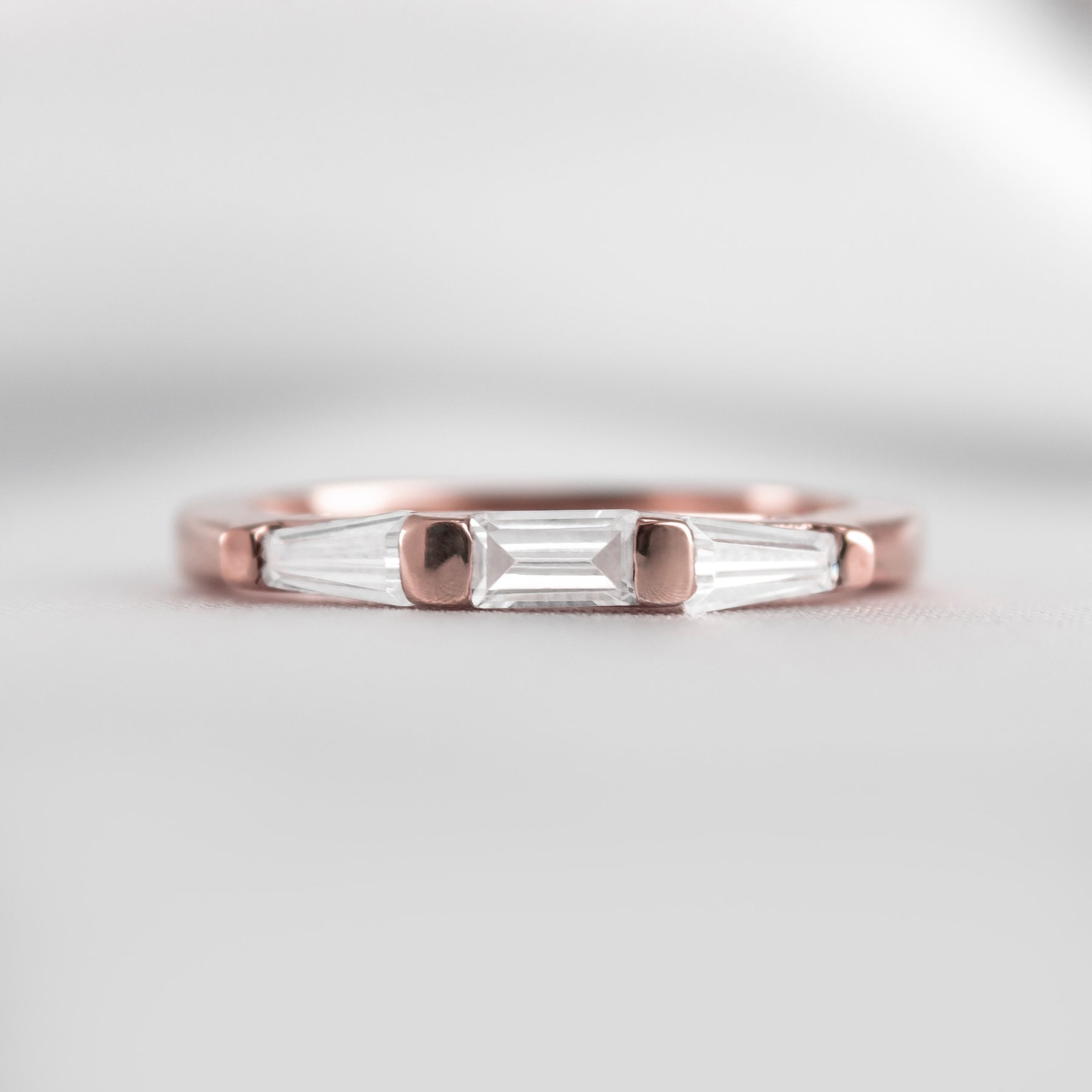
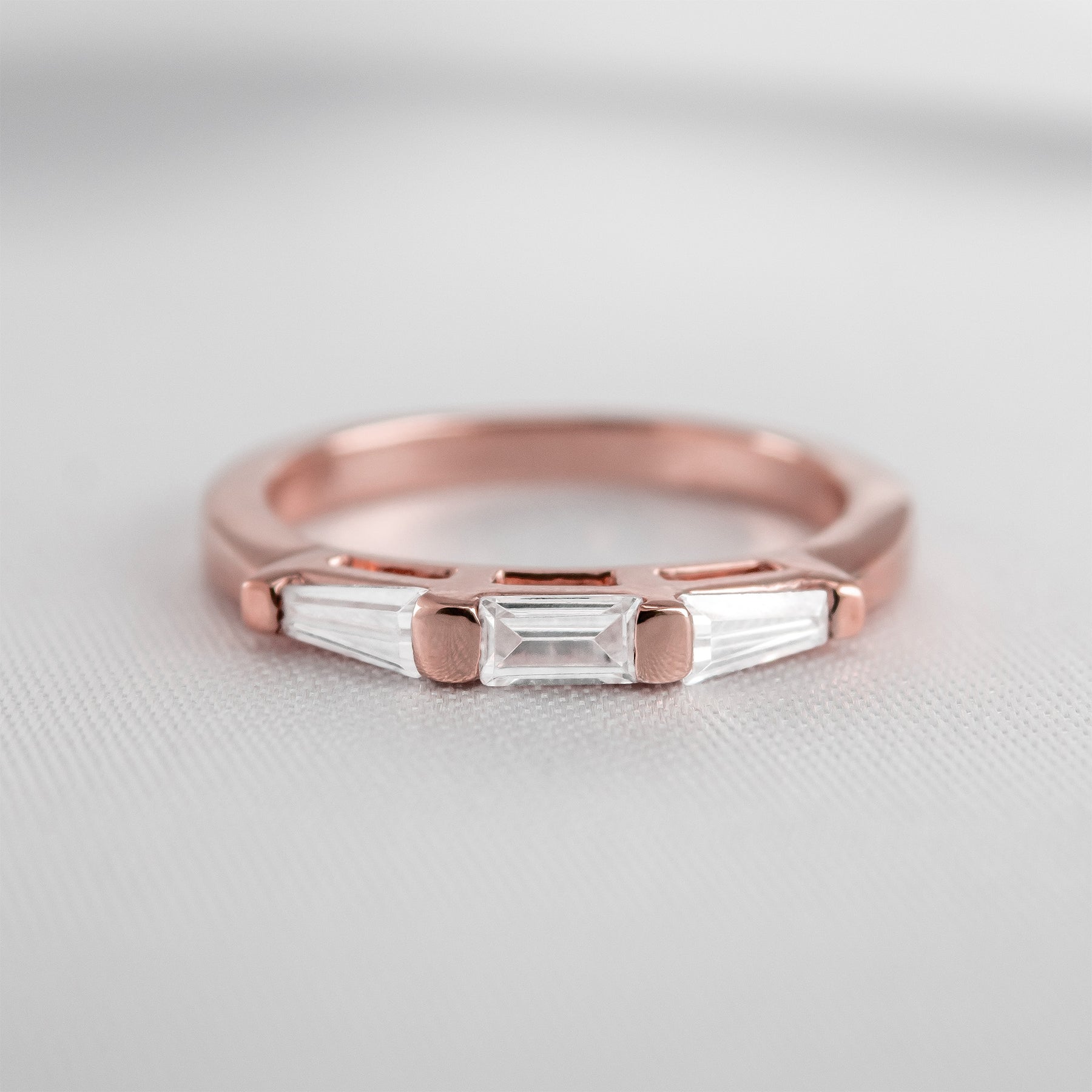
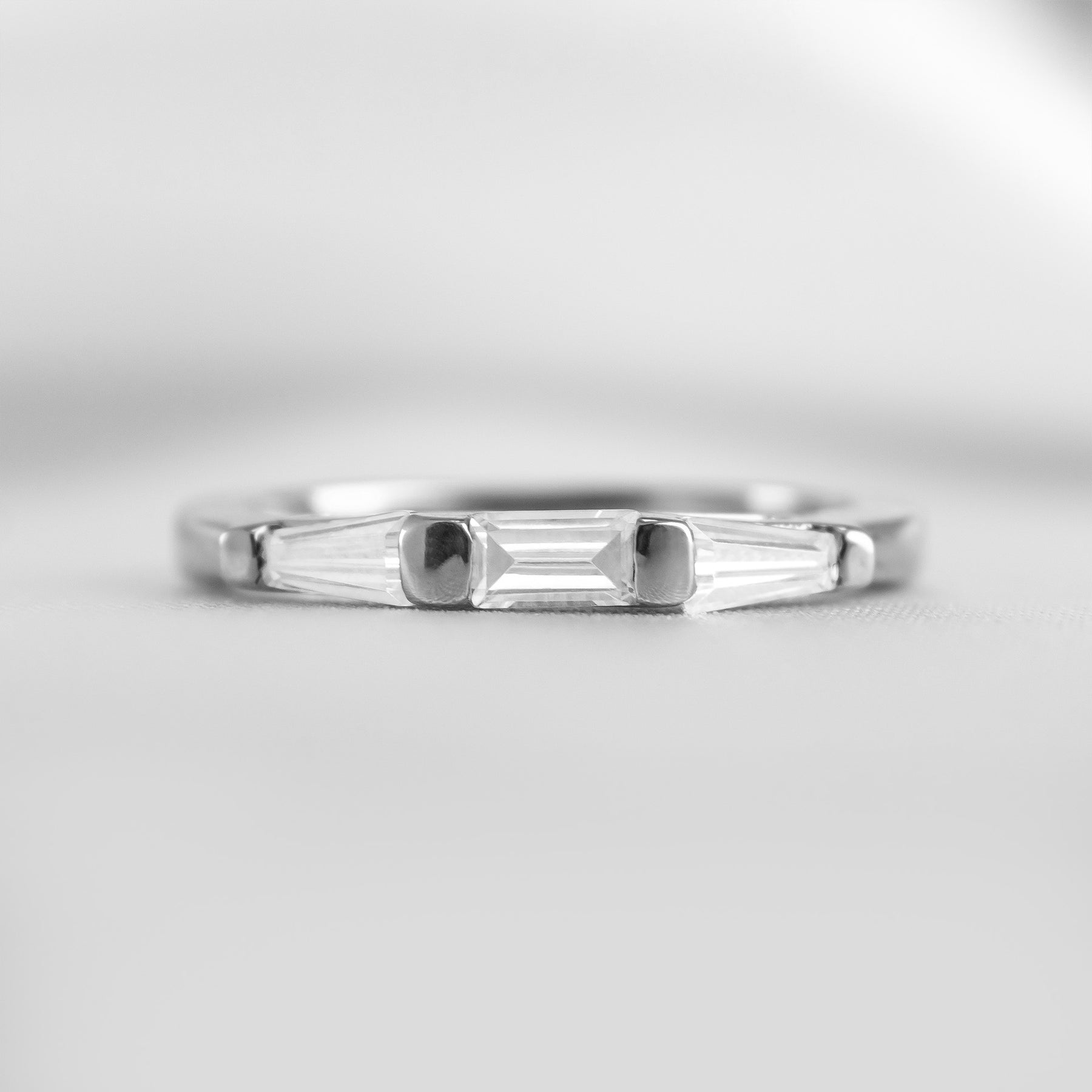
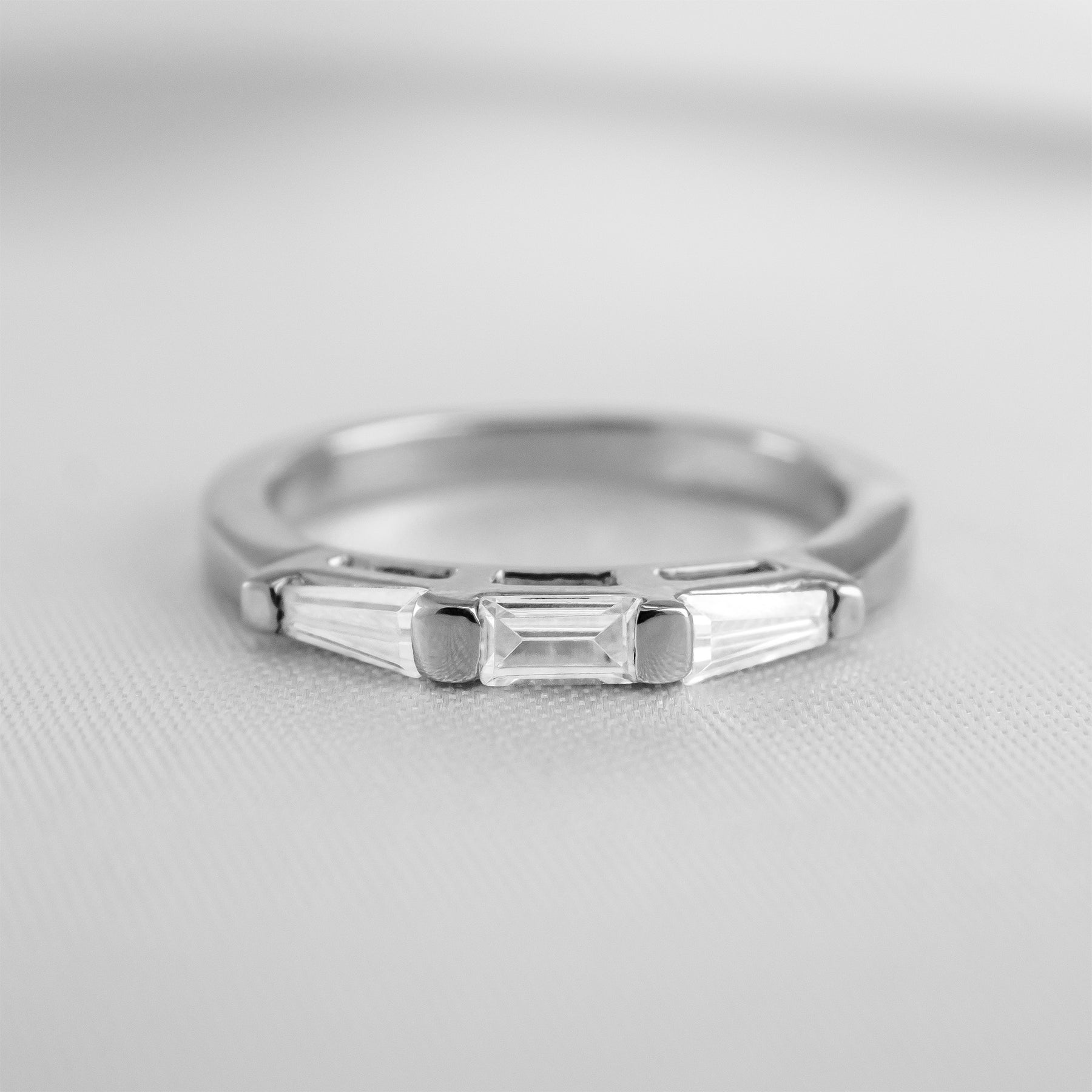
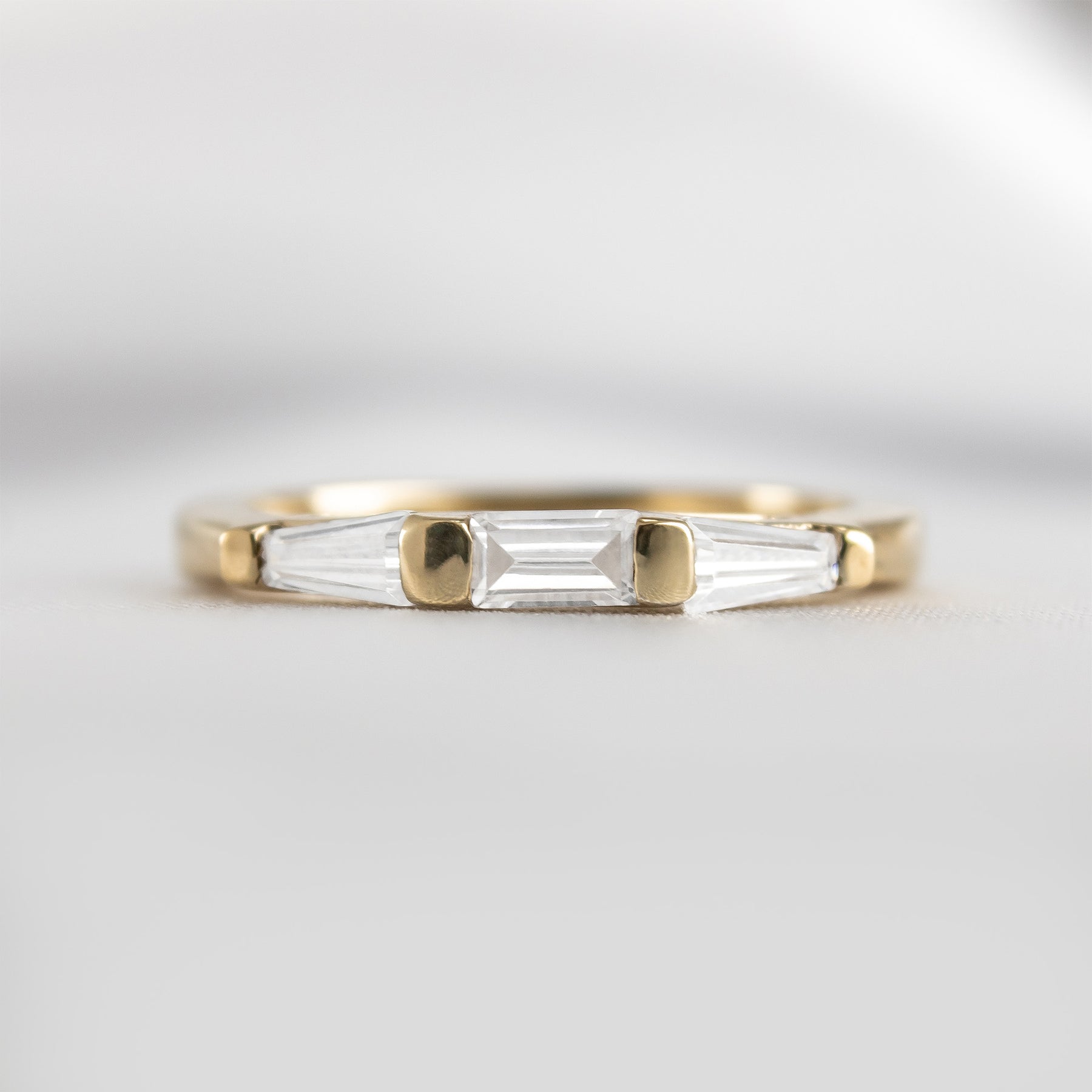
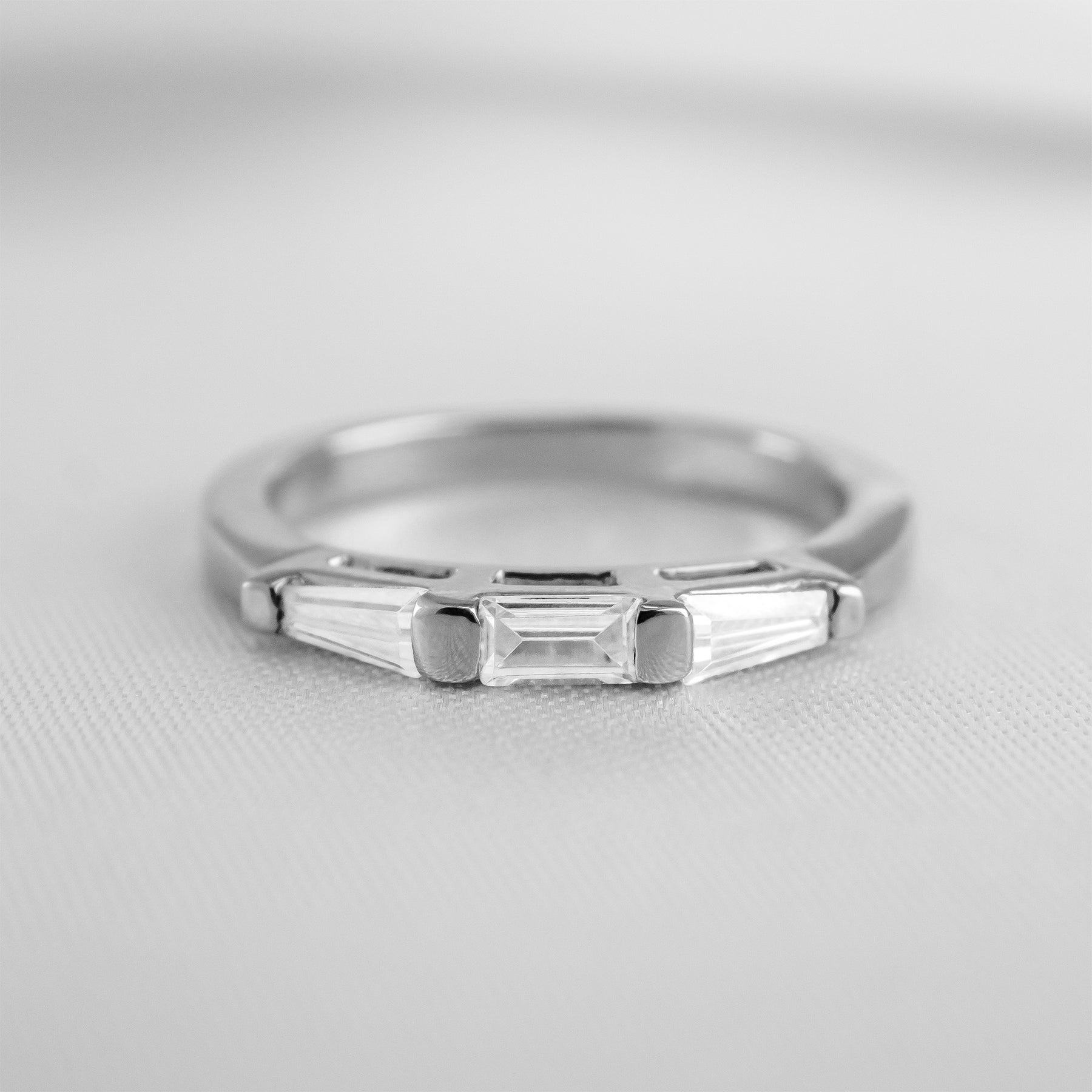
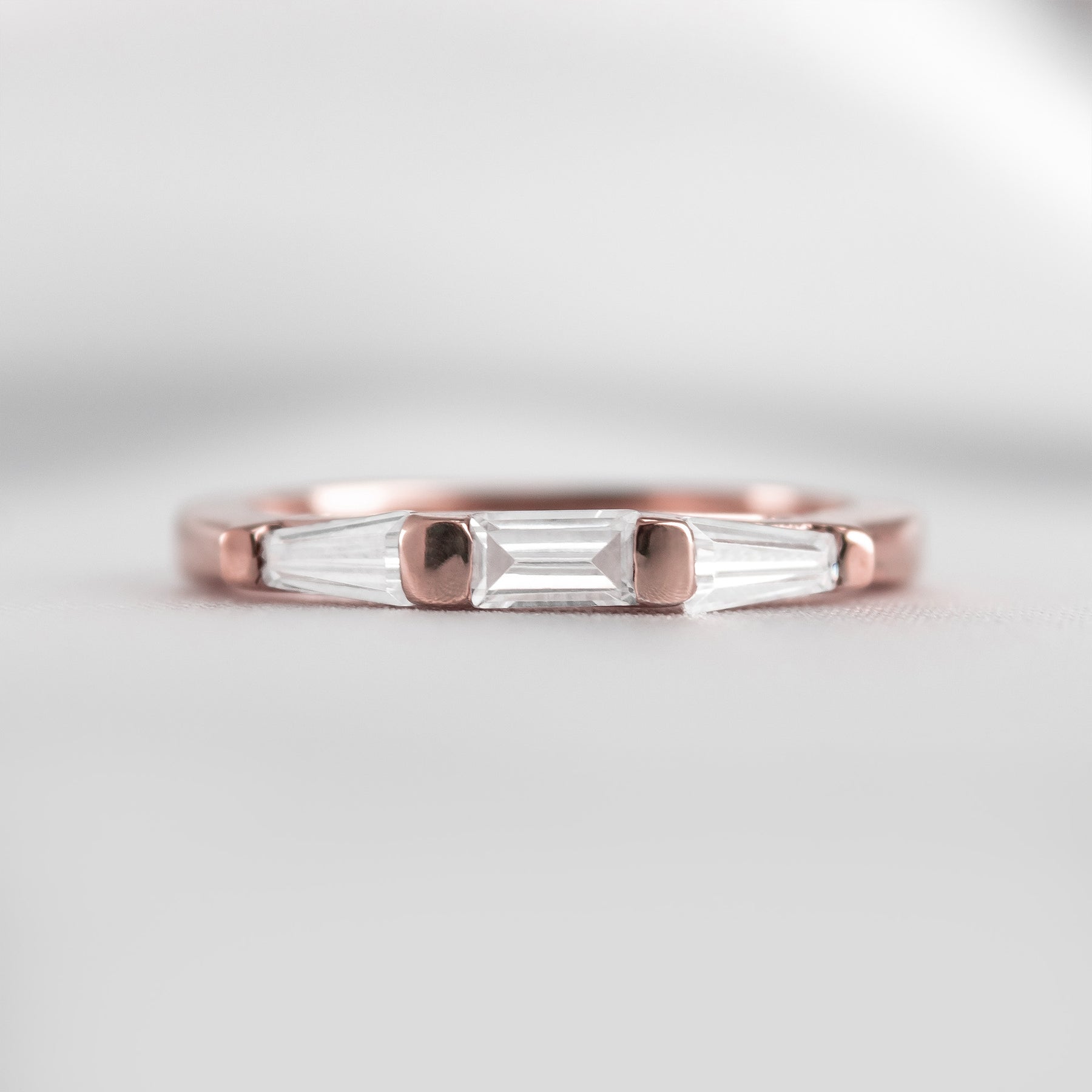
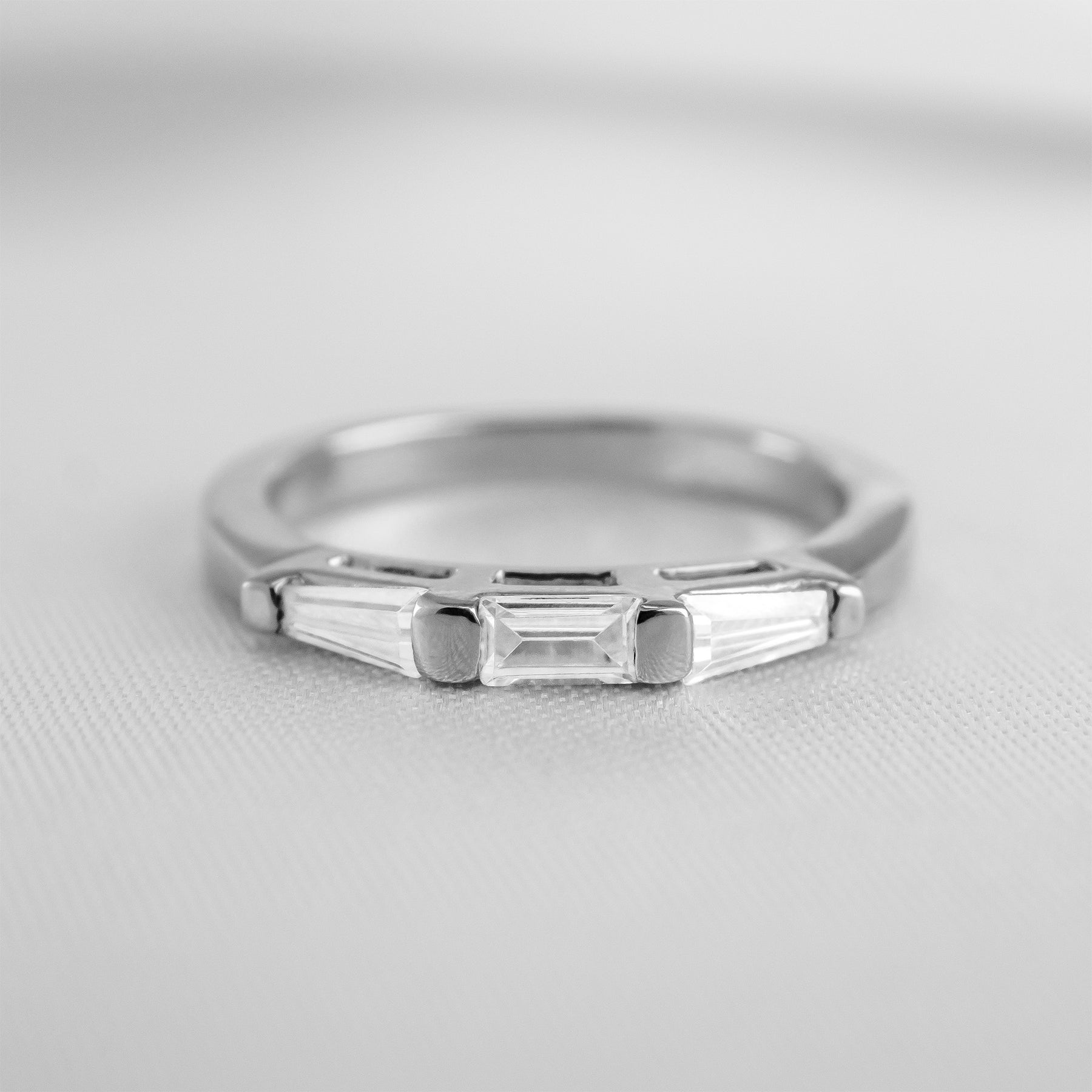
The Dillon is a tapered baguette diamond wedding ring with 0.50 carat of bar-set tapered baguettes and straight baguettes across a 2.65mm high-profile band. A baguette wedding band where tapered geometry alternates with straight cuts — art deco rhythm in continuous repetition.
Regular price$ 1,795.00
/
Color
Diamond

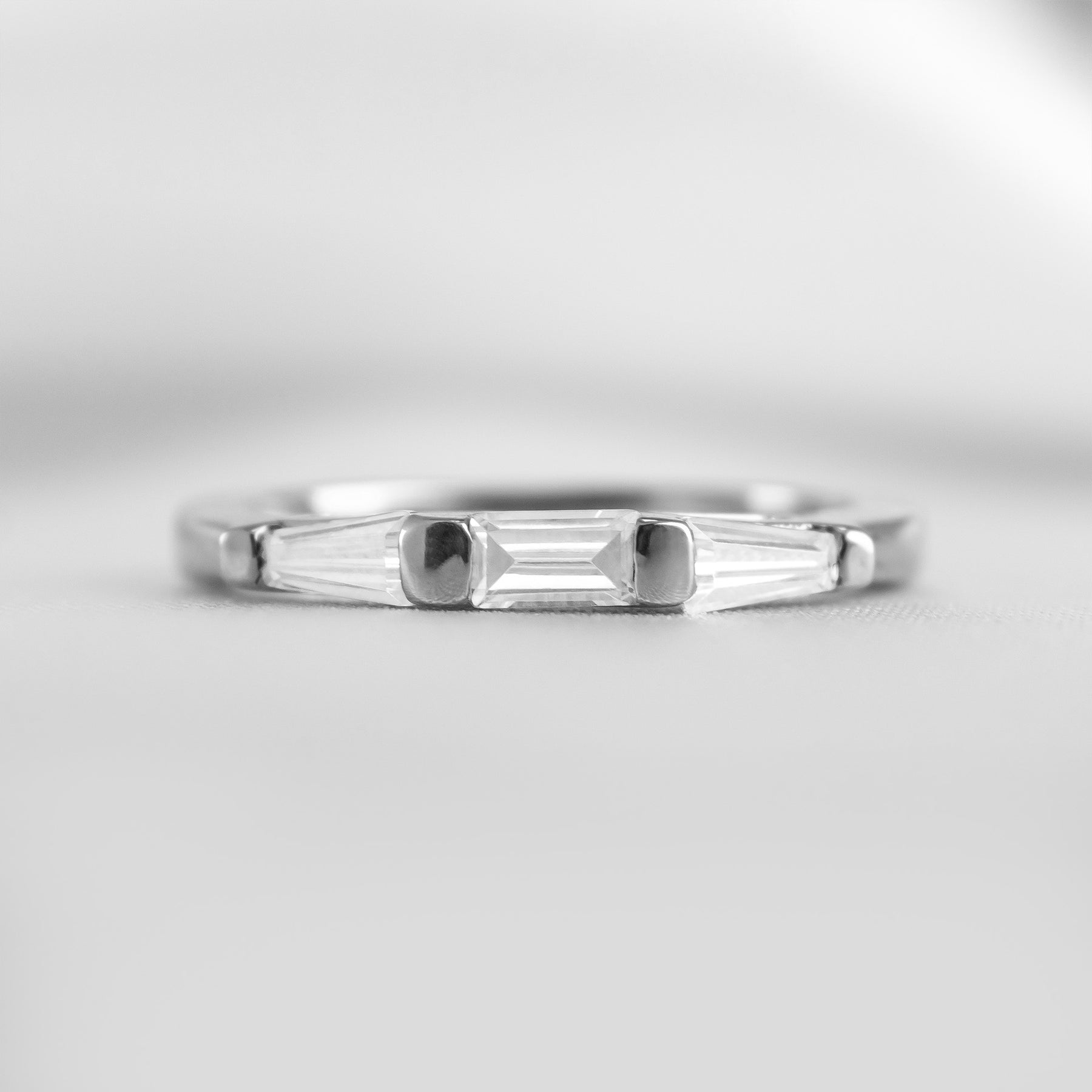
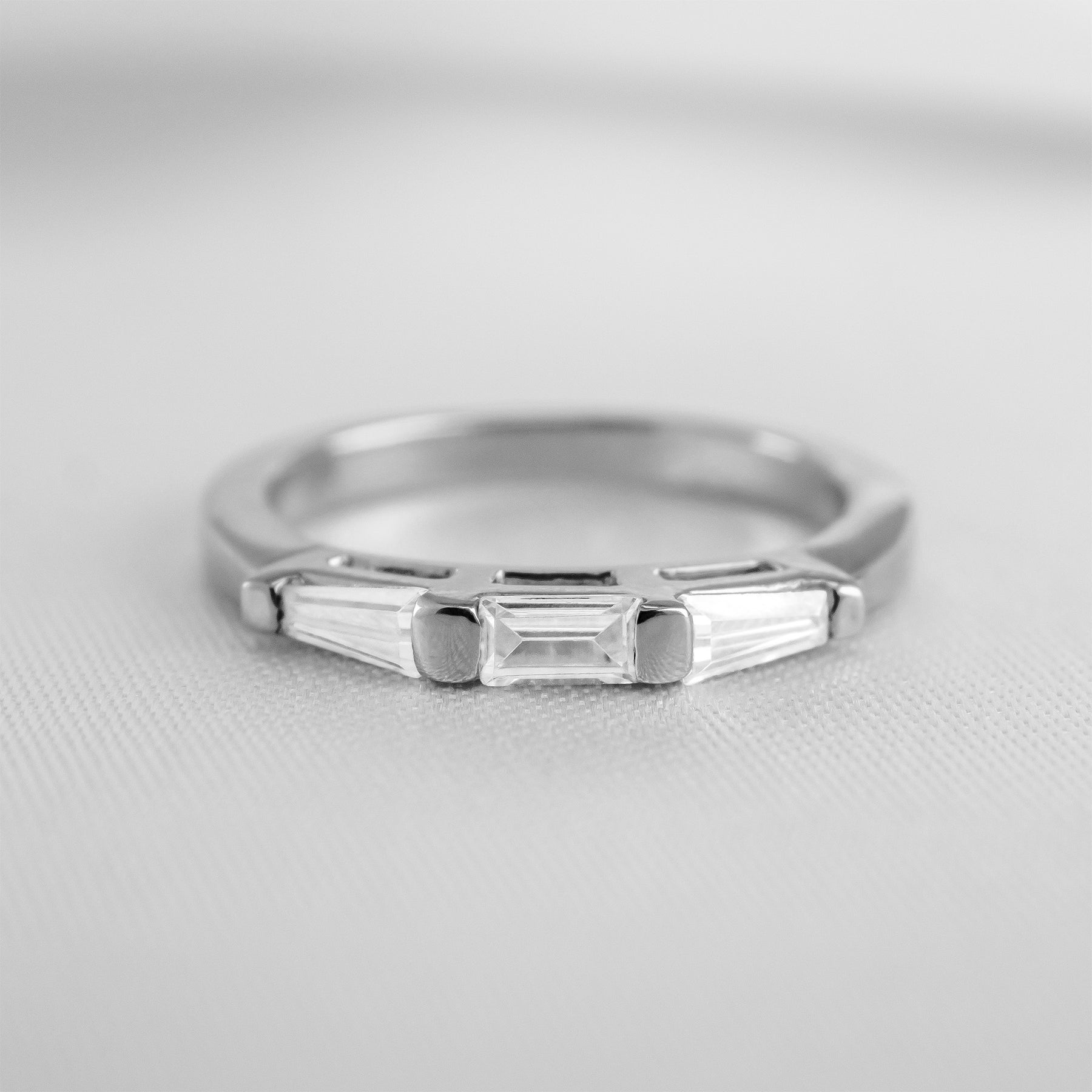
The Dillon bar-sets alternating tapered baguettes and straight baguettes along a 2.65mm high-profile band. The two pieces of metal between each diamond — the bars — read as continuous vertical lines around the band, framing each diamond individually while keeping the visual rhythm coherent. The tapered baguettes (5.5 x 2 x 1.5mm) narrow at one end, the straight baguettes (4.75 x 2.25mm) stay rectangular.

As a tapered baguette diamond wedding ring with bar setting, the Dillon reads more architectural and rhythmic than a straight baguette band. The alternation of tapered and rectangular geometry creates visual variation while keeping the art deco design language consistent.

Metal Options 10K Yellow Gold, 10K White Gold, 14K Yellow Gold, 14K White Gold, 14K Rose Gold, 18K Yellow Gold, 18K White Gold, 18K Rose Gold, or Platinum. Sustainably sourced.
Setting Diamond Total Weight 0.50 carat (alternating tapered + straight baguettes, 0.17 ct each straight)
Setting Diamond Quality Lab grown VS-SI1, D-E-F
Style Tapered baguette diamond wedding ring
Setting Bar, alternating tapered and straight baguettes
Band 2.65mm
Setting Height High
Band Profile Tapered, high
Crafting Time Approximately 2-3 weeks

The Dillon Tapered Baguette Diamond Wedding Ring starts at $1,795 in 10K gold with lab grown diamonds.

What is bar setting, and why use it for baguette diamonds?

Bar setting holds each diamond between two parallel metal bars — vertical strips of metal on either side of the stone — rather than enclosing it in a bezel or holding it with prongs at the corners. For baguette diamonds, bar setting suits the rectangular geometry: the bars frame each baguette as a discrete diamond while the alternating bar-diamond-bar pattern creates visual rhythm around the band. Bar setting also reads more architectural than prong settings — the metal becomes part of the design rather than just structure.

What's the difference between tapered and straight baguettes?

A straight baguette is a rectangle — same width at both ends. A tapered baguette narrows from one end to the other, producing a trapezoidal shape. The Dillon alternates the two: tapered baguettes (5.5mm × 2mm × 1.5mm — narrow at one end) and straight baguettes (4.75mm × 2.25mm — same width throughout). The visual effect is rhythmic, with the tapered shapes creating directional motion around the band and the straight baguettes punctuating the line. Tapered baguettes are an art deco hallmark; the Dillon uses them alongside straight cuts for variation.

Why is the Dillon lab-grown only?

Tapered baguettes are produced in custom sizes for specific designs — they're not stocked the way round brilliants or straight baguettes are. Lab-grown tapered baguettes can be produced precisely to the dimensions the Dillon requires, while natural tapered baguettes in the exact 5.5 × 2 × 1.5mm size are difficult to source consistently. For consistent quality and matching across all the diamonds in the band, the Dillon uses lab-grown diamonds exclusively. The lab origin also keeps the cost more accessible for a band with this many custom-cut stones.

Our guided approach to customizing each ring with intention and clarity.

Every Lisa Robin ring is made to order, which means your design can be thoughtfully refined—even when ordering online. Whether you’re adjusting a detail or evolving the design, we guide you through each decision to ensure the final piece feels cohesive and entirely yours.

Design Refinements can be explored after your initial order, with any pricing adjustments clearly outlined and approved before crafting begins.

Refinement options include but are not limited to:

  • Adjusting the width or taper of the band (shank)
  • Modifying or adding details
  • Adding gemstones or diamonds
  • Selecting your preferred metal type and color

Made to order Ships Aug 11 to Aug 18
Shipping costs calculated at checkout

The Dillon Tapered Baguette Diamond Wedding Ring

Tapered baguettes are an art deco signature — narrow geometric stones that read as directional rather than static.

The Dillon bar-sets alternating tapered baguettes and straight baguettes along a 2.65mm high-profile band. The two cut shapes create different visual movement: the tapered baguettes pull the eye in one direction with their narrowing geometry, the straight baguettes punctuate that motion with regular rectangles. Between each diamond, the bar setting's metal frames sit as vertical lines, giving the band a rhythm of bar-diamond-bar-diamond around the full circumference. The 0.50 carat total weight is distributed across the alternating cuts. In white gold or platinum the geometric architecture reads sharpest; in yellow gold the warm metal softens the structure into something more period-evocative. As a tapered baguette diamond wedding ring, the Dillon brings together two of art deco jewelry's most distinctive elements: bar setting and tapered baguettes.

The Dillon joins a Lisa Robin tradition of art deco diamond wedding rings designed for couples drawn to rhythmic geometry and 1920s design discipline.

Design Process

The Lisa Robin Wedding Band Experience

A thoughtful process designed to bring clarity and confidence to the creation of your wedding band.

Our collection is intentionally edited — each wedding band design reflects a distinct point of view, with proportions and details that set it apart from what you've likely been seeing online.

When something here resonates, the decision tends to feel clear.

From there, we guide you in refining the details to align the design with your preferences.

Once you've chosen your wedding band, you'll select the core elements that define the design:

  • Metal type
  • Natural or lab-grown diamonds (if applicable)
  • Finger size
  • Optional engraving

If your wedding band will be worn alongside an engagement ring, we can help you evaluate how the proportions and overall profile will sit together and feel over time.

These decisions are focused and straightforward — so you can move forward with clarity.

If you'd like to adjust your diamond wedding ring, we guide you through a thoughtful refinement process — ensuring any changes support the overall balance and feel of the design.

Common refinements may include:

  • Adjusting band width or profile
  • Refining diamond size or spacing
  • Subtle modifications to improve pairing or wearability

Each change is considered within the context of the full design, so the final ring feels cohesive and intentional from every angle.

For custom refinements, we provide renderings for review before crafting begins — so you can move forward with complete confidence.

Every custom wedding band is hand-crafted to order based on your final selections.

  • Crafted specifically for your chosen design and refinements
  • No pre-made inventory or resizing shortcuts
  • Typical timeline: 2–3 weeks

If additional clarity is helpful before crafting begins, we can guide you through the next steps to ensure everything feels aligned.

What our customers say

I loved working with Lisa Robin! It was so easy to create exactly what I wanted. With some minor changes to Lisa's gorgeous styles, I had the perfect wedding ring to coordinate with my Lisa Robin Engagement Ring. Can’t wait to add another ring to my stack.

Abby and Zane
Blountville, Tennessee

Our experience with Lisa Robin was delightful. We found our Lisa Robin engagement ring Instagram and then picked out and bought our wedding rings online. Every question we had was answered quickly. Lisa made us feel special and guided us in the right direction. When we got our rings, they were just what we wanted, expressing our style and love perfectly. We are so happy with how everything turned out.

Mary Katherine and Adam
Columbus, Ohio

Women's Wedding Rings — Frequently Asked Questions

The style choice flows from personal aesthetic, the engagement ring you're pairing with, and how the wedding ring should read on the hand. Modern minimal (Drew, Macey, Tanner) reads clean and refined. Vintage (Frances, Leaf and Vine, Vintage Floral) carries period design language with milgrain and floral detail. Contemporary distinctive (Vashti east-west marquise, Marlowe leaf curved) has individual character without specific period reference. Pavé bands produce continuous sparkle; eternity rings produce substantial diamond brilliance; plain gold bands let the metal be the design. Most importantly, the wedding ring should typically coordinate with the engagement ring in metal, design vocabulary, and width proportion. We discuss style during the design conversation.
Not all engagement rings need curved or chevron wedding bands. Round and oval solitaire engagement rings with standard shanks pair well with straight wedding bands. Engagement rings with low-set centers, distinctive shanks, geometric outlines, or unusual proportions often benefit from curved or contoured wedding bands that nest flush against them. Princess cut and baguette engagement rings often pair best with chevron (V-shape) wedding bands. We can assess your specific engagement ring during the design conversation — ideally with the ring on hand or with detailed photographs — and recommend whether a straight, curved, chevron, or custom contoured band fits best.
Yes, in many cases. For couples who designed their engagement ring with us, we have records of the ring's specifications (diamond size, metal alloy, band proportion, design details) and can design a wedding band that explicitly matches or coordinates. The Bellamy and Brooklyn wedding sets are examples of engagement ring + wedding band designed as a matched pair. For couples whose engagement ring is from elsewhere, we can design a wedding band that pairs visually based on photographs and specifications, though exact metal alloy or finish matching may not be possible if the engagement ring uses non-standard specifications. We discuss matching during the design conversation.
Common widths for women's wedding rings range from 1.3mm (very refined narrow accent — Frances) through 4mm (substantial). The most chosen widths are 1.5mm-2.5mm for refined design and 2.5mm-3.5mm for more substantial visual presence. The wedding band's width should typically be narrower than or equal to the engagement ring's shank width — a wider wedding band against a narrower engagement ring shank creates visual imbalance. Hand proportion also matters: smaller hands typically pair best with narrower bands; larger hands can carry wider bands proportionately. We discuss width during the design conversation based on your engagement ring and hand.
Yes. Many of our wedding ring designs come in scales suitable for both women's and men's wedding rings — the Tanner family is the clearest example, offered in five widths from 2mm to 10mm in the same design vocabulary. Couples often choose Tanner for both partners but in different widths (4mm for one, 6mm for the other). Other matched options include same-design pairs in coordinated metals, vintage-style ring pairs (one partner Frances vintage diamond, other partner plain gold), or designed pairs where each partner chooses a ring that coordinates without matching exactly. We discuss matched options during a joint design appointment or individual conversations with each partner.
Yes, with some caveats. Half eternity diamond bands and partial-diamond rings can be resized within a reasonable range (typically 2-3 sizes up or down). Plain gold rings (Tanner family) resize more easily (4-5 sizes). Full eternity rings generally cannot be resized because diamonds run around the entire circumference, preventing the cutting needed for resize work. Specific designs have specific resize characteristics — we discuss resizability during the design conversation, particularly if you anticipate finger size changes (pregnancy, weight changes, aging). For couples wanting maximum resize flexibility, half eternity, partial-diamond, or plain designs are the practical choice.
Women's wedding rings in this collection are made-to-order in approximately 2-3 weeks from when your order is placed. The crafting process includes alloying the metal, forming the band, hand-setting any diamonds, and final finishing. Eternity rings with many diamonds may take the full 3 weeks; narrow accent bands typically finish in 2 weeks. Custom women's wedding ring designs take 3-4 weeks from design approval. Interior engraving adds approximately 1 week to any timeline. For wedding date deadlines, confirm timeline during the order conversation and we'll let you know if rush options are available.
Matching diamond cut vocabulary between engagement ring and wedding band reads more coherent than mixing cuts. If your engagement ring has a round brilliant center, a wedding band with round brilliant accent diamonds reads as a coordinated pair. If your engagement ring has an emerald cut center, a wedding band with emerald cut or baguette diamonds (both step-cut) reads coordinated. If your engagement ring has a marquise center, marquise or curved wedding bands read coordinated. Mixing cut vocabularies can be intentional (round center with baguette wedding band, for example) but works best when both rings stand on their own and the contrast is deliberate. We discuss cut coordination during the design conversation.
Yes. All diamond specifications can be customized: origin (lab grown or natural), quality (standard VS-SI1 / E-F-G or higher), and in some designs, total carat weight and individual diamond size. Lab grown diamonds reduce cost approximately 40-60% compared to natural diamonds of the same specifications. For wedding bands carrying accent diamonds (most of this collection), the visual difference between lab grown and natural is undetectable. We discuss diamond customization during the design conversation based on your visual preferences and budget.
Pricing varies significantly by design, diamond count, total carat weight, diamond quality, and metal choice. Plain gold Tanner wedding bands start around $700 (2mm 14K). Narrow accent diamond bands (Frances, Macey) range $1,200-$1,800. Half eternity diamond bands range $2,000-$4,000. Full eternity rings range $3,500-$8,000+ depending on diamond size. Statement diamond wedding rings (Gabby with 0.90 carats) range $4,000+. Vintage-style and designed rings vary based on complexity. Lab grown diamonds reduce cost approximately 40-60% compared to natural. Platinum adds approximately $400 over 14K gold. Specific pricing is confirmed during the design conversation.