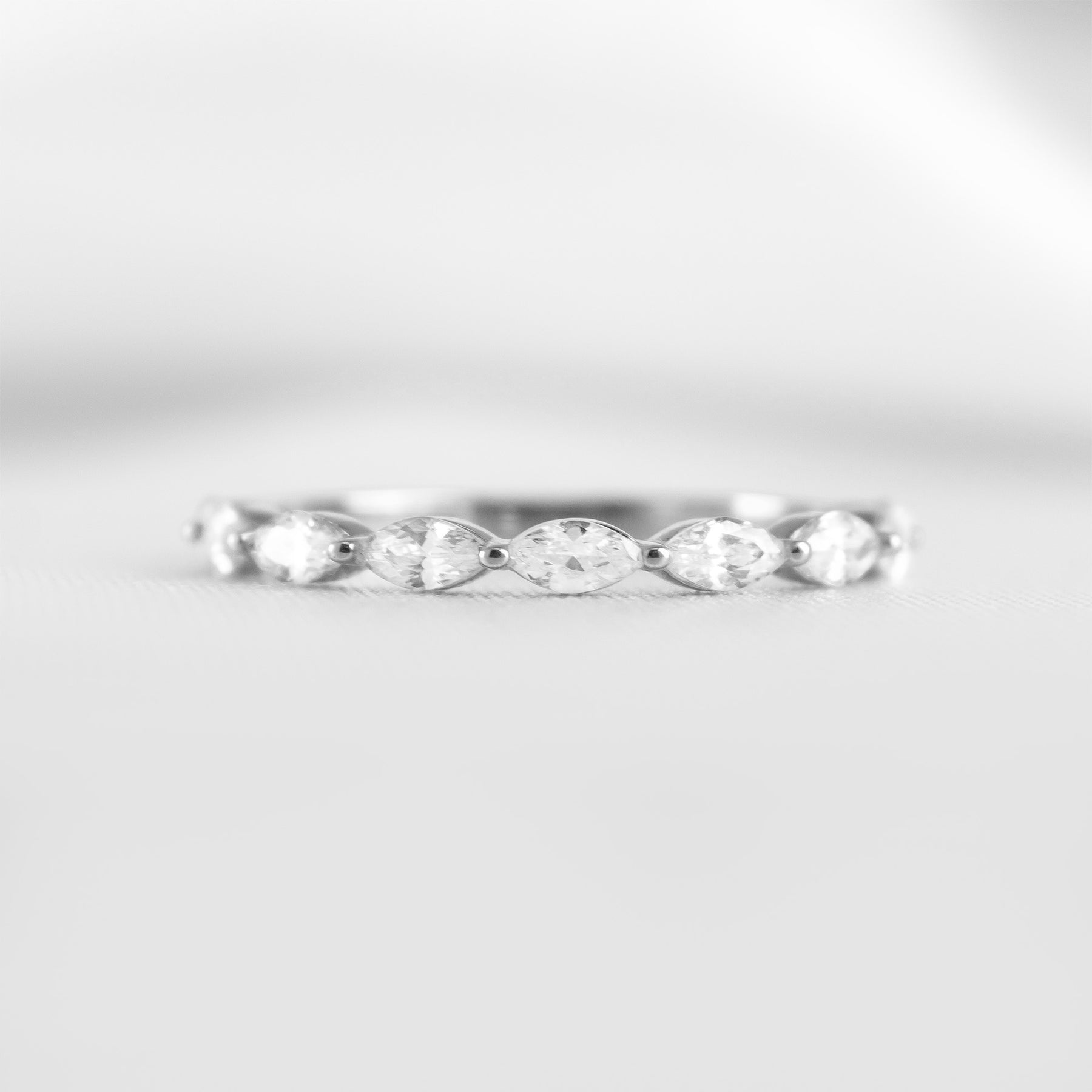




The Finley Marquise Diamond Wedding Ring - Lisa Robin
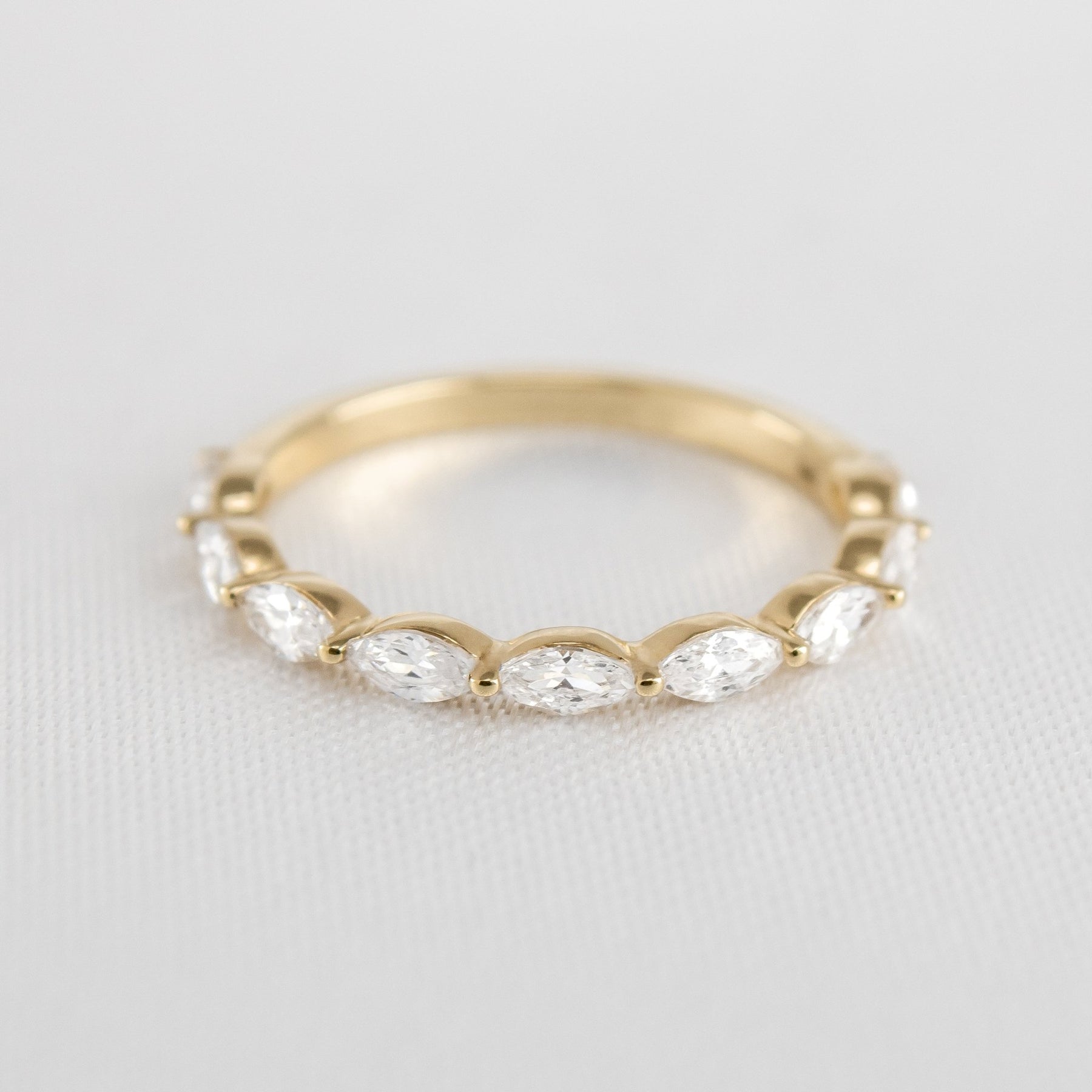
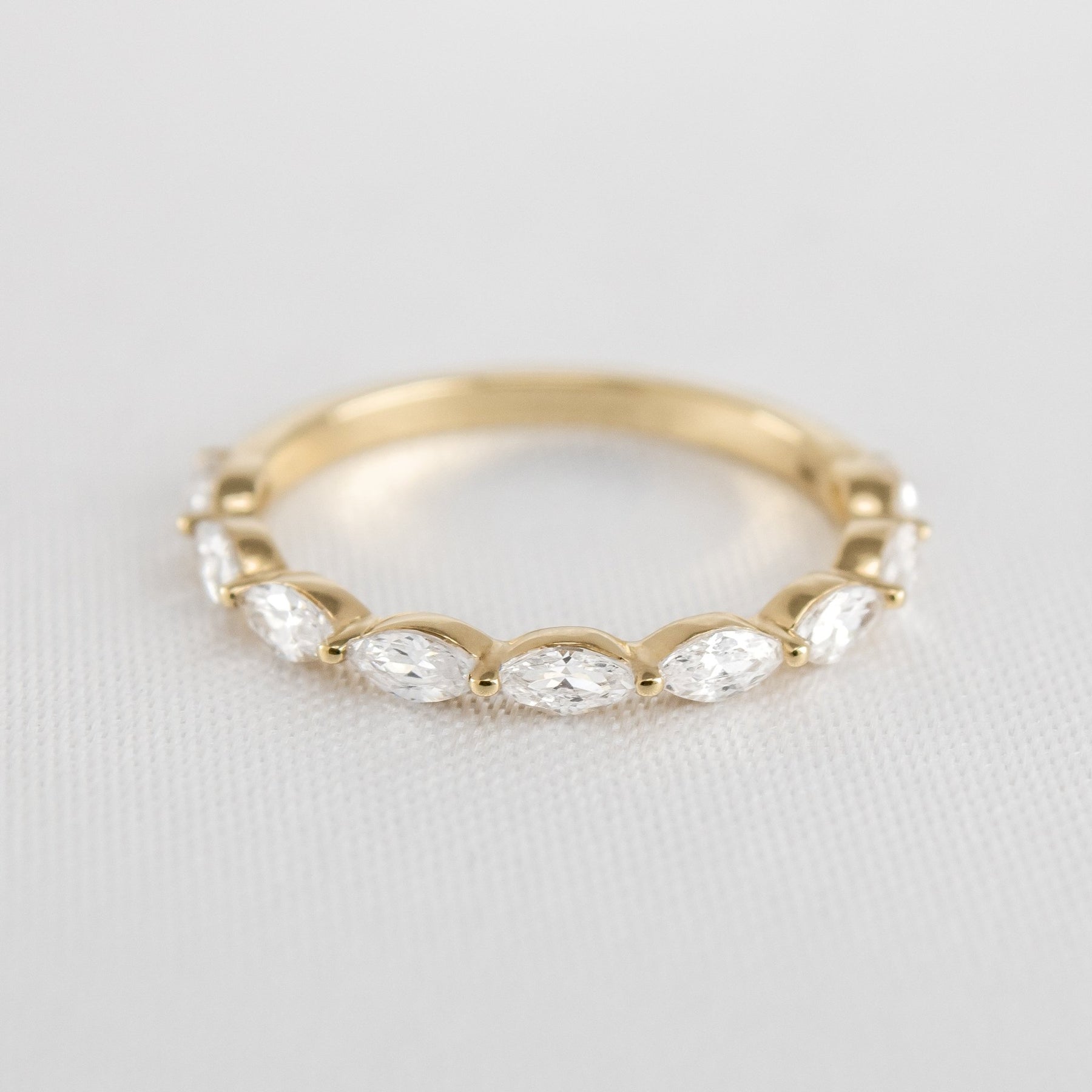
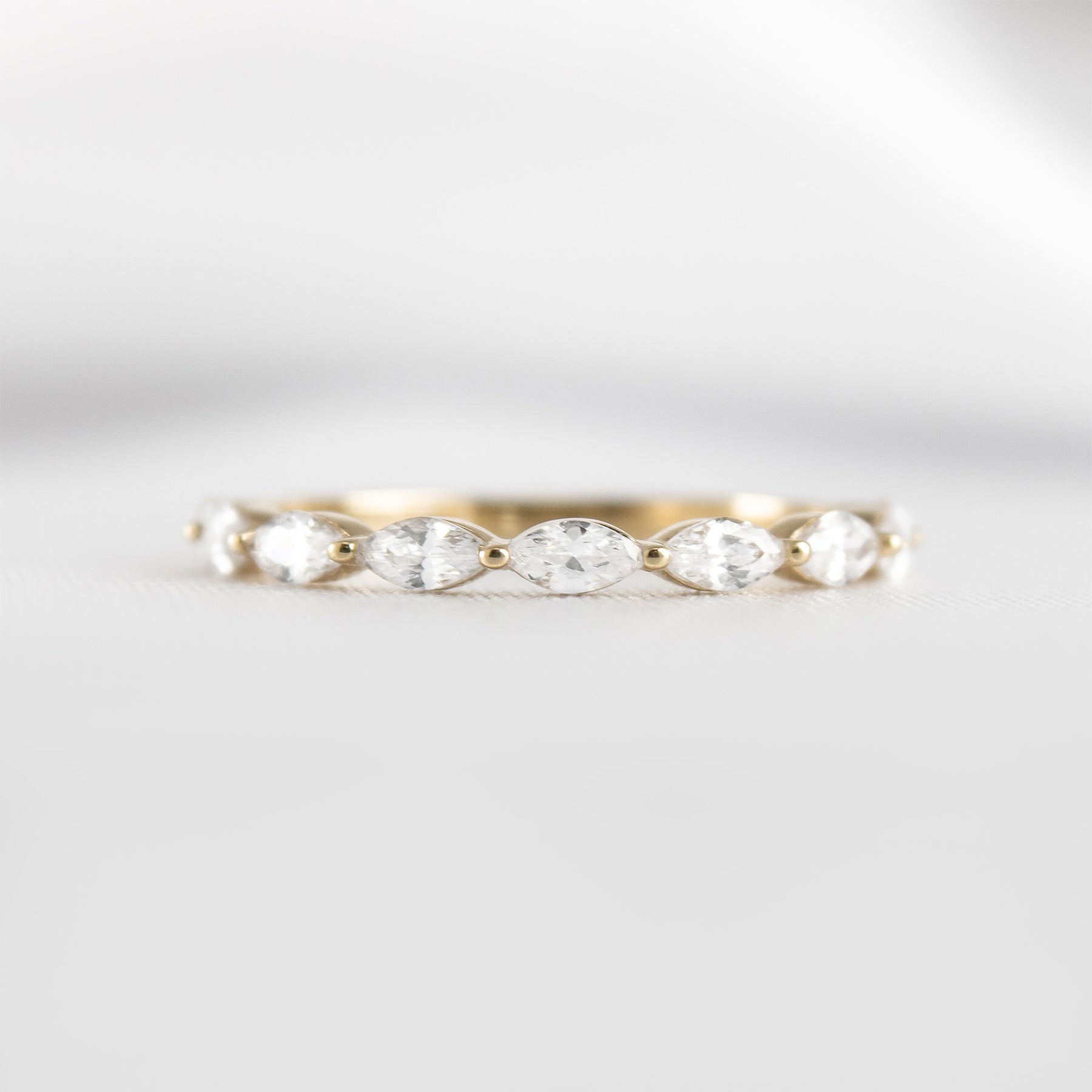
Finley marquise diamond 14K yellow gold wedding ring by Lisa Robin
The Finley Marquise Diamond Wedding Ring - Lisa Robin

The Finley Marquise Diamond Wedding Ring

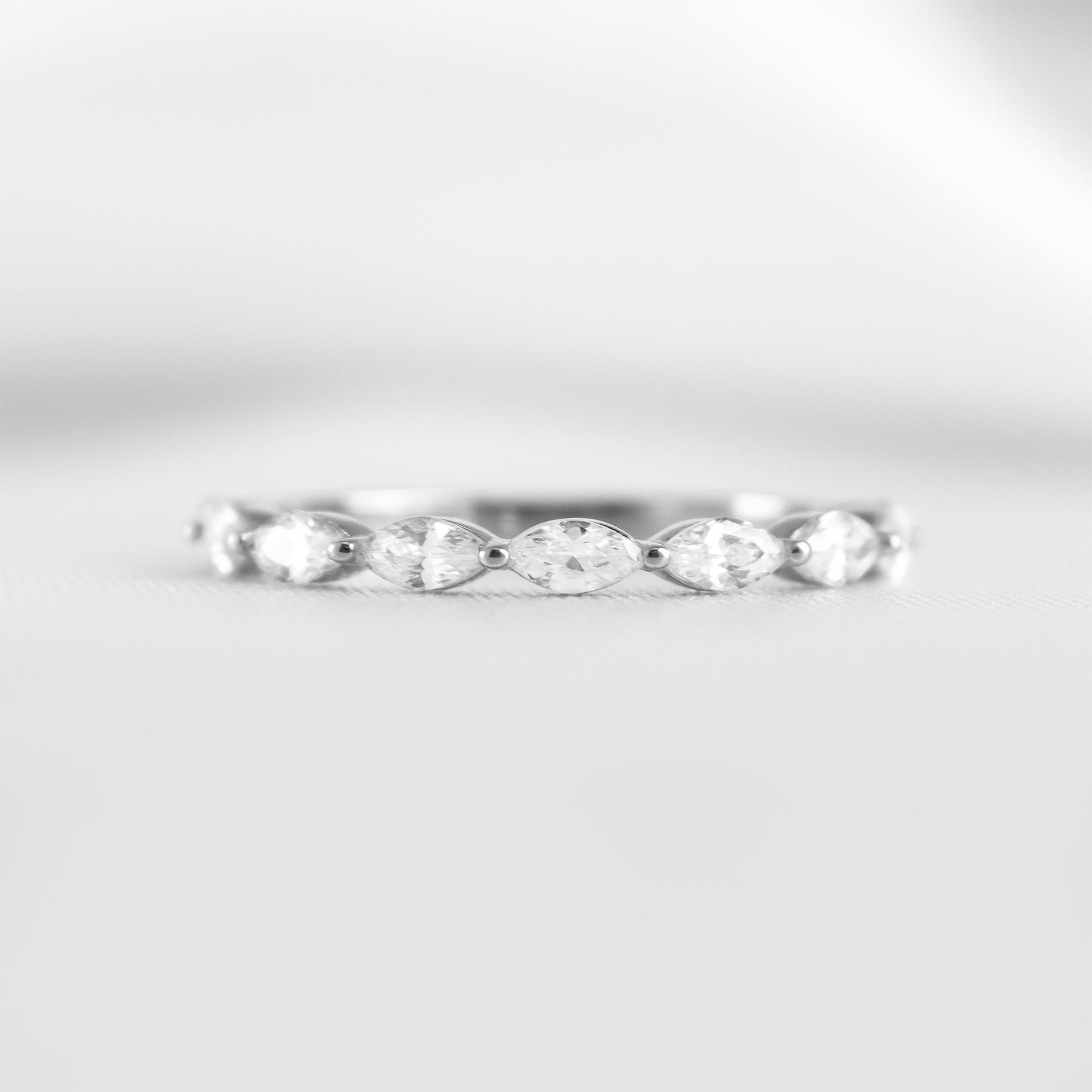
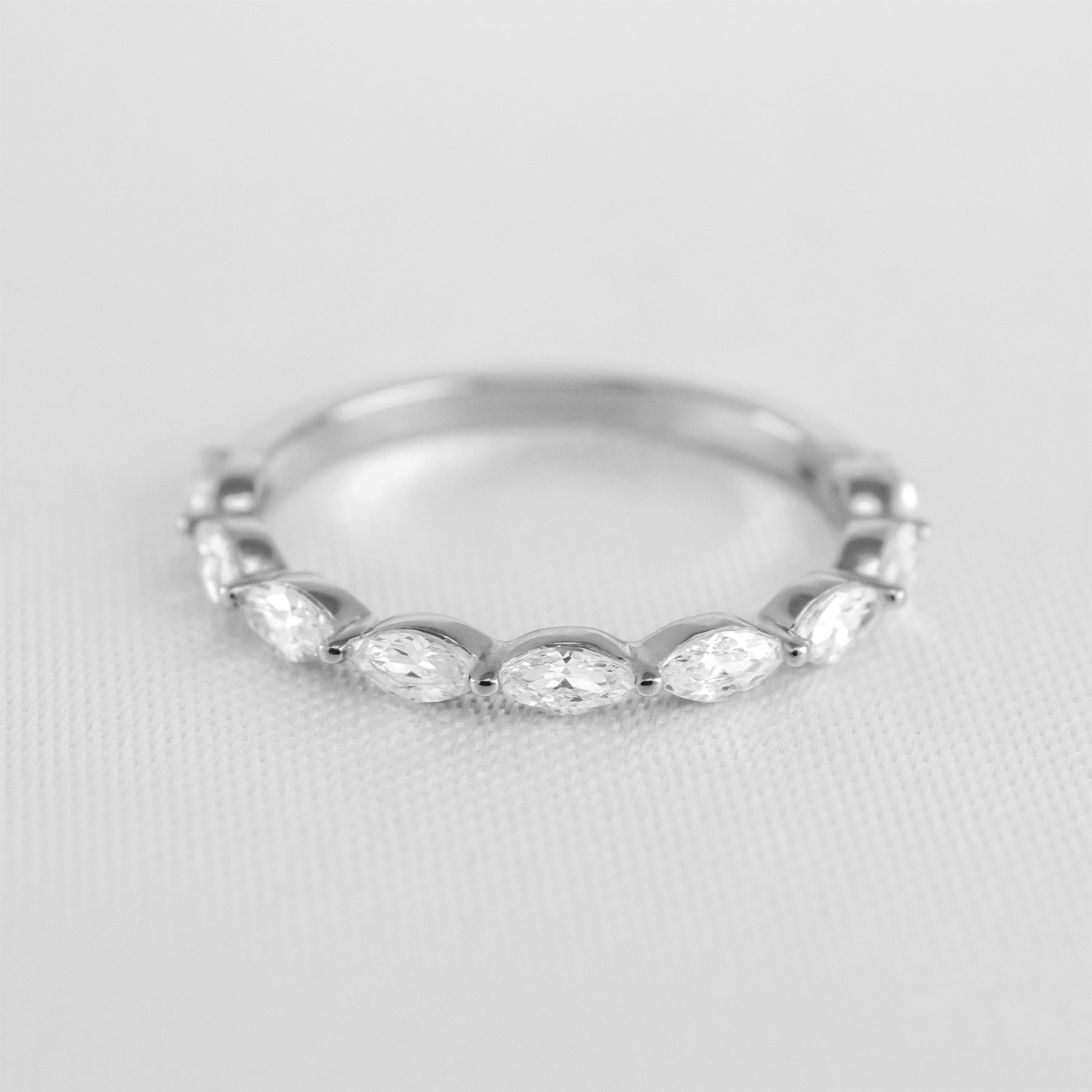
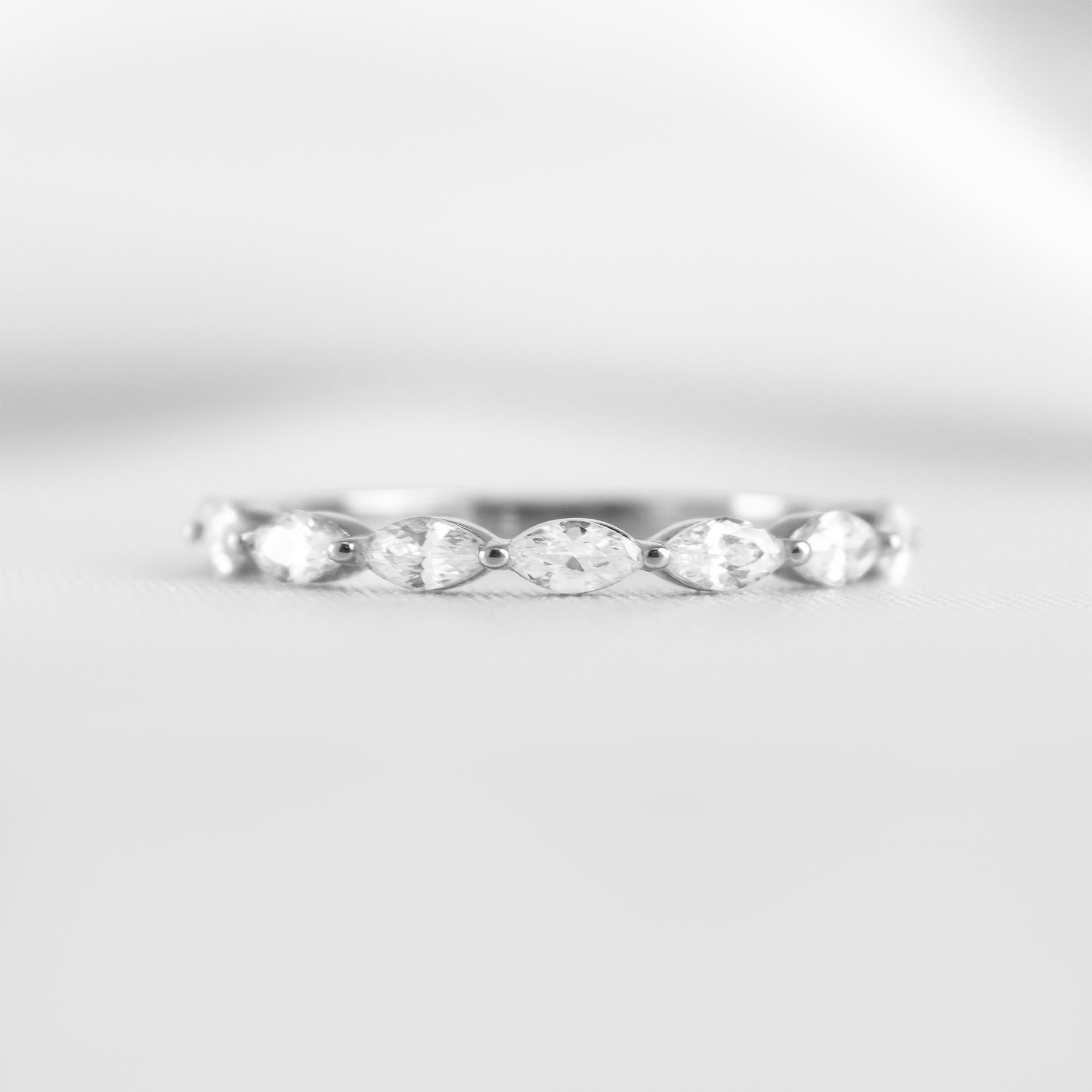
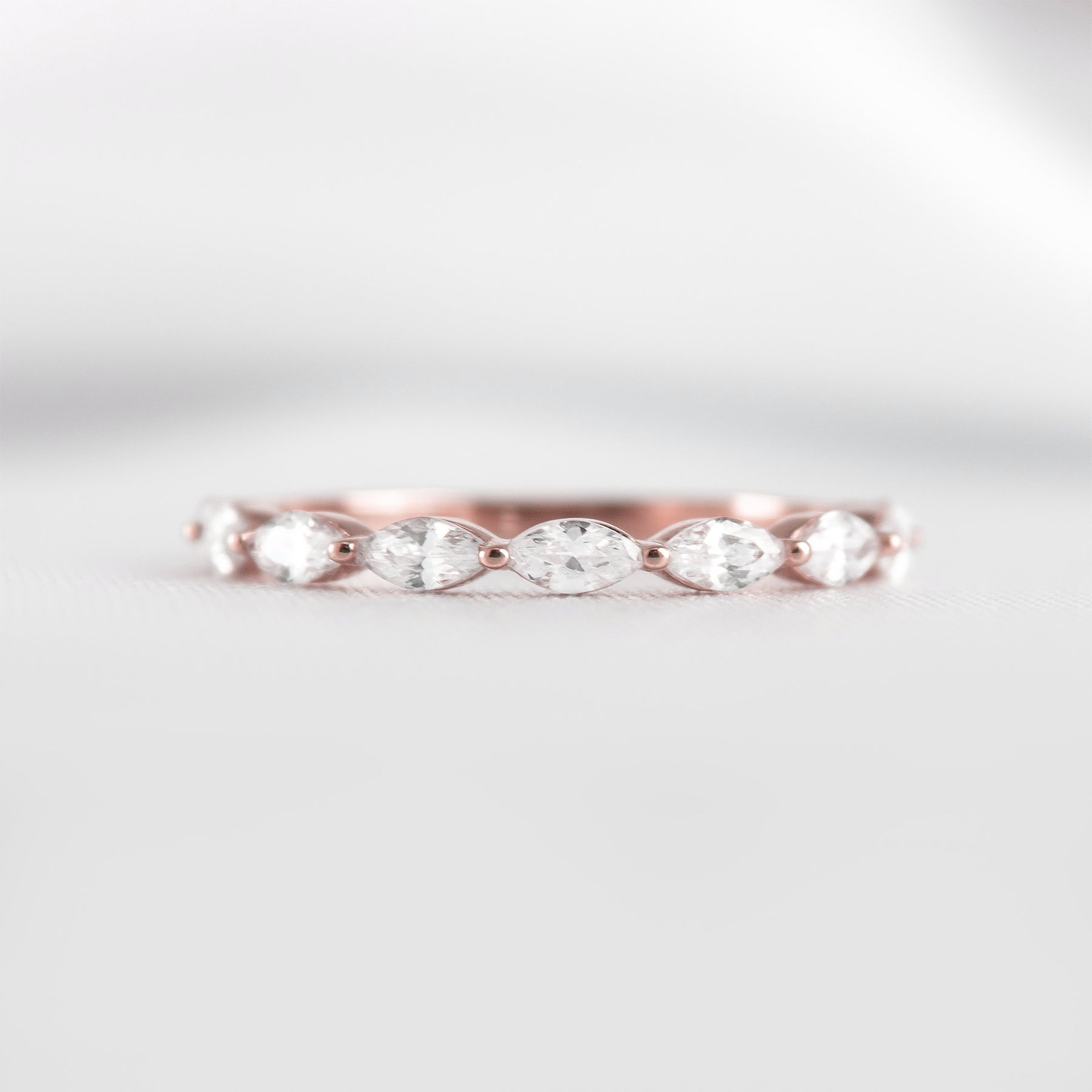
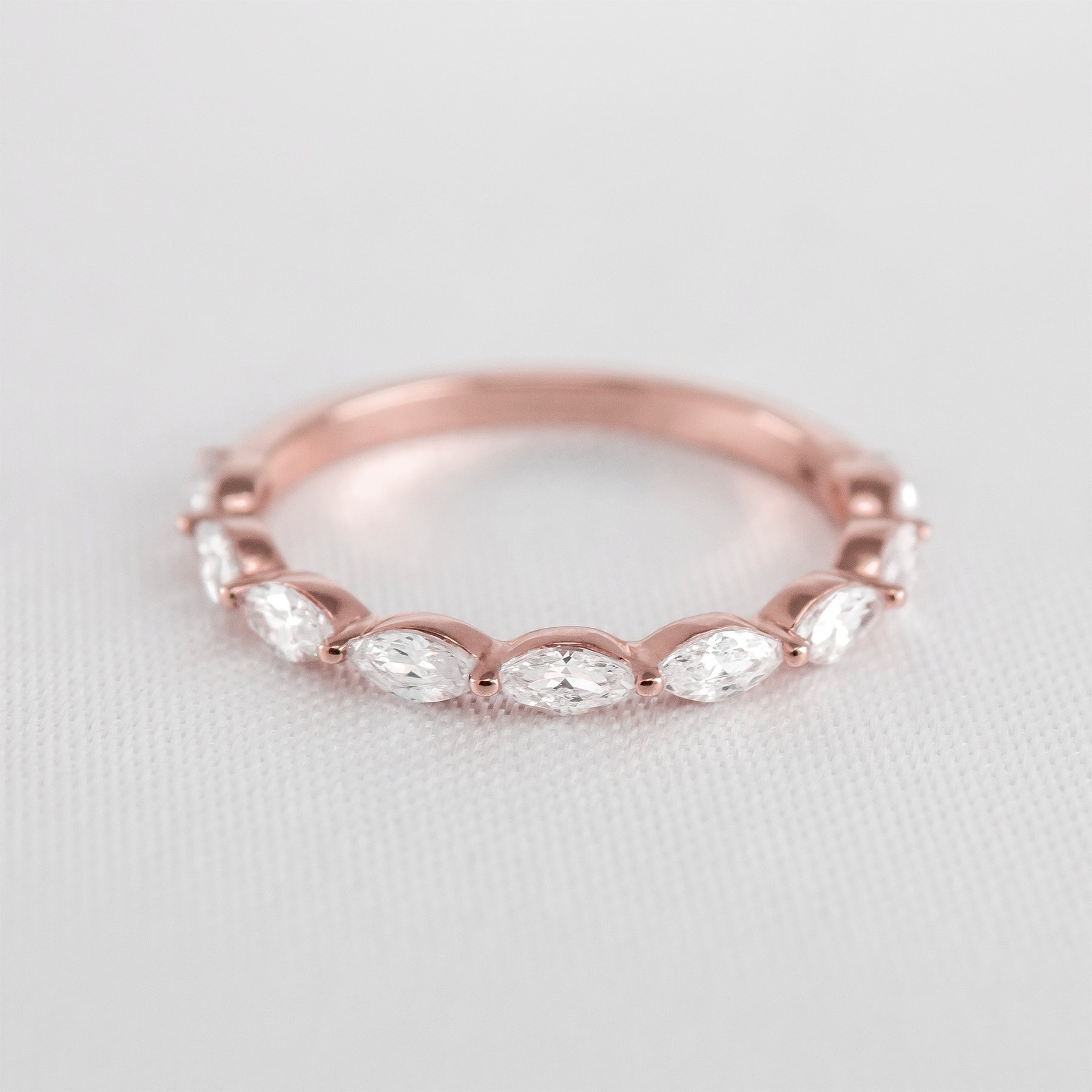
The Finley is a marquise diamond wedding ring with 0.63 carat of marquise-cut diamonds in a shared-prong setting across a 2mm low-profile band. A slim marquise diamond band where the pointed silhouette creates a scalloped, flowing line rather than a continuous row of rounded stones.
Regular price$ 1,350.00
/
Color
Diamond

Shared-prong setting places one prong between adjacent diamonds — minimizing metal between stones so the full face of each marquise reads across the 2mm band. The pointed tips of adjacent stones nearly meet at each shared prong, which produces the flowing, scalloped line across the finger.

The marquise wedding band pairs with vintage-influenced engagement rings, marquise-center rings where the band echoes the center stone's shape, and solitaires where the band provides all the decorative detail. The 2mm width stacks with rings of any profile.

Metal Options 10K Yellow Gold, 10K White Gold, 14K Yellow Gold, 14K White Gold, 14K Rose Gold, 18K Yellow Gold, 18K White Gold, 18K Rose Gold, or Platinum. Sustainably sourced.
Setting Diamond Total Weight 0.63 carat
Setting Diamond Quality Lab grown VS–SI1, E-F-G or Natural SI1–SI2, G-H
Style Marquise diamond wedding ring
Setting Shared prong
Band 2mm
Setting Height Low
Band Profile Low, slim
Crafting Time Approximately 2-3 weeks

The Finley Marquise Diamond Wedding Ring starts at $1,350 in 10K gold with lab grown diamonds.

How does the Finley differ from a round diamond band at the same 2mm width?

The Finley uses marquise-cut diamonds with their pointed-oval silhouette, tips sharing the prong between adjacent stones. A round diamond band at the same 2mm width sets round brilliant stones in a uniform line — each stone is a circle, the band reads as a dot-dash sequence. The marquise diamond band creates a scalloped, pointed sequence with more face-up surface per stone. Marquise cuts read larger per carat than rounds, so the 0.63 carat Finley appears more substantial than a round band of equivalent weight.

What does shared-prong setting mean for the Finley's look and care?

Shared prong sets one prong between two adjacent stones rather than giving each diamond its own closing prong. This minimizes the metal between diamonds, letting more of each marquise face show across the band. The visual result is a cleaner, more diamond-forward band. From a care standpoint, each shared prong holds two stones simultaneously, so periodic professional inspection confirms both adjacent stones remain secure — the same recommendation applies to any fine jewelry worn daily.

What engagement ring styles pair well with a marquise diamond wedding ring?

Marquise diamond wedding rings pair best with vintage-influenced engagement rings, rings with a marquise center stone, and solitaires where the band carries all the decorative interest. Pairing a marquise band with a marquise-center engagement ring creates a shape echo — the pointed oval repeats from center stone through the band in a cohesive way. Rings with heavy side diamond or pavé coverage can compete visually with the band's pointed character; simpler engagement ring designs give the Finley more visual room.

Our guided approach to customizing each ring with intention and clarity.

Every Lisa Robin ring is made to order, which means your design can be thoughtfully refined—even when ordering online. Whether you’re adjusting a detail or evolving the design, we guide you through each decision to ensure the final piece feels cohesive and entirely yours.

Design Refinements can be explored after your initial order, with any pricing adjustments clearly outlined and approved before crafting begins.

Refinement options include but are not limited to:

  • Adjusting the width or taper of the band (shank)
  • Modifying or adding details
  • Adding gemstones or diamonds
  • Selecting your preferred metal type and color

Made to order Ships Aug 16 to Aug 23
Shipping costs calculated at checkout

The Finley Marquise Diamond Wedding Ring

The marquise cut has a rhythm. The pointed tips and curved belly, repeated in sequence across a band, produce a flowing line where rounds would give a dot-dash and ovals a continuous oval stripe. It's a different visual grammar.

The Finley is a slim marquise diamond band with 0.63 carat in shared-prong settings — the stones placed close enough that their pointed tips nearly meet at each prong, reinforcing the scalloped quality of the line. In white gold or platinum, the cut reads crisp and graphic. In yellow gold it pushes further into vintage territory, closer in character to a ring made a century ago than one made this year.

The Finley joins a Lisa Robin tradition of marquise diamond wedding rings designed for couples drawn to elongated shapes and the design language of earlier jewelry eras.

Design Process

The Lisa Robin Wedding Band Experience

A thoughtful process designed to bring clarity and confidence to the creation of your wedding band.

Our collection is intentionally edited — each wedding band design reflects a distinct point of view, with proportions and details that set it apart from what you've likely been seeing online.

When something here resonates, the decision tends to feel clear.

From there, we guide you in refining the details to align the design with your preferences.

Once you've chosen your wedding band, you'll select the core elements that define the design:

  • Metal type
  • Natural or lab-grown diamonds (if applicable)
  • Finger size
  • Optional engraving

If your wedding band will be worn alongside an engagement ring, we can help you evaluate how the proportions and overall profile will sit together and feel over time.

These decisions are focused and straightforward — so you can move forward with clarity.

If you'd like to adjust your diamond wedding ring, we guide you through a thoughtful refinement process — ensuring any changes support the overall balance and feel of the design.

Common refinements may include:

  • Adjusting band width or profile
  • Refining diamond size or spacing
  • Subtle modifications to improve pairing or wearability

Each change is considered within the context of the full design, so the final ring feels cohesive and intentional from every angle.

For custom refinements, we provide renderings for review before crafting begins — so you can move forward with complete confidence.

Every custom wedding band is hand-crafted to order based on your final selections.

  • Crafted specifically for your chosen design and refinements
  • No pre-made inventory or resizing shortcuts
  • Typical timeline: 2–3 weeks

If additional clarity is helpful before crafting begins, we can guide you through the next steps to ensure everything feels aligned.

What our customers say

I LOVE the ring with the engagement ring!

Samantha & Mark
Kattering OH

Hey Lisa, just want to say thank you for the awesome ring. She absolutely loves it! From our custom engagement ring to our wedding bands, Lisa Robin’s process was simple, customized, and made us feel special.

Dan & Krista
Whitestown IN

Gender Neutral Engagement Rings and Wedding Bands — Frequently Asked Questions

Gender neutral rings are designed without the visual markers that traditionally distinguish 'men's' from 'women's' rings — meaning they don't lean toward extremely substantial widths (traditional masculine), extremely refined narrow widths (traditional feminine), heavy surface texture, floral motifs, or other visual elements that carry strong gender associations. Instead, gender neutral designs use middle-range widths (typically 3-5mm), balanced proportions, clean construction, restrained diamond placement, and design vocabulary that reads appropriately on any hand. Many rings designed without specific gender intent end up working as gender neutral by default; this collection curates those designs into a single browsable group.
Yes — this is one of the primary use cases for the gender neutral collection. Both partners can choose rings from the same design family with width or material variations adapting each ring to the wearer's hand. Common approaches: same design at different widths (4mm and 6mm Tanner, for example), same width in different metals (yellow gold and white gold), same design at identical specifications (when hand sizes are similar), or coordinated-but-distinct designs (each partner chooses a different ring that shares aesthetic vocabulary). The Tanner family is particularly suited for matched couples' bands because it offers five widths in the same design language.
No. Engagement rings and wedding bands are personal choices — some couples choose both, some choose only wedding bands, some choose only engagement rings, and configurations vary. There's no universal expectation that any particular configuration is correct. For same-gender couples or any couple preferring a streamlined approach, both partners wearing wedding bands only (without engagement rings) is a valid choice. For couples wanting more ring presence, both partners can wear engagement ring + wedding band. The configuration choice should serve the couple's preferences, not external expectations.
Yes — the design vocabulary in this collection is a starting point, not a constraint. Adjustments toward more traditionally masculine (wider band, more substantial profile, surface texture) or more traditionally feminine (narrower band, more refined proportions, more prominent diamond detail) can be made during custom design. Some couples want their rings to land at the gender neutral midpoint; others want their rings to lean slightly in one direction while remaining outside the traditional 'his and hers' binary. We discuss preferences during the design conversation. The flexibility is the point: the rings should reflect each wearer's individual identity rather than fitting predefined categories.
That's a valid choice. Couples don't need to wear matching or even coordinated rings — many couples choose rings that reflect each partner's individual style preferences. One partner might want a substantial textured wedding band while the other prefers a refined diamond eternity ring. The relationship doesn't require visual symmetry between the rings. For couples wanting some visual connection between distinctly different rings, options include shared metal (both rings in yellow gold, for example), shared engraving (matching dates or phrases inside both rings), or shared diamond origin (both rings using lab grown diamonds). We discuss approaches during the design conversation.
Yes. A gender neutral wedding band can be paired with any engagement ring, including engagement rings that lean more traditionally feminine or masculine. The pairing decisions involve standard considerations: matching diamond cut vocabulary, metal coordination, width proportion, and design language coherence. A gender neutral wedding band paired with a more characterful engagement ring creates a deliberate vocabulary mix — the engagement ring brings the design statement, the wedding band brings refined support. Many couples find this approach works well because the engagement ring carries the visual focal weight and the wedding band supports without competing.
Rings in this collection are made-to-order in approximately 2-4 weeks from when your order is placed. Wedding bands typically finish in 2-3 weeks. Engagement rings with center stones and substantial design typically take 3-4 weeks. Custom designs (where Lisa designs something specific to your vision) take 3-4 weeks from design approval. Interior engraving adds approximately 1 week to any timeline. For wedding date deadlines, confirm timeline during the order conversation.
Yes. All diamonds in this collection can be specified as lab grown or natural. Lab grown diamonds are physically and optically identical to natural diamonds — same hardness, same brilliance, same chemical and crystal structure — but cost approximately 40-60% less for the same carat weight, color, and clarity. Most accent diamonds in wedding bands today are lab grown; the visual difference is undetectable. Lab grown diamonds are particularly aligned with values around responsible sourcing for couples who prioritize that consideration. We discuss diamond origin during the design conversation.
Pricing depends on the specific design, metal choice, diamond specifications, and any customization. Plain Tanner gold wedding bands start around $700-$2,400 depending on width and karat. Diamond wedding bands range $1,200-$8,000+ depending on diamond count, carat weight, and design complexity. Engagement rings in this collection start around $2,500-$3,500 for solitaire designs and range to $15,000+ for more substantial designs with larger center stones. Custom designs vary based on specifications. Lab grown diamonds reduce cost approximately 40-60% compared to natural. Specific pricing is confirmed during the design conversation.
Yes. Design appointments are open to anyone planning engagement rings, wedding bands, or other significant jewelry. The appointment is a conversation about your relationship, your aesthetic preferences, your timeline, and your budget. Whether you're a same-gender couple choosing matched wedding bands, a nonbinary individual designing a single ring for yourself, an engaged couple of any configuration, or anyone wanting to discuss ring design — the appointment serves your specific situation rather than fitting you into predetermined categories. Appointments are available via Zoom, phone, or in person at the Dayton studio. The first appointment is complimentary.